
A Hidden Figure, Ellen Garrison Clark, an Anti-Slavery Activist Daredevil and Educator, 129 Years Ago
A story about the celebration of another hidden figure, an anti-slavery leader and educator who traveled the South teaching freed slaves
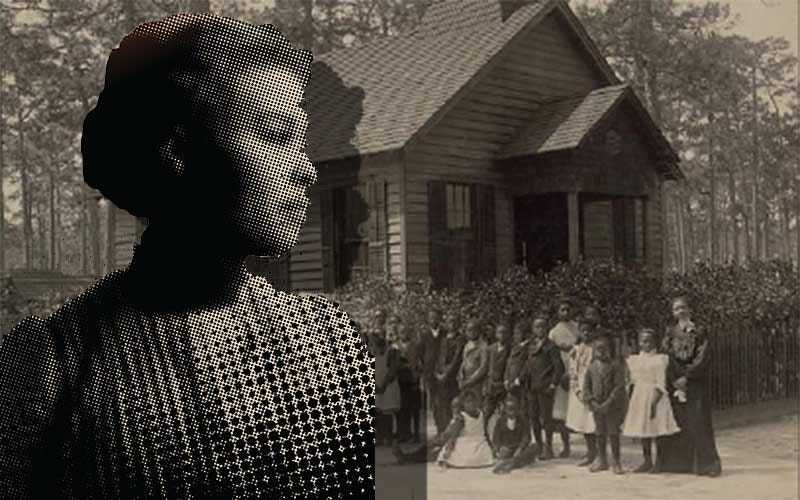
Ellen Garrison Clark, similarly to Mrs. Fannie Lou Hamer, laid in an unmarked grave far too long before getting a tombstone of recognition. Recently there was a ceremony by the Altadena Historical Society where a granite headstone was unveiled for Ms. Clark, an educator, and activist, at the Altadena Mountain View Cemetery, June 19, 2021, 129 years later.
Her grandfather, Caesar Robbins, was a freedman who fought in the Revolutionary War and as a patriot won his freedom by fighting against the British. Her father, Jack Garrison, escaped slavery from New Jersey and ran to Concord, where he lived as a farmer and laborer and remained a fugitive for the rest of his life. Her mother, Susan Robbins Garrison, socialized with the abolitionists and was involved in making Concord famous for its liberal leanings, joining Ralph Waldo Emerson’s wife, Lidian, and Henry David Thoreau’s mother, Cynthia, as charter members of the Concord Female Antislavery Society in 1837. Being the only Black member of the group, and for their second meeting, she hosted them at her home.
90 years before Rosa Parks’ Montgomery, Alabama bus boycott, Ms. Ellison Garrison Clark fought in court in 1866 for the right for law-abiding Blacks to be afforded equal rights to sit wherever they chose. At the age of 15, she signed petitions demanding equal rights for Native Americans and advocated the desegregation of Massachusetts trains and Boston schools.
Ms. Ellen Garrison Clark was born free in Concord, Mass., April 24, 1823, whose family generations back experienced slavery. Therefore, Ms. Garrison being born free, never owned by anyone, allowed her to travel throughout the South for many years teaching formerly enslaved people to read and write as she protected her identity with a passport showing she was free and owned by no one.
Her life as an educator begun with a private school in Newport, R.I. during the Civil War as she felt the calling to work with the American Missionary Association to teach former slaves to read and write throughout Virginia and Maryland in the face of much hostile racism. Occasionally, she was beaten, harassed, degraded, and stoned in the street.
There was an occasion where a white person stepped on her dress and accused her of walking too slow but she stood her ground and he walked away. Another time, she was thrown from her seat in a ladies sitting room at the Baltimore train depot. After the later encounter, she filed a legal suit as recommended by her Baltimore employer to make changes for the ones to follow. This suit was a test of the recently passed Civil Rights Act. A month prior, the Civil Rights Act of 1866 granted Blacks citizenship of the United States without any specifications as to what was involved.
The opponent’s counsel tried to convince Ms. Clark to settle out of court but she refused demanding Black’s rights be granted to them, thereafter the council pulled a fast one on her, requested a jury trial to get the upper hand on Ms. Clark. This all-white jury was summoned for a court date, but much ambiguity surrounded the assigned court date, whereas it ended with the case being thrown out and alluded to the fact that Ms. Clark did not appear, but it was not clear if she ever was notified. Thereafter, the case faded into oblivion.
Due to the funding depletion of her employer, she lost her teaching job around 1870. Pennsylvania Quakers hired Ms. Clark in the 1870s to work at Black schools in North Carolina and was revered for starting new schools and reviving schools that were flagging.
Ms. Clark in 1857 was briefly married to John W. Jackson, a free Black farmer from Delaware who died a few years later. In 1881, at the age of 58, she married Harvey Clark, a Black homesteader, and widower from South Carolina.
Ms. Clark at 69 years old, never had any children to record and died December 21, 1892, of consumption, tuberculosis, and records are unclear as to what brought her to California other than a warm-weather cure as was common at that time for thousands to do.
In conclusion, Ms. Clark legacy has been established in the Robbins House Museum, a facility that was once owned by the Robbins family. The Robbins House-Concord’s African American History, a nonprofit group dedicated to documenting Concord’s African American and anti-slavery history from the 17th and 19th centuries. May her legacy live on and join the ranks of many others who have impacted society and deserves to be in America’s history books worldwide.
For additional reads:


