
A FILM TO REMEMBER: “THE TREASURE OF THE SIERRA MADRE” (1948)
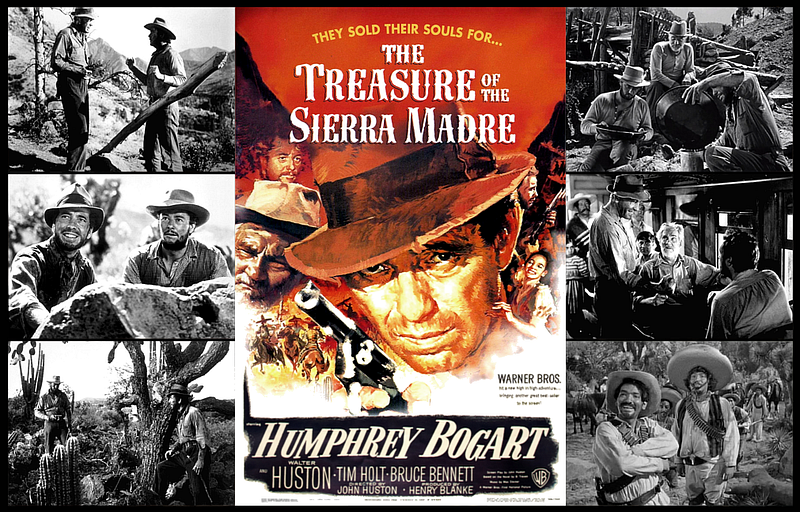
Before I get into this, I want to make mention “A FILM TO REMEMBER” will be a series about films that have reached a milestone anniversary since their origin in being culturally, historically, or aesthetically significant. The articles will contain the film’s plot outline, director, cast, a compilation of trivialities, various photos, movie trailer, critical reception and more. So, let’s start:
We are here to mark the celebration of the 70th Anniversary of John Huston’s “The Treasure of the Sierra Madre”. Let’s take an inside look at the film:
PLOT OUTLINE:
Two Americans searching for work in Mexico, persuade an old prospector to help them mine for gold in the Sierra Madre Mountains.
STUDIO:
Warner Bros. Pictures
DIRECTOR:
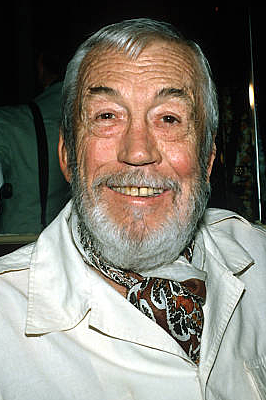
John Huston
CAST:
- Humphrey Bogart … Fred C. Dobbs
- Walter Huston … Howard
- Tim Holt … Bob Curtin
- Bruce Bennett … James Cody
- Barton MacLane … Pat McCormick
- Alfonso Bedoya … Gold Hat
- Arturo Soto Rangel … El Presidente
- Manuel Dondé … El Jefe
- José Torvay … Pablo
- Margarito Luna … Pancho
GENRE(S):
Adventure | Drama | Western
TAGLINE:
The more he yearns for a woman’s arms…the fiercer he lusts for the treasure that cursed them all!
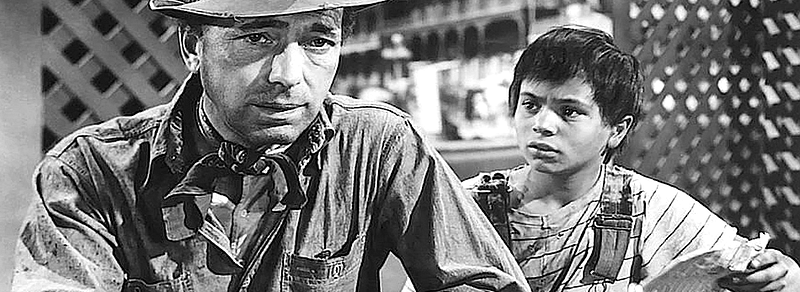
The film is known for being a finely crafted western-style character drama where greed and paranoia drive desperate men over the edge in this powerful study of masculinity under pressure. Director John Huston must have thrown everything he had into this impossibly rich, packed with grit, passion, adventure and heartbreak as its never really about gold but about characterization with an incomparable cast of imposing performances fronted by Walter Huston and particularly, Humphrey Bogart in this conglomeration of a cunning, greed and maladjustment cinematic treasure. The film is based from B. Traven’s novel of the same name, it was universally acclaimed as it’s become an unconventional western masterpiece in the annals of cinema.
Here’s what some of the critical receptions have been for the film over the years:
Roger Ebert from Chicago Sun-Times says: “The movie has never really been about gold but about character, and Bogart fearlessly makes Fred C. Dobbs into a pathetic, frightened, selfish man — so sick we would be tempted to pity him, if he were not so undeserving of pity.”
Herb Schoenfeld from Variety says: “The characters here are probed and thoroughly penetrated, not through psychoanalysis but through a crucible of human conflict, action, gesture and expressive facial tones.”
Stephen Garrett from Time Out says: “There’s a quite enjoyable yarn buried under the hollow laughter.”
Bosley Crowther from New York Times says: “Greed, a despicable passion out of which other base ferments may spawn, is seldom treated in the movies with the frank and ironic contempt that is vividly manifested toward it in ‘The Treasure of Sierra Madre.’”
Don Druker from Chicago Reader says: “John Huston has rarely been in better form than in this 1948 study of gold fever and worse obsessions among an unlikely trio of prospectors…”
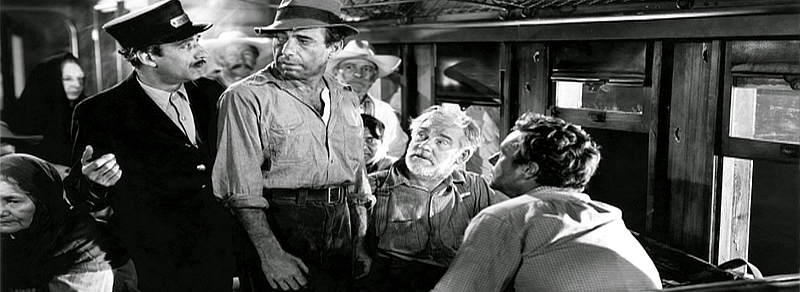
As you can tell by the critical reactions, the film was critically peerless consensually, as much of its strength comes from Huston’s pen and attention to detail in this elusive search for gold in the Sierra Madre Mountains by a trio of ill-matched that chronicle’s a powerful morality tale aided by a gilt-edge cast and performances distinctly from Walter Huston and a distinguishably maniacal Humphrey Bogart as the humor is as black as the heart of its central character, but as humane as the men who survive their brush with greed in this smart, riveting, downbeat and gripping adventurous gem. But I’ll let you decide…
So, to get a better look at the film, here’s a link to the movie trailer of John Huston’s “The Treasure of the Sierra Madre”:
Here I have provided 12 interesting and intriguing trivia facts (I wanted to keep it limited) about “The Treasure of the Sierra Madre”:
- Director John Huston first read the novel by B. Traven in 1935 and had always thought the material would make a great film with his father in the main role. Based on a 19th-century ballad by a German poet, Traven’s book reminded Huston of his own adventures in the Mexican cavalry. After a smashing success with his directorial debut, “The Maltese Falcon” (1941), Huston started to work on the project. The studio had George Raft, Edward G. Robinson and John Garfield in mind for the three main roles, but then World War II intervened.
- Filmmaker Vincent Sherman was all set to direct a version of the story during the WWII years until his script fell foul of the 1930s Motion Picture Production Code for being derogatory towards Mexicans.
- By the time John Huston came back from making several documentaries for the war effort, Humphrey Bogart had become Warner Bros’ biggest star. When Bogart first got wind of the fact that Huston might be making a film of the B. Traven novel, he immediately started badgering Huston for a part. Bogart was eventually given the leading role of Fred C. Dobbs. Prior to filming, Bogart encountered a critic while leaving a New York nightclub. “Wait till you see me in my next picture,” he said, “I play the worst shit you ever saw”.
- Traven initially disagreed with John Huston’s decision to cast his father, Walter Huston, as Howard. He had preferred Lewis Stone, but eventually came to agree with Huston’s choice. Walter Huston himself also questioned his son’s choice. He still saw himself as a leading man and was not keen on being cast in a supporting role. However, his son was able to persuade him to accept, and also got him to play the part without his dentures for the sake of reality. Huston rated his father’s performance as the finest piece of acting in any of his films. On seeing the depth of Walter Huston’s performance, Humphrey Bogart famously said, “One Huston is bad enough, but two are murder.”
- John Huston originally wanted to cast Ronald Reagan for the part of James Cody. Warner Bros. studio head, Jack L. Warner instead insisted on casting Reagan for another film. Bruce Bennett was eventually cast in the role.
- The film was one of the first Hollywood films to be filmed on location outside the United States (in the state of Durango and street scenes in Tampico, Mexico), although many scenes were filmed back in the studio and elsewhere in the US. Filming took five and a half months to shoot.
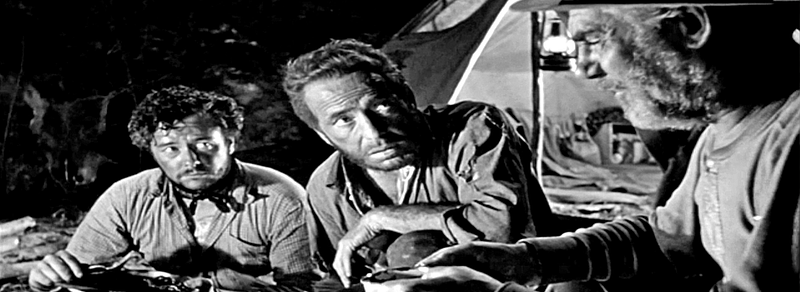
- Just as John Huston was starting to shoot scenes in Tampico, Mexico, the production was shut down inexplicably by the local government. The cast and crew were at a complete loss to understand why, since the residents and government of Tampico had been so generous in days past. It turns out that a local newspaper printed a false story that accused the filmmakers of making a production that was unflattering to Mexico. Huston would soon found out why the newspaper skewered him and his production. When you wanted to do anything in Tampico, it was customary to slide a little money toward the editor of the newspaper, something the crew failed to do. Fortunately, two of Huston’s associates, Diego Rivera and Miguel Covarrubias, went to bat for the director with the President of Mexico. The libelous accusations were dropped, and a few weeks later, the editor of the newspaper was caught in an adulterous situation and shot dead by a jealous husband.
- There were scenes in which Walter Huston had to speak fluent Spanish, a language he did not know off camera. To fill this need, John Huston hired a Mexican to record the lines, and then the elder Huston memorized them so well that many assumed he knew the language like a native. As with most of the Mexican actors selected from the local population, Alfonso Bedoya’s heavily accented pronunciation of English proved to be a bit of a problem. Example: “horseback” came out as “whore’s back”. Bogart only knew two Spanish words, “Dos Equis”, a Mexican beer.
- A photograph included in the documentary accompanying the DVD/Blu-Ray release shows Ann Sheridan in a streetwalker costume, with Humphrey Bogart and John Huston on the set. Many film-history sources credit Sheridan for a part.
- While most of the film was shot in Mexico, Jack L. Warner had the unit return to Hollywood when the budget started to exceed $3 million dollars.
- Though the daily rushes impressed Warner Bros., Jack L. Warner, he nearly went berserk with the weekly expenditures. After viewing one scene, Warner threw up his hands and shouted to Producer Henry Blanke, “Yeah, they’re looking for gold all right — mine!” During another screening of rushes, Warner watched the character of Dobbs (played by Humphrey Bogart) stumble along in the desert for water. Warner jumped up in the middle of the scene and shouted to a gaggle of executives, “If that s.o.b. doesn’t find water soon I’ll go broke!” However though, Warner had reason to be upset. John Huston and Blanke led him to believe that the film would be an easy picture to make and that they would be in and out of Mexico in a matter of weeks. Warner was notorious for not actually reading scripts, and he assumed the film was a B-movie Western. As the full extent of Huston’s plans became apparent, Warner became quite angry. He was especially unhappy with the way the film ended, arguing that audiences wouldn’t accept it. Warner’s expectation was validated in that the initial box office take was unimpressive. Yet the film was a huge critical success and, in its many re-releases on home entertainment platforms, it’s more than earned back its original investment of $3 million dollars.
- John Huston’s original filmed depiction of the character of Dobbs’ death was more graphic — as it was in the novel— than the one that eventually made it onto the screen. When Gold Hat (played by Alfonso Bedoya) strikes Dobbs with his machete, Dobbs is decapitated. Huston shot Dobbs’ (fake) head rolling into the waterhole (a quick shot of Gold Hat’s accomplices reacting to Dobbs’ rolling head remains in the film, and in the very next shot, one can see the water rippling where it rolled in). The 1948 censors would not allow that though, so Huston camouflaged the cut shot with a repeat shot of Gold Hat striking Dobbs. Warner Bros’ publicity department released a statement that Humphrey Bogart was “disappointed the scene couldn’t be shown in all its graphic glory.” Bogart’s reaction was: “What’s wrong with showing a guy getting his head cut off?”
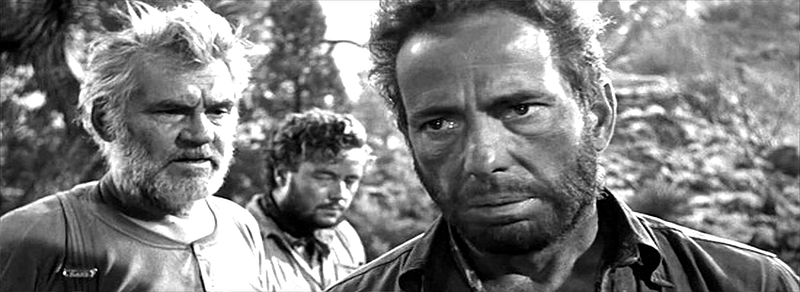
To conclude, John Huston’s “The Treasure of the Sierra Madre” plays as a morality fable, showing that the deadliest dangers to man are in his soul and not from the external dangers. John Huston brings to form a masterful display of characterization, structure, pacing and storytelling with a remorseless and chronicling tale of gold, greed, guns and guile from a solid-gold cast and prodigious performances from Walter Huston and prominently, Humphrey Bogart in this probing and penetrating of intense heat, thirst and near starvation of a westernly yarn in an obsessively greedy, betraying, murderous and cunningly triumphant treasured masterpiece.
NOTE: The article contains sources from IMDb and Wikipedia.
Follow me and check out other articles of mine: