
A FILM TO REMEMBER: “THE STING” (1973)
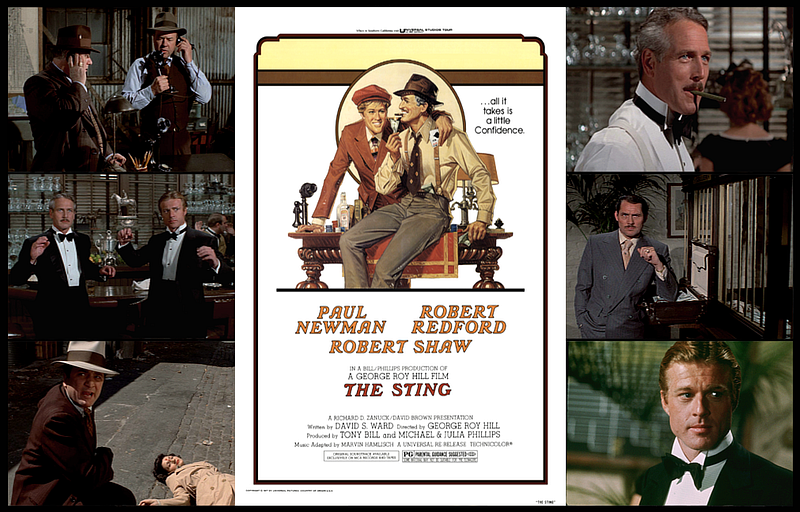
Before I get into this, I want to make mention “A FILM TO REMEMBER” will be a series about films that have reached a milestone anniversary since their origin in being culturally, historically, or aesthetically significant. The articles will contain the film’s plot outline, director, cast, a compilation of trivialities, various photos, movie trailer, critical reception and more. So, let’s start:
We are here to mark the celebration of the 45th Anniversary of George Roy Hill’s “The Sting”. Let’s take an inside look at the film:
PLOT OUTLINE:
Henry Gondorff and Johnny Hooker, two professional grifters, decide to team up and pull an elaborate con on Mob boss, Doyle Lonnegan.
STUDIO:
Universal Pictures
DIRECTOR:
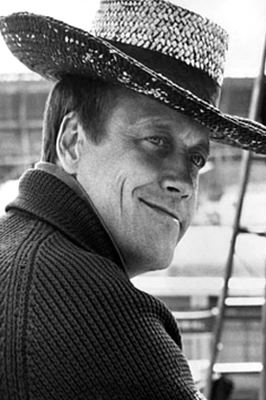
George Roy Hill
CAST:
- Paul Newman … Henry “Shaw” Gondorff
- Robert Redford … Johnny “Kelly” Hooker
- Robert Shaw … Doyle Lonnegan
- Robert Earl Jones … Luther Coleman
- Charles Durning … Lt. William Snyder
- Ray Walston … J.J. Singleton
- Eileen Brennan … Billie
- Harold Gould … Kid Twist
- John Heffernan … Eddie Niles
- Dana Elcar … F.B.I. Agent Polk
- Jack Kehoe … Joe Erie
- Dimitra Arliss … Loretta Salino
- James J. Sloyan … Mottola
- Charles Dierkop ... Floyd
- Lee Paul … Bodyguard
- Sally Kirkland … Crystal
- Avon Long … Benny Garfield
- Arch Johnson … Combs
- Ed Bakey … Granger
- Brad Sullivan … Cole
- John Quade … Riley
- Larry D. Mann … Train Conductor
- Leonard Barr … Burlesque House Comedian
- Paulene Myers … Alva Coleman
- Joe Tornatore … Black Gloved Gunman
- Jack Collins … Duke Boudreau
- Tom Spratley … Curly Jackson
- Kenneth O’Brien … Greer
- Ken Sansom … Western Union Executive
- Ta-Tanisha … Louise Coleman
- William “Billy” Benedict … Roulette Dealer
GENRE(S):
Comedy | Crime | Drama
TAGLINE:
...all it takes is a little Confidence.
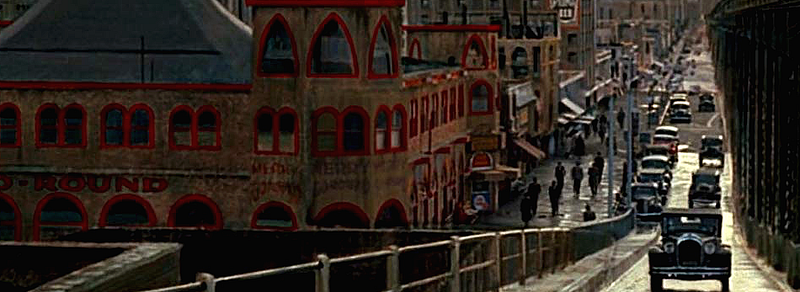
The film is known for being the definitive con artist prototype: as irresistible and ingenious as the scheme that hooks in its antagonist which makes it as audacious as it is elaborate. Director George Roy Hill brings a sly heist-style caper that joyously relives the 1930s with the inspired reshaping of Scott Joplin’s ragtime compositions which in lesser hands could easily have come across as cheesy and regressive. But it doesn’t, which is largely a tribute to the light touch of the versatile Hill, who keeps the proceedings moving along briskly while cashing in on the individual charms and performances of Paul Newman and Robert Redford and their strong chemistry between them in this breezy, charming and old-fashioned escapism archetypal. The film’s story was created by David S. Ward, inspired by real-life cons perpetrated by brothers Fred and Charley Gondorff and documented by David Maurer in his novel “The Big Con: The Story of the Confidence Man,” it received rave reviews overall with some criticisms, it’s since though has become one of cinema’s most beloved heist films of all-time, in addition to being widely considered one fo the greatest films of all-time.
Here’s what some of the critical receptions have been for the film over the years:
Kathleen Carroll from New York Daily News says: “As for Newman and Redford, they have developed a form of instant communication. Words are not as important as they way they look at each other. Call it as snow job or call it acting, it is very pleasing to watch.”
Roger Ebert from Chicago Sun-Times says: “‘The Sting’ is one of the most stylish movies. Hill gently kids the 1930s with his slight exaggerations of fashions and styles. He tells his story episodically, breaking the movie down into the various plateaus of the con game. And he’s awfully good at maintaining a kind of off-balance pacing; we can never quite pin Newman and Redford down.”
Jay Cocks from TIME Magazine says: “Paul Newman and Robert Redford pass a few facial expressions between them and try to cool each other out. If there ever was much of a script, it can be said to have gone to waste.”
Chris Petit from Time Out says: “The film ends up relying on different chapter headings to explain what’s going on, but it’s all very professional, with fine attention to period detail.”
A.D. Murphy from Variety says: “‘The Sting’ has all the signs of a blockbuster. Paul Newman and Robert Redford are superbly re-teamed. George Roy Hill’s outstanding direction of David S. Ward’s finely crafted story of multiple deception and surprise ending will delight both mass and class audiences. Extremely handsome production values and a great supporting cast round out the virtues.”
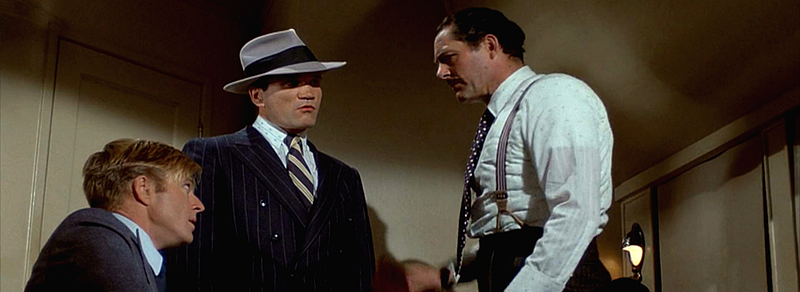
As you can tell by the critical reactions, the film received enthusiastic critical acclaim despite some pundits feeling it was overlong and even, overrated to a few because of its unconvincing formula that relies heavily on star power. But this smart, stylish crime film is a masterfully calibrated machine designed to be as entertaining as possible in as many ways as possible, but the real pleasures come from the undeniably charismatic chemistry between Newman and Redford, the beautifully created 1930s settings and the inspired reworking of Scott Joplin’s music in this stylized, cunning, crafty and quintessential con playing caper classic. But I’ll let you decide…
So, to get a better look at the film, here’s a link to the movie trailer of George Roy Hill’s “The Sting”:
Here I have provided 12 interesting and intriguing trivia facts (I wanted to keep it limited) about “The Sting”:
- Screenwriter David S. Ward has said in an interviews that he was inspired to write the film while doing research on pickpockets, stating “Since I had never seen a film about a confidence man before, I said I gotta do this.” Daniel Eagan explained: “One key to plots about con men is that film goers want to feel they are in on the trick. They don’t have to know how a scheme works, and they don’t mind a twist or two, but it’s important for the story to feature clearly recognizable ‘good’ and ‘bad’ characters.” It took a year for Ward to correctly adjust this aspect of the script and to figure out how much information he could hold back from the audience while still making the leads sympathetic. He also imagined an underground brotherhood of thieves who assemble for a big operation and then melt away after the “mark.”
- Filmmaker Rob Cohen years later told of how he found the script in the slush pile when working as a reader for Mike Medavoy, a future studio head, but then an agent. He wrote in his coverage that it was “the great American screenplay and…will make an award-winning, major-cast, major-director film.” Medavoy said that he would try to sell it on that recommendation, promising to fire Cohen if he could not. Universal bought it that afternoon, and Cohen has kept the coverage framed on the wall of his office.
- David Maurer sued for plagiarism, claiming the screenplay was based too heavily on his 1940 novel “The Big Con,” about real-life tricksters Fred and Charley Gondorff. Universal quickly settled out of court for $300,000, irking David S. Ward, who had used many nonfiction books as research material and had not really plagiarized any of them.
- David S. Ward originally wrote the character Henry Gondorff as a minor character who was an overweight, past one’s prime slob, but once Paul Newman became associated with the film, Gondorff was rewritten as a slimmer character and his part was expanded in order to maximize the second partnership of Newman and Robert Redford. Interestingly enough, Newman had been advised to avoid doing comedies because he didn’t have the light touch, but accepted the part to prove that he could handle comedy just as well as drama.
- In her 1991 autobiography “You’ll Never Eat Lunch in This Town Again,” Julia Phillips stated that filmmaker George Roy Hill wanted Richard Boone to play Doyle Lonnegan. Much to her relief, Paul Newman had sent the script to Robert Shaw while filming “The Mackintosh Man” (1973) in Ireland to ensure his participation in the film. Philips’s autobiography asserts that Shaw was not nominated for an Academy Award for Best Supporting Actor because he demanded that his name follow those of Newman and Robert Redford before the film’s opening title.
- Robert Shaw’s character’s limping in the film was authentic. Shaw had slipped on a wet handball court at the Beverly Hills Hotel a week before filming began and had injured the ligaments in his knee. He wore a leg brace during production which was hidden under the wide 1930s style trousers.
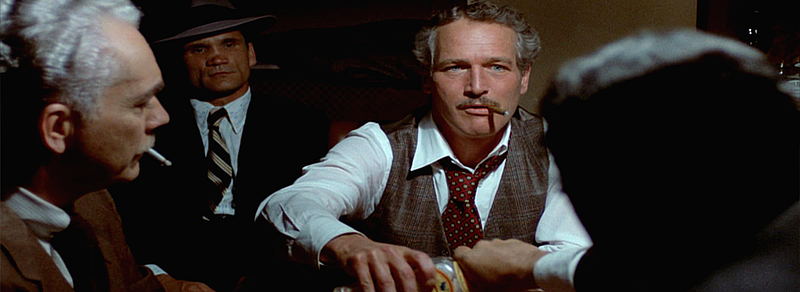
- George Roy Hill decided that the film would be reminiscent of films from the 1930s and watched films from that decade for inspiration. While studying ‘30s gangster films, Hill noticed that most of them rarely had extras. “For instance,” said Hill as quoted in Andrew Horton’s 1984 novel “The Films of George Roy Hill,” “no extras would be used in street scenes in those films: Jimmy Cagney would be shot down and die in an empty street. So I deliberately avoided using extras.”
- Along with art director Henry Bumstead and cinematographer Robert L. Surtees, Hill devised a color scheme of muted browns and maroons for the film and a lighting design that combined old-fashioned 1930s-style lighting with some modern tricks of the trade to get the visual look he wanted. Edith Head designed a wardrobe of snappy period costumes for the cast, and artist Jaroslav Gebr created inter-title cards to be used between each section of the film that were reminiscent of the golden glow of old Saturday Evening Post illustrations — a popular publication of the 1930s.
- The film was mostly shot on the backlot of Universal Studios and the diner in which Johnny Hooker (played by Robert Redford) meets Doyle Lonnegan (played by Robert Shaw) is the same diner interior used in “Back to the Future” (1985).
- Jack Nicholson turned down the role of Johnny Hooker before Robert Redford changed his mind and decided to play it.
- When George Roy Hill first approached composer Marvin Hamlisch to adapt Scott Joplin’s music for the score, Hamlisch was reluctant. He was a composer of original music, after all, and not in the habit of adapting other musicians’ work. “I agreed to see a first cut in the screening room,” said Hamlisch in his 1992 autobiography “The Way I Was.” “I quickly realized that this was one of the best pictures I had seen in years…David Ward had written a witty, stylish script, George Roy Hill had directed it faultlessly, and Newman and Redford were the best screen couple in years…One of the things that drew me to The Sting was that George had been shrewd enough to leave little oases without dialogue for the music. He built montages and sequences into the picture for this purpose. Whenever I see patches in a film that are talkless, I’m in heaven.” Hamlisch agreed to take on the job.
- Robert Redford confessed that he didn’t see the film until June 2004.
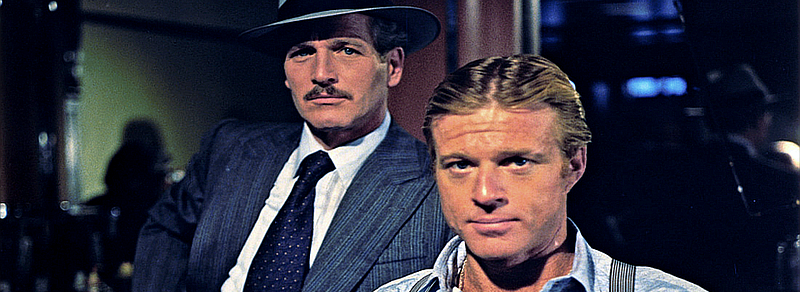
To conclude, George Roy Hill’s “The Sting” refers to the moment when a con artist finishes the “play” and takes the mark’s money. If a con is successful, the mark does not realize he has been cheated until the con men are long gone as this American Borsalino, deceives persuasively with sharp and clever dialogue, directed at a fine pace and with a distinctly visual eye for period detail by George Roy Hill who works in many old-fashioned elements into his direction from the gangster films of the 1930s. This deftly smooth grift that’s built on golden-age savvy, polished bad boy stylization and complexing plotted twists pulled in the punters, as the star wattage of Paul Newman and Robert Redford provide the real sting that’s only aided by the handsome production values, a solidified supporting cast led by Robert Shaw and the revamped Scott Joplin ragtime rhapsodies in this characteristically dapper, shrewdly shifty, astutely clever and a double-dealing dupe of a gold brick pioneer masterwork.
NOTE: The article contains sources from IMDb and Wikipedia.
Follow me and check out other articles of mine: