
A FILM TO REMEMBER: “ANGELS WITH DIRTY FACES” (1938)
Before I get into this, I want to make mention “A FILM TO REMEMBER” will be a series about films that have reached a milestone anniversary since their origin in being culturally, historically, or aesthetically significant. The articles will contain the film’s plot outline, director, cast, a compilation of trivialities, various photos, movie trailer, critical reception and more. So, let’s start:
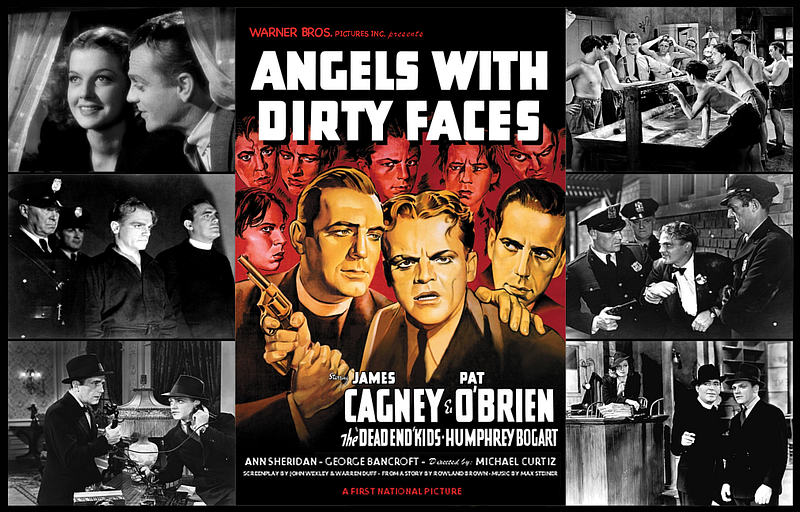
We are here to mark the celebration of the 80th Anniversary of Michael Curtiz’s “Angels with Dirty Faces”. Let’s take an inside look at the film:
PLOT OUTLINE:
The story chronicles the fictional rise and fall of the notorious gangster William “Rocky” Sullivan. After spending three years in prison for armed robbery, Rocky intends to collect $100,000 from his co-conspirator, mob lawyer Jim Frazier. All the while, Father Jerry Connolly tries to prevent a group of youths from falling under Rocky’s influence.
STUDIO:
Warner Bros. Pictures
DIRECTOR:
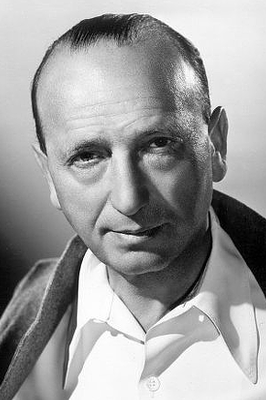
Michael Curtiz
CAST:
- James Cagney … William “Rocky” Sullivan
- Pat O’Brien … Jerry Connolly
- Humphrey Bogart … Jim Frazier
- Ann Sheridan … Laury Martin
- George Bancroft … Mac Keefer
- Billy Halop … Soapy (as The “Dead End” Kids)
- Bobby Jordan … Swing (as The “Dead End” Kids)
- Leo Gorcey … Bim (as The “Dead End” Kids)
- Gabriel Dell … Pasty (as The “Dead End” Kids)
- Huntz Hall … Crab (as The “Dead End” Kids)
- Bernard Punsly … Hunky (as The “Dead End” Kids)
- Joe Downing … Steve
- Edward Pawley … Edwards
- Adrian Morris … Blackie
- Frankie Burke … William “Rocky” Sullivan — Child
- William Tracy … Jerry Connolly — Child
- Marilyn Knowlden … Laury Martin — Child
- The Robert Mitchell Boy Choir … Saint Brendan’s Church Choir
GENRE(S):
Crime | Drama | Film-Noir | Thriller
TAGLINE:
A Big Time Cast in a Big City Drama Destined to be the Biggest Hit in Years!
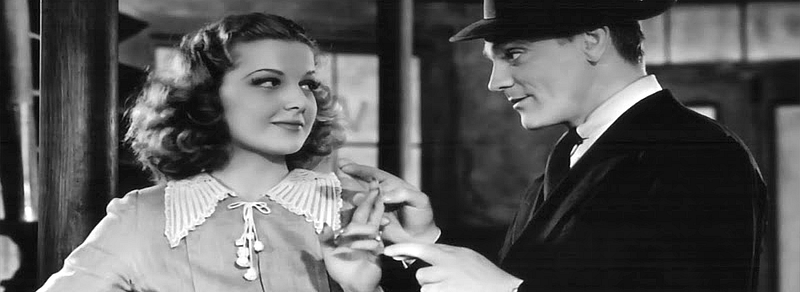
The film is known for being a prime archetype of a Warner Bros. gangster/crime melodrama of the 30s and 40s. Director Michael Curtiz establishes a fine sense of visual rhythm balancing the hard-bitten gangster dramatics with a warmly stage-managed religiosity in giving us an entertaining and yet, analytical morality story with an esteemed ensemble cast anchored by a rivetingly legendary performance by James Cagney in this stylistically sharp, vital and fierce, machine gun firing tour de force. The film is based from a story by Rowland Brown, it was critically lauded overall with some minor nitpick criticism but the film is widely regarded as one of the best gangster films of all time; one of the best in Cagney’s career and with many claiming it as one of the best exemplar films in American cinema.
Here’s what some of the critical receptions have been for the film over the years:
Frank Nugent from New York Times says: “‘Angels with Dirty Faces’ is a powerful and savage gangster melodrama that offers James Cagney at his best.”
Noel Murray from A.V. Club says: “James Cagney’s magnetism stems from his note-perfect combination of broad gestures and subtle shifts of posture, but the keen eye of his director (Curtiz) is what makes his gangster picture classic.”
Variety Staff from Variety says: “On the strength of the Cagney-O’Brien combo, [Angels with Dirty Faces] should do fair business, but the picture itself is no bonfire. That cowardice angle is thoroughly hokey, [and the] Dead End’ kid story has already been told too many times.”
Emanuel Levy from EmanuelLevy.com says: “James Cagney is in top form as a gangster with redeeming qualities in this well-directed, picture from Michael Curtiz; O’Brien and Bogart are also good.”
Jeremiah Kipp from Slant Magazine says: “‘Angels with Dirty Faces’ benefits from the Production Code because it forces the gangster film to acknowledge its nihilism.”
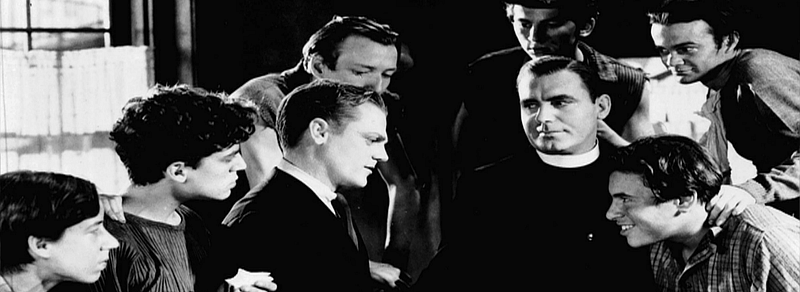
As you can tell by the critical reactions, the film was almost universally commended though it did have a few less enthused about its cowardice climatic approach and the Dead End Kids’ premise having been done many times before it. Consensually however, many felt the cowardice climax angle is unparalleled in its genre as it reduces the hero worship of gangsters to nothing and while the film trades heavily on gang-film staples, there’s also ample comedy packed into the mix that’s visually blended and guided by Curtiz and aided by a top-of-the-line cast particularly from James Cagney with a brilliantly embodying performance in one of the most thrillingly powerful and savagely hard-hitting gangster films in the annals of cinema. But I’ll let you decide…
So, to get a better look at the film, here’s a link to the movie trailer of Michael Curtiz’s “Angels with Dirty Faces”:
Here I have provided 12 interesting and intriguing trivia facts (I wanted to keep it limited) about “Angels with Dirty Faces”:
- The story was written by Rowland Brown as a project for James Cagney at Grand National Pictures, the independent studio Cagney had signed with in 1936 after winning a breach-of-contract suit against Warner Bros. The original plan had been for Brown to write the full script and direct the film, but when Warners won back Cagney’s contract on appeal they bought Brown’s story for Cagney but assigned John Wexley and Warren Duff to do the screenplay and Michael Curtiz to direct.
- The Dead End Kids terrorized the set during shooting. They threw other actors off with their ad-libbing, and once cornered co-star Humphrey Bogart and stole his trousers. They didn’t figure on James Cagney’s street-bred toughness, however. James Cagney’s opening scene with The Dead End Kids took place in the basement of a deserted building. By this time they had been throwing their weight around quite a bit with other directors and actors on the lot. As the scene was being shot, Leo Gorcey jokingly ad-libbed He’s “psychic!”, throwing the rhythm of the scene right out the window. In the next take, just before he said, “Come here, suckers,” Cagney stiff-armed Gorcey right above the nose. His head went back and hit the kid behind him, stunning them both momentarily. From then on the gang behaved. Huntz Hall witnessed the incident and talked about it for many years afterwards.
- Some segments of this movie were remade and modified for the feature film “Home Alone” (1990) and its sequel. In the two films, Kevin watches them as “Angels with Filthy Souls” and “Angels with Even Filthier Souls”.
- To play Rocky, James Cagney drew on his memories of growing up in New York’s Yorkville, a tough ethnic neighborhood on the upper east side, just south of Spanish Harlem. His main inspiration was a drug-addicted pimp who stood on a street corner all day hitching his trousers, twitching his neck, and repeating, “Whadda ya hear! Whadda ya say!” Those mannerisms came back to haunt Cagney. He later wrote in his autobiography, “I did those gestures maybe six times in the picture. That was over 30 years ago — and the impressionists have been doing me doing him ever since.”
- A montage features a shot of gangsters bombing a storefront. This shot is actually an alternate angle of the bombing of a store in “The Public Enemy” (1931).
- Because of the controversy over gangster films, the picture was banned outright in Denmark, China, Poland, Finland and parts of Canada and Switzerland.
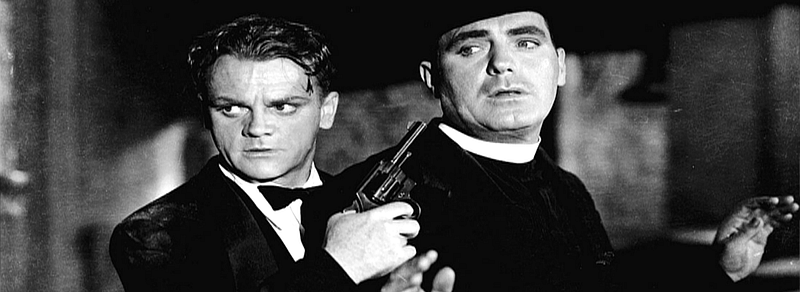
- While filming Rocky’s shootout with the police, one scene called for James Cagney to be right at the opening as machine-gun bullets took out the windows above his head. At this point in his career Cagney had experience with the unpredictability of using live gunfire and he later recalled that “common sense or a hunch” made him wary about the upcoming scene, and he finally decided to tell director Michael Curtiz to shoot the scene in process. As Cagney walked away, the professional machine-gunner — a man named Burke — fired the shots. One of the bullets ricocheted, hitting the steel edge of the window and going right through the wall where Cagney’s head had been. This experience convinced Cagney “flirting this way with real bullets was ridiculous”.
- The moment in which Rocky forces a trailing hood to take his place inside the phone booth in the pharmacy to get killed was inspired by the death of New York gangster Vincent “Mad Dog” Coll. In the real incident, Coll was locked in a gang war with Dutch Schultz. During the war, Coll hid in an apartment above a pharmacy and would only come out to go into the pharmacy and call his girlfriend from the phone booth. Schultz found out about this and when Coll went to make his routine phone call, two of Schultz’s gunmen walked in and shot Coll to death.
- James Cagney’s other inspiration for Rocky was his childhood friend, Peter “Bootah” Hessling, who was convicted of murder and “sent to the electric chair” on July 21, 1927. The night Bootah was executed, Cagney was playing in a Broadway show and wept upon hearing of his friend’s death.
- When James Cagney was offered the film, his agent was convinced that he would never agree to play the role of an “abject coward” being dragged to his execution. Cagney, however, was enthusiastic about the chance to play Rocky. He saw it as an opportunity to prove that he had a broad acting range that extended beyond “tough guy” roles.
- Analysts claims that if it weren’t for this film and two other films directed by Michael Curtiz that year, “The Adventures of Robin Hood” (1938) and “Four Daughters” (1938), Warner Bros. would have lost a considerable amount of money, resulting in negative turnover for the company’s 1938 fiscal year.
- For years, viewers have wonder whether or not “Rocky” Sullivan (played by James Cagney) really turned yellow as he was being strapped into the electric chair. Some have wondered if he was faking it in order to keep his promise to Father Jerry Connelly (played by Pat O’Brien). When asked about the scene years later, Cagney says he chose to play it in such a way so that the audience could make their own decisions as to whether or not he was faking.
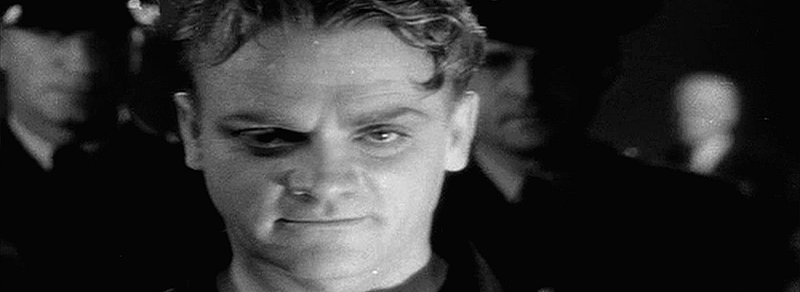
To conclude, Michael Curtiz’s “Angels with Dirty Faces” warns against the tendency of wild youth to admire gangsters who make money by violence; but the consequences make clear that such crimes often lead to prison or a violent death. Michael Curtiz directs with a remarkable craftsmanship that’s heavily influenced by German expressionism but never so much that it feels leaden and thick, but keeps things flowing and poignant in focusing on the effect of the crime and not the actions of it; with a solidified cast that’s led by James Cagney in a strikingly powerhouse performance and a climatic conclusion that’s unprecedented in the iconography of gangster cinema in this fast-talking, swagger inspiring, pugnacious spontaneity of a gun-toting, fates riddled with bullets, touchstone classic.
NOTE: The article contains sources from IMDb and Wikipedia.
Follow me and check out other articles of mine: