
A FILM TO REMEMBER: “THE DEER HUNTER” (1978)
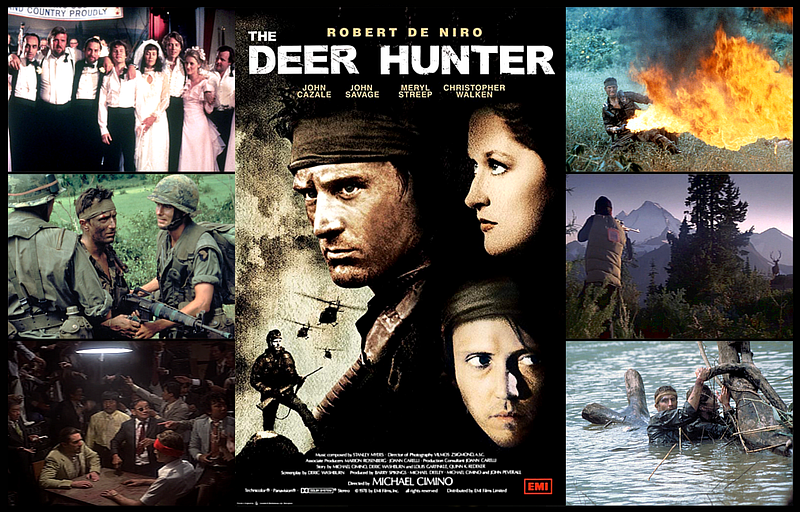
Before I get into this, I want to make mention “A FILM TO REMEMBER” will be a series about films that have reached a milestone anniversary since their origin in being culturally, historically, or aesthetically significant. The articles will contain the film’s plot outline, director, cast, a compilation of trivialities, various photos, movie trailer, critical reception and more. So, let’s start:
We are here to mark the celebration of the 40th Anniversary of Michael Cimino’s “The Deer Hunter”. Let’s take an inside look at the film:
PLOT OUTLINE:
An in-depth examination of the ways in which the Vietnam War impacts and disrupts the lives of people in a small industrial town in Pennsylvania.
STUDIO:
Universal Pictures
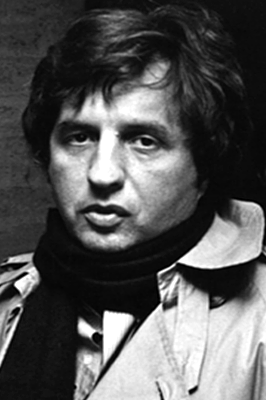
DIRECTOR:
Michael Cimino
CAST:
- Robert De Niro … SSG Michael “Mike” Vronsky
- Christopher Walken … Cpl. Nikanor “Nick” Chevotarevich
- John Savage … Cpl. Steven Pushkov
- John Cazale … Stan — “Stosh”
- Meryl Streep … Linda
- George Dzundza … John Welsh
- Pierre Segui … Julien Grinda
- Shirley Stoler … Steven’s Mother
- Chuck Aspegren … Peter “Axel” Axelrod
- Rutanya Alda … Angela Ludhjduravic-Pushkov
- Mady Kaplan … Axel’s Girl
- Amy Wright … Bridesmaid
- Mary Ann Haenel … Stan’s Girl
- Richard Kuss … Linda’s Father
- Joe Grifasi … Bandleader
- Christopher Colombi Jr … Wedding Man
- Victoria Karnafel … Sad Looking Girl
- Jack Scardino … Cold Old Man
- Joe Strnad … Bingo Caller
- Helen Tomko … Helen
- Paul D’Amato … Sergeant
- Dennis Watlington … Cab Driver
- Charlene Darrow … Red Head
- Jane-Colette Disko … Girl Checker
- Michael Wollet … Stock Boy
- Robert Beard … World War Veteran
- Joe Dzizmba … World War Veteran
- Stephen Kopestonsky … Priest
- John F. Buchmelter III … Bar Patron
- Frank Devore … Barman
- Tom Becker … Doctor
- Lynn Kongkham … Nurse
- Nongnuj Timruang … Bar Girl
- Po Pao Pee … Chinese Referee
- Dale Burroughs … Embassy Guard
- Parris Hicks … Sergeant
- Samui Muang-Intata … Chinese Bodyguard
- Sapox Colisium … Chinese Man
- Vitoon Winwitoon … NVA Officer
- Somsak Sengvilai … V.C. Referee
- Charan Nusvanon … Chinese Boss
- Jiam Gongtongsmoot … Chinese Man At Door
- Chai Peyawan … South Vietnamese Prisoner
- Mana Hansa … South Vietnamese Prisoner
- Sombot Jumpanoi … South Vietnamese Prisoner
- Phip Manee … Woman In Village
- Ding Santos … V.C. Guard
- Krieng Chaiyapuk … V.C. Guard
- Ot Palapoo … V.C. Guard
- Chok Chai Mahasoke … V.C. Guard
GENRE(S):
Drama | War
TAGLINE:
One of the most important and powerful films of all time!
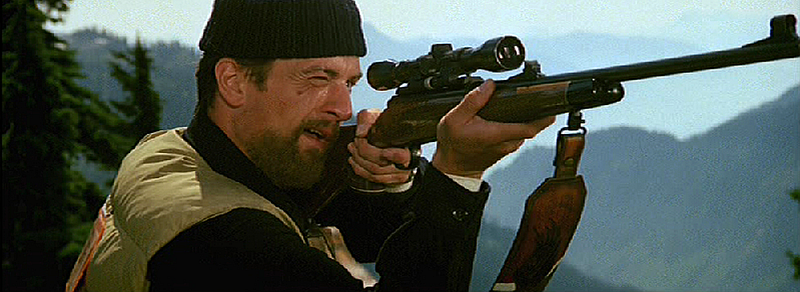
The film is known for being a dubious and visceral narrative that speaks volumes about the horrors of war and its impact on the lives involved that’s an experience both simultaneously touching and harrowing in its portrayal. Director Michael Cimino manages to fluctuate in between cynicism and compassion in bringing the emotional, home front legacy of the Vietnam War vividly to life with a principal cast of heartrending performances by Robert De Niro, Christopher Walken, Meryl Streep, John Cazale and John Savage in this powerful, disturbing and ugly reality of war exemplar. The film is based in part on an unproduced script called “The Man Who Came to Play” by Louis Garfinkle and Quinn K. Redeker, about Las Vegas and Russian roulette. When producer Michael Deeley bought the script, authorizing a rewrite by Cimino and co-screenwriter Deric Washburn, taking the Russian roulette element and placed it in the Vietnam War, it was initially received with a positive reception though not without various critical and controversial backlash but the film has contentiously garnered in becoming known as one of the greatest war films as well as one of the greatest films of all-time.
Here’s what some of the critical receptions have been for the film over the years:
James Berardinelli from ReelViews says: “While its fair to argue ‘The Deer Hunter’ contains moments of brilliance, the film as a whole is undone by its length.”
Pauline Kael from The New Yorker says: “It has no more moral intelligence than the Clint Eastwood action pictures, yet it’s an astonishing piece of work, an uneasy mixture of violent pulp and grandiosity, with an enraptured view of common life — poetry of the commonplace.”
Jonathan Rosenbaum from Chicago Reader says: “A disgusting account of what the evil Vietnamese did to poor, innocent Americans stands at the center of this Oscar-laden weepy about macho buddies from a small industrial town.”
Frank Rich from TIME Magazine says: “This excruciatingly violent, three-hour Vietnam saga demolishes the moral and ideological cliches of an era: it shoves the audience into hell and leaves it stranded without a map.”
Kathleen Carroll from New York Daily News says: “In trying to measure the devastating impact of Vietnam on the lives of three American soldiers, Cimino brings home the true horror of that senseless conflict in a way that the 6 O’Clock News never could.”
As you can tell by the critical reactions, the film was lauded overall but criticized for being overlong and one-sided point of view, though controversy of the Vietcong’s use of Russian roulette with POWs, was highly chided by certain pundits as being contrived and unrealistic since there were no documented cases of Russian roulette in the Vietnam War. However, Cimino defended his position by stating that he had news clippings from Singapore that confirm Russian roulette was used during the war (without specifying which article). Despite the contended matters in the content, it was all overpowered by the saga’s penetrating scope and ambition with Cimino’s sympathetic direction that is nonetheless an effective chronicle of the impact of Vietnam on a clique of close friends, displayed through the stirringly primary performances of De Niro, Walken, Streep, Cazale and Savage in this emotionally devastating meditation on war, masculinity and the human psyche of a cinema classic. But I’ll let you decide…
So, to get a better look at the film, here’s a link to the movie trailer of Michael Cimino’s “The Deer Hunter”:
Here I have provided 12 interesting and intriguing trivia facts (I wanted to keep it limited) about “The Deer Hunter”:
- There has been considerable debate, controversy and conflicting stories about how the film was initially developed and written. Director and co-writer Michael Cimino, writer Deric Washburn, and producers Barry Spikings and Michael Deeley all have different versions of how the film came to be.
- In 1968, the record company EMI formed a new company called EMI Films, headed by producers Barry Spikings and Michael Deeley. Deeley purchased the first draft of a spec script called “The Man Who Came to Play,” written by Louis Garfinkle and Quinn K. Redeker, for $19,000. The spec script was about people who go to Las Vegas to play Russian roulette. “The screenplay had struck me as brilliant,” wrote Deeley, “but it wasn’t complete. The trick would be to find a way to turn a very clever piece of writing into a practical, realizable film.” When the film was being planned during the mid-1970s, Vietnam was still a taboo subject with all major Hollywood studios. According to producer Michael Deeley, the standard response was “no American would want to see a picture about Vietnam”.
- After consulting various Hollywood agents, Michael Deeley found writer-director Michael Cimino, represented by William Morris Agency. Deeley was impressed by Cimino’s TV commercial work and crime film “Thunderbolt and Lightfoot” (1974). Cimino himself was confident that he could further develop the principal characters of “The Man Who Came to Play” without losing the essence of the original. After Cimino was hired, he was called into a meeting with Louis Garfinkle and Quinn K. Redeker at the EMI office. According to Deeley, Cimino questioned the need for the Russian roulette element of the script, but Redeker made such a passionate case for it that Cimino ended up literally on his knees. Through further meetings, Cimino and Deeley discussed the work needed at the front of the script, Cimino believed he could develop the stories of the main characters in the first 20 minutes of film.
- Michael Cimino worked for 6 weeks with Deric Washburn on the script. Cimino and Washburn had previously collaborated with Stephen Bochco on the screenplay for “Silent Running” (1972). According to producer Barry Spikings, Cimino said he wanted to work again with Washburn. According to producer Deeley, he only heard from office rumor that Washburn was contracted by Cimino to work on the script. “Whether Cimino hired Washburn as his sub-contractor or as a co-writer was constantly being obfuscated,” wrote Deeley, “and there were some harsh words between them later on, or so I was told.”
- According to Michael Cimino, he would call Deric Washburn while on the road scouting for locations and feed him notes on dialogue and story. Upon reviewing Washburn’s draft, Cimino said, “I came back, and read it and I just could not believe what I read. It was like it was written by somebody who was…mentally deranged.” Cimino confronted Washburn at the Sunset Marquis in LA about the draft, and Washburn supposedly replied that he couldn’t take the pressure and had to go home. Cimino then fired Washburn. Cimino later claimed to have written the entire screenplay himself. Washburn’s response to Cimino’s claims were, “It’s all nonsense. It’s lies. I didn’t have a single drink the entire time I was working on the script.”
- Michael Deeley felt the revised script, now called “The Deer Hunter,” broke fresh ground for the project. The protagonist in the Quinn K. Redeker and Louis Garfinkle script, Merle, was an individual who sustained a bad injury in active service and was damaged psychologically by his violent experiences, but was nevertheless a tough character with strong nerves and guts. Cimino and Washburn’s revised script distilled the 3 aspects of Merle’s personality and separated them out into 3 distinct characters. They became 3 old friends who grew up in the same small industrial town and worked in the same steel mill, and in due course were drafted together to Vietnam. In the original script, the roles of Merle which was later renamed Mike (played by Robert De Niro) and Nick (played by Christopher Walken) were reversed in the last half of the film. Nick returns home to Linda (played by Meryl Streep), while Mike remains in Vietnam, sends money home to help Steven (played by John Savage), and meets his tragic fate at the Russian roulette table.
- While producer Michael Deeley was pleased with the revised script, he was still concerned about being able to sell the film. “We still had to get millions out of a major studio,” wrote Deeley, “as well as convince our markets around the world that they should buy it before it was finished. I needed someone with the caliber of Robert De Niro.” De Niro was one of the biggest stars at that time, coming off “Mean Streets” (1973), “The Godfather: Part II” (1974), and “Taxi Driver” (1976). In addition to attracting buyers, Deeley felt De Niro was “the right age, apparently tough as hell, and immensely talented.” Hiring De Niro turned out to be a casting coup because he knew so many actors in New York. De Niro brought on Meryl Streep to the attention of Michael Cimino and Deeley. With Streep came John Cazale who Streep was dating at the time. De Niro also accompanied Cimino to scout locations for the steel mill sequence as well as rehearsed with the actors to use the workshops as a bonding process.
- This was the first feature film depicting the Vietnam War to be filmed on location in Thailand. All scenes were shot on location (no sound stages). “There was discussion about shooting the film on a back lot, but the material demanded more realism,” says Spikings. The cast and crew viewed large amounts of news footage from the war to ensure authenticity. The film was shot over a period of 6 months. The Clairton scenes comprise footage shot in 8 different towns in 4 states: West Virginia, Pennsylvania, Washington and Ohio. The initial budget of the film was $8.5 million but when filming was completed, it had ended up costing $13 million and still had to go through an arduous post-production.
- Meryl Streep accepted the role of the “vague, stock girlfriend,” in order to remain for the duration of filming with John Cazale, who had been diagnosed with terminal lung cancer. Cazale was very weak when filming began, and for this reason, his scenes were filmed first. Michael Cimino knew from the start that Cazale was dying from cancer, but the studio did not. When they found out and he was deemed uninsurable, the studio wanted to replace Cazale. When Streep learned of their intentions, she threatened to quit if they did. Robert De Niro didn’t want Cazale replaced either and put up the money for the insurance for Cazale to stay on. Sadly though, Cazale died shortly after filming was finished, never seeing the completed film.
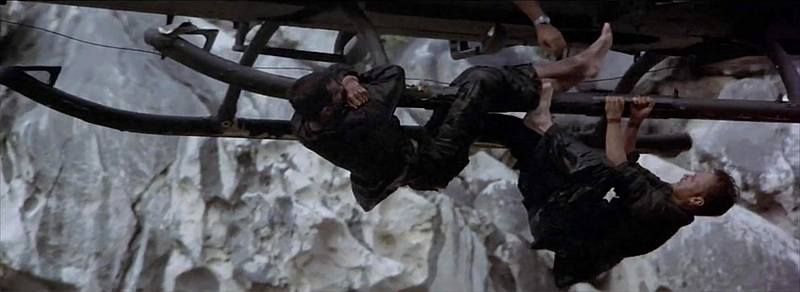
- Robert De Niro and John Savage performed their own stunts in the fall into the river, filming the 30 foot drop 15 times in 2 days. During the helicopter stunt, the runners caught on the rope bridge as the helicopter rose, which threatened to seriously injure De Niro and Savage. The actors gestured and yelled furiously to the crew in the helicopter to warn them. Footage of this is included in the film.
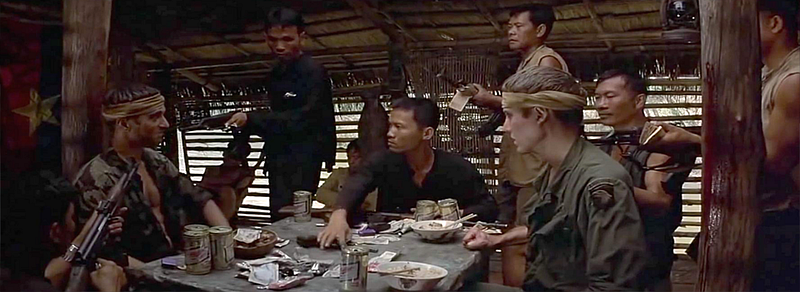
- The Vietcong Russian roulette scenes were shot in real circumstances, with real rats and mosquitoes, the 3 principals (Robert De Niro, Christopher Walken and John Savage) were tied up in bamboo cages erected along the River Kwai. The woman who was given the task of casting the extras in Thailand had much difficulty finding a local to play the vicious-looking individual who runs the game. The first actor hired turned out to be incapable of slapping De Niro in the face. The caster then found a local Thai man with a particular dislike of Americans, and cast him accordingly. De Niro suggested that Walken be slapped for real by one of the guards without any warning. The reaction on Walken’s face was genuine. Producer Michael Deeley has said that Cimino shot the brutal Vietcong Russian roulette scenes brilliantly and more efficiently than any other part of the film.
- Both the long and short versions were previewed to Midwestern audiences, although there are different accounts among Michael Cimino, Michael Deeley and Barry Spikings as to how the previews panned out. Cimino says he bribed the projectionist to interrupt the shorter version, in order to obtain better reviews of the longer one. According to Spikings, Universal executive Lew Wasserman let EMI’s CEO Bernard Delfont decide between the 2 versions and chose Cimino’s longer cut. Deeley claims that the two-and-a-half hour version tested had a better response.
To conclude, Michael Cimino’s “The Deer Hunter” is a rich, haunting and powerful film that’s an American tragedy indebted to Russian literature, alive with detail and ritual and embedded into the souls of men, the heart of a community and the spilled guts of a nation. Michael Cimino helms with an impressive style that’s a blistering and psychologically gripping account of an epic treatise on the malignancy running through American civilian and political life in the 1970s. The film is a lyrical, slow-to-unfold story of the devastating effects of a tour in Vietnam on the close friendship between a group of characters, and their shared association with the people from their small hometown, that is truthful and realistic, hoisted by the deep-rooted performances from Robert De Niro, Christopher Walken, Meryl Streep, John Cazale and John Savage in this heartbreakingly effective, extremely intense, graphically violent and an emotional roulette costs of war, cinematic masterpiece.
NOTE: The article contains sources from IMDb and Wikipedia.
Follow me and check out other articles of mine: