
A FILM TO REMEMBER: “STALAG 17” (1953)
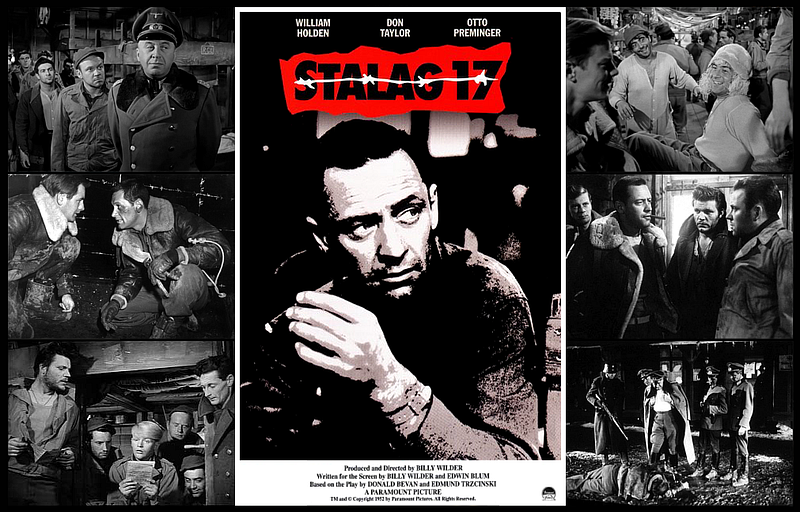
Before I get into this, I want to make mention “A FILM TO REMEMBER” will be a series about films that have reached a milestone anniversary since their origin in being culturally, historically, or aesthetically significant. The articles will contain the film’s plot outline, director, cast, a compilation of trivialities, various photos, movie trailer, critical reception and more. So, let’s start:
We are here to mark the celebration of the 65th Anniversary of Billy Wilder’s “Stalag 17”. Let’s take an inside look at the film:
PLOT OUTLINE:
When two escaping American World War II prisoners are killed, the German POW camp barracks, a black marketeer is suspected of being an informer.
STUDIO:
Paramount Pictures
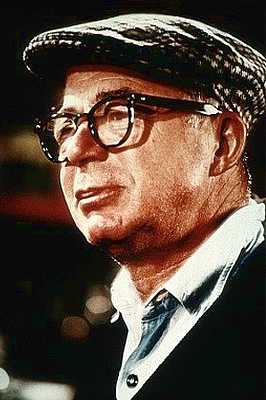
DIRECTOR:
Billy Wilder
CAST:
- William Holden … Sgt. J.J. Sefton
- Don Taylor … Lt. James Dunbar
- Otto Preminger … Col. Oberst von Scherbach
- Robert Strauss … Sgt. Stanislas “Animal” Kuzawa
- Harvey Lembeck … Sgt. Harry Shapiro
- Peter Graves … Sgt. Frank Price
- Sig Ruman … Sgt. Johann Sebastian Schulz
- Neville Brand … Duke
- Richard Erdman … Sgt. “Hoffy” Hoffman
- Michael Moore … Sgt. Manfredi
- Peter Baldwin … Sgt. Johnson
- Robinson Stone … Joey
- Robert Shawley … Sgt. “Blondie” Peterson
- William Pierson … Marko the Mailman
- Gil Stratton … Sgt. Clarence Harvey “Cookie” Cook
- Jay Lawrence … Sgt. Bagradian
- Erwin Kalser … Geneva Man
- Paul Salata … Prisoner with Beard
- Edmund Trzcinski … “Triz” Trzcinski
GENRE(S):
Comedy | Drama | War
TAGLINE:
Hilarious, heart-tugging! You’ll laugh…you’ll cry…you’ll cheer William Holden in his great Academy Award role!
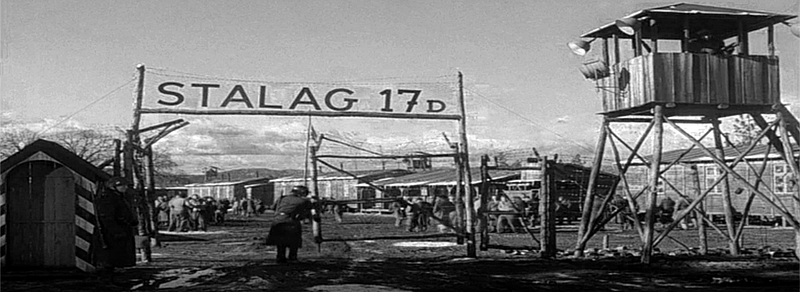
The film is known for being a Prisoner of War story with an offbeat flavor but unlike previous POW films, it presents the prisoners not as paragons of patriotic virtue but as real, self-interested, bored soldiers trying to survive. Director Billy Wilder superbly manages to balance the elements of drama, satire and comedy, and captures the claustrophobia of camp life. This bleak, black comedic war drama is anchored by a noble performance from William Holden and its credible cast in this taut, dramatic, raillery and rowdily filled POW entertaining gem. The film is based from the Broadway play of the same name by Donald Bevan and Edmund Trzcinski, which was based on their experiences as prisoners in Stalag 17B in Austria, it was critically well-received and has since gone on to become among the best World War II Prisoner of War films of all-time.
Here’s what some of the critical receptions have been for the film over the years:
Don Druker from Chicago Reader says: “The resulting letdown is terrific, but along the way there is some of the funniest men-at-loose-ends interplay that Billy Wilder has ever put on film.”
Noel Murray from A.V. Club says: “In the end, ‘Stalag 17’ irreverence likely didn’t revolutionize moviemaking for adults so much as it paved the way for the likes of ‘M*A*S*H’ and ‘Animal House’. Then again, that alone is an achievement worth celebrating.”
James Berardinelli from ReelViews says: “One could make an argument that, among 20th century directors, few were more versatile than Billy Wilder.”
Douglas Pratt from Hollywood Reporter says: “The good greatly outweighs the bad, particularly in the profile of Holden’s character, a pragmatic, self-centered cynic whose heroism, when it is finally called upon, appears to come from deep within the barriers he has placed inside of himself.”
Bosley Crowther from New York Times says: “A cracker jack movie entertainment has been made from Wilder for the greater glory of Paramount and played by an all-male cast of experts, sparked by Holden, Lembeck and Strauss, this film version of the comedy-drama of American airmen in a German prison camp becomes a humorous, suspenseful, disturbing and rousing pastime on the screen.”
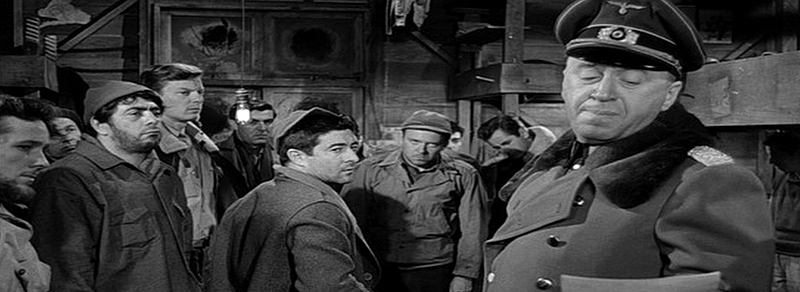
As you can tell by the critical reactions, it was consensually praiseworthy from pundits primarily though some critical reappraisal has found the humor to be out of style per se but this vastly entertaining serio comedic drama set in a POW camp, survives the jump from stage to screen with flying colors. Wilder creates an interesting depiction with a grimly hilarious, subversive and defiant, rough around the edges, and more than a little sad wartime yarn that’s bolstered by Holden with an indelible performance and a top-of-the-line cast in this comic, dramatic, suspenseful and touching in turn of an endeavoring stockade escaping classic. But I’ll let you decide…
So, to get a better look at the film, here’s a link to the movie trailer of Billy Wilder’s “Stalag 17”:
Here I have provided 12 interesting and intriguing trivia facts (I wanted to keep it limited) about “Stalag 17”:
- Charlton Heston was originally considered for the role of Sgt. J.J. Sefton, but when the script was altered to make the character less heroic, he was dropped in favor of someone more suitable for the role. Kirk Douglas stated he was next in line and declined the part, making William Holden the third choice. Douglas came to rue his decision, saying it was the biggest mistake of his career.
- The prison camp set was built on the John Show Ranch in Woodland Hills, California, on the southwestern edge of the San Fernando Valley. The shoot began in February of 1952, the rainy season in California, providing plenty of mud for the camp compound. It is now the location of a meetinghouse of the Church of Jesus Christ of Latter-day Saints.
- In order to keep the actors’ reactions for the film’s plot twists as close to genuine as possible, director Billy Wilder shot the film in chronological order, an unusual practice as that method is more expensive and time-consuming than otherwise. In a featurette made later, members of the cast said that they themselves did not know the identity of the informant until the last 3 days of shooting.
- Peter Graves recalled the film was held from release for over a year due to Paramount Pictures not believing anyone would be interested in seeing a film about prisoners of war. The 1953 release of American POWs from the Korean War led Paramount to release it on an exploitation angle.
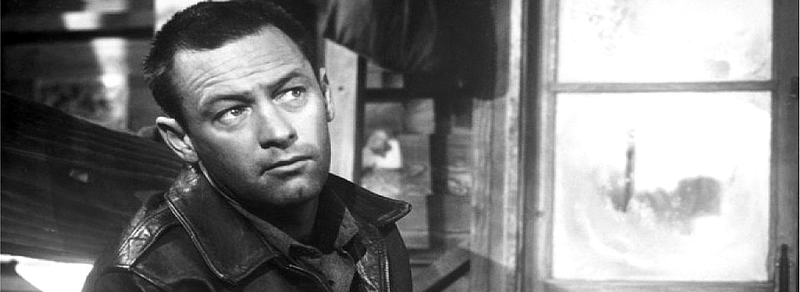
- William Holden did not like the part of Sefton as written, thinking him too selfish. He kept asking Billy Wilder to make Sefton nicer. Wilder refused. Holden actually refused the role but was forced to do it by Paramount Studios. Interestingly enough, although suggestions for making the character of Sefton more palatable were rejected by Wilder, he did allow for a fleeting moment of warmth and humanity in the final scene. As he slips down into the tunnel in the barracks, Sefton says bitterly to the other airmen who had once rejected, accused and beaten him, “If I ever run into any of you bums on a street corner, just let’s pretend we’ve never met before.” That departure seemed too abrupt and anticlimactic, so Wilder had Holden pop back up through the hole, smile, and salute before disappearing again.
- Otto Preminger always claimed that, as a director, he would only shout at actors if they were late or if they did not know their lines. Employed solely as an actor in this film, he told Billy Wilder at the start of filming that if he ever forgot his lines, he would present Wilder with a jar of caviar. Wilder later told interviewers that he soon had dozens of such jars.
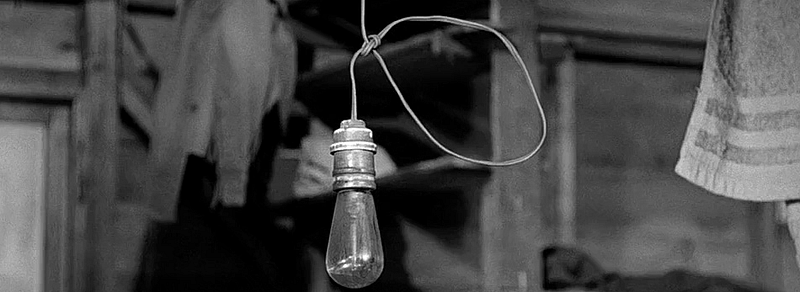
- Things that were more verbal and stage-bound in the original were worked out in more visually innovative ways during shooting. For instance, the discovery of the true informer came about on stage in an overheard conversation. On film, Billy Wilder used the visual clue of the light cord with the loop in it.
- One day during an afternoon break in filming, William Holden “entertained” a young actress in his dressing room. Later that day, while shooting one of the final scenes with Don Taylor in the water tower, he looked down and saw his wife standing on the set with a stricken look on her face. Convinced she had learned about the dressing room incident, he climbed down, certain his marriage was over. He was greatly relieved when he realized she had only come to tell him she had accidentally wrecked their car.
- While filming, Billy Wilder reportedly wore his best shoes to work in the mud. He felt it was only fair, since he was asking his cast and crew to work under filthy, muddy conditions day after day. He even refused to use the planks that were set down for Otto Preminger’s commandant character and as a result ruined his very expensive footwear.
- William Holden threw himself into the role with a great deal of intensity. His hair was cropped into a crewcut and his face unshaven, a look that not only gave the character reality but also undercut the actor’s good looks. Usually friendly and lively on a movie set, he was withdrawn on the Stalag 17 set and complained about the noise and pranks among the rest of the cast, some of whom had an easy camaraderie from more than a year of doing the play on stage. But as his confidence grew in the role, Holden became more at ease, sometimes even frivolous, on the set.
- To improve the chances for commercial success in West Germany (at that time already an important market for Hollywood) a Paramount executive suggested to Billy Wilder that he should make the camp guards Poles rather than Germans. Wilder, whose mother and stepfather had died in the concentration camps, furiously refused and demanded an apology from the executive. When it didn’t come, Wilder did not extend his contract at Paramount.
- This film was one of the biggest hits of Billy Wilder’s career. He expected a big piece of the profits from the film. The studio accountants, however, informed Wilder that since his last film “Ace in the Hole” (1951) lost money, the money that picture lost would be subtracted from his profits on this film. Wilder left Paramount shortly after that.
To conclude, Billy Wilder’s “Stalag 17” is a lusty comedic melodrama, loaded with bold, masculine humor and as much of the original’s uninhibited earthiness as good taste and the Production Code permit. Billy Wilder’s typical sterling direction provides a cynical take on war despite one tending to forget just how humorous it is by the way it cuts tension with incisive wit and barely controlled silliness (like many of Wilder’s films) but it doesn’t ennoble the characters or often bring out the best in them as it produces a film that is certainly wittier but may not be really representative of life in a POW camp. While this is no campy farce, the desperation here is real, as it accurately reflects and preserves the blend of anxiety and defiance as it realistically paints a picture of the prisoners as not just saintly beings but as bored and deprived men subject to fits of frustration — all displayed by the ranking cast and particularly, the bravado performance from William Holden in this treacherously thrilling, cynically melodramatic, breezily comedic and claustrophobic barracks of a subtle and yet, potently cruder master work.
NOTE: The article contains sources from IMDb and Wikipedia.
Follow me and check out other articles of mine:


