
A FILM TO REMEMBER: “THE REMAINS OF THE DAY” (1993)
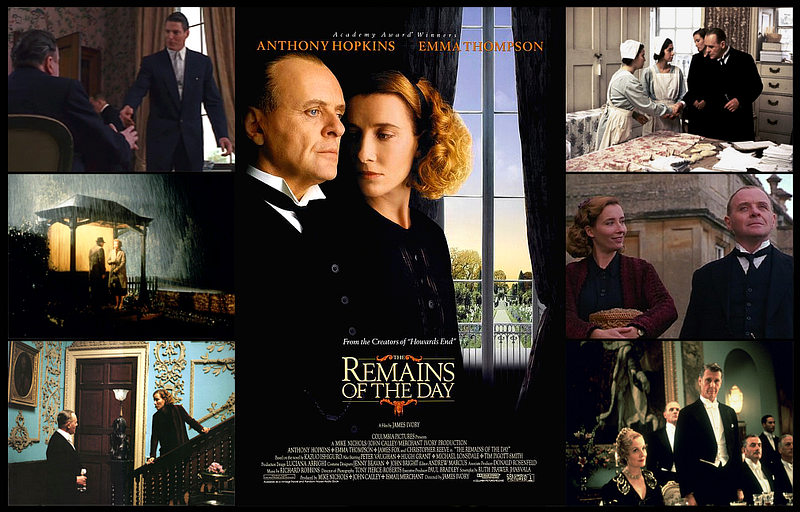
Before I get into this, I want to make mention “A FILM TO REMEMBER” will be a series about films that have reached a milestone anniversary since their origin in being culturally, historically, or aesthetically significant. The articles will contain the film’s plot outline, director, cast, a compilation of trivialities, various photos, movie trailer, critical reception and more. So, let’s start:
We are here to mark the celebration of the 25th Anniversary of James Ivory’s “The Remains of the Day”. Let’s take an inside look at the film:
PLOT OUTLINE:
A butler who sacrificed body and soul to service in the years leading up to World War II realizes too late how misguided his loyalty was to his lordly employer.
STUDIO:
Columbia Pictures
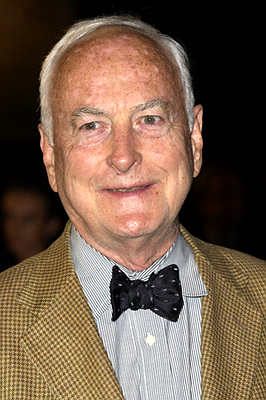
DIRECTOR:
James Ivory
CAST:
- Anthony Hopkins … Mr. James Stevens
- Emma Thompson … Miss Sarah “Sally” Kenton
- James Fox … Lord Darlington
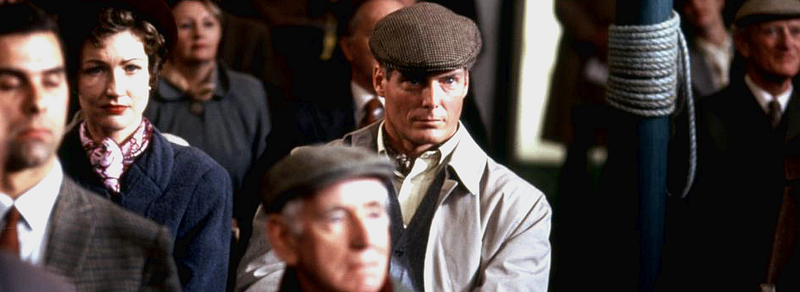
- Christopher Reeve … Congressman Jack Lewis
- Peter Vaughan … Mr William Stevens
- Hugh Grant … Reginald Cardinal
- John Haycraft … Auctioneer
- Caroline Hunt … Landlady
- Michael Lonsdale … Dupont d’Ivry
- Paula Jacobs … Mrs Mortimer, the Cook
- Ben Chaplin … Charlie, Head Footman
- Steve Dibben … George, Second Footman
- Abigail Harrison … Housemaid
- Rupert Vansittart … Sir Geoffrey Wren
- Patrick Godfrey … Spencer
- Peter Halliday … Canon Tufnell
- Peter Cellier … Sir Leonard Bax
- Frank Shelley … Prime Minister Neville Chamberlain
- Peter Eyre … Lord Halifax
- Terence Bayler … Trimmer
- Hugh Sweetman … Scullery Boy
- Tony Aitken … Postmaster
- Emma Lewis … Elsa
- Joanna Joseph … Irma
- Tim Pigott-Smith … Tom Benn
- Lena Headey … Lizzie
- Paul Copley … Harry Smith
- Ian Redford … Publican
- Jo Kendall … Publican’s Wife
- Steven Beard … Andrews
- Pip Torrens … Doctor Carlisle
- Brigitte Kahn … German Baroness
- John Savident … Doctor Meredith
- Wolf Kahler … German Ambassador Joachim von Ribbentrop
GENRE(S):
Drama | Romance
TAGLINE:
N/A
The film is known for being a smoothly crafted, adult drama of unrequited love about pride, loyalty and perceptions with a narrative structure mostly presented in flashbacks that moves rather slowly but builds up to a climax that is woefully sorrowful. Director James Ivory has intelligently presented a subtle, uncompromising, thoughtful melodrama and sociological study that’s hosted with fine exquisite performances by Emma Thompson, James Fox and particularly, the touchingly repressed Anthony Hopkins in this moving, sharp, autocracy and the stiff upper lip British classic. The film is based from the Booker Prize-winning novel of the same name by Kazuo Ishiguro, it received a critically positive reception with only minor nitpicks against it but has gone on in becoming a quintessential treasure of British cinematic vintage.
Here’s what some of the critical receptions have been for the film over the years:
Vincent Canby from New York Times says: “Here’s a film for adults. It’s also about time to recognize that Mr. Ivory is one of our finest directors, something that critics tend to overlook because most of his films have been literary adaptations.”
Desson Howe from Washington Post says: “Put Anthony Hopkins, Emma Thompson and James Fox together and you can expect sterling performances.”
Todd McCarthy from Variety says: “All the meticulousness, intelligence, taste and superior acting that one expects from Merchant Ivory productions have been brought to bear.”
Jonathan Rosenbaum from Chicago Reader says: “The actors keep this interesting, but as a story it drifts and rambles.”
Peter Travers from Rolling Stone says: “What do you call filmmakers who make literary entertainment box office in the age of Beavis and Butt-bead? Try miracle workers.”
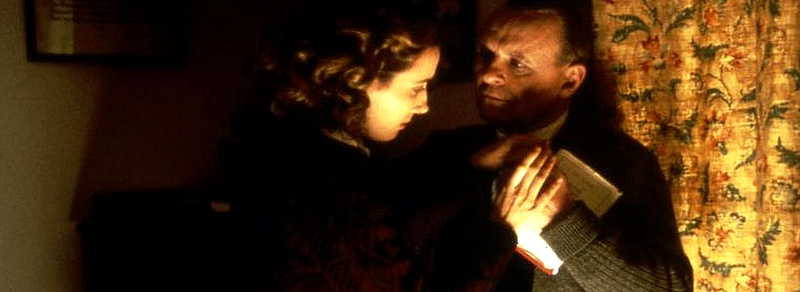
As you can tell by the critical reactions, the film critically well accepted consensually but did have a select number of pundits felt its narrative drifted and was dawdling in it’s pacing. However, Ivory shows all the deep and heartfelt emotion just under the surface of it’s characters with its attention to detail that is meticulous and piercing considering how muted the emotions are, laced with its first-rate cast of sterling performances from Thompson, Fox and specifically, the carefully nuanced and subtle Hopkins in this unfolding story of grace, elegance, regret and unfulfilled love in a British cinematic work of art. But I’ll let you decide…
So, to get a better look at the film, here’s a link to the movie trailer of James Ivory’s “The Remains of the Day”:
Here I have provided 12 interesting and intriguing trivia facts (I wanted to keep it limited) about “The Remains of the Day”:
- A film adaptation of the novel was originally planned to be directed by Mike Nichols from a script by Harold Pinter. Some of Pinter’s script was used in the film, but, while Pinter was paid for his work, he asked to have his name removed from the credits, in keeping with his contract. Christopher C. Hudgins observes: “During our 1994 interview, Pinter told [Steven H.] Gale and me that he had learned his lesson after the revisions imposed on his script for “The Handmaid’s Tale” (1990), which he has decided not to publish. When his script for the film was radically revised by the James Ivory-Ismail Merchant partnership, he refused to allow his name to be listed in the credits”. Though no longer the director, Nichols remained associated with the project as one of its producers.
- The character of Sir Geoffrey Wren (played by Rupert Vansittart) is based loosely on that of Sir Oswald Mosley, a British fascist active in the 1930s. Wren is depicted as a strict vegetarian.
- The character of Congressman Jack Lewis (played by Christopher Reeve) in the film is a composite of two separate American characters in Kazuo Ishiguro’s novel: Congressman Lewis (who attends the pre-WW2 conference in Darlington Hall), and Mr Farraday, who succeeds Lord Darlington as master of Darlington Hall.
- Sir Anthony Hopkins, as a guest on Inside the Actors Studio (1994), said that he got tips on how to play a butler from real-life butler Cyril Dickman, who served for 50 years at Buckingham Palace. The butler said there was nothing to being a butler, really, when you’re in the room, it should be even more empty.
- Director James Ivory described the film’s principal character, James Stevens (played by Anthony Hopkins), “As a bit like a priest who puts his life almost on an altar. He serves his lord unconditionally, and in this case, his lord is literally a Lord (Lord Darlington). Perhaps it’s a mentality that we don’t know so well in the United States, except in the military, or indeed, in the priesthood. Within Stevens’ life there is a very, very small area that is his, and the rest of the time he belongs to, or is committed to, a larger idea, or ideal: that of unquestioning service to an English aristocrat: his Master, right or wrong.”
- One of the film’s producers, Mike Nichols, described the film as a tragedy of “what someone could have been, what he could have been as a man, because in his way, Stevens is a remarkable man, but he never got off the wrong track, as well as what he and Miss Kenton could have been together, but they missed it. That breaks everybody’s heart, because everyone has a sense of a similar loss, everybody has that feeling, ‘I could have, I would have, I should have.’”
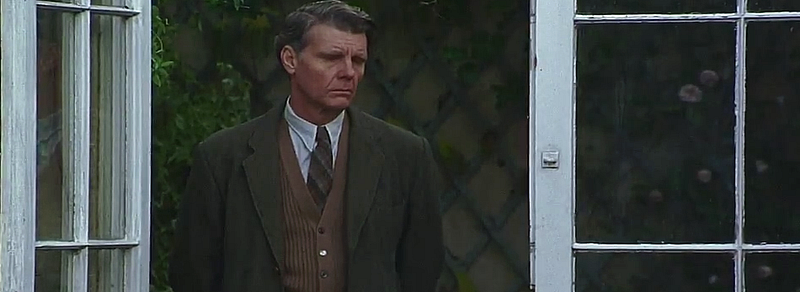
- John Cleese was offered the role of James Stevens and loved Kazuo Ishiguro’s novel. However, he said he withdrew after Harold Pinter (who wrote the original screenplay) took the humor out and made it, in Cleese’s words, “Relentlessly down”.
- At one point, Anjelica Huston was being courted for the role of the Housemaid. The role was eventually given to Abigail Harrison.
- It was while shooting “Mr. & Mrs. Bridge” (1990) in Kansas City, that Remak Ramsay, who was reading “The Remains of the Day” novel, while playing a part in the film, gave the novel to James Ivory to read in 1989, thinking that its subject and setting might intrigue Ivory.
- By bringing together the most outstanding features of some of England’s finest country houses, Merchant Ivory created a single imaginary setting of quintessential beauty, the perfect backdrop to a compelling drama. Not one, but four of England’s greatest country houses were used in the creation of Darlington Hall for the film. They were scouted for the movie by the architectural historian Joe Friedman, who had acted as location scout on previous Merchant Ivory Productions such as “Maurice” (1987), “Howards End” (1992), and “Mr. & Mrs. Bridge” (1990) for the Paris scenes.
- Another important location used for Darlington Hall, was the former royal residence of Corsham Court in Wiltshire, at the time of shooting, being the home of Lord Methuen, where filming was allowed in the famous picture gallery, which measures 22 feet (21.9 meters) long by 24 feet (7.3 meters) wide. The gallery has been one of the largest and most impressive of all Georgian domestic interiors, with a ceiling by Capability Brown, pier glasses by Robert Adam, sofas and chairs by Chippendale, original crimson damask wall hangings, and an outstanding collection of old master paintings. Lord Darlington’s (played by James Fox) library and dining room, neo-gothic rooms designed by Nash, were filmed at Corsham Court as well.
- According to the book “Hit & Run”, about the time in the 1990s when Peter Guber and Jon Peters were running Sony Pictures, Columbia Pictures, and TriStar Pictures, contrary to some other reports, the reason Mike Nichols and Meryl Streep did not direct and star in the film, respectively, was because the budget was cut. At the time, certain executives were unhappy with the rising costs of productions at the studio, and money spent on talent, so when the budget was slashed on this film from around thirty million dollars to closer to fifteen million dollars, Nichols and Streep withdrew, and in their place came in James Ivory, and the casting of Sir Anthony Hopkins and Emma Thompson.
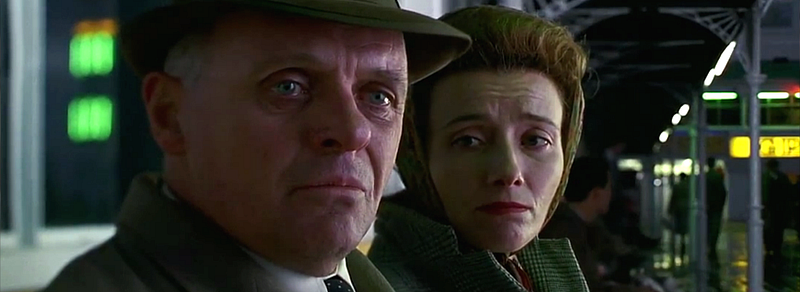
To conclude, James Ivory’s “The Remains of the Day” is a smart, aristocratic, refined and emotionally stirring tale in capturing one man’s pride to his professionalism as well as the dishearteningly emotional price in paying for his own single-mindedness as its tragedy without catharsis. This Ismail Merchant produced feature, helmed by James Ivory, manages to ordain in doing nothing to blunt the story’s impact through it’s emotional upheavals in it, but they all take place in shadows and corners, in secret — in a rather wistful and melancholy tale that’s anchored by sublime performances by Emma Thompson, James Fox and especially, the monumental act of Anthony Hopkins in this cunning, engaging, impelling and emotionally wrenching of a heart-rending British romance period showpiece.
NOTE: The article contains sources from IMDb and Wikipedia.
Follow me and check out other articles of mine: