
A FILM TO REMEMBER: “FROM HERE TO ETERNITY” (1953)
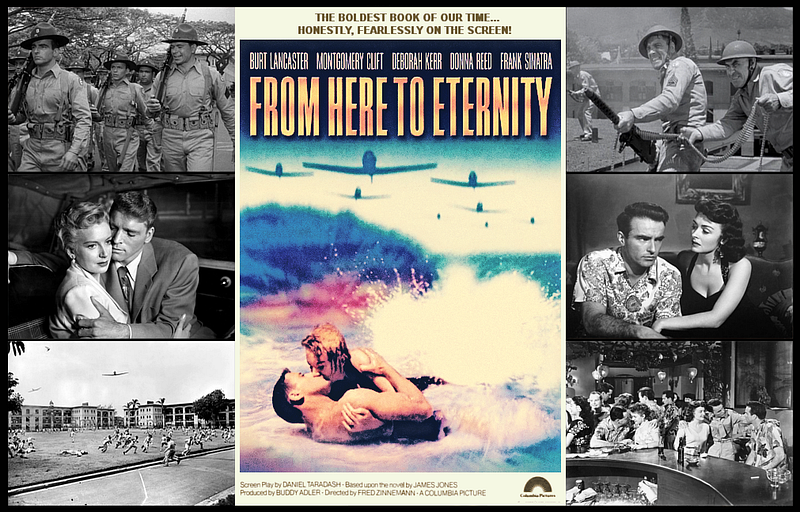
Before I get into this, I want to make mention “A FILM TO REMEMBER” will be a series about films that have reached a milestone anniversary since their origin in being culturally, historically, or aesthetically significant. The articles will contain the film’s plot outline, director, cast, a compilation of trivialities, various photos, movie trailer, critical reception and more. So, let’s start:
We are here to mark the celebration of the 65th Anniversary of Fred Zinnemann’s “From Here to Eternity”. Let’s take an inside look at the film:
PLOT OUTLINE:
In Hawaii in 1941, a private is cruelly punished for not boxing on his unit’s team, while his captain’s wife and second-in-command are falling in love.
STUDIO:
Columbia Pictures
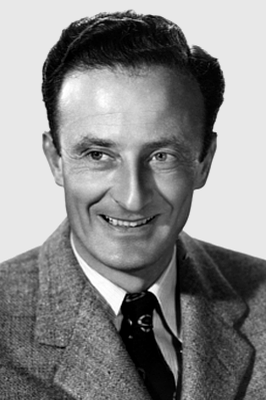
DIRECTOR:
Fred Zinnemann
CAST:
- Burt Lancaster … First Sergeant Milton Warden
- Montgomery Clift … Private Robert E. Lee “Prew” Prewitt
- Deborah Kerr … Karen Holmes
- Donna Reed … Alma Burke / Lorene
- Frank Sinatra … Private Angelo Maggio
- Philip Ober … Captain Dana “Dynamite” Holmes
- Mickey Shaughnessy … Sergeant Leva
- Harry Bellaver … Private First Class Mazzioli
- Ernest Borgnine … Staff Sergeant James R. “Fatso” Judson
- Jack Warden … Corporal Buckley
- John Dennis … Sergeant Ike Galovitch
- Merle Travis … Private Sal Anderson
- Tim Ryan … Sergeant Pete Karelsen
- Arthur Keegan … Treadwell
- Barbara Morrison … Mrs. Kipfer
- George Reeves … Sergeant Maylon Stark (uncredited)
- Claude Akins … Sergeant “Baldy” Dhom (uncredited)
- Alvin Sargent … Nair (uncredited)
- Robert J. Wilke … Sergeant Henderson (uncredited)
- Carleton Young … Colonel Ayres (uncredited)
- Kristine Miller … Georgette (uncredited)
GENRE(S):
Drama | Romance | War
TAGLINE:
The Original Pearl Harbor Story
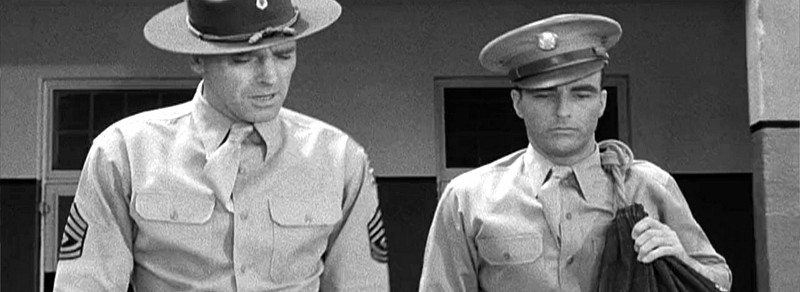
The film is known for being a high-calibre Hollywood prestige melodrama, that’s a powerful, stark, realistic story (and fierce indictment) of the lives of American military men (and their women) set at the outbreak of Pearl Harbor. Director Fred Zinnemann takes the helm in solidly handling in transferring the novel to the screen while retaining a substantial measure of its dramatic masculinity and molding the parts into cohesive, gripping drama that is spiced with action, rounded characterization and humor. Its all brought to life by a superb cast with Montgomery Clift and represented a departure from the type-cast roles with performances from the primarily seen as a lightweight to a trajectory of serious direction of Burt Lancaster, from the “prim and proper” to showing off a sexy, sensual side of Deborah Kerr, from the girl-next-door to the meaty, dramatic of Donna Reed and a low ebb comedy/musical crooner (at the time) to career resurrection of Frank Sinatra in this is old school drama of the highest order. The film is based from the James Jones’ novel of the same name, it garnered rave reviews from critics but received various criticisms from military services but has become a sharp and sobering military classic.
Here’s what some of the critical receptions have been for the film over the years:
William Brogdon from Variety says: “It is an important film from any angle, presenting socko entertainment for big business. The cast names are exceptionally good, the exploitation and word-of-mouth values are topnotch, and the prospects in all playdates are very bright, whether special key bookings or general run.”
Ty Burr from Boston Globe says: “So clear-eyed and three-dimensional that it makes ‘Pearl Harbor’ [2001] look like a bunch of kids playing dress up.”
Kenneth Turan from Los Angeles Times says: “Rapturously received from the moment it was released in 1953, ‘From Here to Eternity’ remains, half a century later, a singular cinematic experience, one of the landmarks of American film.”
Geoff Andrew from Time Out says: “Fred Zinnemann’s flat direction does produce its dull moments.”
James Berardinelli from ReelViews says: “The film tells a compelling story with many of the elements that audiences find appealing. Although entertaining throughout and occasionally moving, the film is less an epic drama than a historically based soap opera.”
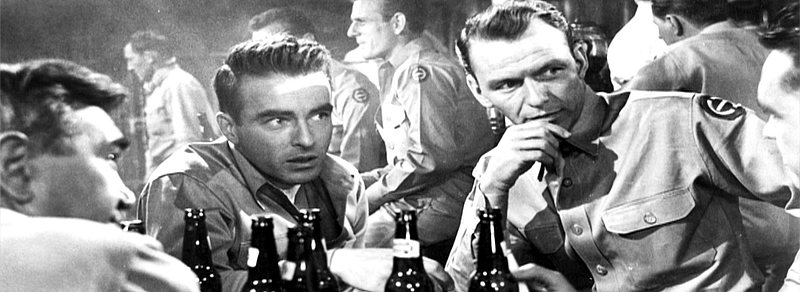
As you can tell by the critical reactions, the film got a commended praise by the majority of pundits despite the military criticism from the Army who was reportedly not pleased with its depiction in the finished film, and refused to let its name be used in the opening credits. The Navy also banned the film from being shown to its servicemen, claiming it a derogatory of its sister service and a discredit to the armed services. Contrary to the military’s reception, the film’s tough story on corruption in the military on bullying, sadism and adultery eventually gives way to heroism and sacrifice as the bombs fall. Zinnemann establishes a study in scene building and developing character in coaxing stellar performances by Lancaster, Clift, Kerr, Reed and Sinatra in this seamless ranking combination of high drama, romance and action of a military benchmark. But I’ll let you decide…
So, to get a better look at the film, here’s a link to the movie trailer of Fred Zinnemann’s “From Here to Eternity”:
Here I have provided 12 interesting and intriguing trivia facts (I wanted to keep it limited) about “From Here to Eternity”:
- Several of the novel’s controversial plot points were changed or eliminated for the film to satisfy the Production Code Office and the U.S. Army. Army cooperation was necessary in order to shoot on location at Schofield Barracks, use training aircraft, and obtain military footage of Pearl Harbor for use in the film, as well as for cost reasons. According to screenwriter Daniel Taradash, both the Code Office and the Army were impressed by his script, which reduced the number of censorship problems.
- Hollywood legend has it that Frank Sinatra got the role in the film by means of his alleged Mafia connections, and it was the basis for a similar subplot in “The Godfather” (1972). However, that has been dismissed on several occasions by the cast and crew of the film. Director Fred Zinnemann commented that, “The legend about a horse’s head having been cut off is pure invention, a poetic license on the part of Mario Puzo, who wrote, ‘The Godfather’”. One explanation of Sinatra’s casting is that his then-wife Ava Gardner persuaded studio head Harry Cohn’s wife to use her influence with him; this version is related by Kitty Kelley in her Sinatra biography.
- In the novel, Lorene (played by Donna Reed) was a prostitute at a brothel, but in the film, she is a hostess at a private social club. Karen’s (played by Deborah Kerr) hysterectomy in the novel was caused by the unfaithful Capt. Holmes (played by Philip Ober) transmitting gonorrhea to her, but in the film, her hysterectomy resulted from a miscarriage, thus avoiding the topic of venereal disease. The changes were made to meet Code Office standards.
- Columbia’s studio head Harry Cohn resisted the notion of casting Montgomery Clift in the role as Prewitt as “he was no soldier, no boxer and probably a homosexual”. Fred Zinnemann refused to make the film without Clift. The casting paid off for the most part, as Clift threw himself into the character of Prewitt, learning to play the bugle (even though he knew he’d be dubbed) and taking boxing lessons. Zinnemann said, “Clift forced the other actors to be much better than they really were. That’s the only way I can put it. He got performances from the other actors, he got reactions from the other actors that were totally genuine.” However, Clift had real difficulty letting the character of Prewitt go after filming was completed and would often turn up drunk in Hollywood drinking establishments with his bugle and Hawaiian shirts.
- In the novel, several of the enlisted men fraternize with homosexuals, and one soldier commits suicide as a result, but homosexuality is not mentioned or directly explored in the film. Again, the change was made to satisfy the Code Office. However, J. E. Smyth has written that the film’s treatment of Judson’s (played by Ernest Borgnine) behavior towards Maggio (played by Frank Sinatra) “has all the indications of sexual abuse, and therefore reintroduces the fear of homosexuality in the 1930s military that the rest of the script had to repress for obvious reasons of censorship”.
- The on-screen chemistry between Burt Lancaster and Deborah Kerr may have spilled off-screen; it was alleged that the stars became sexual partners during filming.
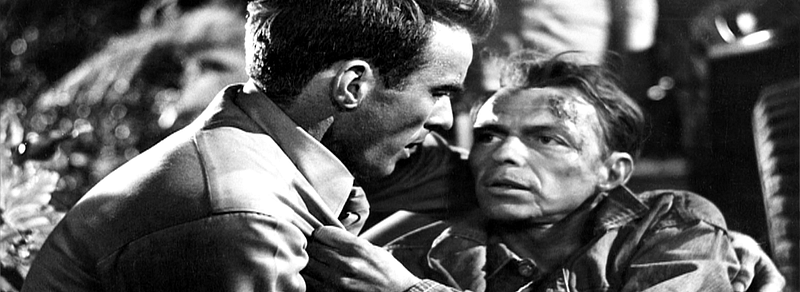
- Fred Zinnemann wanted to cast the female roles against type which created some debate between him and the studio, in particularly studio head Harry Cohn. Gladys George was offered the role of Karen Holmes, but George lost her role when Zinnemann decided to cast against type. Joan Crawford was then originally cast to for the role of Karen Holmes, but when Crawford insisted on shooting the film with her own cameraman, the studio balked. Zinnemann decided to take a chance and cast Deborah Kerr, who then was struggling with her ladylike stereotype, to play the adulterous military wife who has an affair with Burt Lancaster. Cohn wasn’t thrilled with the casting of Kerr but the casting worked in the end and Kerr’s career, thereafter, enjoyed a new, sexier versatility. For the other female role, Cohn and the studio wanted Donna Reed to play the part of Lorene/Alma Burke, Zinnemann though was not keen of the casting of Reed for the role and had Julie Harris in mind for it instead. However, as he had bucked Cohn over casting Kerry, Montgomery Clift and Frank Sinatra, Zinnemann felt he had no right to insist on putting another actress in the part. Much to Zinnemann’s surprise, Reed surpassed all his expectations.
- Burt Lancaster was so nervous about acting alongside Montgomery Clift that he was physically shaking in their first scene together. However, Clift later told friends that he thought Lancaster was a terrible actor and “a big bag of wind” (an attitude perhaps fueled by his resentment over having to take second billing).
- Frank Sinatra credited Burt Lancaster and Montgomery Clift with helping him find his feet dramatically for the film. Prior to this, most of Sinatra’s film engagements had been comedic roles or in musicals, but by working alongside such heavyweight actors, Sinatra was able to hone his craft in new directions. Indeed, he and Lancaster remained friends for the rest of their lives. Sadly, the relationship with Clift was not so long-lasting. Three years after doing this film, Clift was involved in a life-altering car crash that required facial reconstruction and left him addicted to pain medication. This, coupled with his alcoholism, made him a very different person from the actor who played Prewitt. At a party thrown by Sinatra, Clift made a drunken pass at one of the singer’s entourage that ended up with him being thrown out of the party and denied access to Sinatra and his inner circle.
- Burt Lancaster’s anxiety manifested itself in a pattern of difficult behavior, nitpicking over his lines, the camera angles, and his appearance. During breaks in filming he would go off by himself to jog or do push-ups. He argued so much with the normally even-tempered Fred Zinnemann, he finally provoked the director into telling him to go “screw” himself.
- The now infamous scene between Burt Lancaster and Deborah Kerr in the rushing water on the beach was not written to take place there. The idea to film with the waves hitting them was a last minute inspiration from Fred Zinnemann.
- Fred Zinnemann was initially reluctant to make the film, as he had an inherent distrust of Columbia head Harry Cohn. Zinnemann also felt that in the climate of McCarthyism, to voice anything that cast any doubt over such institutions as the Army, the Navy or the FBI was just asking for trouble.
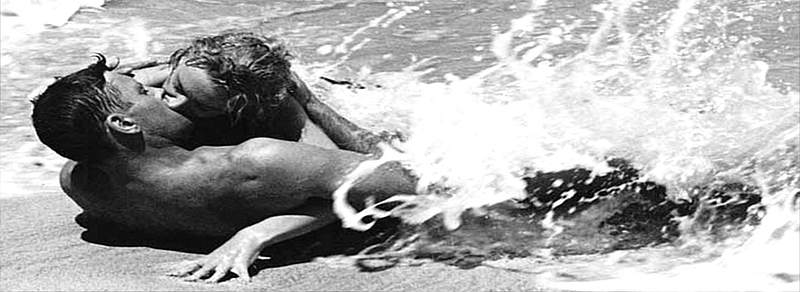
To conclude, Fred Zinnemann’s “From Here to Eternity” remains a powerful commentary on the military world as the novel whose anger and compassion stirred a postwar reading public as few such works have, Fred Zinnemann and company of sensitive hands have forged a film almost as palpable and persuasive as its source that’s anonymously directed, languidly paced, fascinatingly characterized and narratively compelling in seducing itself as a hot-blooded spectacle that stitches emotional detail onto the epic (and melodramatic) canvas of history. The film is a lavish, star-studded spectacle showpiece of dynamic and esthetic performances from Burt Lancaster, Montgomery Clift, Deborah Kerr, Donna Reed and Frank Sinatra in this fight, drink, smoke and have affairs of a taut, romantic, steamy, military dramatic bonanza but it’s the lasting image of that the nocturnal romp embraced in the pounding surf between Lancaster and Kerr is what remains one of cinema’s most iconic clinches.
NOTE: The article contains sources from IMDb and Wikipedia.
Follow me and check out other articles of mine: