
A FILM TO REMEMBER: “SCHINDLER’S LIST” (1993)
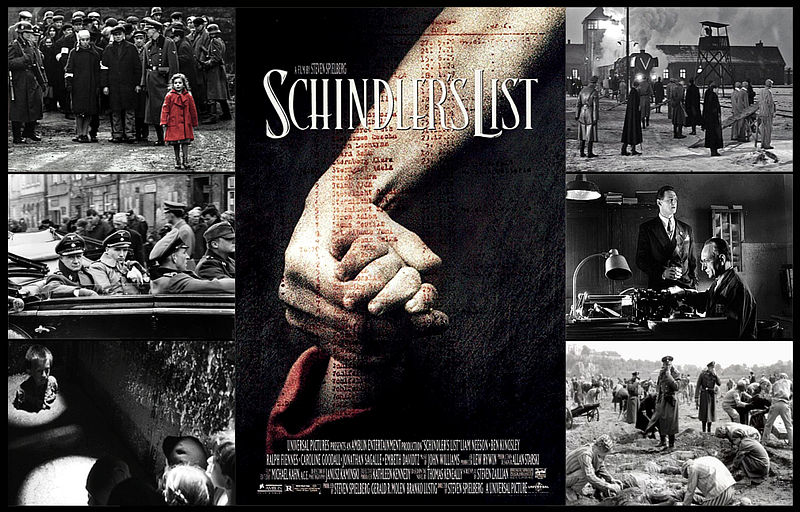
Before I get into this, I want to make mention “A FILM TO REMEMBER” will be a series about films that have reached a milestone anniversary since their origin in being culturally, historically, or aesthetically significant. The articles will contain the film’s plot outline, director, cast, a compilation of trivialities, various photos, movie trailer, critical reception and more. So, let’s start:
We are here to mark the celebration of the 25th Anniversary of Steven Spielberg’s “Schindler’s List”. Let’s take an inside look at the film:
PLOT OUTLINE:
In German-occupied Poland during World War II, Oskar Schindler gradually becomes concerned for his Jewish workforce after witnessing their persecution by the Nazi Germans.
STUDIO:
Universal Pictures
DIRECTOR:
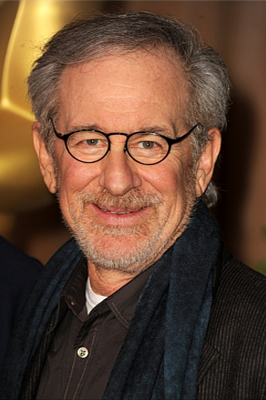
Steven Spielberg
CAST:
- Liam Neeson … Oskar Schindler
- Ben Kingsley … Itzhak Stern
- Ralph Fiennes … Amon Göth
- Caroline Goodall … Emilie Schindler
- Jonathan Sagalle … Poldek Pfefferberg
- Embeth Davidtz … Helen Hirsch
- Małgorzata Gebel … Wiktoria Klonowska
- Mark Ivanir … Marcel Goldberg
- Beatrice Macola … Ingrid
- Andrzej Seweryn … Julian Scherner
- Friedrich von Thun … Rolf Czurda
- Jerzy Nowak … Investor
- Norbert Weisser … Albert Hujar
- Michael Schneider … Juda Dresner
- Miri Fabian … Chaja Dresner
- Anna Mucha … Danka Dresner
- Adi Nitzan … Mila Pfefferberg
- Albert Misak … Mordecai Wulkan
- Jacek Wójcicki … Henry Rosner
- Beata Paluch … Manci Rosner
- Piotr Polk … Leo Rosner
- Rami Heuberger … Joseph Bau
- Ezra Dagan … Rabbi Menasha Lewartow
- Elina Löwensohn … Diana Reiter
- Hans-Jörg Assmann … Julius Madritsch
- Hans-Michael Rehberg … Rudolf Höss
- Daniel Del Ponte … Dr. Josef Mengele
- August Schmölzer … Dieter Reeder
- Ludger Pistor … Josef Leipold
- Bettina Kupfer … Regina Perlman
- Michael Z. Hoffmann … Montelupich Colonel
- Henryk Bista … Mr. Löwenstein
- Oliwia Dąbrowska … Red Genia
GENRE(S):
Biography | Drama | History
TAGLINE:
Whoever saves one life, saves the world entire.
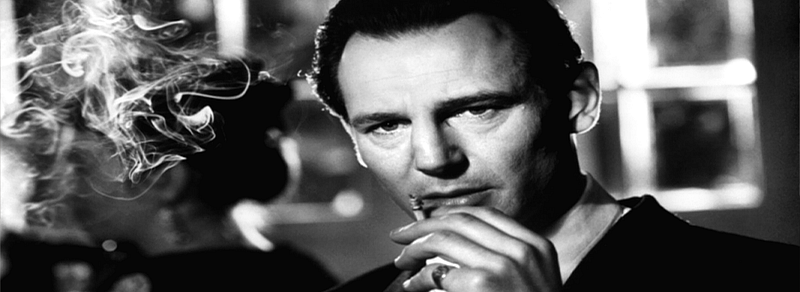
The film is known for being a gravely potent, documentary style experience of the devastating, calculated breakdown of a Polish Jew in 1939 through the end of the war that’s seen mostly in black and white, with small touches of color — a candle flame; a child’s coat, bright red — bringing the enormity of the tragedy into an excruciatingly allegorical focus. Director Steven Spielberg brings a work of vision and passion in finding his enduring themes within the material in using the stark, brutal realism to put over his powerful points about racism and ethnic cleansing that’s anchored by a cast of top talents in Liam Neeson, Ben Kingsley and Ralph Fiennes in capturing the tragedy and horror while still finding room to inspire and move generations in this narrative boldness, visual audacity and emotional directness of a cinematic master work. The film is based from the novel “Schindler’s Ark” by Australian novelist Thomas Keneally, it garnered consensual critical acclaim but did receive criticism but the film has since gone on to take its place in cultural history and stands as one of the greatest films of all-time.
Here’s what some of the critical receptions have been for the film over the years:
Gene Siskel from Chicago Tribune says: “What Spielberg has done in this Holocaust story is simply and forcefully place us there. Some of the violence is difficult to watch, but there is a story with genuine tension that runs throughout the crimes.”
Stanley Kauffmann from The New Republic says: “For this film Spielberg has done the best directing of his career. Much of his previous work has been clever and some of it better than that, but ‘Schindler’s List’ is masterly.”
Leonard Maltin from TCM.com says: “Its a staggering adaptation of Thomas Keneally’s best-seller, this looks and feels like nothing Hollywood has ever made before as its Spielberg’s most intense and personal film to date.”
Owen Gleiberman from Entertainment Weekly says: “‘Schindler’s List’ is a film whose meanings are to be found less in it’s uplifting outline than in it’s harrowing flow of images of fear, hope, horror, compassion, degradation, chaos, and death.”
Janet Maslin from New York Times says: “Rising brilliantly to the challenge of this material and displaying an electrifying creative intelligence, Mr. Spielberg has made sure that neither he nor the Holocaust will ever be thought of in the same way again.”
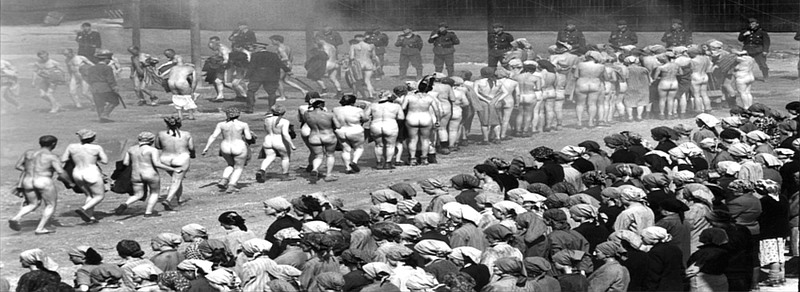
As you can tell by the critical reactions, the film received critical acclaim overall but criticism of the film also appeared, mostly from academia rather than the mainstream press for it’s certain perceptions and historical compromises to various circumstances such as the stereotypical view of Jewish life, the dichotomy’s gloss of absolute good versus absolute evil and so forth. Nonetheless though, Spielberg serves up a masterful narration of storytelling that’s as humane and compassionate as it is gripping and provocative in displaying his directorial credibility with sufficient professional gravitas to signal that he understood the line he was walking. This heart-rending and redemptive story captures all the different sides of the Holocaust into a bracing perspective, that’s aided with a stalwart cast of performances from Neeson, Kingsley and Fiennes in a profoundly shocking, unsparing, powerful, thought-provoking piece of a work of art. But I’ll let you decide…
So, to get a better look at the film, here’s a link to the movie trailer of Steven Spielberg’s “Schindler’s List”:
Here I have provided 12 interesting and intriguing trivia facts (I wanted to keep it limited) about “Schindler’s List”:
- Poldek Pfefferberg, one of the Schindlerjuden, made it his life’s mission to tell the story of his savior. Pfefferberg attempted to produce a biopic of Oskar Schindler with MGM in 1963, with Howard Koch writing, but the deal fell through.
- In 1982, Thomas Keneally published his historical novel “Schindler’s Ark,” which he wrote after a chance meeting with Poldek Pfefferberg in Los Angeles in 1980. MCA president Sid Sheinberg sent director Steven Spielberg a New York Times review of the book. Spielberg, astounded by Schindler’s story, jokingly asked if it was true. “I was drawn to it because of the paradoxical nature of the character,” he said. “What would drive a man like this to suddenly take everything he had earned and put it all in the service of saving these lives?” Spielberg expressed enough interest for Universal Pictures to buy the rights to the novel. At their first meeting in the spring of 1983, Spielberg told Pfefferberg he would start filming in 10 years because he felt he wasn’t ready to tackle the Holocaust in 1983 at the age of thirty-seven. In the end credits of the film, Pfefferberg is credited as a consultant under the name Leopold Page.
- Steven Spielberg was unsure if he was mature enough to make a film about the Holocaust, and the project remained “on [his] guilty conscience”. Spielberg, as a producer, tried to pass the project to filmmaker Roman Polanski, who turned it down because he didn’t feel he, himself was ready yet to tackle the Holocaust after surviving it in childhood. Polanski’s mother was killed at Auschwitz, and he had lived in and survived the Kraków Ghetto until the age of eight, when he escaped on the day of the liquidation. After learning this, Spielberg immediately and repeatedly apologized for bringing up such a traumatic memory. Polanski would eventually helm his own Holocaust drama “The Pianist” (2002).
- Steven Spielberg would attempt to continue to try to shop the film to other filmmakers. After Roman Polanski’s decline, Spielberg offered the film to Sydney Pollack (who declined to do it) and then Martin Scorsese, who would become attached to direct the film in 1988. However, Spielberg was unsure of letting Scorsese do the film, as “I’d given away a chance to do something for my children and family about the Holocaust.” Though Scorsese was interested in the project, he ultimately felt it was a subject that should be done by a Jewish director. Spielberg offered Scorsese the chance to direct the remake/sequel of “Cape Fear” (1991) instead. Billy Wilder expressed an interest in directing the project himself in making it his last film and as a memorial to his family, most of whom died in the Holocaust. But after re-consideration, Wilder felt it would be too personal for him to be objective on the matter and that he was getting too old to handle such a project. Wilder persuaded Spielberg to do the project himself. Spielberg finally decided to take on the project when he noticed that Holocaust deniers were being given serious consideration by the media. With the rise of neo-Nazism after the fall of the Berlin Wall, he worried that people were too accepting of intolerance, as they were in the 1930s.
- In 1983, Thomas Keneally was hired to adapt his novel, and he turned in a 220-page script. His adaptation focused on the character of Oskar Schindler’s (who’s played by Liam Neeson) numerous relationships, and Keneally admitted he did not compress the story enough. Steven Spielberg hired Kurt Luedtke, who had adapted the screenplay of “Out of Africa” (1985), to write the next draft. Luedtke gave up almost 4 years later, as he found Schindler’s change of heart too unbelievable. During his time as director, Martin Scorsese hired Steven Zaillian to write a script. When Spielberg was handed back the project, Spielberg found Zaillian’s 115-page draft too short, and asked him to extend it to 195 pages. Spielberg wanted more focus on the Jews in the story, and he wanted Schindler’s transition to be gradual and ambiguous, not a sudden breakthrough or epiphany. He extended the ghetto liquidation sequence, as he “felt very strongly that the sequence had to be almost unwatchable.”
- Months before he landed the title role, Liam Neeson had auditioned for the leading role but, assuming that he’d never get the part, he accepted instead an offer to play opposite to wife-to-be Natasha Richardson in a Broadway revival of Eugene O’Neill’s “Anna Christie” at New York’s Criterion Center in 1993. After a performance one evening, Neeson was in his dressing room when a knock on the the door announced the arrival of Steven Spielberg, wife Kate Capshaw and her mother. After Spielberg had introduced his wife and mother-in-law, Neeson hugged the older woman in a manner that stuck with Capshaw, who later commented to her husband (Spielberg), “That’s just what Oskar Schindler would have done”. Neeson would receive a call a week later from Spielberg, with the offer of the lead role.
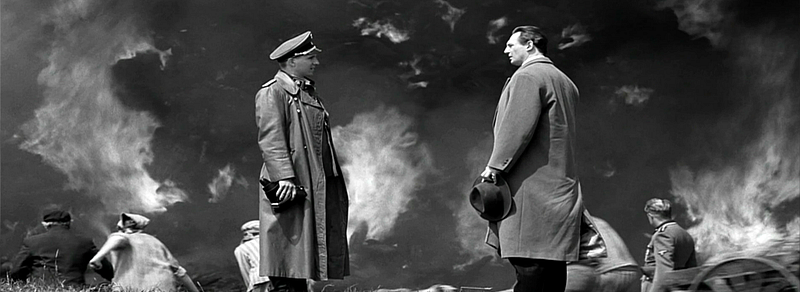
- Harrison Ford was the first choice for the title role, but declined, saying that some people would not be able to look past his Indiana Jones persona to see the importance of the film. Warren Beatty participated in a script reading, but Steven Spielberg was concerned that he could not disguise his accent and that he would bring “movie star baggage”. Kevin Costner and Mel Gibson also expressed interest in the leading role, but Spielberg preferred to cast the relatively unknown Liam Neeson in the end, so the actor’s star quality would not overpower the character.
- Ralph Fiennes was cast as the character of Amon Göth after Steven Spielberg viewed his performances in “A Dangerous Man: Lawrence After Arabia” and “Emily Brontë’s Wuthering Heights”. Spielberg said of Fiennes’ audition that “I saw sexual evil. It is all about subtlety: there were moments of kindness that would move across his eyes and then instantly run cold.” When survivor Poldek Pfefferberg was introduced to Ralph Fiennes on the set, he looked so much like Göth in costume that she began shaking uncontrollably in fear, as he reminded her too much of the real Amon Göth.
- Steven Spielberg initially intended to make the film in Polish and German with English subtitles, but rethought the idea, because he felt he wouldn’t be able to accurately assess performances in unfamiliar languages.
- Universal Picture’s chief executive, Sid Sheinberg, green-lit the film on the condition that Steven Spielberg make “Jurassic Park” (1993) first. It was even written into his contract. Spielberg later said, “He [Sheinberg] knew that once I had directed ‘Schindler’s List’ I wouldn’t be able to do ‘Jurassic Park.’”
- The shots featuring a red-coat-girl (played by Oliwia Dabrowska) came from a story that Audrey Hepburn told Steven Spielberg while they were filming her final film “Always” (1989). Hepburn told Spielberg of an incident during World War II where she saw a little girl with the same attire roaming while other people were loaded onto trains. That moment was forever etched in Hepburn’s memory, and it struck Spielberg when he made this film. Due to the amount of violence and horror depicted, Spielberg made Dabrowska, the red-coat-girl, and her parents to promise him not to watch the film until she reaches eighteen years of age (in 2007). True to what Spielberg said, she was horrified of the result when she violated the promise at the tender age of eleven.
- At his insistence (citing that it would be “blood money”), all royalties and residuals from the film, that would normally have gone to Steven Spielberg, instead were given to the Shoah Foundation, which records and preserves written and videotaped testimonies from survivors of genocide worldwide, including the Holocaust.
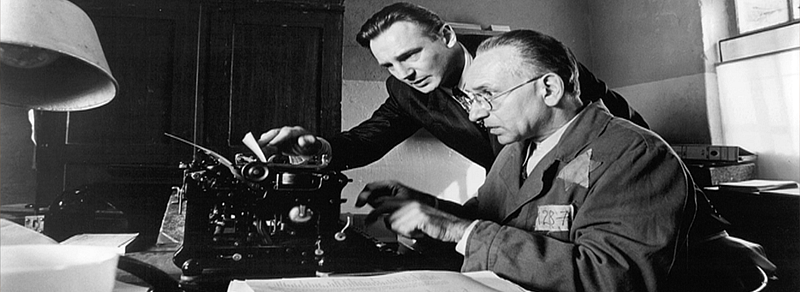
To conclude, Steven Spielberg’s “Schindler’s List” with a seemingly effortless grace and skill, as it balances fear and exaltation, humor and horror, love and death. It evokes, superbly, a time of savagery and grief, and the inexplicable, stunning compassion that rises within and against it. The film lends the abject atrociousness of the Holocaust with Steven Spielberg handling the controversial, sophisticated narrative with a real sensitivity, putting his signature touch of tendered humanism while exuding an inescapable realism with an emotionally charged examination of calculated brutality. All the while, it looks, without ever averting its gaze, at the darkest of the dark as it unfolds like a collective nightmare of an unspeakable cataclysmic trepidity and sadism with an imbedded principal cast soldered by Liam Neeson, Ben Kingsley and Ralph Fiennes in this chillingly raw, grippingly emotional, graphically painstaking and inspiringly hopeful of a vividly black-and-white epic, cinematic masterpiece.
NOTE: The article contains sources from IMDb and Wikipedia.
Follow me and check out other articles of mine:


