
A FILM TO REMEMBER: “HUD” (1963)
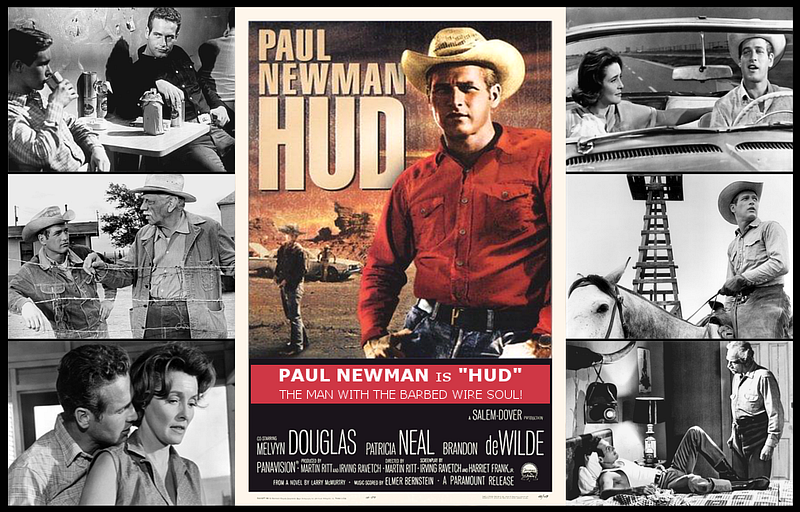
Before I get into this, I want to make mention “A FILM TO REMEMBER” will be a series about films that have reached a milestone anniversary since their origin in being culturally, historically, or aesthetically significant. The articles will contain the film’s plot outline, director, cast, a compilation of trivialities, various photos, movie trailer, critical reception and more. So, let’s start:
We are here to mark the celebration of the 55th Anniversary of Martin Ritt’s “Hud”. Let’s take an inside look at the film:
PLOT OUTLINE:
A mysterious stranger with a harmonica joins forces with a notorious desperado to protect a beautiful widow from a ruthless assassin working for the railroad.
STUDIO:
Paramount Pictures
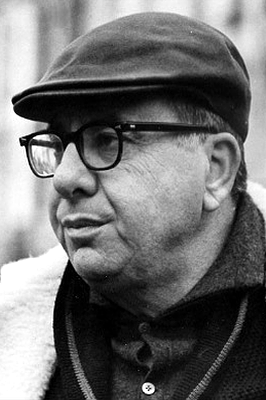
DIRECTOR:
Martin Ritt
CAST:
- Paul Newman … Hud Bannon
- Melvyn Douglas … Homer Bannon
- Brandon deWilde … Lonnie Bannon
- Patricia Neal … Alma Brown
- Whit Bissell … Mr. Burris
- Crahan Denton … Jesse
- John Ashley … Hermy
- Val Avery … Jose
- George Petrie … Joe Scanlon
- Curt Conway … Truman Peters
- Sheldon Allman … Mr. Thompson
- Pitt Herbert … Mr. Larker
- Carl Low … Mr. Kirby
- Robert Hinkle … Radio Announcer Frank
- Don Kennedy … Charlie Tucker
- Sharyn Hillyer … Myra
- Yvette Vickers … Lily Peters
GENRE(S):
Drama
TAGLINE:
The man with the barbed wire soul!
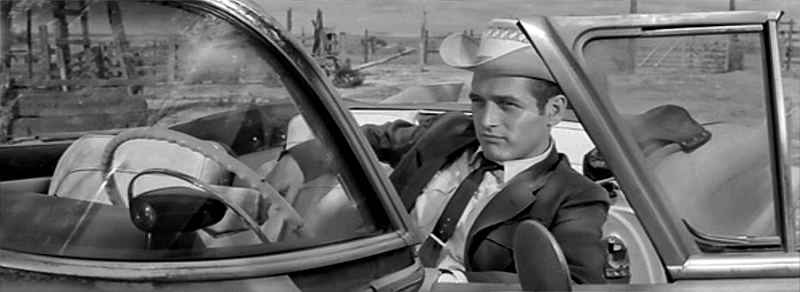
The film is known for being a blistering adult western which broke ground in its depiction of an unglamorous west and in the decidedly antiheroic nature of it’s leading character as it was a warning shot for the that era, for which its focus on generational conflict would prove prescient. Director Martin Ritt presents a cynical approach to the material which was typical of ‘60’s filmmakers and even violated the Production Code in the process with the use of forbidden words (at the time) such as “bastard” and “son of a bitch,” heard for the first time in American cinema. The film has an authentic-feeling narrative to it that’s build around it’s talented nucleus cast and performances from Patricia Neal, Melvyn Douglas, Brandon deWilde and particularly, Paul Newman. The film is based from Larry McMurtry’s novel, “Horseman, Pass By,” it was much critically acclaimed overall despite some various criticism towards it, nonetheless, the film’s re-evaluation over the years has made it described as a revisionist western exemplar.
Here’s what some of the critical receptions have been for the film over the years:
Bosley Crowther from New York Times says: “Ritt’s direction has a powerfully realistic style and Ravetch and Frank’s work is an excellent screenplay. Newman’s acting is tremendous, Douglas is magnificent, de Wilde is eloquent of clean, modern youth and Neal is brilliant.”
TIME Magazine Staff from TIME Magazine says: “The four principal actors — Newman, Neal, Douglas, and de Wilde — are so good that they might well form the nucleus of a cinematic repertory company.”
Variety Staff from Variety says: “Where it falls short of the mark is in its failure to filter it’s meaning and theme lucidly through its characters and story.”
Pauline Kael from The New Yorker says: “It’s an ‘anti-American film,’ which was so astutely made and yet such a mess, that it was redeemed by its fundamental dishonesty.”
Tom Milne from Time Out says: “Along with ‘Hombre,’ one of Ritt’s best films, less abrasive than it thinks but still a remarkably clear-eyed account of growing up in Texas to mourn the old free-ranging ways of the frontier days.”
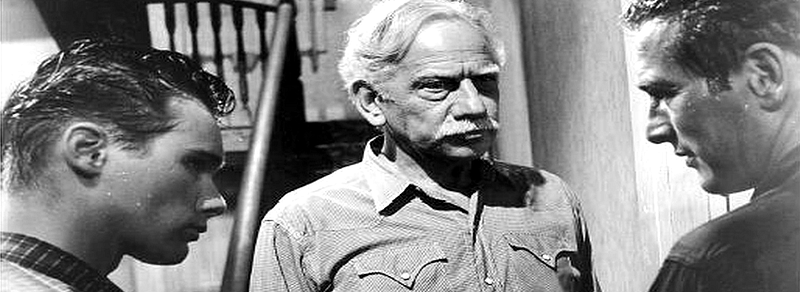
As you can tell by the critical reactions, the film garnered much acclaimed praise though certain critics thought it fell short of its mark or, more or less a western-take knock off of similar themed films. However, this bleak and heartbreaking film refuses to take the easy, happy route as Ritt directs with a powerfully realistic style in this visually striking and intelligently scripted yarn of an uncompromising western gothic anchored by it’s sublime cast and elevated performances from Neal, Douglas, deWilde and especially Newman in lifting this sum of conscious choices in a raw, Old West, sexually liberated, binge drinking and unprincipled nature of a cinematic, characteristic studied showpiece. But I’ll let you decide…
So, to get a better look at the film, here’s a link to the movie trailer of Martin Ritt’s “Hud”:
Here I have provided 12 interesting and intriguing trivia facts (I wanted to keep it limited) about “Hud”:
- After working together on other projects, director Martin Ritt and Paul Newman co-founded Salem Productions and the company made a three-film deal with Paramount Studios. For its first film Salem hired husband-and-wife scriptwriters Irving Ravetch and Harriet Frank, Jr., who worked with Ritt and Newman on “The Long, Hot Summer” (1958). Ravetch found Larry McMurtry’s novel, “Horseman, Pass By,” in an airport shop during a Dallas stopover and presented the project to Ritt and Newman after reading a description of Hud Bannon (which played by Paul Newman in the film). The partners met Ravetch and Frank at their home, approved the project and the writers adapted the script.
- Although McMurtry’s novel focuses on the character of Lonnie Bannon (which played by Brandon deWilde in the film), Irving Ravetch and Harriet Frank, Jr., expanded Hud Bannon’s character to the lead role. Martin Ritt wanted the character of Hud to be an antihero who did not regret his actions at the end of the film. He was changed from Homer’s stepson to his son, and the character of Homer’s wife was eliminated. Paul Newman and Ritt initially named the project “Wild Desire,” followed by “The Winners,” “Hud Bannon Against the World,” “Hud Bannon” and finally “Hud”. Ravetch and Frank accompanied Ritt and Newman through pre-production, casting and publicity design.
- Martin Ritt asked that the housekeeper character (originally Halmea, a black woman) be renamed Alma and played by a white actress (which would be played by Patricia Neal), because he thought a relationship between Hud and a black woman would not work. According to Ravetch and Frank, “Neither American film nor American society was quite ready for that back then”. Although Halmea is raped by Hud in the novel, Ravetch and Frank added Lonnie’s intervention to “highlight” his significance and keep Hud “human” and not “totally and simplistically evil”. To accentuate the scene’s violence, Hud’s roughness was complemented by the use of shadows, while a camera was attached on Paul Newman’s back to create a “man’s view angle” while he chased Neal.
- Paul Newman approached the part of Hud as a villain. He was later stunned that so many young moviegoers had a poster of Hud and viewed him as their hero.
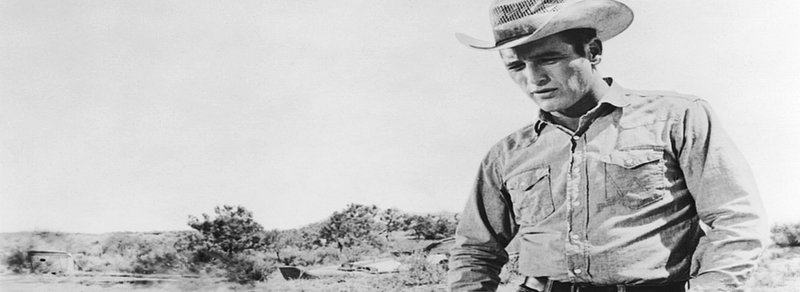
- In preparation for his title role, Paul Newman worked on a Texas cattle ranch for several weeks acquiring genuine calluses and a cowboy’s lope.
- Cinematographer James Wong Howe shot “Hud” in black-and-white to “elevate its dramatic propensities”. Filmed in Panavision, Howe used high contrast with unbalanced light and dark tones. He highlighted the white ground and clear skies, making the shadows black. Dark tones were “overpowered” by light ones, creating a sense of “infinite space”. For faces and structures, Howe used light reflected from the ground. The contrast between the environment and objects silhouetted against the background provides a sense of depth. Martin Ritt’s biographer, Carlton Jackson, wrote that in Hud “the scenery becomes a part of the thematic development itself”. According to Texas Monthly, “Howe’s austere rendition of Texas landscapes […] remains one of the film’s most distinctive pleasures”.
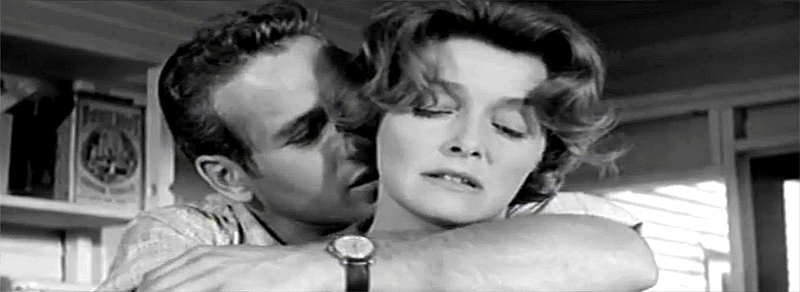
- According to Melvyn Douglas, the atmosphere was amiable and professional but not a laughter-filled set, thanks largely to the inward nature of the cast. He described Paul Newman as “shy, almost withdrawn” and said Patricia Neal was an “internal” person dealing with difficulty in her own life (including a stormy marriage to writer Roald Dahl and the recent death of her 7-year-old daughter). He described Brandon deWilde as “moody, often to the point of being sullen” and frequently distracted in a manner typical of many young people.
- For the filming of the cattle-slaughter scene, the Humane Society was present to monitor the animals’ treatment. The herd was sprayed with a substance to make it appear ill, and bungee cords were tied to the cows’ legs. Camera angles were arranged by Martin Ritt and James Wong Howe to avoid showing the death of the cattle. When a man was shown shooting, the camera would switch to the cattle; the crew shook the cords, creating an effect of the herd being shot.
- During location shooting, Paul Newman and Brandon deWilde often changed hotel rooms due to female fans following them. This was Newman’s first taste of how the female public reacted to him while filming on location. “Women were literally trying to climb through the transoms at the motel where I stayed.” Although he found it flattering at first, he came to believe the reaction was largely to the characters he played rather than the real person behind them.
- Paul Newman’s commitment to the character spilled over into off-camera moments. One such incident involved the rare opportunity for him and Patricia Neal to hang out poolside at their motel. Neal found herself opening up emotionally about her daughter Olivia, who had died suddenly just months earlier of measles encephalitis. After her long outpouring, Newman stared at her for a long moment, then simply uttered “tough” and walked away. She was taken aback by his reaction. It was early in production, and they had not yet done a major scene together, so she hadn’t really gotten to know him well or to understand his methods. Later on in the shoot, however, Neal realized Newman was already very much in character as Hud. Neal said in her autobiography that she and Newman “worked together beautifully.”
- Largely because of the recent tragedy in their lives, Patricia Neal felt she couldn’t leave her husband and surviving children at their home in England for the 2 months it would take to shoot the film. Martin Ritt offered to let her take a break to go home between the Texas locations and the Hollywood studio portion of the shoot.
- The film’s budget was $2.35 million, and Paramount executives were unhappy with the film. They felt it was too dark and were displeased by the black-and-white cinematography and the character of Hud’s lack of remorse and unchanged behavior. Although Paramount’s head of production executive Martin Rackin asked Martin Ritt to change the film’s ending, he and Newman decided to keep the original. After the film was previewed, Paramount considered dropping the project, feeling that it was not “commercial enough,” but Ritt flew to New York and persuaded the executives to release the film unmodified. Advertising posters, with Newman in blue jeans in a “suggestive, full-length pose,” read: “Paul Newman is ‘Hud’!…The man with the barbed-wire soul”.
To conclude, Martin Ritt’s “Hud” is an example about small towns in the 1960s were more innovative, thematically and stylistically, than those of previous decades as these films reflected the breakdown of the studio system as well as the fragmentation of American society. Martin Ritt deals with the decline of the Old West and its breakdown of the aged morality in the film while the language used in it was so unprecedented (for its time) that it helped to bring down the Hollywood Production Code. The film is an overwhelming, emotional tale of troubled youth, in which the American dream has gone wrong and turned sour once again, all displayed through a stupendous cast and performances from Patricia Neal, Melvyn Douglas, Brandon deWilde and specifically, a star establishing act by Paul Newman in this elegiac, ruthless, hard-living, wide-open spaces, modern western slice of slewed Americana classic film.
NOTE: The article contains sources from IMDb and Wikipedia.
Follow me and check out other articles of mine: