avatarScott Anthony

Free AI web copilot to create summaries, insights and extended knowledge, download it at here

4806

Abstract

as being one of the best film-noirs with Fuller taking genuine chances, creating moments of power unequaled by many more respectable filmmakers in engagingly capturing the hysteria over Commies and the underworld scene of the early 1950s, that’s reinforced with a creditable performances by Widmark, Peters and specifically, Ritter in this hard-edged, two-fisted underworld cruelty with reportorial wonder of a crime noir archetype. But I’ll let you decide…</p><p id="0287">So, to get a better look at the film, here’s a link to the movie trailer of Samuel Fuller’s “Pickup on South Street”:</p> <figure id="b1d6"> <div> <div> <img class="ratio" src="http://placehold.it/16x9"> <iframe class="" src="https://cdn.embedly.com/widgets/media.html?src=https%3A%2F%2Fwww.youtube.com%2Fembed%2F4fl5dwVgBs8%3Ffeature%3Doembed&amp;url=http%3A%2F%2Fwww.youtube.com%2Fwatch%3Fv%3D4fl5dwVgBs8&amp;image=https%3A%2F%2Fi.ytimg.com%2Fvi%2F4fl5dwVgBs8%2Fhqdefault.jpg&amp;key=a19fcc184b9711e1b4764040d3dc5c07&amp;type=text%2Fhtml&amp;schema=youtube" allowfullscreen="" frameborder="0" height="480" width="640"> </div> </div> </figure></iframe></div></div></figure><p id="ed0b">Here I have provided 12 interesting and intriguing trivia facts (<i>I wanted to keep it limited</i>) about “Pickup on South Street”:</p><ul><li>20th Century Fox executive head, Darryl F. Zanuck showed director Samuel Fuller, who was then under contract to 20th Century Fox, a script by Dwight Taylor called “Blaze of Glory” about a woman lawyer falling in love with a criminal she was defending in a murder trial. Fuller liked the idea but knew from his previous crime reporter experience that courtroom cases take a long time to play out. Fuller asked Zanuck if he could write a story of a lower criminal and his girlfriend that he originally titled “Pickpocket” but Zanuck thought the title too “European”. Fuller had memories of South Street from his days as a crime reporter and came up with his new title. Fuller met Detective Dan Campion of the New York Police Department to research the background material of his story to add realism, with Fuller basing the role of Dan Tiger (played by Murvyn Vye) the police detective on Campion who had been suspended without salary for 6 months for manhandling a suspect.</li><li>Samuel Fuller turned down many actresses for the lead role including studio favorites Shelley Winters (who was the studio’s first choice), Marilyn Monroe and Ava Gardner, who looked too glamorous; Betty Grable, who wanted a dance number written in; and initially Jean Peters, whom he did not like when he saw film of her in “Captain from Castile” (1947). With only a week to go before the film started production, Fuller saw Peters walk into the studio’s commissary while having lunch. Fuller noticed Peters walked with a slightly bow-legged style that many prostitutes also had. Fuller was impressed with Peters’ intelligence, spunkiness and different roles at the studio when he tested her the Friday before shooting started on Monday. When Grable insisted on being in the film and threatened to cause problems, Fuller promised to walk off the film. Peters was restored.</li><li>In August 1952, the script was deemed unacceptable by the Production Code, by reasons of “excessive brutality and sadistic beatings, of both men and women”. The committee also expressed disdain for the vicious beating of the character Candy (played by Jean Peters), on the part of Joey (played by Richard Kiley). Although a revised script was accepted soon after, the studio was forced to shoot multiple takes of a particular scene in which the manner of Peters and Kiley frisk each other for loot was considered too risqué.</li><li>The French release of the film removed any reference to spies and microfilm in the dubbed version. They called the movie “Le Port de la Drogue” (Drug’s harbour). The executives of 20th Century Fox thought that the theme of communist spies was too controversial in a country where the Communist Party was an influential and legitimate part of public life.</li><li>FBI director J. Edgar Hoover had lunch with Samuel Fuller and Darryl F. Zanuck, and said how much he detested Fuller’s work and especially “Pickup on South Street”. Hoover objected to Widmark’s unpatriotic character especially his line “Are you waving the flag at me?”, the scene of a Federal agent bribing an informer and other things. Zanuck backed Fuller up, telling Hoover he knew nothing about making movies, but removed references to the FBI in the film’s advertising.</li><li>In the opening scene on the subway, a soldier who leaves the train is shown wearing the “Big Red One” 1st Infantry Division shoulder patch. Samuel Fuller fough

Options

t with the 1st Infantry Division during World War II, and later made a film about it — “The Big Red One” (1980).</li></ul><figure id="4c92"><img src="https://cdn-images-1.readmedium.com/v2/resize:fit:800/1*9fBRSvacBl-19lh38oqe_A.png"><figcaption>Still image of Jean Peters and Richard Kiley in “Pickup on South Street”.</figcaption></figure><ul><li>Marilyn Monroe sat in on a rehearsal and actually read for the role of Candy. While Samuel Fuller liked her very much, he said she was wrong for the part, telling her that her “overwhelming sensuality” was wrong for the story.</li><li>The German title for the film is “Polizei greift ein” (“Police takes over”). The film is clearly about espionage, but in the German version the title was changed and even the dialog referring to the spying was completely replaced by dialog about drug dealing.</li><li>When the character of Candy lights a cigarette in an early scene, the matchbook cover reads “Park Row” — which was the title of Samuel Fuller’s previous film, “Park Row” (1952).</li><li>Heard in the recurring background strains of “Again,” a song introduced in “Road House” (1948), Richard Widmark’s third film. It ties Widmark to this film’s musical director, Lionel Newman, who composed the music for the former.</li><li>The last of 4 films in 4 successive years that Thelma Ritter was nominated the Academy Award for Best Supporting Actress. This film follows nominations for “All About Eve” (1950), “The Mating Season” (1951) and “With a Song in My Heart” (1952).</li><li>“Lux Radio Theater” broadcast a 60-minute radio adaptation of the film on April 5, 1954, with Thelma Ritter reprising her film role.</li></ul><figure id="c662"><img src="https://cdn-images-1.readmedium.com/v2/resize:fit:800/1*-NAg4arBkFY9IoaS9kWdQg.png"><figcaption>Still image of Richard Widmark and Jean Peters in “Pickup on South Street”.</figcaption></figure><p id="4b1a">To conclude, Samuel Fuller’s “Pickup on South Street” is like a combative romantic comedy got stuck in one of the 1950s’ bleakest visions of humanity — and it somehow all works in capturing the mentality of the Cold War United States. Samuel Fuller, in one of his few studio-financed projects, takes an oblique angle of approach to find a vein of poetic anarchism in the conformist heart of the 1950s police-procedural melodrama in this breathless genre fun infused with pure, uninhibited passion that’s only complemented with a laudable cast of elevating performances from Richard Widmark, Jean Peters and markedly, Thelma Ritter as it all manages to emanate waves of B-movie street cred at every juncture in this atmospheric, compacted, hard boiled and tension filled, Cold War crime thrilling touchstone.</p><p id="b5e5"><i>NOTE: The article contains sources from IMDb and Wikipedia.</i></p><p id="4e78"><b>Follow me and check out other articles of mine:</b></p><div id="6fe0" class="link-block"> <a href="https://readmedium.com/a-film-to-remember-hud-1963-54ae9ff419be"> <div> <div> <h2>A FILM TO REMEMBER: “HUD” (1963)</h2> <div><h3>The 55th Anniversary of Martin Ritt’s “Hud”.</h3></div> <div><p>medium.com</p></div> </div> <div> <div style="background-image: url(https://miro.readmedium.com/v2/resize:fit:320/1*yJXvF2KSI5UIKkR_Cl1Sqg.png)"></div> </div> </div> </a> </div><div id="22bb" class="link-block"> <a href="https://readmedium.com/a-film-to-remember-once-upon-a-time-in-the-west-1968-2a29d8cbe8af"> <div> <div> <h2>A FILM TO REMEMBER: “ONCE UPON A TIME IN THE WEST” (1968)</h2> <div><h3>The 50th Anniversary of Sergio Leone’s “Once Upon a Time in the West”.</h3></div> <div><p>medium.com</p></div> </div> <div> <div style="background-image: url(https://miro.readmedium.com/v2/resize:fit:320/1*kFpJbIVjtp5TUKt3_YD4Cw.png)"></div> </div> </div> </a> </div><div id="ea34" class="link-block"> <a href="https://readmedium.com/a-film-to-remember-the-treasure-of-the-sierra-madre-1948-34d006824750"> <div> <div> <h2>A FILM TO REMEMBER: “THE TREASURE OF THE SIERRA MADRE” (1948)</h2> <div><h3>The 70th Anniversary of John Huston’s “The Treasure of the Sierra Madre”.</h3></div> <div><p>medium.com</p></div> </div> <div> <div style="background-image: url(https://miro.readmedium.com/v2/resize:fit:320/1*WZIN0iHzOK1wlyHzypXI2Q.png)"></div> </div> </div> </a> </div></article></body>

A FILM TO REMEMBER: “PICKUP ON SOUTH STREET” (1953)
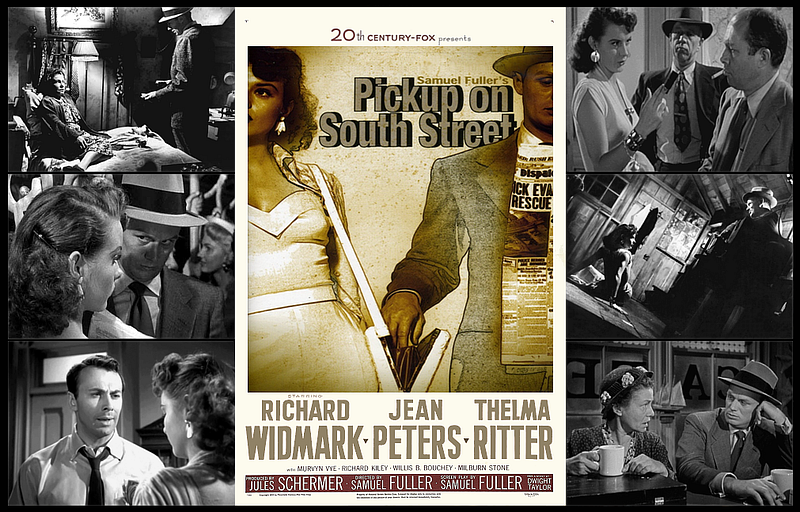
Photograph of film poster with a display of scene images from “Pickup on South Street”.

Before I get into this, I want to make mention “A FILM TO REMEMBER” will be a series about films that have reached a milestone anniversary since their origin in being culturally, historically, or aesthetically significant. The articles will contain the film’s plot outline, director, cast, a compilation of trivialities, various photos, movie trailer, critical reception and more. So, let’s start:

We are here to mark the celebration of the 65th Anniversary of Samuel Fuller’s “Pickup on South Street”. Let’s take an inside look at the film:

PLOT OUTLINE:

A pickpocket unwittingly lifts a message destined for enemy agents and becomes a target for a Communist spy ring.
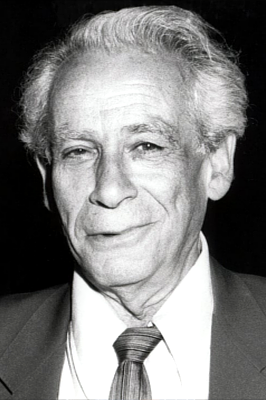
Still image of filmmaker Samuel Fuller.

STUDIO:

20th Century Fox Pictures

DIRECTOR:

Samuel Fuller

CAST:

  • Richard Widmark … Skip McCoy
  • Jean Peters … Candy
  • Thelma Ritter … Moe
  • Murvyn Vye … Captain Dan Tiger
  • Richard Kiley … Joey
  • Willis Bouchey … Zara
  • Milburn Stone … Winoki
  • Parley Baer … Headquarters Communist in Chair
  • George E. Stone … Willie
  • Stuart Randall … Detective

GENRE(S):

Crime | Film-Noir | Thriller

TAGLINE:

How the law took a chance on a B-girl…and won!
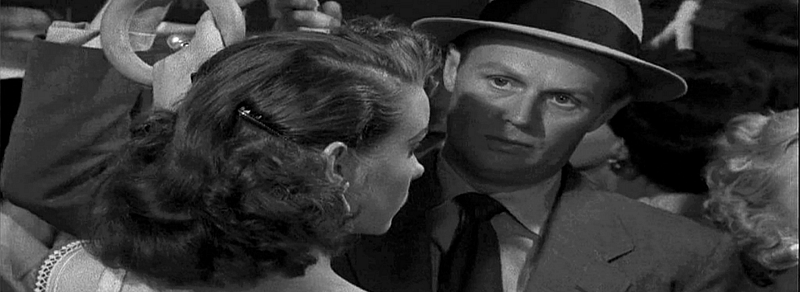
Still image of Jean Peters and Richard Widmark in “Pickup on South Street”.

The film is know for being a bruising, crackling, frenetic and brutal Cold War thriller of anxiety merely heightened by the already-combustible fabric of everyday America. Director Samuel Fuller’s pugnacious direction and his gutter-up view of city life romanticize both the criminal code of honor and the jangling paranoia of global plots; imbedded with superb performances from Richard Widmark, Jean Peters and particularly, Thelma Ritter in giving it the emotional punch to this underworld film-noir work. The film is based from an original idea by Samuel Fuller originally called “Pickpocket,” it received somewhat mixed reviews but over the years, critical appraisals of the film have warmed considerably and with many claiming it a film-noir classic.

Here’s what some of the critical receptions have been for the film over the years:

Charles Taylor from Village Voice says: “As good as are Widmark, with his proto-Method grin, and Peters, with her tawny, untutored naturalism, this is Thelma Ritter’s movie. She transforms what could have been no more than a colorful eccentric to a figure of unshakable dignity.”

TV Guide Staff from TV Guide says: “Both Widmark and Peters are superb, but it is Ritter, as the seedy but much-loved Moe, who gives the film its emotional punch.”

Bosley Crowther from New York Times says: “Sam Fuller, who wrote it and directed, appears to have been more concerned with firing a barrage of sensations than with telling a story to be believed.”

Chuck Bowen from Slant Magazine says: “Samuel Fuller’s a master of unpretentious hot-house poetry, and that theoretical contradiction of terms gives one an idea of the irresolvable, elegantly compact flourishes that abound in his films.”

Time Out Staff from Time Out says: Perhaps finally flawed by its overt political assumptions, but the film remains a desperate kind of masterpiece.

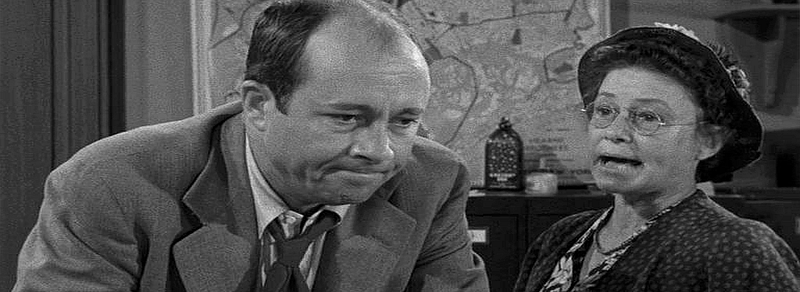
Still image of Murvyn Vye and Thelma Ritter in “Pickup on South Street”.

As you can tell by the critical reactions, the film got a varied reception from critics with those with criticism towards it saying falls flat on its face and borders on presumably unintended, comedy. While other pundits praise it as being one of the best film-noirs with Fuller taking genuine chances, creating moments of power unequaled by many more respectable filmmakers in engagingly capturing the hysteria over Commies and the underworld scene of the early 1950s, that’s reinforced with a creditable performances by Widmark, Peters and specifically, Ritter in this hard-edged, two-fisted underworld cruelty with reportorial wonder of a crime noir archetype. But I’ll let you decide…

So, to get a better look at the film, here’s a link to the movie trailer of Samuel Fuller’s “Pickup on South Street”:

Here I have provided 12 interesting and intriguing trivia facts (I wanted to keep it limited) about “Pickup on South Street”:

  • 20th Century Fox executive head, Darryl F. Zanuck showed director Samuel Fuller, who was then under contract to 20th Century Fox, a script by Dwight Taylor called “Blaze of Glory” about a woman lawyer falling in love with a criminal she was defending in a murder trial. Fuller liked the idea but knew from his previous crime reporter experience that courtroom cases take a long time to play out. Fuller asked Zanuck if he could write a story of a lower criminal and his girlfriend that he originally titled “Pickpocket” but Zanuck thought the title too “European”. Fuller had memories of South Street from his days as a crime reporter and came up with his new title. Fuller met Detective Dan Campion of the New York Police Department to research the background material of his story to add realism, with Fuller basing the role of Dan Tiger (played by Murvyn Vye) the police detective on Campion who had been suspended without salary for 6 months for manhandling a suspect.
  • Samuel Fuller turned down many actresses for the lead role including studio favorites Shelley Winters (who was the studio’s first choice), Marilyn Monroe and Ava Gardner, who looked too glamorous; Betty Grable, who wanted a dance number written in; and initially Jean Peters, whom he did not like when he saw film of her in “Captain from Castile” (1947). With only a week to go before the film started production, Fuller saw Peters walk into the studio’s commissary while having lunch. Fuller noticed Peters walked with a slightly bow-legged style that many prostitutes also had. Fuller was impressed with Peters’ intelligence, spunkiness and different roles at the studio when he tested her the Friday before shooting started on Monday. When Grable insisted on being in the film and threatened to cause problems, Fuller promised to walk off the film. Peters was restored.
  • In August 1952, the script was deemed unacceptable by the Production Code, by reasons of “excessive brutality and sadistic beatings, of both men and women”. The committee also expressed disdain for the vicious beating of the character Candy (played by Jean Peters), on the part of Joey (played by Richard Kiley). Although a revised script was accepted soon after, the studio was forced to shoot multiple takes of a particular scene in which the manner of Peters and Kiley frisk each other for loot was considered too risqué.
  • The French release of the film removed any reference to spies and microfilm in the dubbed version. They called the movie “Le Port de la Drogue” (Drug’s harbour). The executives of 20th Century Fox thought that the theme of communist spies was too controversial in a country where the Communist Party was an influential and legitimate part of public life.
  • FBI director J. Edgar Hoover had lunch with Samuel Fuller and Darryl F. Zanuck, and said how much he detested Fuller’s work and especially “Pickup on South Street”. Hoover objected to Widmark’s unpatriotic character especially his line “Are you waving the flag at me?”, the scene of a Federal agent bribing an informer and other things. Zanuck backed Fuller up, telling Hoover he knew nothing about making movies, but removed references to the FBI in the film’s advertising.
  • In the opening scene on the subway, a soldier who leaves the train is shown wearing the “Big Red One” 1st Infantry Division shoulder patch. Samuel Fuller fought with the 1st Infantry Division during World War II, and later made a film about it — “The Big Red One” (1980).
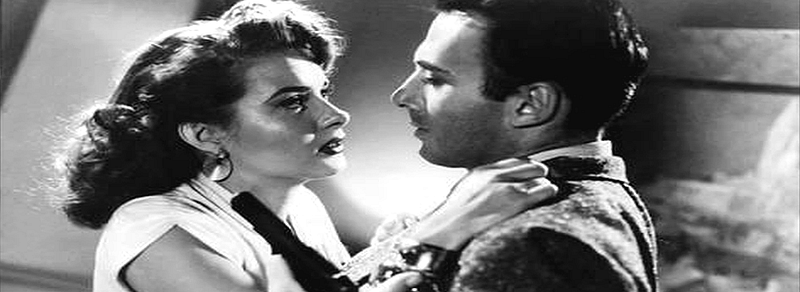
Still image of Jean Peters and Richard Kiley in “Pickup on South Street”.
  • Marilyn Monroe sat in on a rehearsal and actually read for the role of Candy. While Samuel Fuller liked her very much, he said she was wrong for the part, telling her that her “overwhelming sensuality” was wrong for the story.
  • The German title for the film is “Polizei greift ein” (“Police takes over”). The film is clearly about espionage, but in the German version the title was changed and even the dialog referring to the spying was completely replaced by dialog about drug dealing.
  • When the character of Candy lights a cigarette in an early scene, the matchbook cover reads “Park Row” — which was the title of Samuel Fuller’s previous film, “Park Row” (1952).
  • Heard in the recurring background strains of “Again,” a song introduced in “Road House” (1948), Richard Widmark’s third film. It ties Widmark to this film’s musical director, Lionel Newman, who composed the music for the former.
  • The last of 4 films in 4 successive years that Thelma Ritter was nominated the Academy Award for Best Supporting Actress. This film follows nominations for “All About Eve” (1950), “The Mating Season” (1951) and “With a Song in My Heart” (1952).
  • “Lux Radio Theater” broadcast a 60-minute radio adaptation of the film on April 5, 1954, with Thelma Ritter reprising her film role.
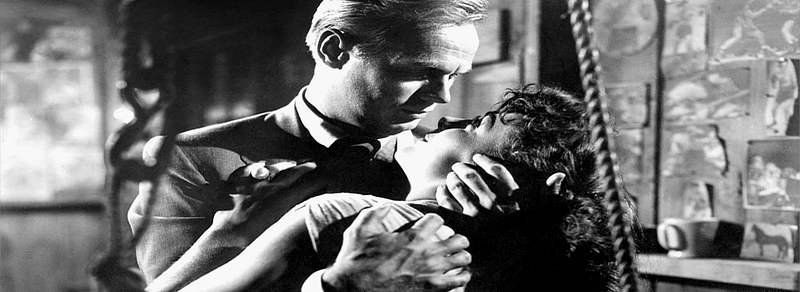
Still image of Richard Widmark and Jean Peters in “Pickup on South Street”.

To conclude, Samuel Fuller’s “Pickup on South Street” is like a combative romantic comedy got stuck in one of the 1950s’ bleakest visions of humanity — and it somehow all works in capturing the mentality of the Cold War United States. Samuel Fuller, in one of his few studio-financed projects, takes an oblique angle of approach to find a vein of poetic anarchism in the conformist heart of the 1950s police-procedural melodrama in this breathless genre fun infused with pure, uninhibited passion that’s only complemented with a laudable cast of elevating performances from Richard Widmark, Jean Peters and markedly, Thelma Ritter as it all manages to emanate waves of B-movie street cred at every juncture in this atmospheric, compacted, hard boiled and tension filled, Cold War crime thrilling touchstone.

NOTE: The article contains sources from IMDb and Wikipedia.

Follow me and check out other articles of mine:

Movies
History
Trivia
Photos
Movie Trailer
Recommended from ReadMedium