
A FILM TO REMEMBER: “BICYCLE THIEVES” (1948)
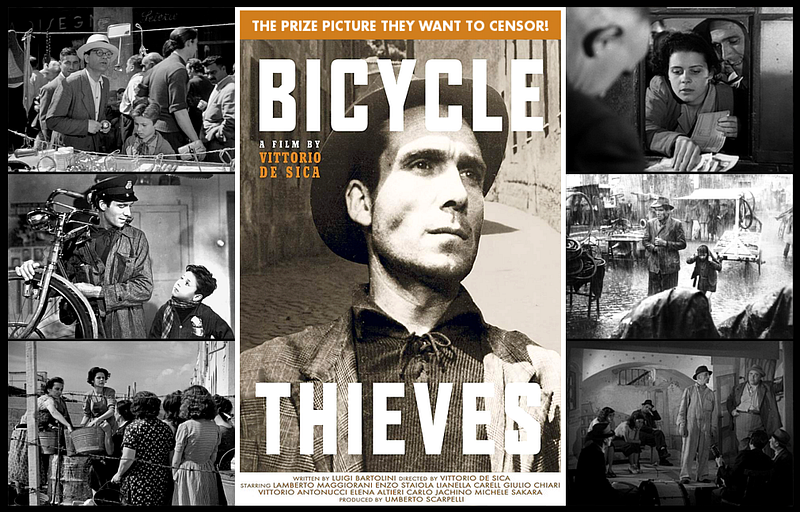
Before I get into this, I want to make mention “A FILM TO REMEMBER” will be a series about films that have reached a milestone anniversary since their origin in being culturally, historically, or aesthetically significant. The articles will contain the film’s plot outline, director, cast, a compilation of trivialities, various photos, movie trailer, critical reception and more. So, let’s start:
We are here to mark the celebration of the 70th Anniversary of Vittorio De Sica’s “Bicycle Thieves”. Let’s take an inside look at the film:
PLOT OUTLINE:
In post-war Italy, a working-class man’s bicycle is stolen. He and his son set out to find it.
STUDIO:
Arthur Mayer & Joseph Burstyn
DIRECTOR:
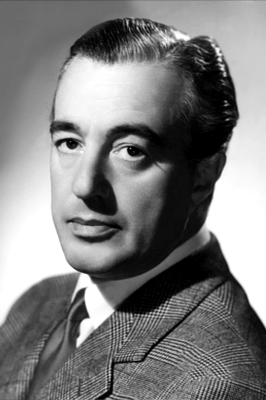
Vittorio De Sica
CAST:
- Lamberto Maggiorani … Antonio Ricci
- Enzo Staiola … Bruno Ricci
- Lianella Carell … Maria Ricci
- Gino Saltamerenda … Baiocco
- Vittorio Antonucci … Alfredo Catelli
- Giulio Chiari … The Beggar
- Elena Altieri … Charitable Lady
- Carlo Jachino … A Beggar
- Michele Sakara … Secretary of the Charity Organization
- Emma Druetti
- Fausto Guerzoni … Amateur Actor
- Giulio Battiferri … Citizen Who Protects the Real Thief (uncredited)
- Ida Bracci Dorati … La Santona (uncredited)
- Nando Bruno (uncredited)
- Eolo Capritti (uncredited)
- Memmo Carotenuto (uncredited)
- Giovanni Corporale (uncredited)
- Sergio Leone … Seminary Student (uncredited)
- Mario Meniconi … Meniconi, the Street Sweeper (uncredited)
- Massimo Randisi … Rich Kid in the Restaurant (uncredited)
- Checco Rissone … Guard in Piazza Vittorio (uncredited)
- Alberto Sordi … Bike Painter (voice) (uncredited)
- Peppino Spadaro … Police Officer (uncredited)
- Umberto Spadaro (uncredited)
GENRE(S):
Drama
TAGLINE:
The Prize Picture They Want to Censor!
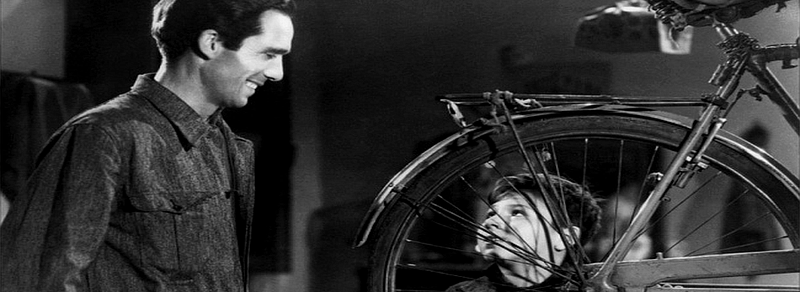
The film is known for being a tender and immediate, a simple tale of a man whose bike is stolen when his job and life depends upon it as it captures, in elemental strokes, the crushing of the human spirit at the hands of poverty, indifference and despair in this unblinking view of post-war Italy. Director Vittorio De Sica carefully balances a generally tragic sensibility with a quiet undercurrent of hope, all the while sucking us into the story with sheer urgency from the display of its cast of nonprofessional actors led by Lamberto Maggiorani and Enzo Staiola in this poverty-parable of tactlessly real work of art. The film is based from Luigi Bartolini’s novel of the same name, it received much acclaim from critics though did receive critical hostility initially towards it from its native country but despite that, it has quickly become widely regarded as a masterpiece of Italian neorealism.
Here’s what some of the critical receptions have been for the film over the years:
Kenneth Turan from Los Angeles Times says: “This film manages to appeal to the better angels of our nature in a way that only deepens as we grow older along with the film.”
Christy Lemire from ChristyLemire.com says: “The themes ‘Bicycle Thieves’ conveys are universal and relevant. Decades later, you can see the influence of ‘Bicycle Thieves’ everywhere, in a variety of genres and languages.”
David Jenkins from Time Out says: “De Sica’s neorealist lodestone may have retained its vitality over the decades, but whatever sense of anger it whipped up in the disgruntled masses of postwar Rome feels lost to the excessively syrupy score.”
Roger Ebert from Chicago Sun-Times says: “‘Bicycle Thieves’ is so well-entrenched as an official masterpiece that it is a little startling to visit it again after many years and realize that it is still alive and has strength and freshness.”
Bob Graham from San Francisco Chronicle says: “Vittorio De Sica’s postwar masterpiece of neorealism, that reminds us that it is the original ‘Life on the Street.’ ‘Bicycle Thieves’ is one of those wonderful titles whose power does not sink in until the film is over.”
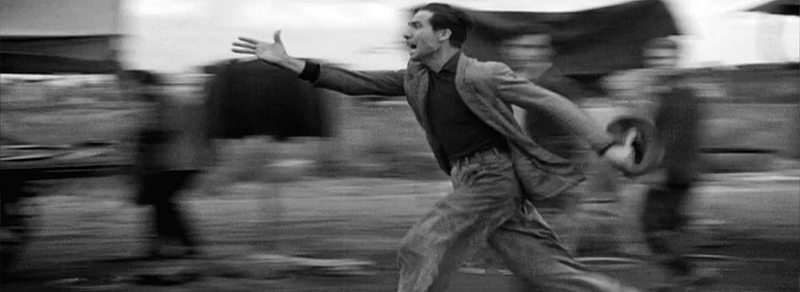
As you can tell by the critical reactions, the film has captured much critical acclaim for the most part but in Italy, initially, it was viewed with a belligerence and as portraying Italians in a negative way. In spit of that, this is a plainspoken, poetic work that is likely to surprise you with its virtues as De Sica establishes a profoundly moving allegory that balances the grimness of its characters’ plight against some of the period’s most elegant visual poetry. This is scarcely a story found in the street, its rooted with nonprofessional actors presided over by Maggiorani and Staiola in this nestled, deeply affecting father-son pairing of poverty’s authentic sting: banal and horrible loss of dignity that’s with a ramshackle simplicity, quietness and naïveté of a neorealist classic. But I’ll let you decide…
So, to get a better look at the film, here’s a link to the movie trailer of Vittorio De Sica’s “Bicycle Thieves”:
Here I have provided 12 interesting and intriguing trivia facts (I wanted to keep it limited) about “Bicycle Thieves”:
- Director Vittorio De Sica changed many aspects of Luigi Bartolini’s novel, but retained the title, which used the plural form and referred, in the novel, to a post-war culture of rampant thievery and disrespect for civil order countered only by an inept police force and indifferent allied occupiers.
- Prospective producer David O. Selznick originally proposed casting Cary Grant as the lead. Vittorio De Sica countered with a request for Henry Fonda before deciding to cast all amateur actors.
- Filmmaker Sergio Leone worked as an assistant for Vittorio De Sica during the shooting of this film. Leone also has a short appearance in the film as well.
- Lamberto Maggiorani was very shy and embarrassed throughout the shooting as he had no training in acting or he would often become anxious when he couldn’t do what Vittorio De Sica wanted him to do. De Sica, however, did not coddle Maggiorani because De Sica knew his real anxiety and nervousness before the camera would work well for his on-screen character. De Sica would later praise Maggiorani, saying “The way he moved, the way he sat down, his gestures with his hands hardened from work, the hands of a working man, not of an actor…I made him promise that after the film he would forget the cinema and would go back to his job.” But during the filming, De Sica would still send a black limousine to pick Maggiorani up and bring him to the day’s location.
- Lianella Carell was a journalist who came to interview Vittorio De Sica when they were looking for someone to play the role of Maria, but, when De Sica saw her, he instantaneously decided that Carell would play Maria for the film.
- Vittorio De Sica still hadn’t found the ideal actor to play the role of Bruno when filming began. It was while De Sica was shooting the scene in which Antonio searches for his friend who can help him locate the bike that fate intervened. “I was telling Maggiorani something,” De Sica recalled, “when I turned around in annoyance at the onlookers who were crowding around me, and saw an odd-looking child with a round face, a big funny nose and wonderful lively eyes. Saint Gennaro has sent him to me, I thought. It was proof of the fact that everything was turning out right.” And so little Enzo Staiola was hired on the spot to play the role of Bruno.
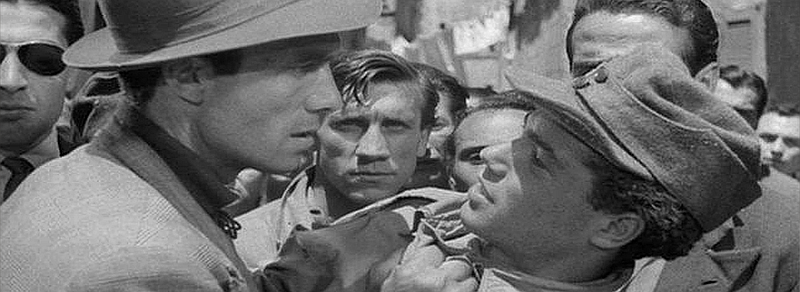
- Even though Lamberto Maggiorani remained uncomfortable with the mechanics of filmmaking and acting, he nevertheless began to feel a merging of his own identity with that of his character Antonio. Vittorio De Sica later stated that Maggiorani “confessed to me that he had experienced this sensation, acutely and poignantly, in the last scene in the film: Antonio, in a moment of revolt against his cruel fate, attempts robbery and is arrested and maltreated in front of his son. When, through his tears, Maggiorani felt his hand seized by little Staiola, it seemed to him that it really was his son who took his hand, and his tears became real tears of burning shame. In a few months of patient effort, I had brought this man to the point of being able to forget himself in his role and to enter fully into the sad story.”
- There’s a scene later in the film where Bruno is nearly run over twice whilst crossing the street. This was absolutely unrehearsed — it was filmed on location and the two cars happened to pass by at that time.
- It took careful planning and rehearsing to give the film its realistic look. Crowd scenes were meticulously staged and drilled, including one for which Vittorio De Sica hired 40 street vendors. The Roman fire department provided a “surprise” rainstorm for another scene. In addition, De Sica shot with as many as 6 cameras at once to get the untrained actors’ spontaneous performances from several angles. Although the film looked like a documentary in places, the painstaking methods drove De Sica over budget.
- Lamberto Maggiorani really did struggle for work after this film was completed.
- Vittorio De Sica claimed he selected the actors for the characters of both Bruno and Antonio because of their walks.
- The film’s final shot of Antonio and Bruno walking away from the camera into the distance is an homage to many Charles Chaplin films, who was Vittorio De Sica’s favorite filmmaker.
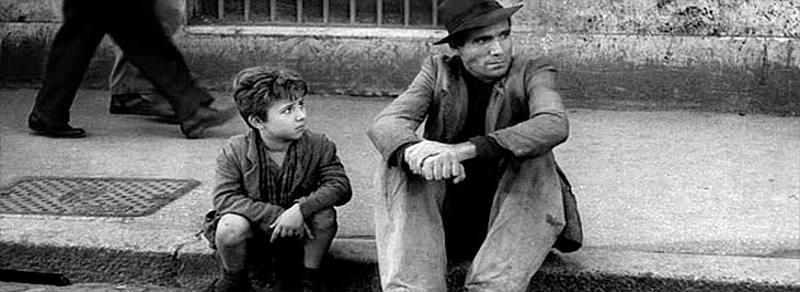
To conclude, Vittorio De Sica’s “Bicycle Thieves” is a haunting fable of want and desperation…an ideal marriage of form and meaning that is both heart- and groundbreaking. Vittorio De Sica guides the story in the form of an allegory meant to pull at your heartstrings, as it was not possible to be anything but sympathetic with the victimized father who only wants to provide for his wife and child as the problems of these “ordinary little people” have attained the force and universality of a Greek tragedy. The film has passages of beauty and heartbreak that suggest a genuine humanism that thrives on its non-flashy performances and searing emotion from it’s nonprofessional actors fastened by Lamberto Maggiorani and Enzo Staiola in showing their humanity glowing, even through their misery and their despair in this rueful, post-war drama of a defining landmark of Italian neorealism.
NOTE: The article contains sources from IMDb and Wikipedia.
Follow me and check out other articles of mine: