
A FILM TO REMEMBER: “BRINGING UP BABY” (1938)
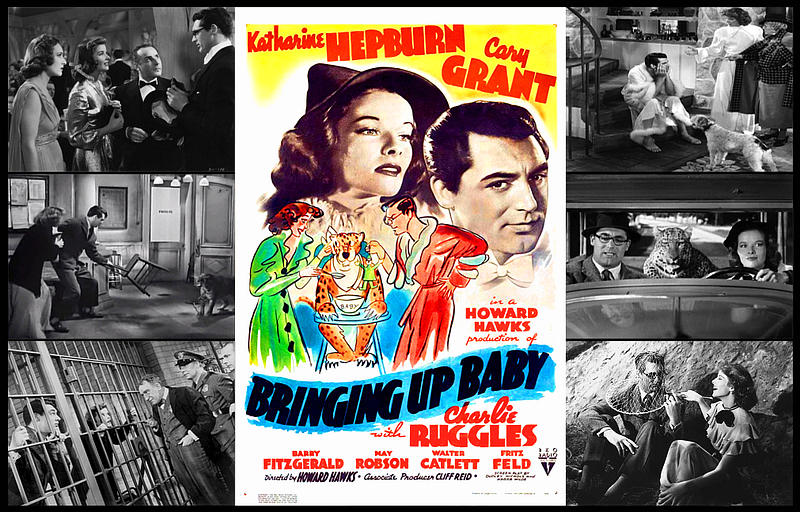
Before I get into this, I want to make mention “A FILM TO REMEMBER” will be a series about films that have reached a milestone anniversary since their origin in being culturally, historically, or aesthetically significant. The articles will contain the film’s plot outline, director, cast, a compilation of trivialities, various photos, movie trailer, critical reception and more. So, let’s start:
We are here to mark the celebration of the 80th Anniversary of Howard Hawks’ “Bringing Up Baby”. Let’s take an inside look at the film:
PLOT OUTLINE:
While trying to secure a $1 million donation for his museum, a befuddled paleontologist is pursued by a flighty and often irritating heiress and her pet leopard, Baby.
STUDIO:
RKO Radio Pictures
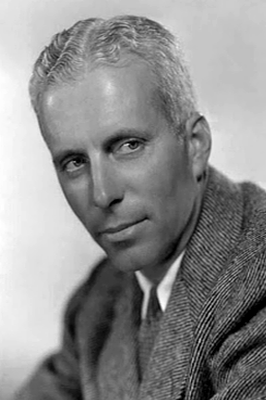
DIRECTOR:
Howard Hawks
CAST:
- Cary Grant … Dr. David Huxley
- Katharine Hepburn … Susan Vance
- May Robson … Elizabeth Carlton Random
- Charles Ruggles … Major Horace Applegate
- Walter Catlett … Constable Slocum
- Barry Fitzgerald … Aloysius Gogarty
- Fritz Feld … Dr. Fritz Lehman
- Virginia Walker … Alice Swallow
- George Irving … Alexander Peabody
- Leona Roberts … Hannah Gogarty
- Tala Birell … Mrs. Lehman
- John Kelly … Elmer
- Skippy … George the Dog
- Nissa … Baby / Circus Leopard
- D’Arcy Corrigan … Professor LaTouche (uncredited)
- Billy Bevan … Tom (uncredited)
- Billy Franey … Butcher (uncredited)
- Dick Lane … Circus Manager (uncredited)
- Ward Bond … Motorcycle Policeman (uncredited)
- Jack Carson … Circus Roustabout (uncredited)
GENRE(S):
Comedy | Family | Romance
TAGLINE:
And so begins the hilarious adventure of Professor David Huxley and Miss Susan Vance, a flutter-brained vixen with love in her heart!
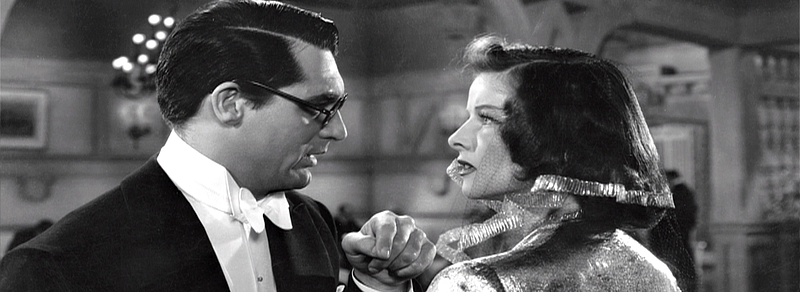
The film is known for being one of the highest high points of the entire screwball comedy genre. Director Howard Hawks had a real gift with the ability of moving things along in making this the prime exemplar of the sharpest, zaniest and most delightful comical slapstick of them all; anchored with it’s sublime cast that’s driven by its high-spirited performances from Katharine Hepburn at her effervescent best and Cary Grant in marvelously combining stuffiness and injured dignity with his usual debonair charm in this enduring gold standard of an undisputed screwball comedy. The film based from a short story by Hagar Wilde which originally appeared in Collier’s Weekly magazine, it would get favorable critical praise but was rather underrated consensually during its time, as history would prove otherwise in the years to come in making it a definitive and genre defining cinematic classic.
Here’s what some of the critical receptions have been for the film over the years:
A.O. Scott from New York Times says: “That you’ll find yourself amazed at its freshness, its vigor, and its brilliance-qualities undiminished after sixty-five years, and likely to withstand repeated viewings.”
Leonard Maltin from TCM.com says: “Not a hit when first released, this is now considered the definitive screwball comedy and one of the fastest, funniest films ever made; grand performances by all.”
Douglas Pratt from Hollywood Reporter says: “The speedy, 102-minute film is a total delight, and the performances are so invigorating that it can withstand many multiple viewings without losing its sparks.”
Mike D’Angelo from A.V. Club says: “If all you need to make a movie is a girl and a gun, I think we can safely say that the only necessary ingredients for a comedy are a dude in a dress and a dog. Not that either strategy is a surefire, but in the hands of an old-school genius like Howard Hawks, however, they work to perfection.”
Joshua Rothkopf from Time Out says: “A perfect example of why directors (and even us brilliant professional critics) can often be completely in the dark about what works.”
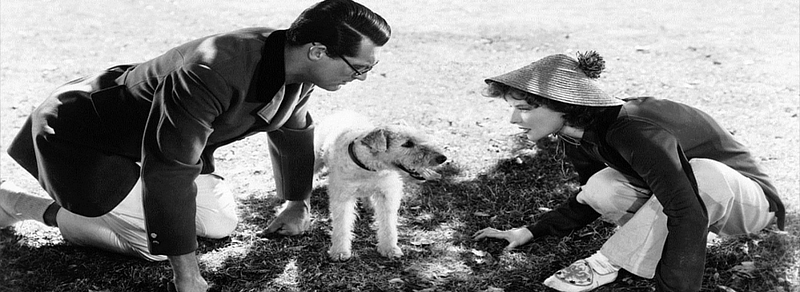
As you can tell by the critical reactions, the film got amicable esteem but its hard to believe that, it was underestimated during its initial release but the enduring fascination of this screwball comedy is due to much more than its uproarious gags as it maintains a level of energy that is almost impossible to achieve. Hawks pushes the story, the dialogue and the acting with its top-notch cast and boisterous performances from Hepburn and Grant, moving so fast that one cannot help but get caught up in this gag and joke show that seems to improve upon repeated viewings in which makes this one of the finest and lunatic screwball comedies ever in the annals of cinema. But I’ll let you decide…
So, to get a better look at the film, here’s a link to the movie trailer of Howard Hawks’ “Bringing Up Baby”:
Here I have provided 12 interesting and intriguing trivia facts (I wanted to keep it limited) about “Bringing Up Baby”:
- The scene in which Susan’s dress is ripped was inspired by something that happened to Cary Grant. He was at the Roxy Theater one night and his pants zipper was down when it caught on the back of a woman’s dress. Grant impulsively followed her. When he told this story to director Howard Hawks, Hawks loved it and put it into the film.
- Katharine Hepburn loved to talk, which caused problems for director Howard Hawks when he needed to shoot scenes. When she ignored the assistant director’s repeated cries of “Quiet,” Hawks just motioned the rest of the crew to stop what they were doing until she realized she was the only one talking. She asked, “What’s the matter?” and Hawks said, “You’re acting a good part of a parrot, and if you’re going to keep on doing it, we’ll just sit here and watch you.” At that, she took Hawks aside and told him not to talk to her like that because she had a lot of friends working on the film. Hawks called to an electrician on a scaffold overhead and said, “If you had a choice of dropping a lamp on Miss Hepburn or me, who would you drop it on?” The man told Hawks to get out of the way, and Hepburn just said, “I guess I’m wrong,” and never misbehaved again. After a bad start, Hawks grew to respect Hepburn tremendously for her comic timing, ad-libbing skills and physical control. He would tell the press, “She has an amazing body — like a boxer. It’s hard for her to make a wrong turn. She’s always in perfect balance. She has that beautiful coordination that allows you to stop and make a turn and never fall off balance. This gives her an amazing sense of timing. I’ve never seen a girl that had that odd rhythm and control.”
- David’s response to Aunt Elizabeth asking him why he is wearing a woman’s dressing gown (“Because I just went gay all of a sudden!”) is considered by many film historians to be the first use of the word “gay” in it’s roughly modern sense (as opposed to its original meaning of “happy, carefree”) in an American studio film. Among homosexuals, the word first came into its current use during the 1920s or possibly even earlier, though it was not popularly known as a slang term for homosexuality until the late 1960s. The line was not in the original shooting script for the film; it was an ad lib from Cary Grant himself.
- This movie fared so badly at the box office that Howard Hawks was fired from his next production at RKO, and Katharine Hepburn bought out her contract to avoid being cast in the film “Mother Carey’s Chickens” (1938). Coincidentally, on the same day that her contract was dissolved, Hepburn’s name appeared in a trade ad placed by the Independent Theatre Owners Association at the top of a list of performers they considered “box-office poison.” Also on the list were Joan Crawford, Greta Garbo and Marlene Dietrich. The publicity about Hepburn’s lack of popularity did little to help the film at the box office. Hawks years later said that he failed at making a good comedy here because of the characters were too “madcap,” with no straight men/women to ground it. This comment may have resulted from his disappointment at the film’s commercial failure at the time of its release, although many now consider it Hawks’ best film.
- Katharine Hepburn had never done any comedy before, and was coached by Howard Hawks and several veteran vaudevillians he employed solely for that purpose. As a former vaudevillian, Cary Grant was already well versed in comedy.
- Katharine Hepburn was having a difficult time with comedic timing — Howard Hawks said that she was “trying too hard to be funny” and kept laughing out loud. Luckily, Walter Catlett (who played Constable Slocum) was a veteran comic who had headlined for Ziegfeld. Hawks wanted him to give Hepburn some tips, but he refused, considering it a serious breach of etiquette. Hawks asked whether Catlett would help Hepburn if she asked him to. He would. Hawks mentioned this to Hepburn, who immediately marched over to ask Catlett for advice. Hepburn was so grateful that she asked Hawks to make Catlett’s part larger so that he could be around if she needed more help.
- The scenes which involved Baby roaming around freely, notably in Susan’s apartment, had to be done in a cage, with the camera and sound picked up through holes in the fencing. In fact, when Cary Grant steps into the bathroom to have a look at “Baby”, there are subtle but visible reflections on the transparent wall between the actor and the leopard.
- Katharine Hepburn and Cary Grant frequently socialized off the set, double-dating with their respective steadies at the time, Howard Hughes and Phyllis Brooks. They loved working on the film so much that they frequently arrived early. Since Howard Hawks was usually late, they spent their time working out new bits of comic business.
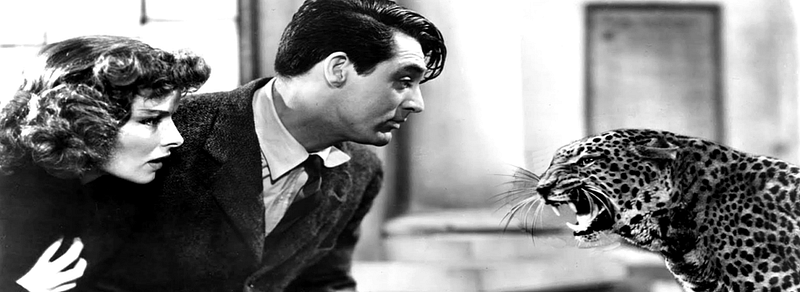
- Katharine Hepburn was generally fearless around the young leopard ‘Nissa’ who played “Baby” and even enjoyed petting it. Cary Grant though was not fond of the tame leopard that was used in the film and a double was used in the scenes where his character and the leopard had to make contact. Hepburn once, to torture Grant, put a stuffed leopard through a vent in the top of his dressing room. “He was out of there like lightning,” wrote Hepburn in her autobiography Me: Stories of My Life.
- Katharine Hepburn had one very close call with the leopard. She was wearing a skirt that was lined with little metal pieces to make the skirt swing prettily. When Hepburn turned around abruptly, the leopard made a lunge for her back. Only the intervention of the trainer’s whip saved Hepburn. The leopard was not allowed to roam around freely after that, and Hepburn was more careful around it from then on.
- This film employed a great number of split screen and optical tricks, such as rear screen projection, so that having the big cat in close proximity to the actors (especially Cary Grant, who was more worried about acting with the cat than Katharine Hepburn) could be kept to a minimum. (Hepburn is sometimes shown petting and handling Baby. The leopard’s trainer praised Hepburn, stating that Kate was fearless and could become an animal trainer if she so desired.) Most of the split screen shots involved a lot of movement, which necessitated moving the dividing line as well. Even the scenes of Susan dragging the mean Leopard on a leash are split screened — you can see that the rope doesn’t always line up. A puppet leopard was also used in some shots. This is most evident after Susan gets the Leopard dragged into the jail. The reaction shot immediately afterwards shows David and Mrs. Random with “Baby” the Leopard on the table. The Leopard is a puppet.
- Cary Grant never said, “Judy, Judy, Judy” in the movies, which he credited to Larry Storch, but he did say, “Susan, Susan, Susan” in this film.
To conclude, Howard Hawks’ “Bringing Up Baby” is the go-to example of screwball comedy that critics and film-lovers reference most as the definitive model of its genre. Howard Hawks took the screwball cycle to it’s dizzying, dazzling peak with a narrative and thematic directions that have much in common with those of Shakespearean comedy. There is little rhyme or reason to most of the action, but it’s all highly palatable as a delightful piece of utter absurdity and lampoons of the battle between the sexes, with a wonderful patter of an exquisitely zestful cast that’s led by irrepressible performances from Katharine Hepburn and Cary Grant in this seamlessly assembled, madcap, leopard chasing, screwball comedic masterpiece.
NOTE: The article contains sources from IMDb and Wikipedia.
Follow me and check out other articles of mine: