
A Day In The Life Of A Crossing Guard
A side gig that may be necessary for school kids and adults
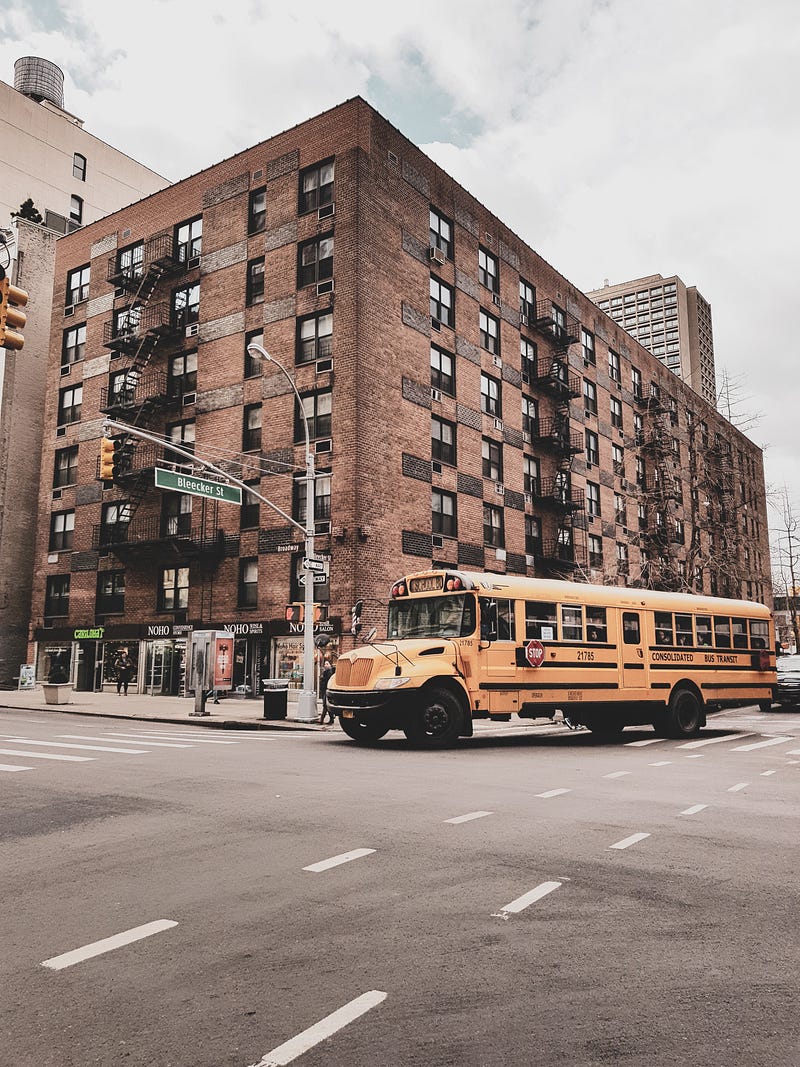
When I was a child at my old school, I and my siblings went home and had to cross a major intersection. Rain or shine, we always met up with a quiet, older man who was our crossing guard. For years, he was our crossing angel, and he guided our small bodies across the street to safety.
It is not many years later, and I find myself wearing a brightly colored yellow coat, and carrying a “Stop” sign. I was called to cover for a sick employee and I am at a new intersection. I make it just in the nick of time, as I spent 15 minutes defrosting my car to make my windows visible for driving. I didn’t anticipate my car would take that long to defrost and I am running behind my personal schedule. I usually like to arrive at least 5 minutes early at any location.
I don’t have to clock in but I have a schedule to do:755 a.m. It is still early morning, and there are several adults who want to cross. There are joggers, and a woman with a large dog, similar to an Aghan breed. The woman and the dog stop to chat with me, and after a while, she leaves, and I am alone again.
But not for long. As we get closer to 9 a.m., a steady stream of kids run, or walk to the crossing walk and I take them across, my right hand boldly holding out the “Stop” sign. The young children often thank me for taking them across and I get a similar response from the adults.
Every day, crossing guards are responsible for taking thousands of kids and adults safely across the streets during the early morning and after school hours.
I was given a one-hour orientation last December from an older man, nearing 70 years old. He was a former corporate mediator and tells me he has spent the past five years working as a crossing guard and a noon hour supervisor. He tells me to get a shovel to help clear out the ice from a patch on the sidewalk. He greets almost all the kids by name and chats to talk to a parent nearby who is shoveling her walkway. His style at stopping cars seems sometimes downright dangerous. The crossing does not have any lights but there is a stop sign for cars. Several times, he jumps out with his stop sign and doesn’t wait for the cars to stop first. His method does not work all the time. A car refuses to stop and drives through. I shake my head and he also says he doesn't have time to photograph the offending cars and feels that cars drive too fast anyway.
Now a few months later, I am working the intersection alone. I press the buttons and wait for the “start walking” sign to turn on before I take the kids and adults across. It is a safer way to work. A few adults choose not to wait for the automated walk signal to go on. I feel obligated to come out with my Stop sign, even though the walk signal is not on. An older woman and her daughter enter the crosswalk and I notice they never pressed the signal. I called out to them to remember to press the walk signal. A few bikers ignore the walk signal and carry on as though there were cars.
That day, I went home with a sore right arm from holding the Stop sign at least 50 times. It’s all in a day’s work and I am glad I helped everyone get safely across the road.
Sometimes the job is downright dangerous. Not too long ago, a volunteer crossing guard in the States was killed after pushing a group of kids away from an oncoming SUV. I don’t have the data on crossing guard death rates, but even one death in the line of duty is enough.
I don’t work as a full-time crossing guard but I applaud all those crossing guards out there. Personally, I think the job is risky and the pay is not great. There are no benefits for casual employees. But the rewards are big: the kids and the adults are grateful for the work done by the crossing guards, whose names should be changed to “crossing angels.”
I hope you liked this story. Please check out my most recent posts here:
Thanks for the read. If you are new to medium, please use my link to join and support my writing and get unlimited reads here.


