
Should You Buy Used LEGO In Bulk?
I Bought Over 6 KG Of Genuine LEGO. Let’s see what I got and whether it was worth it or not…
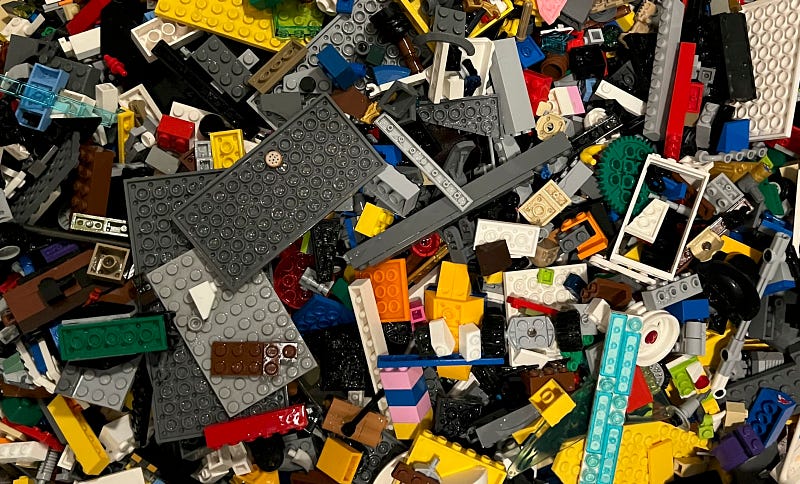
Buying LEGO by the kilo, ha? That’s something you don’t often hear casually brought up in conversations, unless you’re at a LEGO convention, where most people have already done that at least once. For me, however, it was the first time. I had mixed feelings about it — my parents even more so as they wonder why their son at 36 is still spending all that money on LEGO — but curiosity eventually won, and I bid on a 6 KG job lot on eBay, which, after a bit of haggling with the seller, managed to score for 100 bucks. Let’s find out whether my curiosity paid off or not…
Why in bulk?
The short answer because some people sell it in bulk. There are various reasons for doing so. Some genuinely do this as a business, though those job lots are typically a lot smaller than 6 KG, somewhere along the lines of 0.5–2 KG. Note that this is genuine LEGO we’re talking about, not LEGO compatible bricks, which is an entirely different thing.
Traditionally, bulk purchases are a good deal, with LEGO, however, you need to be a bit more careful.
Bulk LEGO also usually doesn’t come as sets. The pieces can be extremely random, and part of the fun is actually finding out what pieces you got. Chances are you might score some really rare pieces. You never know, especially if the seller is just some random person clearing out their shed or attic, and wanting to get rid of all the LEGO stuff. These sellers will often have very little knowledge of what LEGO is worth, so they’ll just slap a price on the entire lot and hope for the best. I think these are the really good deals one should hunt for.
How much is 6 KG of LEGO?
Truth be told, until this experience, I never weighed my LEGO. It’s just not something you’d think of doing, really, so I had no real way of telling how much LEGO I would get in 6 kilos of bricks. But, now, I have a number for you — nearly 6000!
It took me a while to get to the point of being able to write this article because I was washing and sorting all that LEGO. Turns out 6 KG of LEGO is a lot of LEGO, 5765 pieces (plus minifigs and their accessories) to be more exact! That’s about 5 mid-size sets or over 20 small sets. Not bad, not bad at all!
What did I get for my money?
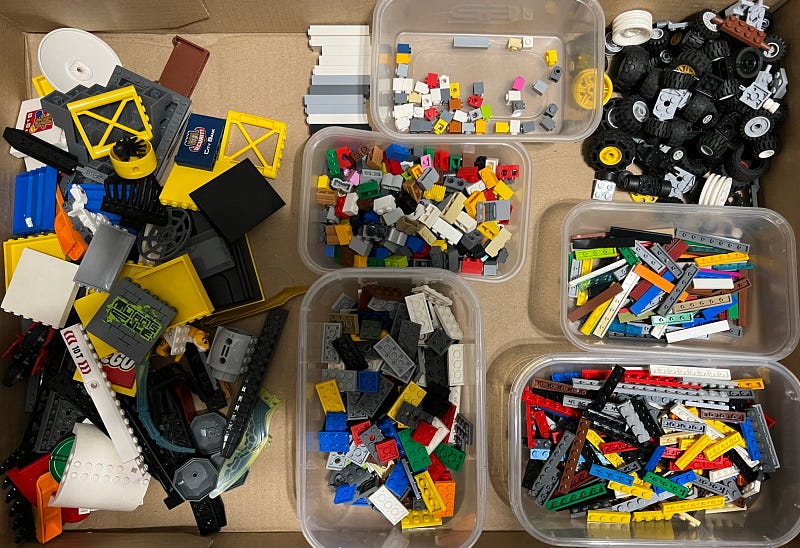
The job lot I scored is incredibly diverse in piece-types. I have still a lot of figuring out ahead of me in terms of what sets these pieces came from because there are no instructions, or anything, just loose pieces and minifigs, but to give you a rough idea of what I managed to sort, here’s an entire list of piece types I got for 100 bucks.
- 92 4×4+ plates
- 98 2×4+ plates
- 221 2×2+ bricks
- 8 1×4+ studded Technic beams
- 7 studless Technic beams
- 38 1×4+ bricks
- 76 1×4 bricks
- 37 windows, doors, windshields
- 78 specialised extra-large pieces
- 19 2×1 tall bricks
- 202 wheels and wheel assemblies
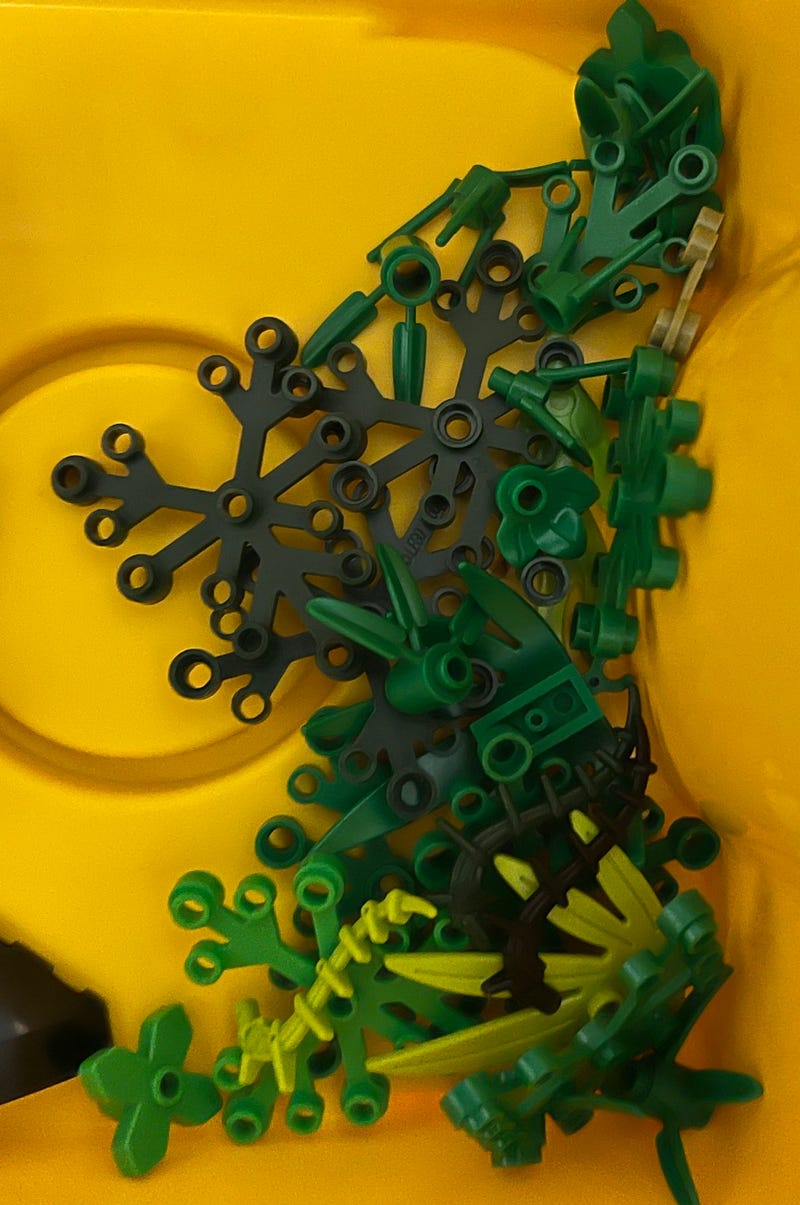
- 30 foliages
- 753 1×1 plates
- 123 1×1 plate derivatives
- 84 2×1 slopes
- 172 1×2+ tiles
- 408 2×1 plates and derivatives
- 90 SNOT plates
- 255 1×1 bricks
- 231 curved bricks
- 82 angled plates and large round plates
- 228 sloped bricks
- 289 1×3+ plates
- 350 1×2 and 1×3 bricks
- 249 2×2+ plates, including 2×2 round plates
- 85 2×2+ tiles
- 94 jumpers
- 50 printed/stickered tiles
- 64 1×2 grille tiles
- 455 small technic pieces
- 321 specialised mid-size and large pieces
- 476 misc pieces
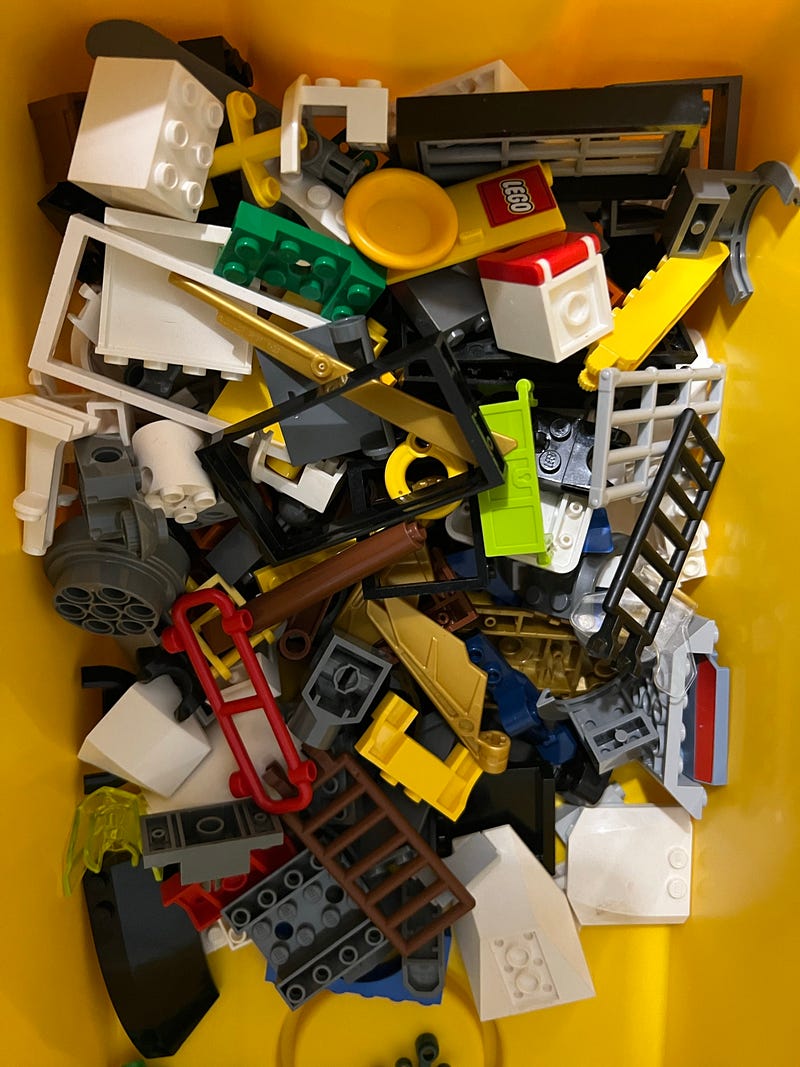
Here are a few photos too of my sorting process, just to give you an idea. And this does not include the minifigs yet!
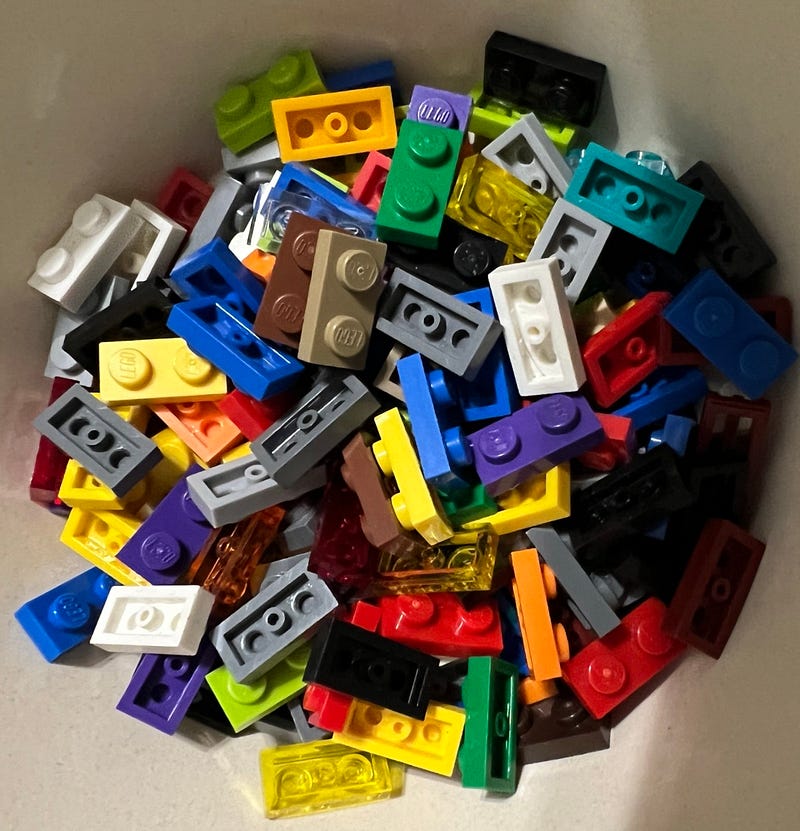
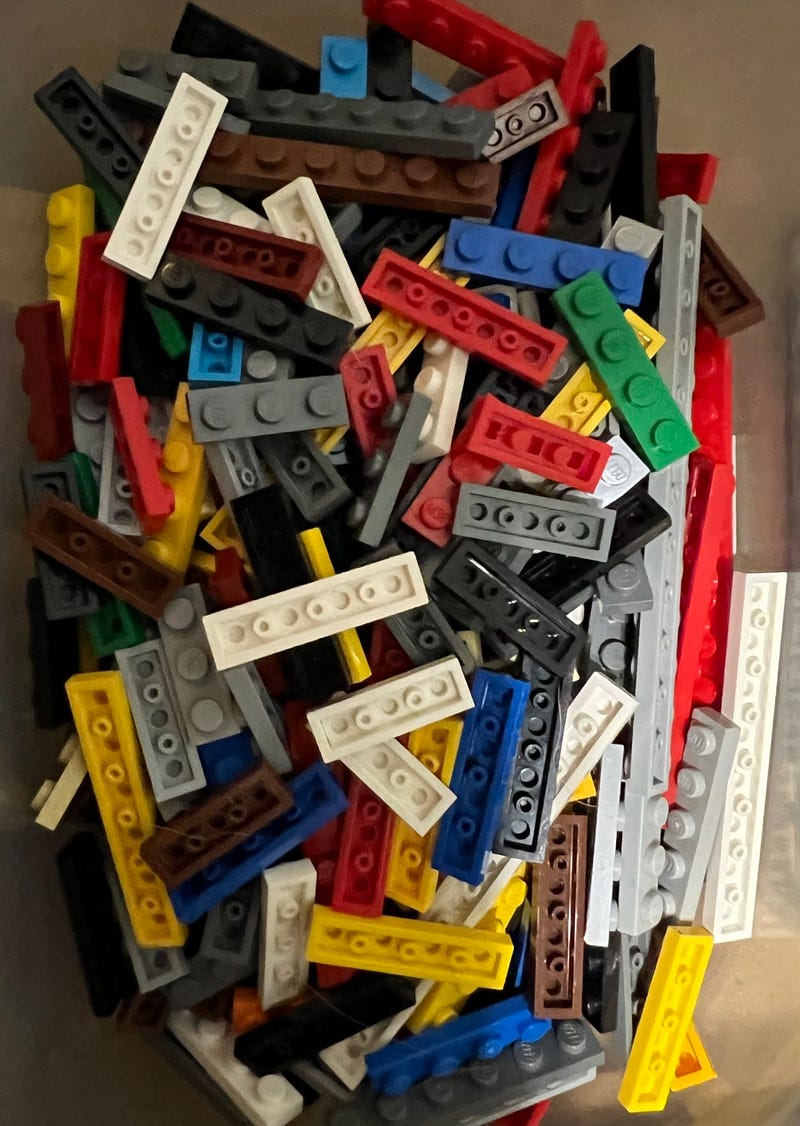
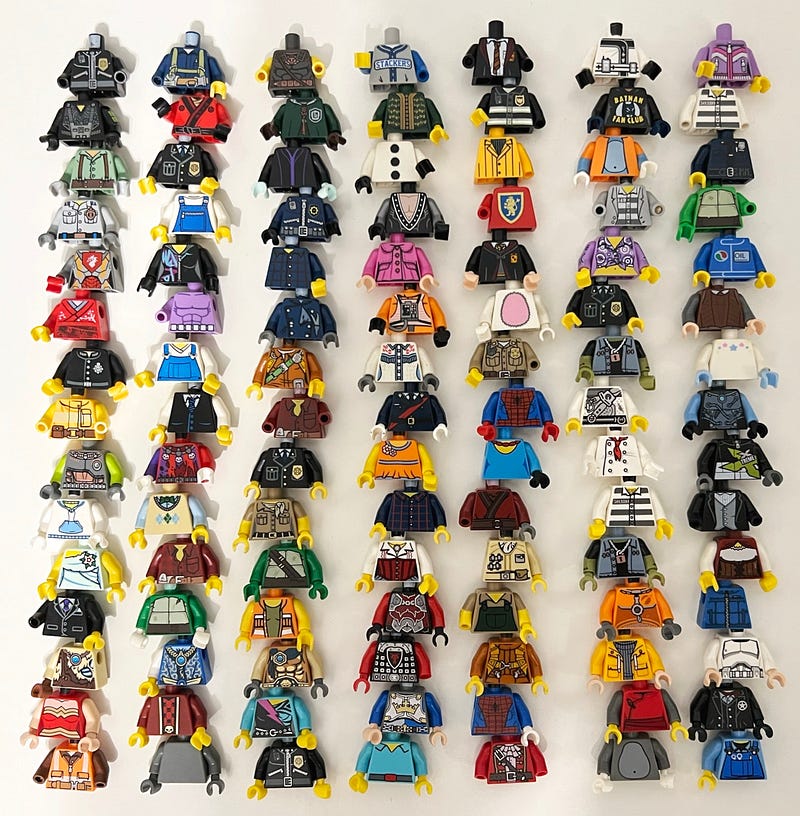
I left the minifigs off the initial count because with used LEGO, this can get a little odd. Turns out I have 105 torsos, but only 88 legs, and just 66 heads! The number of heads is nearly half of the torsos, so that’s going to be a head-scratcher eventually. I would also add that some of the torsos are missing arms or hands. Whoever owned these before me must have had a very disturbing fetish for mutilating LEGO minifigures. 🤮
What was kind of cool and unexpected however is the 6 LEGO microfigs, which I didn’t even know existed until now. I also counted 171 minifig accessories.

So, summing it up, I calculate this as only 66 minifigs, 6 microfigs and the 171 accessories.
Any gotchas?
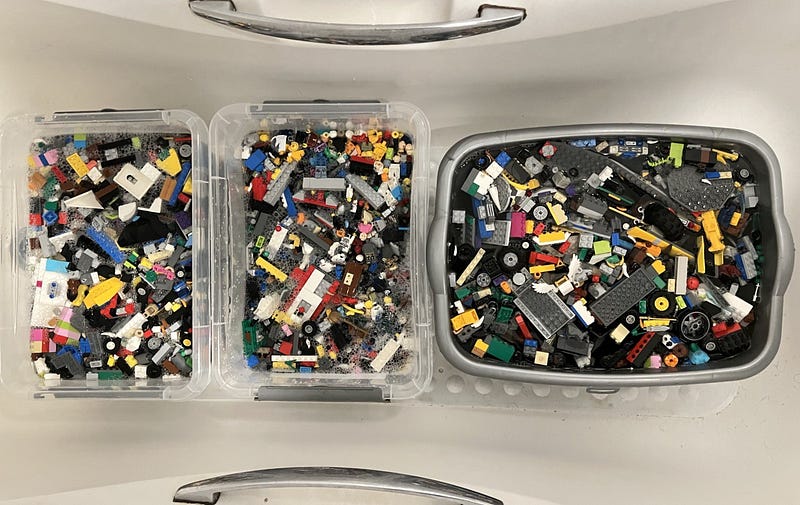
Yes. A couple. First, I had to spend quite a bit of time washing and sorting the pieces. Washing because they were dusty and full of what, I think, was cat fur, and also because it’s just good hygiene practice to wash unsealed LEGO you buy from someone else. That took more time than you’d expect, and had to do two rounds of washing, just to get rid of everything.
There were also some pieces that were not genuine LEGO. Yes, unfortunately for me and my bank-account, I am a purist, and if it doesn’t have the LEGO logo on the piece I ain’t touching it. The seller was honest though and said that there will be a few pieces which she was not sure whether it was LEGO or not. Out of the 6.2 KG she sent over, about 300 grams were KOBI, MEGA and other brands. That still meant that 5.9 KG was genuine LEGO. However, sorting all that, and finding the non-genuine LEGO pieces took me a good few evenings over the course of two weeks. If that’s time you don’t have or don’t want to spend, used LEGO might not be for you.
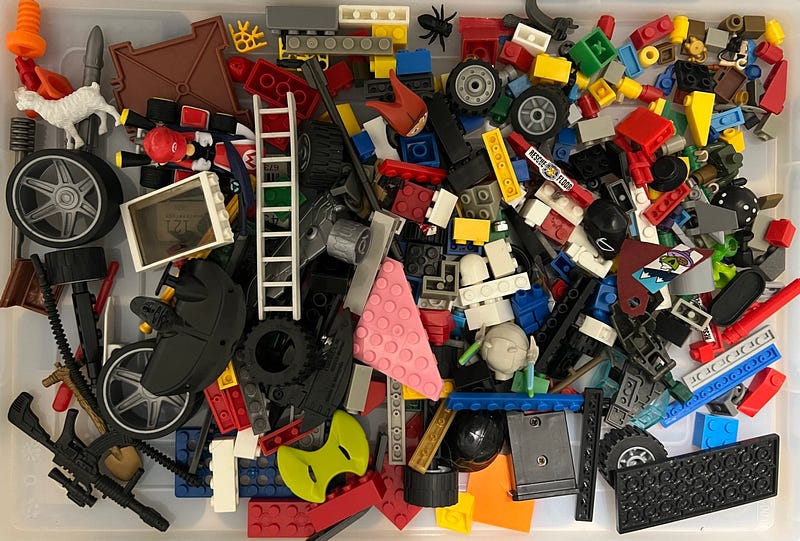
Finally, I think it’s worth stressing that while pictures will often give you an idea as to what pieces you’re getting with your purchase, in a big collection like this, it’s quite impossible to see all of them, unless the seller goes out of their way with the product shots. Some of those pieces you may or may not want or need, while others you hoped you’d get, might not be in the box you’re getting. This is most likely not LEGO that you will sell on as complete sets, it’s purely to extend your library of parts at a much lesser cost than buying new sets.
Overall value
I must admit, I was very curious just how good a score this 6 KG job lot was in terms of $$$ profit, but I did not expect to see the number that I did when I tallied everything up! It’s a total of $1021 worth of LEGO! How did I get to that number, you ask? Well, it’s actually quite simple. On average, LEGO pieces cost $0.16/piece. Multiply that by piece-count, add each minifig for $1, and you get $1021.
Spending $100 on something worth $1000 is a pretty insane deal, if you ask me.
What’s even more interesting is the fact that I probably could score even more if I wanted to sell any of it. I found a good number of what I suspect to be pretty limited edition pieces, which are already valued way over what their initial price would have been. If I sat down and cataloged each and every piece on BrickLink, I am fairly confident the total value would be considerably more than my 1021 bucks.
But forget BrickLink valuation, that’s not why I bought this LEGO. As it stands, what’s important is that I paid only 10% of the total value. 95% of the pieces are in excellent condition, no bent or broken parts and no discolouration. I could essentially count those as “new” LEGO.
Buying used LEGO is a bit of a gamble, but unless you’re tricked into buying fake pieces, it’s hard not to come out profitable at the other end.
Hi there! 👋
Recently, I started a new publication — Bricks n’ Brackets — dedicated to LEGO, tech and coding. It would mean a huge deal to me if you’d follow it, though only do so, if any of those topics pique your interest. You can also read more about why I started it and what my overall goal with it is. You can also join as a writer if you’d like, as long as you submit articles around those three topics. The publication also has a YouTube, Instagram and TikTok channel. Thank you, and may the gods of creativity and success guide your day!
Attila Vago — Software Engineer improving the world one line of code at a time. Cool nerd since forever, writer of codes and blogs. Web accessibility advocate, Lego fan, vinyl record collector. Loves craft beer!


