
Why Today’s Classic LEGO Is Actually Better Than 30 Years Ago
The LEGO nostalgics got it wrong, and I think I know why…
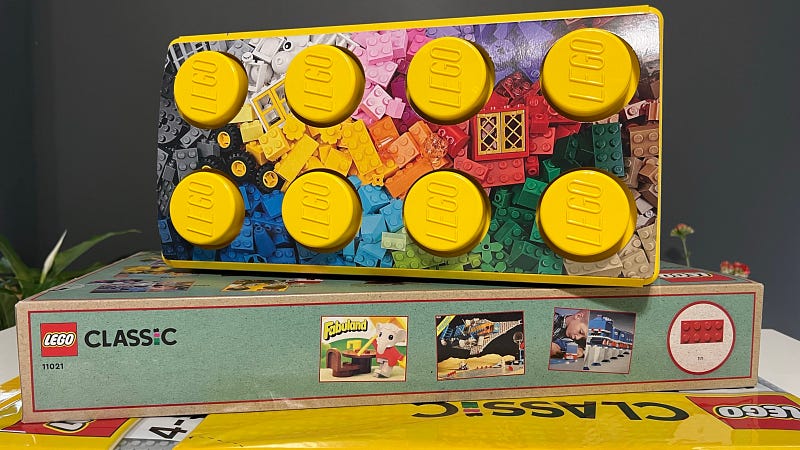
Alright, let’s get this topic handled once and for all. For about a decade now, every time I read about LEGO, be that in the news, blog posts or comments, there’s a recurring theme I’m seeing. Essentially, what seems to have happened over the last 30–40 years is that we’ve ended up with two major groups of LEGO fans. The first is the one that didn’t just grow up with LEGO, but also grew with LEGO. They embraced the company’s direction and cheered along its success.
The other group, however, while they might have grown up with LEGO, they never grew with the company and somehow became the nostalgic, often bitter naysayers, claiming LEGO has departed by lightyears from its original mission, none of the bricks are bricks any more, and most of it is just rubbish. In this article, I want to address this latter group head on, and while it might sound harsh at times, I hope some will reconsider their position and see LEGO again for what it is — an incredible tool for fostering creativity.
LEGO had no choice…
To fully understand the company’s current position in the industry, we need to look at its history — the one that many brickstalgics love bringing up. Indeed, many decades ago, all you could buy were simple bricks and came in very small sets. Decades later, LEGO’s famous patent expired, and suddenly, everyone was able to mould bricks that were compatible with LEGO.
Having said that, this also happened before the patent expired. For instance, once my mum got me a set she thought was LEGO, and frankly it was compatible, but it was some Chinese knockoff and I didn’t have the heart to tell her that it wasn’t actually LEGO. By then of course we were in the 90s, but between those early simple bricks and the somewhat more varied 90s sets something became very apparent to the Billund based company. If they were to survive and see themselves relevant in the 21st century, they had no choice but to diversify, as in, evolve to a much wider range of LEGO bricks.
LEGO had a binary choice. Die or evolve. Anyone wishing back the good ol’ brick days is wishing LEGO’s untimely death as a company.
Denmark’s famous toymaker would have never even seen the 70s, let alone the 90s, if they stopped at simple bricks. Probably by the 60s they would have claimed bankruptcy, and we’d have no one to talk about them today. Those old simple bricks many keep wishing back were nothing but the MVP — one of the best physical representations of a minimum viable product. What LEGO unknowingly did was in some ways was spearheading agile by iterating on its main product year-on-year.
The 1958 bricks still interlock perfectly with today’s bricks, which makes them nothing but a backwards compatible version of the decades old product.
The incorrect nostalgic claims
Those who happen to be crying for the good ol’ days of LEGO, should pay a lot of attention to this section of the article because I am going to refute every single claim I have seen so far about LEGO not being what it used to be.
- You can’t build anything else out of sets any more. This claim is perhaps fuelled by LEGO often not providing alternate building instructions any more with sets. This used to be standard, and indeed it is less so these days. However, this makes no real difference. Anyone with an ounce of imagination can take apart any set — genuinely any set — and build something entirely different out of it.
- Too many specialised pieces. As someone who uses Bricklink’s Studio app to design MOCs, I can tell you, that claim is absolute bullbrick. I have yet to see a piece that is single-use. Yes, new sets sometimes come with new pieces never seen before, but look at them for more than a second, and you’ll realise, they’re all reusable. I have seen some incredibly clever uses of parts in the Speed Champions series, for example. In fact, there’s hardly ever a LEGO set ever that doesn’t use a piece in a way I haven’t seen before, and I am not alone in this observation. Balazs of RacingBrick over on YouTube makes this observation regularly, and so does Jang.
- The new classic sets aren’t really classic. Yes, they are. The problem is that brickstalgics have a different definition — and frankly wrong — of what classic means. Going back to an earlier point that the 1958 bricks are still compatible with today’s bricks makes today’s actual brick elements by definition just as classic, and if you look at any of the classic sets you can buy today, you’ll find they’re mostly bricks and other generic pieces. No themes, no nothing. Just LEGO System bricks, plates and some other cool non-specialised stuff in there.
- LEGO is more expensive than it was. Last time I checked some of this year’s releases compared to sets back in the 70s, those sets adjusted for inflation were actually considerably more expensive than what you can buy today. In fact, I just bought two Classic sets today, the regular large set and the 90-year anniversary set, which pretty much adds up to 2000 pieces and paid a total of 70 bucks! From where I’m standing, that’s a bricking good deal. Reviews of both coming very soon, so subscribe and follow while you’re at it!
- The old, powered train tracks were better. The problem with this statement is that I only hear this coming from adults. First of all because they’re the only ones who can remember them, but secondly — and more importantly — because kids don’t give a flying brick about whether the track is powered or it runs on batteries. The battery option is in every way a better solution for kids, and let’s not forget, LEGO train sets are created for kids, AFOLs like you and I just so happen to play with them too, but we’re not really the target audience.
- Old studded technic was better. More nonsense. First of all, studded Technic pieces still exist and are still being sold as part of sets and on their own. Secondly, they’re not better, they’re different, and that’s an important distinction to make. I, for one, would not claim that studded Technic is superior to the newer beams, or vice-versa. I like them both, and I see the value of both, and whenever I can mix the two, I definitely do because they are compatible with each other.
Is theming really that bad?
One of the major sticking point for brickstalgics is of course theming. They’ll “brick” on everything from Ninjago to Star Wars, and from Marvel to DC. Looking at any of the themed sets with an objective eye, I fail to see the problem. As stated before, none of these sets contain single-use parts. All of them can be taken apart and be the basis for anything else. Buy the 700 bucks Millennium Falcon for your kid, and they’ll have so many LEGO pieces, they’ll be able to build MOCs for the next two years!
Themed LEGO sets are the best ever marketing tool for creativity!
Some claim that LEGO, by introducing themed sets, removed the need for imagination. I think that’s total bullbrick! If anything, themed sets open the doors of imagination for kids who never would have got into LEGO had it not been for their favourite superhero, who now is part of an entire LEGO saga. Instead of just buying the action figure, they now get to build it. Doing that, will do great things for a child’s brain, and while they might stay in that superhero, sci-fi, adventure universe, they get to build it and rebuild it they way they see it and the way they want to see it evolve.
The brick is in your court
I think the message is clear. There’s absolutely nothing wrong with LEGO’s classic sets, and in fact with any of their sets. The problem is not the bricks, but rather the lack of willingness of many fans to evolve their imagination. It is the age-old issue. When you have only a horse, the only way you can imagine getting from A to B is via a horse and a cart. The automobile might even seem like an abomination compared to what you’re used to. However, we can all agree that it enabled humans to achieve far more things than a horse and a cart ever could. All was needed was a bit of imagination.
The same applies to newer classic sets, and in fact any LEGO set. One’s imagination needs to evolve from the square brick and plates era and join the present, where you have options to create much more accurate creations than ever before. All is required is perhaps a bit more imagination, but true to LEGO’s mission, that was always the goal — to evolve one’s imagination.
Those struggling to see the infinite creative potential in today’s LEGO sets, perhaps should spend a bit more time training their imagination and creativity, instead of living in the past.
The brick’s in your court. It always was. What you build with it, is entirely up to you.
Attila Vago — Software Engineer improving the world one line of code at a time. Cool nerd since forever, writer of codes and blogs. Web accessibility advocate, Lego fan, vinyl record collector. Loves craft beer!


