
BOOK CHAPTER
#7. 10 Minute Author — Plan
Task 5: Complete your research
I wrote a book 10 minutes a day, so I wrote another book about how I did that. 10 Minute Author shares the steps I took so that others can too. Click here for the Chapter Guide for easy access to find the section you need. This special Medium adapted version includes additional resources not available elsewhere. Get unlimited access to everything by joining Medium (this is an affiliate link and I receive financial compensation if you join from it. Thanks for feeding a writer).
PART 1: PLAN
Conduct Your Research
Once you know what is going in your book and you work out what your book will look like through your brain dump and organization, the next step is to work out what research you will need to do and to complete your research. When you’re writing a book in 10 minutes a day, the last thing that you want to do is stop your flow because you suddenly realize you need to research something. It’s an unnecessary distraction that could be avoided by simply sticking to your plan and pre-completing your research. So let’s do that.
Research Plan
Creating and using a research plan will keep you focused and on target. Be it fiction or non-fiction, chances are you’ll need to research something, and you may need to research quite a lot. Planning your research before you begin will avoid the break in flow while you’re writing, as well as those pesky tangents and excuses — also known as procrastination. Plan all your research from the start. Think about everything you may need to research from where you’ll find images and quotes that you wish to include, to searching for particular statistics etc.
For fiction, you could be researching anything at all! They look up at the moon while on the beach. Wait, the moon affects the tides. Is the moon full, waxed, waning, half, quarter, new? Are they high tide or low tide? Where are they? Could they even be standing on the beach under these conditions? RESEARCH! Of course, you will only research it if necessary. If you simply mention the moon and the beach, the effect on the tides may not matter, but if the water depth is important, then these are details you need to know.
Because I Plan to Pants, in fiction, there is flexibility with research. But I still recommend researching everything expected before you write. Now, here is an important tip — research everything unexpected after you write (during the editing phase). Never leave the flow of writing to research — create in the moment and fact-check later.
Research everything EXPECTED before you write.
Research everything UNEXPECTED during the edit.
Research Journal
Once you have planned out the research you will need to conduct, the next step is to prepare to gather the information and this is where a research journal comes in handy. Having a research journal means that you can keep all of your research data in one place so that you don’t have to go looking for it later. Journal things like:
- Websites
- Images
- Magazines
- Articles
- Books
- Quotes
- Facts
- Figures
- Etc…
Your research journal should contain all the details about the research conducted including:
- Links
- Notes
- Ideas
- Follow-up questions
- Reference (for non-fiction)
This may sound like a scary thing, particularly if you don’t know how to research. The thing is research can be anything from having a conversation with a friend to more formal research such as searching scientific journals for data. You may search Google, Google Scholar for journals, your local library, books on Amazon, interview locals, connect with experts via Facebook messenger, etc. Research is open to your interpretation and your resilience. When conducting formal research (such as searching for peer-reviewed papers), do not try to be tricky — use direct words and search terms. Simplicity is key. Always check and cross-check everything to ensure you’re providing your audience with accurate information.
Research is a legal safety net
Your research plan and research journal are not just for fun, they are also to legally cover your butt. If you choose to use an image, once you search and find the image you wish to use, enter the details into your journal so that on completion of your book, you can ensure you give the creator of that image the acknowledgment they deserve and are legally entitled to. This is not just applicable to images, of course. All intellectual property (IP) comes under copyright including Facebook posts. You must obtain permission or legally and accurately reference any IP that you include in your book.
Referencing honors copyright
You must reference any work that you include which was done by someone else. Just as you would expect someone to give you credit for the work you’ve done, so should you give credit to somebody for the work they have done. When in doubt, reference. This will be less applicable in fiction; however, still important to know. There are many referencing styles available, and it doesn’t matter which one you choose as long as you are consistent. I prefer to use the Harvard referencing system.
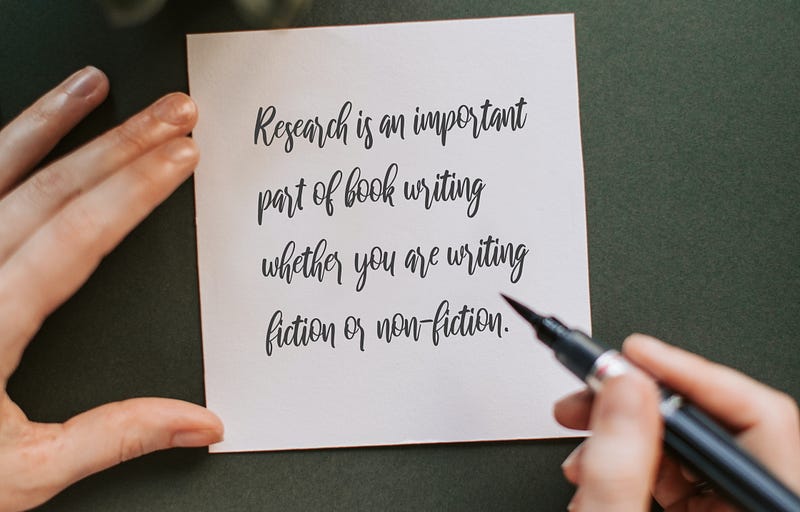
Research is an important part of the book writing whether you are writing fiction or non-fiction. Audiences can be forgiving but they like to see that you know your stuff and one way you show that is through research. I find that I do more research for fiction than non-fiction, which may surprise many. Having a strong research plan and a research journal and conducting your research before you begin writing will allow you to get out of the way when it comes to writing and permit your creativity to flow.
YOUR TASK: Set-up your Research Plan and Research Journal and complete your research
Copyright © 2020 Writer’s World
All rights reserved. No portion of this book may be reproduced in any form without permission from the publisher, except as permitted by Australian copyright law.
This book was written a few years ago and published in 2020; however, since then, I have closed the program and website that it refers to so, I need to update it. What better way than to share it on here? You can purchase the full original copy on Amazon here.