
How to Make Rational Investment Decisions
6 Tips for Avoiding Emotional Traps in Trading
To begin, it’s crucial to set aside emotions when investing in the stock market. Sentimentality or anxiety can hinder your success. You might wonder, “How can I do this, especially since I’m an emotional person and proud of it?”
It’s challenging, but I faced the same issue years ago and developed strategies to cope. One key approach is understanding that significant fluctuations are normal even for well-positioned, solid companies.

This advice isn’t about day trading, which is different. I’m a long-term investor, and I’m sharing my strategies. But first a quick disclaimer:
Investment Discussion Disclaimer
This content reflects my personal stock investment experiences and is for informational purposes only, not financial advice (I do not give financial advise and I do not recommend any stocks). I am not a licensed financial advisor. Any investment decisions you make based on this information are your own responsibility.
Stock investments carry risks, and results are not guaranteed. It’s recommended to conduct your own research or consult a financial professional before investing. I am not responsible for any investment losses or damages incurred from the use of this information. This is all just my personal experience! Stocks are volatile financial assets, so research and make your own financial decisions.
Are you considering ETFs or individual stocks?
To manage your emotions, starting with ETFs can be effective. ETFs, or passively managed index funds, hold a range of stocks in various sectors. Initially, this approach helped me because the impact of any single stock’s volatility is minimized within the ETF.
“But I want to buy individual stocks, because I am just interested in one particular company. Or I really like them.”
Never every buy a company because you just like them.
However, if you prefer individual stocks (or a mix with ETFs), prepare for a more turbulent experience. Acknowledge your emotions and check them, but avoid hasty decisions. Enjoy the upswings in the market but prepare for its volatility.
One tactic for long-term investors is to avoid constantly checking your portfolio (I check it out only once a week at the moment). This helps in staying emotionally detached and ignoring market noise. Be aware, though, that this approach carries the risk of missing significant market downturns. To mitigate this, you could use stop-loss orders to automatically sell a stock at a predetermined price. But be aware that the stock is sold no matter what, when the price of your order is reached.
“But I do not want to loose money!”
Well this might happen at one point!
Dividends could easy the pain
Remember, losing money is a possibility. An alternative strategy is investing in dividend-paying stocks. Even during downturns, dividends can provide some financial return, though they might not fully compensate for losses. Ensure that the company is a reliable dividend payer and be wary of unusually high dividend yields, as they can indicate underlying issues.
In volatile times, reviewing the financial health of each company in your portfolio can offer reassurance. If the data isn’t promising, a stop-loss order could be a a good measure to give your emotions some rest.
Always question your investment decisions, whether buying or selling. This self-talk can prevent rash actions. Before making a move, find at least five solid reasons to support it. If the reasons aren’t convincing, gather more information before proceeding.
“Zooming out” is another useful perspective. A stock might drop by 5% today but could have grown by 50% over two decades. Check long-term trends on stock websites for a broader view. Here’s a good example from Yahoo finance:
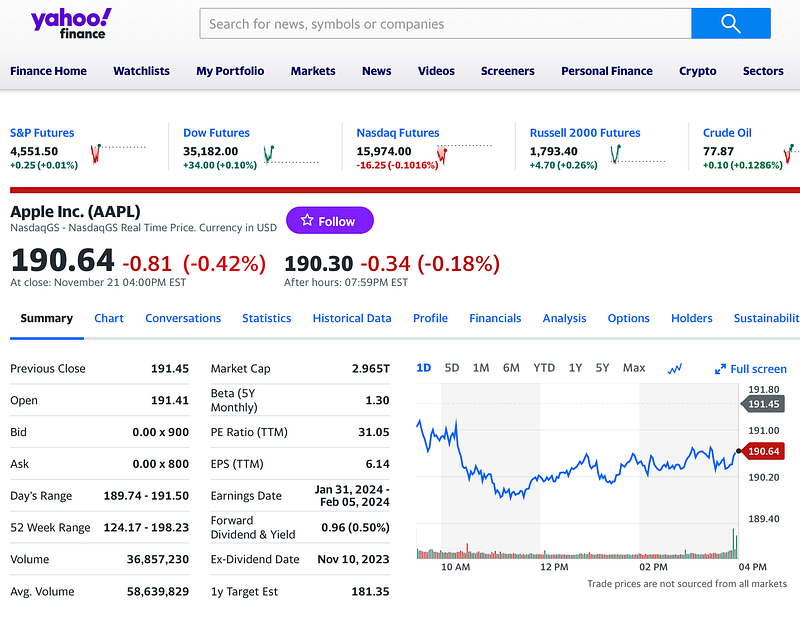
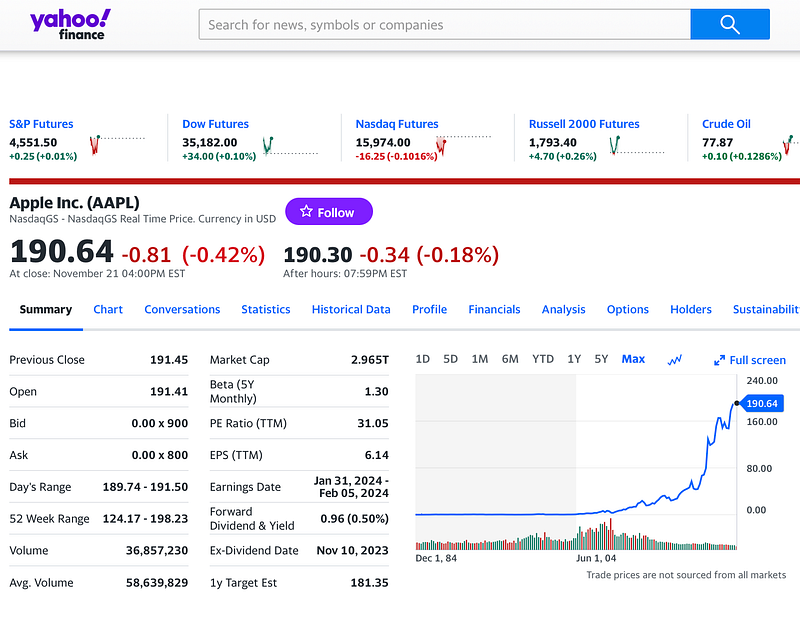
Naturally, past performance is not a guaranteed predictor of future trends. However, in the context of a solid company, a strong historical record can be a reassuring sign. If the business model and management remain consistent, it suggests that even in market volatility, the company has the potential to recover and thrive again. This underscores the importance of understanding the fundamental stability and resilience of the business when making investment decisions.
And lastly, if you can’t do that or if stress and anxiety are a problem for you, consider consulting a financial expert. They can assist with decision-making or manage investments on your behalf.
Conclusion
In conclusion, navigating the stock market without letting emotions control your decisions is key to long-term investment success. Whether you’re inclined towards ETFs or individual stocks, understanding market dynamics is crucial. Employing strategies like focusing on ETFs for diversified, less volatile investments, and using stop-loss orders for individual stocks can help manage risks. Additionally, considering dividend-paying stocks can provide a steady income stream, even in fluctuating markets. Regularly reviewing company data ensures you stay informed about your investments’ health. Remember, always question your motives before making any investment decision and consider the long-term perspective to avoid being swayed by short-term market movements. And if managing your investment portfolio becomes overwhelming, seeking advice from a financial expert can be a wise step.
With years of experience in the market, I have reached a spoint where I can manage my emotions. My approach now involves only reviewing my stocks and ETFs once a week. Additionally, I’ve developed a personal strategy for when and how to rebalance my portfolio. And above all I stick to my strategy.
Hej there! Can I ask you a favour (it will really help me out to grow this blog)?
If you find this article insightful and enjoy reading it, consider following me please for more content about Apple, Mem, productivity, and the general landscape of AI, as they help me reach a wider audience, enabling others to benefit from my stories and personal experiences. Thanks for reading and enjoy your day!
More to read:
Apple
AI