
6 Life-Changing Lessons To Learn From the Inspiring Napoleon Hill
Success doesn’t owe us anything.
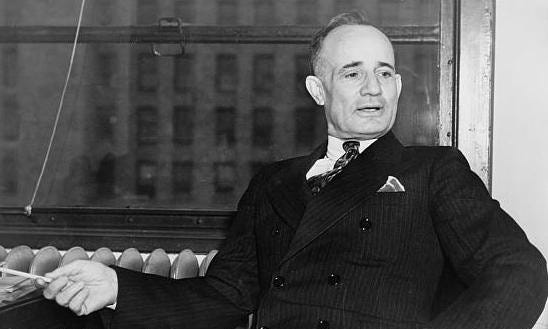
Napoleon Hill was born in 1883.
Yes, it’s the same time when:
- Henry Ford was 20
- Theodore Roosevelt was 25
- Thomas Edison was 36
- Alexander Graham Bell was 36, and
- Andrew Carnegie was 48
Research claims that Napoleon Hill’s had many reputable friends. Back to back, Napoleon interviewed the above personalities for his book “The law of success.”
Besides, interviewing personalities like Thomas Edison & Henry Ford gave him a deep idea of a wealthy lifestyle.
Though he always got along with his famous friends, most of his written work is also based on getting rich: “Thinking and Growing Rich” and “The Law of Success.”
While most of us still hate rich personalities, Napoleon realized it’s the art of life.
- Who doesn’t want a wealthy life?
- Or perhaps you believe wealth only counts in money?
For Napoleon, wealth was knowledge, power, status, respect, fame, and much more. Napoleon truly believed that we could achieve everything. It’s only our mind that stops us.
So, below are 6 quotes from the all-famous Napoleon Hill to make a better you.
Note: Most of Napoleon’s quotes are in the context of his friends mentioned above.
Let’s get started.
1. Do something
Theodore Roosevelt was the 26th US president.
Amongst most historical figures, people can deeply relate to the struggles of Theodore Roosevelt.
Friends with the Hill, Roosevelt was a prolific writer.
He had many tricks up his sleeve to impress people.
Dale Carnegie, in the book “How to win friends and influence people,” explains that:
“In order to meet someone, Theodore would stay up all night and study in the best interest of his guests.”
Sure. For some people, this act may sound deranged. But coming from a noble-winning president, I highly believe he was right.
If doing anything gives you an edge over other people, do it — how little may it seem?
Whatever knowledge you have, put it to use. In Hill’s words:
“Action is the real measure of intelligence.”
The only possible way to test your understanding is to apply them.
Life is very short for rehearsing lessons and never testing them. Apply lessons like these!
2. Take the first benchmark
In the book “When,” the Author Daniel Pink explains:
“Thomas Edison was a night owl.”
Edison had intense hearing problems. This problem worked for him in two ways:
- Ignoring people got way fun
- Concentration tripled
Edison would stay awake all night, reflecting on what if the Scarlet Fever never happened — would he still be deaf?
Edison said: “My deafness has not been a handicap, but a help to me,”
Most people waste their time on events that will never happen. Nobody could go back in history and undo war.
Moment of truth: If we could go back in history and change events, no people would die.
So please don’t tell me you want to go back and undo useless things that aren’t liabilities in your life.
Just start with what you have and where you stand. In Hill’s words:
“Do not wait. The time will never be just right. Start where you stand, and work whatever tools you may have at your command, and better tools will be found as you go along.”
You never know how long the road is. Only starting can guarantee you the knowledge.
3. Do quit or Do (not) quit
Napoleon wrote best-selling books in his lifetime.
All of them focused on one principle: personal growth.
At the start, Napoleon was just a teen reporter, trying to learn education and feed himself.
Who would have known that his best book: Think and grow rich, would sell 20 million copies after 50 years of publishing?
In the era of no internet, how did people know about the Hill?
Answer: Words spread faster when people realize you’re not the bland ones who quit.
Andrew Carnegie always motivated Napoleon Hill. On one occasion, Napoleon Hill said:
“Our only limitations are those we set up in our minds.”
All of us have only two options:
- To quit
- To begin
According to Hill, quitting never guarantees anything. If you’re after a shred of light, opt for the beginning.
Success doesn’t owe us anything.
But if it’s going to help us, we better take advantage to fulfill our goals.
4. The car method
Life is like one giant loophole.
Tony Robbins and Robert Kiyosaki follow Napoleon Hill. When Napoleon Hill always followed Andrew Carnegie. And Andrew Carnegie was influenced by Herbert Spencer.
In other words, the influencer loop looks like this:
Tony & Robert → Napoleon Hill → Andrew Carnegie → Herbert SpencerOther than Hill and Carnegie being great friends, no one in the loop ever met each other.
But let me tell you, I have a way you can meet Napoleon Hill.
Secret answer: through the book.
You might not get to meet Napoleon Hill, but the best shot of understanding him is by reading his work.
We don’t have to do great things. We have to wipe out the dust from useless things.
An average US car company’s turnover in 2021 was $98.8 Billion. Tell me, are they making alien ship cars?
Everything you need to make yourself rich is right under your nose.
You don’t need to do extraordinary things. Just put extraordinary effort into little things that matter.
In Napoleon’s words:
“If you can’t do great things, do small things in a great way.”
5. We have superpowers
Hill dedicated 25 years of his life to studying what made Thomas Edison, Theodore Roosevelt, and Henry Ford rich.
Bitter fact: None of us are willing to waste 25 days researching a piece we have already doomed to failure.
But Napoleon did.
I wonder how he slept through the night knowing he told people he had to write a book and show up every time on the streets meeting Andrew Carnegie with not-so-good news about the book.
We all fear deadlines. But what Napoleon had was a goal.
Hill said:
“When your desires are strong enough, you will appear to possess superhuman powers to achieve.”
We are all born with superpowers.
Reading fiction, we have been taught that superpowers are magical, maybe dark, passed by people who fly and raise their palms in a clockwise direction.
If I may ask:
- We all have miracles
- We all have darkness inside us
- We all fly: airplane, parachute, paragliding
- And we all can twist our plans
We are superhuman beings. We all have these qualities.
Sometimes I think they have lied about us being superhumans and the other creatures as normal.
What do you think?
6. The banana peel
How often have you underestimated yourself and done something out of the way?
Not to mention, you slipped too.
Let me tell you: you’re not alone.
Five hundred years ago:
Christopher Columbus did this too. Even when it wasn’t enough, the creator of the Titanic did this too.
Did it stop the world from making failures?
No? Because failure isn’t something we can control. It’s embedded in success as a part of learning.
In Napoleon’s words:
“Every adversity, every failure, every heartbreak, carries with it the seed of an equal or greater benefit.”
The above quote reminds me of a line I love the most by Passenger:
“Only when you love her when you let her go.”
Only when you’re willing to learn can you accept failure? They are an unbreakable bond.
Instead, one should have a proper framework to surface from failure and rise again.
Just like Thomas Edison did 10,000 times.
Final thoughts:
Napoleon Hill’s history is similar to Marcus Aurelius’s.
Broken families. Faced adversity. But it became successful.
Similar childhood trauma and problem patterns made them two of the world’s most famous people.
If you also have problems, maybe it’s a sign you’re going to be the [3rd next successful person.]
Who knows!
Join 1,100+ writers and get your next writing inspiration right now.
Or, join Medium with my referral link.


