
This Muscle in Your Calf Can Do Big Things to Improve the Metabolic Health of the Rest of Your Body
Groundbreaking research suggests the soleus muscle pushup is more effective than exercise, weight loss, and intermittent fasting for improving the regulation of blood glucose
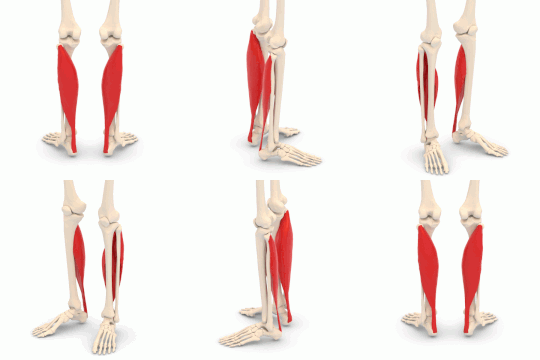
Professor Marc Hamilton of Health and Human Performance at the University of Houston has identified the ‘soleus pushup’ as the most effective exercise to improve your Basal Metabolic Rate (BMR).
The effect lasts for hours, even while sitting.
His research shows the soleus muscle if activated correctly, can sustain an enhanced BMR. This improves the regulation of blood glucose and is more effective than any other methods, including exercise, weight loss, and intermittent fasting.
Your BMR is the number of calories you burn as your body performs its basic life-sustaining functions. Your body uses oxygen to burn blood glucose or fats, depending on its immediate energy needs.
The soleus is the large muscle on the back of your lower leg. This powerful muscle runs from the back of your shin bone and attaches to your heel bone. When activated correctly, the soleus muscle can raise your BMR for hours.
“We never dreamed that this muscle has this type of capacity. It’s been inside our bodies all along, but no one ever investigated how to use it to optimize our health, until now.” — Professor Hamilton.
The soleus muscle does not rely on glycogen, allowing it to work for hours effortlessly without tiring.
Professor Hamilton tested the soleus push-up by having subjects take a glucose drink and measuring their vital functions over the following three hours. He found a 52% improvement in the excursion of blood glucose and 60% less requirement for insulin.
Doing the soleus muscle push-up doubled the normal rate of fat metabolism in the period between meals. It also reduced levels of fat in the blood.
How do you perform a soleus pushup?
Your aim is to shorten the calf muscle.
- Sit with your feet flat on the floor and muscles relaxed.
- Raise your heel, keeping your toes on the ground.
- Release the heel when it is at the top of its motion and place it back on the ground.
It is a similar motion to walking, performed while seated. However, it uses much more energy and as the muscle doesn’t tire, you can maintain it for a long duration.
Here is it in action with a word from Professor Hamilton.
The researchers are adamant this is not a fad diet tip. They stress it is a potent way to benefit from the unique features of the soleus muscle.
A healthcare breakthrough
Professor Hamilton calls it the “most important study” ever completed at the University of Houston. The discovery could solve a variety of health problems caused by our modern-day tendency to remain inactive for long periods.
Too much sitting increases the risk of heart disease and more. Having a low metabolic rate is dangerous for people who are at high risk for age-associated metabolic diseases such as diabetes, prediabetes, and dementia.
Professor Hamilton is unaware of any drugs that come close to raising and sustaining whole-body oxidative metabolism at the same level as exercising the soleus with his pushup method.
I tried it for one month
Here are my updated results.
Malky also has a sure cure for seasickness — sit under a tree. Sign up for more and have a giggle.
In case you missed it —
It would be cool if you wanted to read more by me. And if you haven’t signed up for Medium, you can earn money or support other writers by joining here.


