
I Lost 1kg Doing This Easy Exercise While Sitting
The results from testing the groundbreaking research
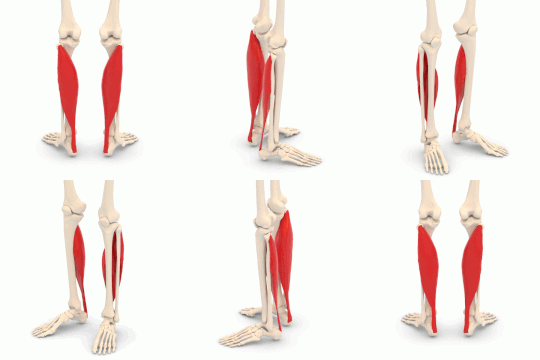
One month of daily soleus muscle push-ups
At the conclusion of the month:
- I noticed an improvement in calf muscle definition. When tensed, it was rock solid.
- I lost 1kg in weight — I’m not aware of reducing my calorie intake.
- My sleep improved — I was getting a much-needed extra hour.
- My blood pressure showed no discernible difference over the month.
I did not measure glucose tolerance or use any other invasive methods. I limited my observations to the ease of completing the soleus push-up and the perceived difference in physiology.
The science
Professor Marc Hamilton of Health and Human Performance at the University of Houston discovered that soleus muscle push-ups sustain soleus oxidative metabolism and improve glucose and lipid regulation.
I reported on the research in this article. There is a link to YouTube showing the push-up in action.
The test
Initially, I set out to complete 10 daily sets of 100 soleus muscle push-ups over the course of one month. I responded well to this. The exercise felt remarkably easy to complete, and I did not feel the muscle tiring or sore.
As I sit at my desk for extended periods, I increased the exercise time to three half-hour slots. Morning, afternoon, and evening.
As with the study’s volunteers, I responded well to the prolonged contractile activity and did not experience fatigue or other adverse responses to the activity. No cramps, joint pain, or muscle soreness.
I subconsciously did the push-up while watching TV, in waiting areas, and sitting at the table while eating. Estimated additional time accounted for a further 30 minutes of soleus muscle push-ups.
Two hours of daily soleus muscle push-ups may seem like a lot, but it quickly became a habit, and I experienced no adverse effects — other than my wife wondering what I was doing.
I continued my normal exercise regime: One-hour brisk daily walk, gym twice per week, and 100 push-ups three times per week.
Why it matters
The importance of this discovery cannot be overstated.
Over half of American adults have either prediabetes or diabetes.
That figure rises to 80% of those over 65 years old. Our modern lifestyles mean a high prevalence of prolonged sitting — 9 to 11 hours per day. Sitting encourages our body to have a low metabolic rate.
Sedentary behaviour increases our risk for age-associated metabolic diseases such as metabolic syndrome and type 2 diabetes.
Even in nondiabetics, increased glucose concentration increases our risk factors for chronic disease, Alzheimer's disease, dyslipidemia, and cardiovascular conditions.
Professor Hamilton found that the soleus muscle push-up improves the regulation of blood glucose and is more effective than any other method.
He found the human soleus muscle could raise local oxidative metabolism to high levels for hours without fatigue, even in unfit volunteers.
It makes complete sense. The research highlights and references:
- The energy demand is minimal in resting muscle fibres.
- Slow oxidative muscle has multiple intrinsic molecular and phenotypic features favouring specialisation in prolonged contraction activity.
- The soleus muscle has a greater predominance of slow-oxidative fibres.
- The soleus is a slow-twitch postural muscle favouring a lower threshold of effort needed to recruit it for more time and intensity than other limb muscles.
- It has distinctive vascular features enhancing the delivery of blood-borne fuels and oxygen.
Next step
I intend to continue completing the soleus muscle push-up exercises at the same level. There certainly does not appear to be any harm to them.
I would be interested in your experiences and in particular if you are testing blood sugars for diabetes — is there any improvement?
Malky also has a sure cure for seasickness — sit under a tree. Sign up for more great articles like these for only $5 per month.
In case you missed it —
It would be cool if you wanted to read more from Malky. And if you haven’t signed up for Medium, you can support other writers by joining here and also write and earn with Medium.


