
4 Simple Principles From “How To Win Friends and Influence People”
The sooner you know, the sooner you can win friends!
If you’ve ever felt low in high school, you’d know how it feels to be left alone.
Making friends seem hard. So, you constantly:
- Help with the assignments
- Never backbite
- Stay loyal
But the leader of the group says, “Not quite pleased.” You try, even shed your translucent tears, but the group has decided on a new member, and it’s not you. :(
“What is wrong with me,” you ask yourself!
We all do.
Losing friends or not inspiring people is both a frightening and alarming situation.
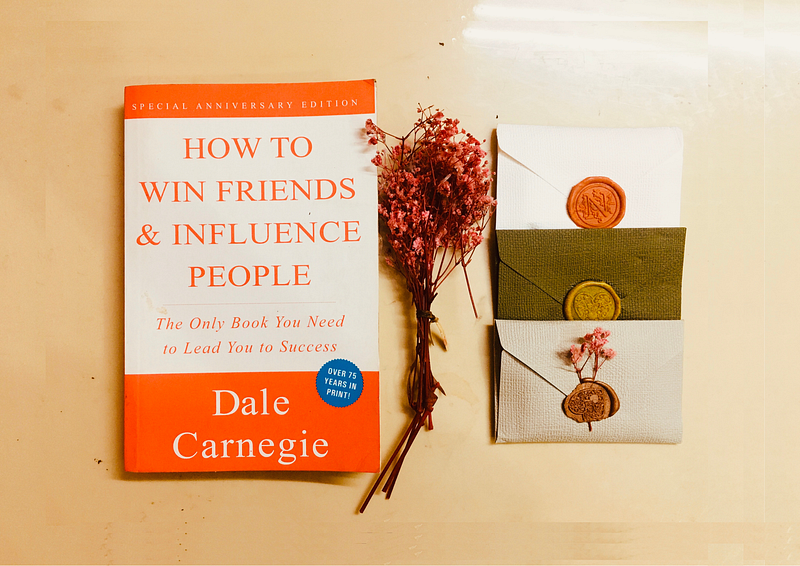
Reading Dale Carnegie’s “How to win friends and influence people” was an eye opener for me.
I read each chapter *twice* and found myself crying on the curb when new facts emerged in front of my eyes.
I didn’t know. I’m sorry.
Influencing people is an art. And Dale Carnegie seems to be a master of it. The book consists of 4 parts and approx: 250 pages, enough to influence and win people.
So, let’s read 4 tips from Dale Carnegie to win friends.
1. Never Criticize People
Carnegie wrote:
“99 times out of hundred, people don’t criticize themselves for anything no matter how wrong it may be.”
Belittling someone or their nature of work is like waging war against them. It never ends well.
Of course, do we expel teachers when they criticize us? However, we can do nothing to banish teachers, but we can banish people from our friend circle.
- And criticizing makes it easy.
Carnegie continues:
“Realize that criticism is like homing pigeons. They always return home. The person you’re going to condemn will probably justify his actions.”
It’s true.
Samuel Johnson, an 18th-century author, says:
“God himself, sir, doesn’t propose to judge men until the end of his days. So why do you?”
Excessive criticism makes us defensive, and we start to believe that the other person is at fault or maybe crooked.
This develops negative framing of your personality. Living in a world of social media, word spreads quickly.
2. Make Your Appreciation Look Honest
You think people are hungry for hamburgers, they’re. But there’s something most of us miss.
- People are hungry for fame and importance.
If you look closely, the Elizabethan age had all famous disciple’s dresses covered in red. Even today, branded cars and costly vintage jackets are made of Maroon dyes.
Feeling significant is not something unknown. It’s embedded in everyone’s DNA.
Carnegie wrote:
“If some people are so hungry for a feeling of importance that they actually go insane to get it, imagine what miracle you and I can achieve by giving people honest appreciation.”
To make friends, follow a simple rule: give appreciation for free.
Point out what they are happy about.
Perhaps:
- Their new dress
- Hairstyle
- Watch
And compliment regarding it. The secret sauce is finding the happy nerve.
Generally, become interested in other people.
3. Have a Good Ear
Carnegie wrote:
“Many people call a doctor when all they want is an audience.”
To be an extraordinary friend and influencer, you must become a ‘good listener.’
And it’s no rocket science. Carnegie advises:
“Remember that the people you are talking to are a hundred times more interested in themselves and their wants and problems than yours.”
Of course, a good friendship does mean co-operation from both sides. But for the first impression, you must strike the first deal.
Everybody wants to feel heard. Most of us come from broken nuclear families. All of us have the problem.
You should be quick to spot the topic the person wants to talk about. And then, you’re good to go.
Some tips from Carnegie are:
- Find an interesting topic
- Do not change the subject
- Don’t interrupt
- Generally smile, and nod to make them feel you’re listening.
To start a conversation, you can try a phrase from the book, phrased by the participant from Detmer woolen company:
“Believe me; I am far more eager to hear this than you’re to say it.”
4. Avoid Arguments
Dale Carnegie guides:
“Avoid arguments as you would avoid rattlesnakes and earthquakes.”
Why?
He further adds: Nine out of 10 times; an argument ends with each contestant more firmly convinced than he is right.
True.
How many times have we indulged in a fight, and the opposing party made it seem like he is winning, and you’re a loser?
Well, I know the truth is different. But we all know this is true. People are extremely manipulative when you hit their nerve. Arguing is gaslighting them.
Carnegie wrote: “you can’t win an argument. If you lose it, you lose it. And if you win it, you lose it.”
Meaning that argument is deadly.
- If you win the argument, you lose people
- If you win people, you have to lose the argument
- The simple way to save you from trouble is to skip arguments.
Keeps your words and guidance to yourself.
As Carnegie believes: “The more you argue, the more you sell yourself to your enemy. Means you’re bidding for someone else.”
Bonus Tip — Smile:
Where most tips get stuck in the doorway, a smile can easily penetrate above anything.
Smile. It makes you likable than ever.
And smile, my friend, is one thing that can make someone addicted to you. Try it!
Join 1,100+ writers and get your next writing inspiration right now.
Or, join Medium with my referral link.