
Benjamin Franklin: 4 Fastest Ways to Make People Like You in 5 Minutes or Less
Be *that* person everyone treasures.
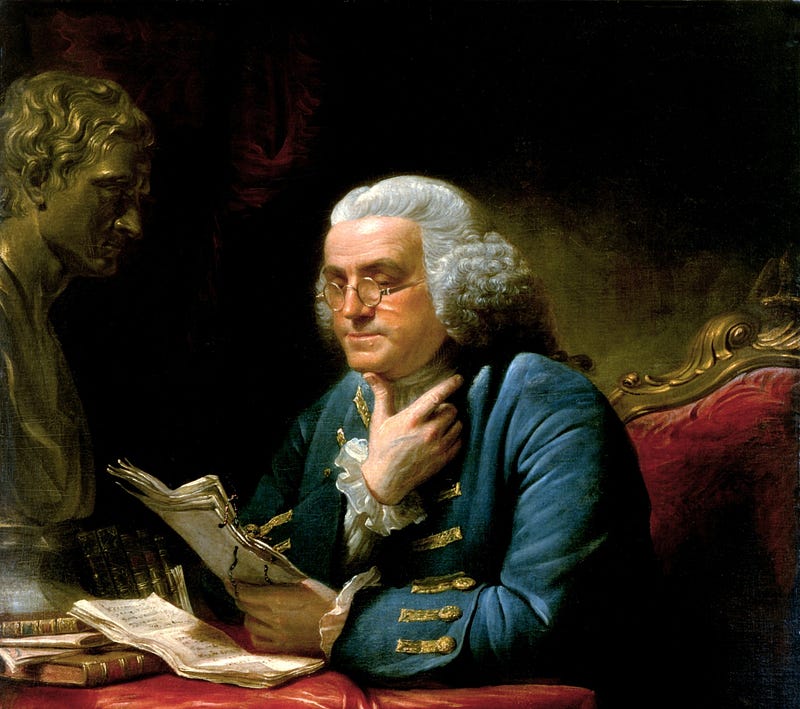
We all have heard this quote: A friend in need is a friend indeed!
To me, this quote appears exaggerated (over-kill). Upon researching, I found that this quote belongs to Benjamin Franklin, founder of the Ben Franklin effect.
Benjamin grew up penniless. Without education, Benjamin knew all doors were sealed for him. That’s when he started rehearsing fresh ways to blend with people.
As a veteran of ‘public speaking,’ Benjamin turned his enemies in his favor. Despite the untutored childhood, Ben’s true-grit tactics are applicable 232 years later.
- Pretty interesting, right?
It’s time to unfold the mind’s bedsheet and view 4 life lessons from Ben Franklin to make people like you.
1. Ask for a favor
What is your go-to technique to impress people?
Maybe:
- You compliment them
- Talk in a deeply-pleasing manner
- Smile
But Ben Franklin’s method is quite the opposite of what we do. Ben Franklin effect means: asking someone a favor.
Suppose:
…you are at a workplace party and ask your colleague (who, BTW, hates you) to pass a doughnut. Or maybe, something eternal than a doughnut. You ask someone to lend you a book.
(I mean, book lovers like me would die rather than lend-lease a book. But suppose you did, to your enemy.)
According to researchers, the enemy now will turn into your friend. How? The Ben Franklin effect works because of cognitive dissonance: Means we cannot do someone a favor and hate them. Helping someone is associated with *friendship.*
Ben Franklin followed the exact practice of making friends with his enemies. One day, he borrowed a rare book from an enemy and buried the hatchet. In his famous autobiography, The Autobiography of Benjamin Franklin, Ben wrote:
“He that has once done you a kindness will be more ready to do you another than he whom you have obliged.”
One thing that makes Ben Franklin’s effect “Lend a Hand” so powerful is that when one makes a healthy move toward friendship, he doesn’t stop. Lending a hand is a continuous process.
As for the twist, the method can do wonders without the other person comprehending your tactic. Simple.
2. Honor apology
- Benjamin Franklin was a diplomat.
Imagine him making errors and not confessing — there’d be no American Revolution then.
Benjamin Franklin believes that our words are powerful. We are a result of thousands of years of evolution. When we fight for wrong, it affects history as it may seem.
He often uttered:
“Never ruin an apology with an excuse.”
Similarly, Guy Winch suggests: When we don’t apologize, we’re careless about the relationship or face an emotional discomfort that our apology won’t matter.
If you do something wrong, apologize. When you make an excuse, you either:
- Lie, or
- Entrap another person
So in both ways, you fail somebody. Doing otherwise might give you leeway to improve.
If you believe saying “sorry” is too overrated, here are a few phrases you can use, according to Shundalyn Allen:
- Oops/Whoops
- My Bad
- I beg your pardon
- Deepest apologies
- Forgive me…
3. The Ransberger Pivot
To be clear, the Ransberger Pivot can transform your lives.
…only, if you let it.
Ben Franklin belives:
“Tis a great confidence in a friend to tell him your faults; greater to tell him his.”
We all know someone who loves to correct us — maybe it’s us. Who wouldn’t?
Ben Franklin says every “correctness attempt” has a price to pay. Validating your point, you become clear as a diamond but push another person into a groove.
Assume correcting a genuine error of your manager. Maybe, you thought your opinion matters more than your friendship and colleague relations — you’ll soon be left with no one.
- Briefing people they’re wrong is a treacherous mission.
Dale Carnegie, an American writer, and Author, believes: If your point of view needs more acknowledgment, go ahead and correct people. But if not, sit in silence. People who need to feed their egos want to show others their proficiency.
It’s true.
Do you also love to redraft people? If yes, here’s a guide how-to-not:
- Think before you speak
- Let go of minor mistakes
- Mind how you phrase your correction
- Don’t correct it right away
4. Become a parrot — The Chameleon Effect
The underrated yet successful attribute of making friends is — becoming a parrot.
People want to feel their friendship brings (benefit.) If it does not, your friendship is at stake.
My mother often tells me: Act like you support or assist your friends in any way.
Humans are products of benefit — we run where we glimpse it. Below are a few ways you can provide benefits to your friends:
1#: Spending money: The downside of spending money is the bulk-ier your friend circle will be, the costlier it will become.
2#: Buying gifts: You might buy gifts for your friends if you know what they like. Without apparent thought, you might end in despair.
3#: Listening: Most people need a listener. For example, online listeners earn while listening to people.
4#: Promoting confidence: Chameleon effect is a way of copying your friend, mimicking their actions and moves. This way, help your friend build confidence in your friendship.
I believe the first (1–2) are pretty impossible. The last two are my favorites as it’s cheaply accomplished.
You boost your bond by contributing to friendship while listening or promoting confidence.
As Ben Franklin says:
“Make use of your friends by being of use to them.”
Bless your friends with your presence as a listener or a confidence chum. As Dale Carnegie writes, “You should gauge friends with sincerity, transparency, and understanding.”
Final thoughts:
Everyone has their way of making friends.
If you haven’t landed a single friend for some time, then Benjamin Franklin proposes a different ball of wax.
To land a Friend who is different, maybe quite popular, you need unique tactics. Above notions might serve you to gain famous friends you once fancied.
Want to avail a free “Writing Guidance” E-book? Click here.
Or, join Medium with my referral link.


