
Your Two Cents Probably Aren’t Worth a Dime
Why most advice is usually bullshit
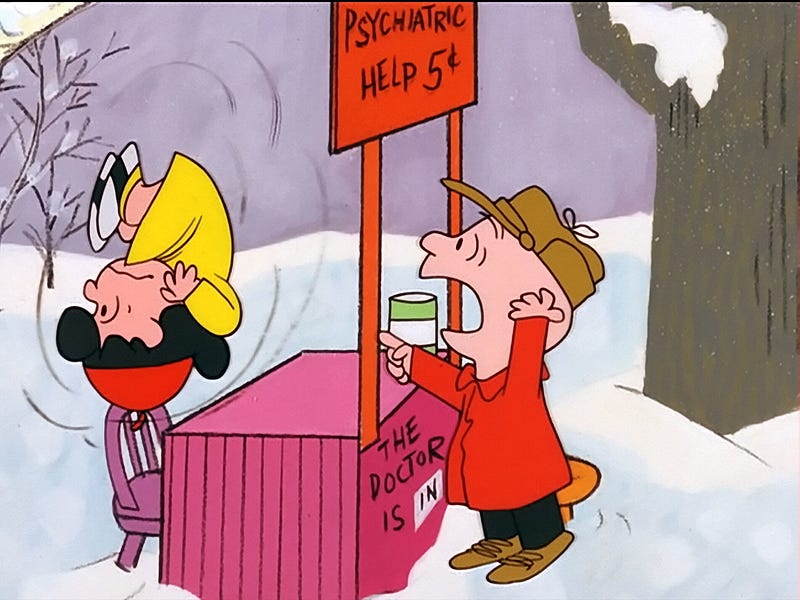
“You should….”
Those two little words at best make my eyes glaze over, and at worst make me want to drown somebody in a toilet. But it’s not because I’m a know-it-all who believes she never needs help.
“What do you think I should…?”
This phrase to me has become no better. I feel a twinge of discomfort in most cases when I’m asked for anything that even remotely resembles advice. But it’s not because I don’t want to help people who need it.
In both cases, it boils down to an observation that has been years in the making: Most advice I’m going to receive, or even give, is usually bullshit.
Hear me out on this. The truth is, I actually don’t have a problem with advice. At least not in principle. But thanks to years of situations I’ve been a part of, or I’ve observed with other people, I’ve come to the conclusion that a lot of advice is not exactly what it seems. As a result, I look at most advice that comes my way, or any advice I could possibly give, through a certain lens. And that lens makes me think of the following problems.
You Don’t Have to Live With the Consequences of Your Advice
I have had people give me really awful advice, the kind of advice that only serves to make a bad situation much, much worse. And I’ve taken that advice because of the nature of the relationship. I hadn’t critically worked through whether or not the advice was actually sound, only that the advisor cared about me and wanted the best for me. I thought that was enough because after all, someone who cares about you won’t steer you wrong…right?
It didn’t change the fact that the advice was terrible.
It also didn’t change the fact that when the bad advice blew up in my face, all of a sudden, those same people didn’t have much to say about the problem anymore. It was almost as if we hadn’t talked about it in the first place. It’s like throwing a hand grenade into somebody’s life and when you watch it blow up into smithereens, you shrug your shoulders and say, “Well, that’s unfortunate.”
It’s like throwing a hand grenade into somebody’s life….
The last time I took advice as that and things went terribly, terribly wrong, this was the nonchalant reaction I got. Despite the fact that I was pretty distraught and looking for a way to clean up the mess, the advice giver, who had so much to say prior to the problem getting worse, was suddenly as quiet as a church mouse. After wading through the muck and mire I created because of the bad advice, it occurred to me why she acted that way: She had no skin in the game. Not in any tangible way. So because she didn’t have to live with the consequences of her advice, it was easy for her to give it — no matter how bad it was — and wash her hands of the situation entirely. I know I’m ultimately responsible for taking the advice, but I was still surprised by the lack of acknowledgment or concern from her that what she told me completely missed the mark.
You May Be Too Invested In Someone Taking Your Advice
There was a time when I was giving a friend what I thought was good advice, based on having gone through a similar situation. He talked to me ad nauseam about his problem, which led me to believe my input was really wanted. But the more he wanted to talk about the issue, the more frustrated I became because he just wasn’t listening to me.
It was not until I was in his position — resisting someone else’s advice and having them get equally exasperated with me — did I realize that I was way too invested in my friend taking my advice. After all, I wasn’t going to have to live with the consequences of it, so why was I so adamant and angry that I wasn’t being listened to? When that shoe was on my foot and someone else was angry with me because I wasn’t listening, I realized that if I’m too invested in someone else’s problem, I need to take a step back and ask myself why. I still don’t exactly know the answer to that in this particular case, but I do know it’s always worth asking the question as not to frustrate myself or another person. Most of the time, I find that getting over-invested in someone else’s problems happens when their situation aggravates my own demons, and it has nothing to do with them at all.
Your Best Thinking Got You to Where You Are Now
If I had been thinking critically when I took the bad advice that caused a mess, I would have realized the other person wasn’t qualified to give the advice in the first place. Why? Because her own situation was a mess. And if her best thinking made her life a mess, what in the world made me think she could help me with mine? How could she? If she had the knowledge to help me, she would have fixed her own problem — or avoided it in the first place.
If I’m too invested in someone else’s problem, I need to take a step back and ask myself why.
Bottom line, if I wanted advice on how to become a legendary Hollywood actress, I would have gladly gone to Elizabeth Taylor in a heartbeat. But if I wanted marital advice? Not so much.
You May Not Even Know What You’re Talking About
I would not presume to give someone advice on how to become a best-selling fiction writer because, although I hope to become one someday, I’m not one now. That means anything I tell you would be completely conjectural at best, and utterly nonsensical at worst. But I have been a copywriter for quite some time, so I could help someone in that way. The older I get, the less inclined I am to dispense advice on things I haven’t experienced myself because there’s a good chance I won’t know what I’m talking about.
Your Advice May Not Have Been Wanted In the First Place
I have been both the giver and receiver of unsolicited advice and I’ve come to realize it’s probably the worst kind of advice there is since sometimes people just want to vent. Sometimes people want your ear and not your mouth. So, my friend who resisted all of the “good advice” I thought I was giving him probably just wanted to vent and because he chose to vent to me, I assumed he wanted my opinion. But clearly, he didn’t.
On the flip side of that is the solicited advice that is a waste of time to give. Since I’ve been freelancing for a long time, I’ve had numerous people ask to pick my brains about how to get started. And I used to be more than happy to talk to people about it because when I was starting out, I had to learn on my own through trial and (mostly) error. So I foolishly thought that if I could help someone else’s path be a little bit easier because I’ve walked it myself, it would be a great thing to do.
Sometimes people want your ear and not your mouth.
Except it wasn’t. It turned out, in every single case, people found out how much work I had to put in to get my business up and running, and they didn’t have enough interest to do the work. In some cases, I spent numerous hours talking them through the nuts and bolts of freelancing only for it to be in vain. Some of them put in a half-hearted try and said it was just too much work. Most of them didn’t even bother trying at all. But all of them were enthusiastic when they asked for my advice and sounded serious about following through. So did they really want the advice? In my opinion, no. Did they waste my time? Absolutely.
None of this is to say that I’m completely against advice; I’m just much more judicious about the advice I accept and the advice I dish out. There are people whose opinions I completely value because I know that their insights are worth their weight in gold. And when appropriate, I’ll still give advice to others — though not nearly as often and it comes with all manner of caveats when I do.
This all may sound like a recipe for needless struggle, a stubborn insistence to do everything on my own without any input from anyone, but it isn’t. Filtering advice in this way has helped me separate the wheat from the chaff and understand what kernels are worth incorporating into my life. It’s actually saved me from potential headaches and needles exacerbations of problems. Also, it’s helped me strengthen my intuition and have the confidence to trust it, as well as the humility to know when to listen more and speak less.
So that’s my two cents on the matter.
My advice? Take it with a grain of salt.


