
You should have a website
If you were a lady of fashion, or a gentleman of means in 18th century France, you would have had a calling card.
A calling card was a small piece of paper, which you left at the home of the people you wanted to pay a visit to. It had your name. And your title, if you had one. And a couple of illustrations.
It didn’t say much beyond that.
It just stated your name and quality.
Because that’s all you needed to be received (or not) in the most refined Parisian homes of the time.
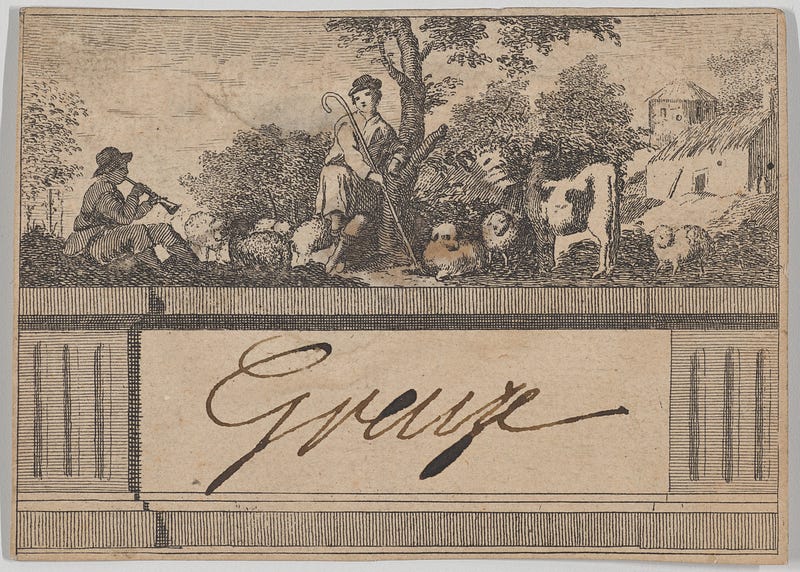
Unfortunately for us introverted-hermits, today, people just show up at your door, without a card, and it is not considered good decorum to simply… turn them away.
But the practice is thriving elsewhere: in the business world.
And at first, it very much looked like calling cards.
In fact, we still call them ‘cartes de visite’ in French. But you probably are more familiar with the term ‘business card’.
And up until the succeeding popularization of the telephone directory, the phone book and the browser — business cards were a BIG deal.
Your card was your entry into circles, and it was the first impression you made. It better reflect your business and your values…
Today, though, a business card is little more than a cute accessory for almost all professionals.
Because today, we have… ✨ the website ✨
A business card on steroids.
What a website will do for you
Business opportunities don’t care about good decorum. They want to judge you before they will even consider letting you in.
Fortunately, we are a bit more refined than pre-Revolution French nobles, and today, your title and your name matter very little.
What matters is what you do, what you want to do, and what you did.
And your website is the perfect place to display all of this.
I stopped counting the number of opportunities that came my way simply because… I had a website where people can learn about what I do.
At the very least, it’s a magnet for brand deals, meetings with other professionals, and sales.
At best, it might be just what you need to understand what you stand for.
Making a website is an exercise in branding
It’s not easy to make all of yourself fit into the right pair of pants.
And not just in a literally sort of way.
If you are a bit like me, you are interested in a lot of things. And from the control tower that is your head, it can be hard to make a coherent story of it all.
“So, what do you do?” cues confusion.
Laying yourself on a website might just be the thing you need.
It’s like constructing something with all the parts of you.
What’s more…
A website is a centre hub in an atomic digital world
Focus gurus might not like it much, but I’m going to say it anyway: you are allowed to be in different places. To do YouTube and Twitter. And Medium and TikTok. And anything else.
For some of us, having several projects is a sanitary measure.
But connecting it all — with a place that displays you in all your various glories… Now that’s smart.
That’s smart because this brain of yours that makes weird connections might just be what someone is looking for.
And your website will act like a hub between all the different parts of you.
From Twitter to YouTube to your past projects, to your future ones.
But listen, before you dive in, let me be clear on one thing.
Your website doesn’t have to be fancy.
It doesn’t have to be a monster of links and blog posts. It doesn’t have to list every single project on which you ever worked. Hell, it doesn’t even have to have colours and images.
I am personally using Podia for my website.
Because that’s a service I’m already using to sell some of my products, and because I like it. (Also, if you don’t have a website, it’s free to use and can grow with you in the future).
But you do you.
Just remember to treat this as a calling card.
Would you be admitted to the homes of the opportunities you seek?
If you found this story useful, check out those too:
- The only 3 tools I need to run my online business
- To be interesting, stop being interested — and do this instead
- 1 month on Medium — what to expect
- Why you should learn useless things
This story contains affiliate links.


