
Music
You Need to Hear this Song #14
Heavy Rotation — Mandinka, Sinead O’Connor (The Lion and the Cobra, 1987)
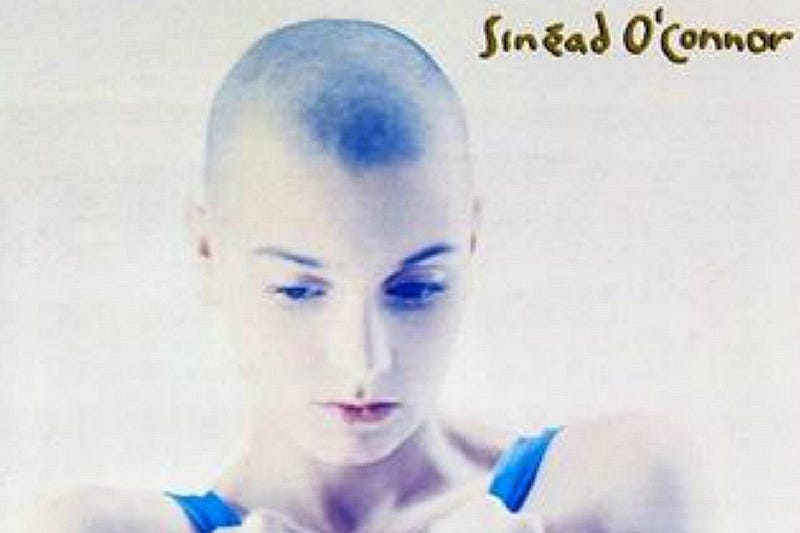
Heavy Rotation was a music industry term for songs that one way or another got a lot of airplay. It referred to the large amount of rotation that a particular record got on turntables at radio stations. Since, until the 1980s, this was the only way to get new music into the ears and brains of listeners, heavy rotation meant increased sales. These were good for record companies and artists alike.
Today, some of us still put records on at home and give them a spin. Most of us don’t. However, the term still applies, though in a different way. Streaming services like Spotify sell subscriptions to listeners and then pay artists based on listens. At least, that’s the way we think it works.
For me, heavy rotation means a song that is in my head for some reason. Maybe for a moment, maybe for a day, maybe for longer. It’s a song that you come back to from time to time and still feels just as good.
This series of articles is dedicated to these songs.
Here, I aim to highlight a particular song by a particular band or singer. We should know a bit about the band, a bit about where the song fits into its history and where the song fits into what was happening in music at that time. Then there’s the song itself. Who’s playing on it, what are the lyrics getting at and why is it so good? How does it still occupy sonic space in our lives?
I’ll (try to) keep it short. It shouldn’t take you any longer to read than the song itself. To that end, I’ll put a Youtube clip of the original recording at the top of the article so you can listen as you read. Or not. And because a song is often much different live than in the recording studio, I’ll stick a live clip on at the end.
What song is in your head right now? Here’s one that won’t leave mine today:
#14 — Mandinka, Sinead O’Connor (The Lion and the Cobra, 1987)
Fourteen articles into this series and it is well past time for a woman and her music to be the subject.
Before you read anything else, forget what you know about Sinead O’Connor. And just listen to this song. Specifically, listen to her voice.
She is 20 years old at this point. She has not hit the big time yet. She has not ripped the picture of the Pope in half on Saturday Night Live. She has not raised the ire of Frank Sinatra, who said “he’d give her such a smack”, in response. She hasn’t yet reduced us to tears with her cover of Prince’s “Nothing Compares 2 U”. She has not yet confused everyone by her unwillingness to play the game.
And the world has not yet chewed her up and spit her out.
Her voice is an arrow. Her voice is a sweet lullaby. Her voice is a razor blade. Her voice is a feather. Her voice is the voice for everything that is fucked up with the music industry and pop culture.
And this one song has all of that, in three minutes and twenty nine seconds. Mandinka It is the second track on her debut album, “The Lion and the Cobra”, which she recorded while pregnant with her first child.
It’s rock and roll from the start — bass, drums and a guitar riff that is repeated four times before we first hear O’Connor’s softer voice at 00:16.
“I’m dancing the seven veils
want you to pick up my scarf
see how the black moon fades
Soon I can give you my heart”
She is writing this to someone, who she wants to let know that she is almost ready, she’s lived her life, she’s old enough for whatever is being offered.
But at 00:33, the sweetness leaves her voice for the first of two high, piercing vocal sounds. She wants you to listen, in case the you missed the first part.
The chorus follows at 00:44 and now you know she’s not kidding around anymore and in comes the fierce, vitriolic O’Connor voice we all know.
“I don’t know no shame
I feel no pain
I can’t see the flame”
“But I do know, Mandinka”. Mandinka? The ethnic group in West Africa? She knows them? She can speak their language?
Or, perhaps she knows about the coming of age rituals that women in the Mandinka culture are subjected to at an age only slightly younger than she is at that moment. She has “refused to take part”.
Either way, the tormented urgency in her voice in the lead up to the chorus is echoed again and leads back into the chorus again 2:22 and it now feels like a cool, healing balm, which continues through the end of the song.
It’s not a long song and it’s not a love song either, but it seems like a perfect example of what rock music could / should / would have sounded like in the late 1980s. Which is an odd thing to say, since her voice was like no one else’s at the time. The result of that was that people did indeed open their ears and take notice.
They wanted more of her. She was fresh, exciting, beautiful and snarling. Her head was shaved as though to say, “I know what you want me to be and I am not going to be that”. She didn’t play games, much as the games wanted to play her. The next album, “I Do Not Want What I Haven’t Got” was massive and for me, it’s one of the rare albums that can still be played from start to finish and each song is a absolute laser.
Fame was not kind to Sinead O’Connor and she has turned inward, converting to Islam and changing her name to Shuhada Sadaqat. She has not made an album now since 2014 and announced her retirement, with one final album to be released this year. Her struggles with depression, mental illness and suicide are the things that get whatever headlines there are to be had about her these days.
Stunning voice, stunning sound and I’d argue we haven’t anything like it since and may never again.
Here she is live at Pink Pop in 1988, Doc Martens and no bullshit.
As you see, this is #14 in this series, which means there are 13 that preceded it. Here are the links to the individual articles, if you are interested in reading more:
You Need to Hear this Song #6
Heavy Rotation — She Sells Sanctuary, The Cult (Love, 1985)
medium.com
If you like what you are reading here and want unlimited access to thousands of writers, please consider a subscription to Medium. It will set you back $5 a month and if you use this link, then I get a slice of that. It will go towards time travel back to the early 1990s.


