3Fv%3D0GVdzY6Wgbk&image=https%3A%2F%2Fi.ytimg.com%2Fvi%2F0GVdzY6Wgbk%2Fhqdefault.jpg&key=a19fcc184b9711e1b4764040d3dc5c07&type=text%2Fhtml&schema=youtube" allowfullscreen="" frameborder="0" height="480" width="854">
</div>
</div>
</figure></iframe></div></div></figure><p id="9884">I have to be honest and say that I don’t know much about Harry Nilsson. He went by his last name on albums, I know that. Was he involved with Bruce Springsteen? Or am I thinking of Nils Lofgren? Was he involved with Van Morrison? Or is it just the beard and the paperboy hat that makes me think that? Did Van Morrison have a beard? Nilsson had a beard and a Swedish name. Was he in Abba maybe?</p><p id="ecf0">A quick peek on his Wikipedia page tells me that none of the above is accurate. He was American, he was mentioned by the Beatles in 1968 as their favourite American singer, he rarely toured, he made 15 albums between 1968 and 1980 and he died of a heart attack in 1994. The song by him that most people know is probably <a href="https://www.youtube.com/watch?v=55xQu9eIPIA">“Everybody’s Talkin’”</a>. Beautiful song, from <i>Aerial Ballet</i> (1968) and perhaps best known from the Jon Voigt / Dustin Hoffman film, <i>Midnight Cowboy</i>, of the same year.</p><p id="deda">But the reason we are here is for this song, <b><i>Jump into the Fire</i></b> from the Album <i>Nilsson Schmilsson</i> (1971), which has got to be the best named album of all time. If you’ve seen the film <i>GoodFellas</i> (1990), you’ve heard this song. It’s the one playing when Ray Liotta as Henry Hill finally loses it in a haze of cocaine and paranoia. Hill knows he’s about to get busted and sees helicopters flying overhead as he’s driving around. You know the scene. <i>Magic Bus</i> by the Who interludes, but then Nilsson comes back and the song provides the backdrop for the sweaty, descending chaos of Hill’s life.</p><p id="81f8">The song itself, in the clip above, comes in with a bassline line at 00:10. Guitar comes in at 00:16 and things get going with drums, complete with cowbell at 00:24. Nilsson is on piano too, it has it all. The vocal starts at 00:46 and Nilsson’s range is apparent already by the second line, <i>“You can climb a mountain / you can swim the sea / You can jump into the fire / But you’ll never be free”.</i></p><p id="d5f6">To me though, the trademark of this tune is the whoop that Nilsson let’s out at 1:05 and repeats later. His exhortation that <i>“we can make each other happy” </i>follows. He’s a wild man on that piano too, belting it out. You will see Keith Moon drumming as only Keith Moon can at 1:20 of the video, but he’s not the drummer on the recording.</p><p id="0fc5">The song continues along this groove in a swirling cloud
Options
of early 70’s psychedelia, perhaps echoing the perceived chaos of the times.</p><p id="86cf">This is the song you want to crank up and put on repeat when you are making dinner tonight. And then again when you are taking care of the dishes. And then probably watch GoodFellas. Again.</p><p id="8787">Here is LCD Soundsystem doing a live cover of this classic in 2011</p>
<figure id="b06f">
<div>
<div>
<img class="ratio" src="http://placehold.it/16x9">
<iframe class="" src="https://cdn.embedly.com/widgets/media.html?src=https%3A%2F%2Fwww.youtube.com%2Fembed%2FF5lxVUQW6Bw%3Fstart%3D64%26feature%3Doembed%26start%3D64&display_name=YouTube&url=https%3A%2F%2Fwww.youtube.com%2Fwatch%3Fv%3DF5lxVUQW6Bw&image=https%3A%2F%2Fi.ytimg.com%2Fvi%2FF5lxVUQW6Bw%2Fhqdefault.jpg&key=a19fcc184b9711e1b4764040d3dc5c07&type=text%2Fhtml&schema=youtube" allowfullscreen="" frameborder="0" height="480" width="854">
</div>
</div>
</figure></iframe></div></div></figure><p id="ba3e">This is the 10th installment of this series. If you are enjoying them and want to read and listen to more, this is the link to #9. The previous 8 are linked at the end of that article.</p><div id="5da2" class="link-block">
<a href="https://readmedium.com/you-need-to-hear-this-song-9-a83abde7340a">
<div>
<div>
<h2>You Need to Hear this Song #9</h2>
<div><h3>Heavy Rotation — Way Down Now, World Party (Goodbye Jumbo, 1990)</h3></div>
<div><p>medium.com</p></div>
</div>
<div>
<div style="background-image: url(https://miro.readmedium.com/v2/resize:fit:320/)"></div>
</div>
</div>
</a>
</div><p id="2ffe">If you like what you are reading here and want unlimited access to thousands of writers, consider a subscription to Medium. It’s $5 a month and if you use this link, then I get a piece of that. It’ll go straight to the memory of Harry Nilsson Schmillson and Ray Liotta.</p><div id="d8b2" class="link-block">
<a href="https://medium.com/membership/@73srabt">
<div>
<div>
<h2>Join Medium with my referral link — Scott-Ryan Abt</h2>
<div><h3>As a Medium member, a portion of your membership fee goes to writers you read, and you get full access to every story…</h3></div>
<div><p>medium.com</p></div>
</div>
<div>
<div style="background-image: url(https://miro.readmedium.com/v2/resize:fit:320/0*H8aUKQRGBvt2mEJP)"></div>
</div>
</div>
</a>
</div></article></body>
Music
You Need to Hear this Song #10
Heavy Rotation — Jump into the Fire, Harry Nilsson (Nilsson Schmilsson, 1971)
Heavy Rotation was a music industry term for songs that one way or another got a lot of airplay. It referred to the large amount of rotation that a particular record got on turntables at radio stations. Since, until the 1980s, this was the only way to get new music into the ears and brains of listeners, heavy rotation meant increased sales. These were good for record companies and artists alike.
Today, some of us still put records on at home and give them a spin. Most of us don’t. However, the term still applies, though in a different way. Streaming services like Spotify sell subscriptions to listeners and then pay artists based on listens. At least, that’s the way we think it works.
For me, heavy rotation means a song that is in my head for some reason. Maybe for a moment, maybe for a day, maybe for longer. It’s a song that you come back to from time to time and still feels just as good.
This series of articles is dedicated to these songs.
Here, I aim to highlight a particular song by a particular band or singer. We should know a bit about the band, a bit about where the song fits into its history and where the song fits into what was happening in music at that time. Then there’s the song itself. Who’s playing on it, what are the lyrics getting at and why is it so good? How does it still occupy sonic space in our lives?
I’ll (try to) keep it short. It shouldn’t take you any longer to read than the song itself. To that end, I’ll put a Youtube clip of the original recording at the top of the article so you can listen as you read. Or not. And because a song is often much different live than in the recording studio, I’ll stick a live clip on at the end.
What song is in your head right now? Here’s one that won’t leave mine today:
#10 — Jump into the Fire, Harry Nilsson (Nilsson Schmilsson, 1971)
I have to be honest and say that I don’t know much about Harry Nilsson. He went by his last name on albums, I know that. Was he involved with Bruce Springsteen? Or am I thinking of Nils Lofgren? Was he involved with Van Morrison? Or is it just the beard and the paperboy hat that makes me think that? Did Van Morrison have a beard? Nilsson had a beard and a Swedish name. Was he in Abba maybe?
A quick peek on his Wikipedia page tells me that none of the above is accurate. He was American, he was mentioned by the Beatles in 1968 as their favourite American singer, he rarely toured, he made 15 albums between 1968 and 1980 and he died of a heart attack in 1994. The song by him that most people know is probably “Everybody’s Talkin’”. Beautiful song, from Aerial Ballet (1968) and perhaps best known from the Jon Voigt / Dustin Hoffman film, Midnight Cowboy, of the same year.
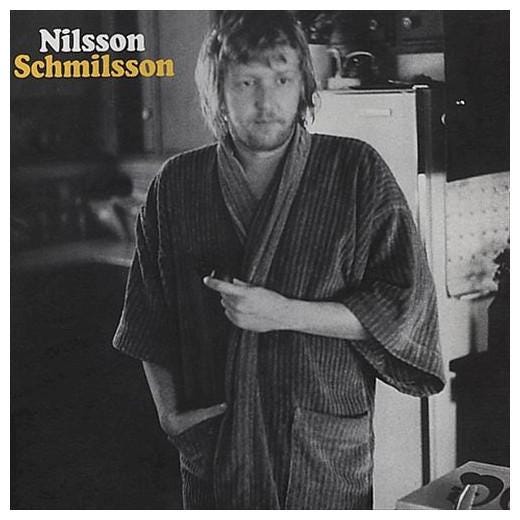
But the reason we are here is for this song, Jump into the Fire from the Album Nilsson Schmilsson (1971), which has got to be the best named album of all time. If you’ve seen the film GoodFellas (1990), you’ve heard this song. It’s the one playing when Ray Liotta as Henry Hill finally loses it in a haze of cocaine and paranoia. Hill knows he’s about to get busted and sees helicopters flying overhead as he’s driving around. You know the scene. Magic Bus by the Who interludes, but then Nilsson comes back and the song provides the backdrop for the sweaty, descending chaos of Hill’s life.
The song itself, in the clip above, comes in with a bassline line at 00:10. Guitar comes in at 00:16 and things get going with drums, complete with cowbell at 00:24. Nilsson is on piano too, it has it all. The vocal starts at 00:46 and Nilsson’s range is apparent already by the second line, “You can climb a mountain / you can swim the sea / You can jump into the fire / But you’ll never be free”.
To me though, the trademark of this tune is the whoop that Nilsson let’s out at 1:05 and repeats later. His exhortation that “we can make each other happy” follows. He’s a wild man on that piano too, belting it out. You will see Keith Moon drumming as only Keith Moon can at 1:20 of the video, but he’s not the drummer on the recording.
The song continues along this groove in a swirling cloud of early 70’s psychedelia, perhaps echoing the perceived chaos of the times.
This is the song you want to crank up and put on repeat when you are making dinner tonight. And then again when you are taking care of the dishes. And then probably watch GoodFellas. Again.
Here is LCD Soundsystem doing a live cover of this classic in 2011
This is the 10th installment of this series. If you are enjoying them and want to read and listen to more, this is the link to #9. The previous 8 are linked at the end of that article.
If you like what you are reading here and want unlimited access to thousands of writers, consider a subscription to Medium. It’s $5 a month and if you use this link, then I get a piece of that. It’ll go straight to the memory of Harry Nilsson Schmillson and Ray Liotta.