
You Can’t Live a Happy Life Like Danes and Keep Toxic Individualism
Happiness comes from empathy, not money
Every time I read How I Earned x Dollars in One Month, I think:
A) Oh, you Lady Macbeth. You’ll never satisfy your greed.
B) Poor soul. You’ll burn out.
I was the second option. I wanted to settle my life so badly that I struggled and persevered until I got depressed. Grind, hustle, productivity, time management, hurry, stick up for yourself… With more money than ever I felt as if my brain was rotting out of stress. It took me years to recover. This period of nice clothes and business trips was the saddest part of my life.
The road to earning big money is unpredictable and frustrating. Still, you believe things will fall into place when you reach your goal. But when you do, you feel empty, even sad. Now what? Where to? You did all this to feel better but the feeling is missing with all the new stuff lying around.
Why am I so miserable? When will I ever be satisfied with what I have?
Then you look up to happy people. What hack of theirs should you apply? None. You won’t be content until you shift your perspective. Let’s take a look at the happy people of Denmark.
Why Danes Are the Happiest Nation on Earth
American author Jessica Joelle Alexander and Danish child psychologist Iben Sandahl have explained why Danes are officially the happiest nation in the world for nearly 50 years. In their book The Danish Way of Parenting, two authors describe Danes are all about perspective and close connections — something they learn in early childhood.
The basis of Danish happiness is their resilience. They can recover from stress quickly thanks to reframing. It is the ability to notice both the good and the bad in an unpleasant situation. This skill makes things less dramatic. You don’t sink when life gives you a blow.
Also, Danes like to feel average. They don’t teach their kids to compete or stick out so they can feel good about themselves. Even their entrepreneurs work as team players. Being a part of the group teaches you how to cooperate and see the situation from a different angle.
Finally, Danes don’t run away from family time, quite the opposite.
Hygge Moments Are Simple Activities But with a Purpose
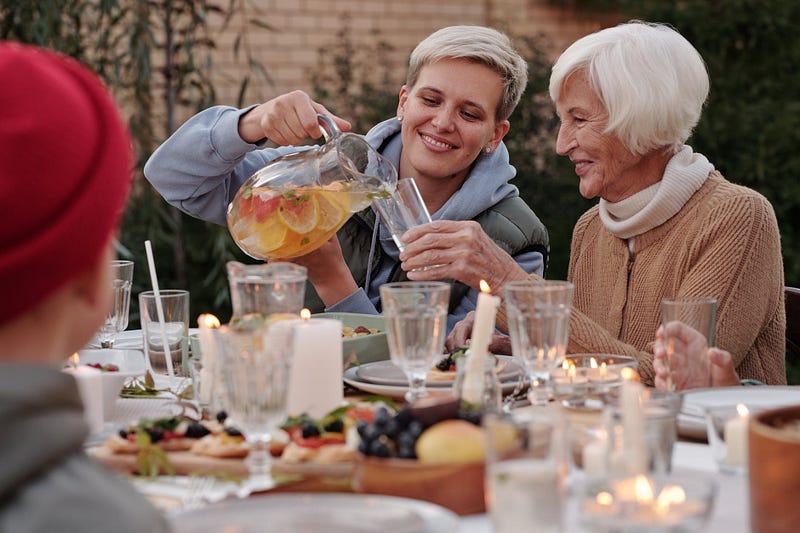
In Denmark, families regularly spend time together. Preparing food, setting the table, eating and singing, playing board games, and chilling with candles is what hygge looks like. Hygge isn’t about eating cookies at candlelight in your woolen socks. It’s about the sense of coziness that comes from being with each other. How do they do it every night when some people can’t do it even on Thanksgiving?
The key is to put yourself in somebody else’s shoes and understand them. What is more, Danes feel their relationships are more important than feeling comfortable every moment of their lives. Therefore, they will “sacrifice” a bit of solitude for some family time. Togetherness gives our life a purpose because it creates strong bonds and security.
In The Danish Way of Parenting, Joelle Alexander and Sandahl state that people resort to food, TV, shopping, medications, drugs, and alcohol when they want to feel good about their lives. But these habits just make you emotionally numb and create an illusion that everything’s fine. They don’t solve your well-being because people end up overweight, in debt, and miserable. What if we tried to be more vulnerable and less perfect instead?
Vulnerability and Empathy Make Us Closer
Each one of us has a specific set of beliefs. They work as mental filters that color our reality. Everyone’s experience is different. If you and I watched the same incident, we will notice and interpret details in a different way. This is why your sister thinks your mom has always loved you more, and you think she is just lazy. Lenses bring misunderstanding between people. Danes solved this issue with empathy.
If you try to focus on what the other person says and feels instead of what you believe, then you listen without your filters. If the other person does the same, you will have the feeling you’re being heard. Your communication will get better. Both of you will trust each other more and the relationship will grow stronger. If you constantly do it together, you’ll have someone to rely on and open up to.
Our empathy and moments of vulnerability make us closer. If you can show your weaker side to the other party, you can release your pent-up stress. This is why having someone to confide in feels so therapeutic.
But this luxury does not exist in the society where you always compare who has a bigger house or a better career.
Individualism Disables Hygge
People who constantly compare are prone to judge others. They see what’s “wrong” with you instead of who you are. Naturally, you are afraid of their judgment because then you aren’t good enough. This way you don’t get support from your environment. No Danish candle can burn that loneliness and the feeling you are misunderstood.
Individualism is the opposite of empathy. Who earns more figures is the talk of the town. Your worth goes down to your paycheck and what you own. Happiness is something you discuss in your free time or read about when you burn out.
No matter how much you earn or what you achieve, it is never enough. You always compare yourself to those around you right now, not to who you were a few years ago. You are always in some race toward self-fulfillment and the bar keeps moving. Impossible expectations and competitiveness destroy your happiness.
Individualism doesn’t happen because people are born selfish and need to fight against each other. It is the result of capitalism.
American Individualism Is Based on Economy
Industrialization and the free market have influenced American culture. In business, competition and selfishness take you to success. And only after you get financially settled, you think about relationships and kindness.
The constant race who’ll do better means more money for those on top. And everybody has internalized those same values. You believe your life will be better if you act the same way. But with this point of view, most people still don’t get rich. The money goes to only a handful of individuals.
Parents want to prepare their kids for the cruel system, so they teach children to compete since very young age. Kids learn that if you are the best, you are good enough. All your future happiness depends on your success right now. There is not much space for vulnerability because in a competitive group it is considered a weakness. As a result, you learn to be a fighter and not open up to others before you even grow up.
You believe all this battle will make you happier but it won’t. It is opposite to your nature.
Science Says Individualism Isn’t a Part of Our Innate Behavior
People are not born to fight each other for survival, on the contrary. Throughout history, human tribes wouldn’t have survived in harsh conditions if their members hadn’t relied on one another. People lived in groups and helped each other out to go through adversities. Most of us have a natural tendency to feel for each other.
Science has proved that shared happiness makes people happier than if only one person achieved success. The participants in a study played the quiz Prisoner’s dilemma while doctors did fMRI scans of their brains. They concluded a person’s ventral striatum (the center for rewards) lights up when people cooperate instead of competing against each other. This old mechanism proves that millennia ago people had to help each other to live on. Our empathy lies in the limbic system, where emotions, long-term memory, and instincts are. In other words, we have survived not because we had claws but because we have empathy and can cooperate.
Danes use this inborn mechanism to feel good about their lives. Their empathy makes their relationships stronger. Compassion and helping others make them more satisfied. A Dane instinctively knows his happiness depends on the happiness of others. On the other hand, an American wants to be self-reliant.
Parents Who Raise Individualists Make Them Unable to Connect
Kids raised in individualistic cultures believe life is about success, money, and sticking out from the crowd. As a result, children are competitive and selective. They become narcissists interested only in their own wellbeing. Narcissism affects not only people around you because you can’t feel for them, but it affects you as well. Because you lack empathy, you don’t know how to keep deep relationships with others.
In the last few decades, narcissism is on the rise, especially in the USA. There was a big study from 1982 to 2009 that estimated students according to the Narcissistic Personality Indicator. From 1980 till 2000 the level of narcissism has doubled, and the level of empathy decreased by a double in America. About 70% of those in 2007 were more narcissistic than an average student in 1982. People are becoming increasingly self-absorbed and unable to establish healthy connections.
All that self-sufficiency is not the road to happiness. Instead of building social support, we judge others and shame them so we can feel better about ourselves. But with such behavior, we don’t have people to rely on when times are hard. As a result, we get anxious whenever we feel exposed and vulnerable.
Still, there is always something you can do to improve your life, even if you are a stockbroker on Wall Street.
How to Bring More Happiness into Your Life
Life isn’t only about your ass. For true satisfaction, you need to find a balance between your ambition and relationships. Here are a few things you can do to feel more happiness the Danish way:
- Arrange simple activities that bring people together: preparing dinner, board games, singing, chatting with music and wine. Hygge is simple, comfortable, and social.
- Choose a goal you can achieve with someone else. It can be as simple as winning a sports match or tidying up your neighborhood together. Support each other and celebrate the winnings. As science confirmed, winning in a team makes you happier than winning as an individual.
- Volunteer or donate to charity. Being kind to others is addictive because it changes the biochemistry of your brain. By helping other people you experience the “Helper’s High” — the uplifting feeling thanks to your feel-good hormones (oxytocin, serotonin, and dopamine).
- Try to be a better listener. Ask someone what they mean when they say something instead of just reacting to their words. If you understand them better, you won’t judge them. You’ll be surprised to see how more likable you are.
You aren’t weak if you rely on relationships to feel content. Humans need other humans because that’s how we survived through history. This is why other people’s happiness makes us happy. Don’t just focus on winning. Focus on feeling good about what you do and how you treat others.
Subscribe to my weekly digest about how we live and think or read my other popular pieces:


