
5 Tips for a Long and Good Life from My Mom, a Communist Salesclerk
Don’t let the hardships break you
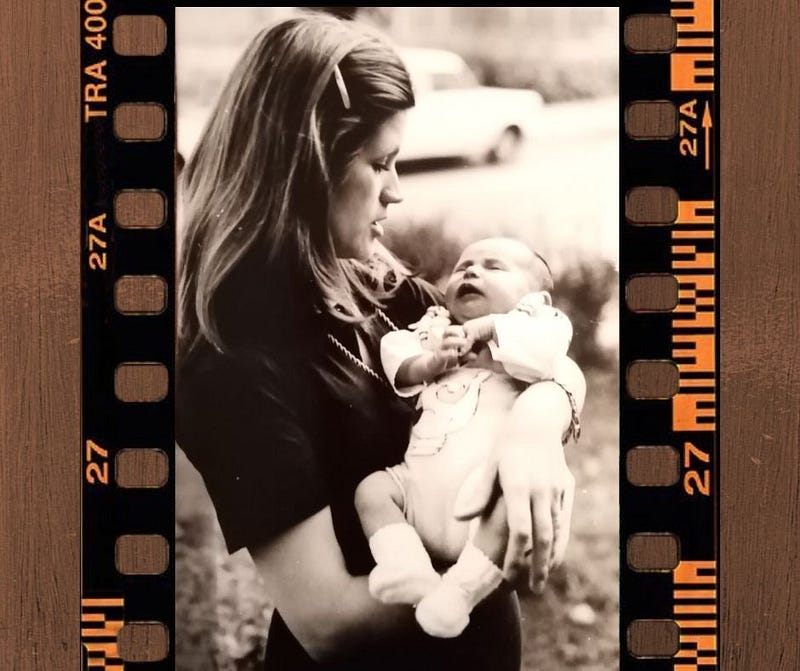
My mom’s life was everything but easy. Still, she stayed sane through it all. But she wasn’t born resilient. A personal tragedy made her finally stop stressing about the small stuff. My granddad died unexpectedly during a Christmas break at the age of 55. Through her grief, my mom finally learned what isn’t worth her energy.
Sadly, with this new knowledge, her life wasn’t getting easier. From that year on, tragedy was swelling around her. Granddad’s death symbolically ended the good life in our country. Everybody was getting poorer until the civil war started in the former Yugoslavia. It brought us the new rich — lawbreakers with big money. Mom worked for $3 a month and waited for milk in a line. How do you raise children when crime is everywhere and everything you believed in is gone?
You find shelter at home.
Unless, like my mom, you live with abusive in-laws. Then you kick the kids out of the house not to see the violence, hoping to get a state-owned apartment soon. Where do you go in Communism with no private property?
In the end, my family got a home of our own after 20 years of living in our extended family. Not long after that came the infamous bombing. A few years later my dad got cancer. A few years after that my sister got an autoimmune disease. Mom could never have peace of mind for long. Despite it all, she is the happiest realist I know. Here are five life lessons that got her through it all:
Let Some Things Pass You By
I was surrounded by friends but often felt lonely. They would disappoint me and I’d get away from the real world into textbooks. Being a nerd was a way to avoid the harshness of life. Although a good student, I’d burn out after every exam. Later on, I struggled with stress at work. I believed you just need to be hard-working and justice would do the rest. The rock of our family could see it all. She’d tell me:
“Don’t let everything pass through you. Let some things pass you by.“
What she meant is similar to the Zen proverb “Let go or be dragged.“ You can’t fix everything, so it’s pointless to get upset about it. Whenever you face hardship, you can ask yourself: Can I change the situation? Can I do anything about it? If the answer is No, let it stay next to you like a drunk relative at a family gathering. You can’t ignore he is there, but you can talk to another guest. Accept your circumstances and focus on what you can do.
Letting go is often difficult. You have to discard your expectations and step into the unknown territory. But when there’s nothing else to rely on, you can trust your unconscious strategies.
What Does the Doctor Know?
My mom would often use defense mechanisms to cope with unpleasant events. Instead of watching war atrocities on TV, she’d sit at her sewing machine and make girls’ dresses. In our dark hallway by a nightlamp, she would forget about time and money, and convert all her negative energy into creation. Anyway, we couldn’t afford new clothes, so her sublimation did a great job.
She would design her own truth to protect herself from hardship. It was unconscious, but it served us well. When the doctor said my dad had only several years to live after cancer surgery, she told me: “What does the doctor know?” Her denial gave her time to prepare for a huge emotional impact, but it also proved correct. Twelve years later my dad is still with us. No one can tell you how long you are going to live. You don’t take anyone’s estimations as the ultimate truth.
Noam Shpancer Ph.D. defines defense mechanisms as smart psychological tools. They help us manage hardships in a practical and positive way:
“ It’s not whether you encounter hardship, but how you manage it that wins the game (…) Adaptive management of life’s challenges involves developing the habits of mind (and behavior) that will allow you to harness your energy toward productive pursuits (and) control your emotions rather than letting them control you.”
My mom had the capacity to save herself from suffering with the help of these mechanisms. Also, she never rushed into things. Her caution and order have been her great asset.
Order and Caution Improve Your Life
While she was still working, the house was always clean, the laundry ironed, and the kids were fed. She fought the chaos around her with the mental load. With house chores, she would get into the flow and forget the problems of our household. Mom would bring order where she could to feel more at peace. Sticking to things gave her structure and a sense of control. These small rituals helped her push through the hard times.
“When people experience emotional distress, they intuitively resort to repetitive, ritualistic behaviours.” — Marta Brzosko
As Yugoslavia was sinking into poverty that ended with a war, Mom lost the feeling of safety. At the time of hyperinflation, she’d get a salary and take us and the cousins to the local lake. By the time we got to the beach, we could buy four ice creams with that money. Anxious about what might happen, she’d deliberate before she made a decision. Her caution was a constructive way to overcome difficulties.
Worry can be good, claim Howard S. Friedman and Leslie R. Martin in their book The Longevity Project: Surprising Discoveries for Health and Long Life from the Landmark Eight-Decade Study. Although worrying all the time is counterproductive because it drags you down, a small amount of worry can help you prepare better for the future:
“Conscientious worriers tend to put their fretting to good use: They make choices or changes in response to their concerns. Their worrying is productive, not pointless.”
My mom would get away from problems in her department store. The low-paid job was her shelter from money troubles and family violence.
Your Job Is Just Something Outside Your Home
If you dreamed of an art school or foreign trade, you aren’t enthusiastic about a salesclerk job. Still, mom worked hard and never let that profession define her. Selling tracksuits was just a way to put money on the table.
In his LinkedIn article, emergency physician Louis M. Profeta gives advice on how to decrease stress at work. He tells all employees including doctors to bear in mind a simple thought:
It’s just a job.
This mindset may seem selfish, especially if your duty is to save lives. Still, it also protects you from burnout in hard times. You prioritize self-care because the company won’t do it for you. With this way of thinking, you will save strength, keep productivity, and even manage to do your job better.
Your life is not only your career but also the people around you. My mother knew she was more than the position she filled. And she would gladly turn to others.
People-Pleasing Is Good for You
Mom grew up poor in a system with no private property. But she never yearned for material things. She has always valued relationships over money, even when we couldn’t afford butter for breakfast. These bonds have helped her cope with all the blows.
Even now, when she goes to a family gathering, she makes spicy bread for the host. In the 1990s, when we had meat once a week, my mother would somehow make a cake for us. Doing things for others never made her feel used. She has chosen kindness as a way to show love. She found purpose in pampering other people to keep her spirits up.
Your strong relationships with others are like the branches of a tree. The more you have, the stronger your root system is. This makes your trunk more stable when the wind blows.
Choosing friendships as a way to be resilient and cope with distress is an effective strategy. A 2002 study by Diener & Selingman concluded that very happy people are highly social. They also have stronger relationships with others. They are more agreeable, less neurotic, and score lower on psychopathology scales:
“Good social relations were necessary. Members of the happiest group experienced positive, but not ecstatic, feelings most of the time, and they reported occasional negative moods. This suggests that very happy people do have a functioning emotion system that can react appropriately to life events.”
My mom based her system on kindness.
My Mom Really Knows How to Live
Markham Heid wrote a brilliant article about people who have a long but hard life. They are all grateful for what they have and focus on what they love:
“While some regard tough times as a sign that life is unfair or unpleasant, others emerge from a struggle with a greater sense of gratitude and a newfound resolve to commit their time and efforts to things that matter — to close friendships, to family bonds, or to hobbies, or work for which they feel passionate.”
Mom always knew how much she could do and operated in that space. Her family and friends got her through political turmoil and domestic violence. She managed to cope with the poverty and insecurity of everyday life. She often had no choice but to move on. And so, she taught me:
- You can’t let everything affect you. When she lost her beloved dad, the pain changed her. Often adversity pushes us to transformation. Unpleasant events teach us we shouldn’t get upset about every detail. Focus on what you can change and move on.
- Your mind has the inexplicable power to help you push through hard times. Whether it’s a denial of the doctor’s bad predictions or creation underneath the night lamp, you are more able to survive a calamity than you think.
- Bring little things to order. Find comfort in house chores. Don’t rush into decisions. If you constantly obsess about what-ifs, you are self-sabotaging. But when things get tough, consider your choices well to reach better decisions.
- Don’t let your job define you. You can’t put all your money on one number in roulette. Take care of yourself. You are more than your job.
- Turn to people. Make and bake things for others. Kindness affects those you help, but it also makes you happier. It works as a natural high. After every act, you will crave it even more.
It usually takes you a few calamities to learn how to live. My mom had dozens and they made her resilient and kind. And here she is, at 69, still satisfied.
Life is a series of ups and downs, and so is your mental health. But you have the capacity to go through adversities. A man is born with a material that keeps him sinewy if he tells himself he can cope. Call it hope, defense mechanisms, adaptability, caution, rituals, relationships, kindness, gratitude, or a hobby.
Your life is how you see it and what you do with it. In war-time, my mom managed to make a delicious cake with only a few ingredients. Everybody can make one with some good practice. And you’ve just got the recipe for it from her.
Subscribe to my weekly digest about how we live and think or read my other popular stories:


