
Yes, It Matters that China Just Banned Crypto.
But not for the reason you think.
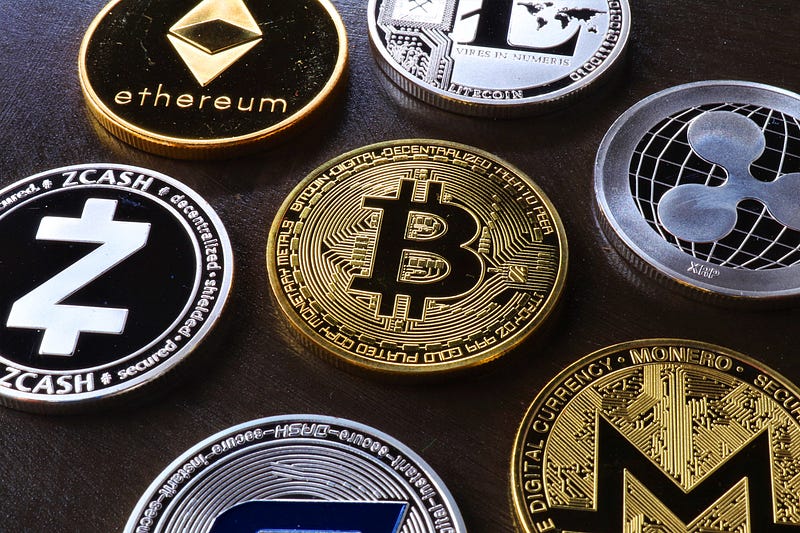
Unless you’ve been living under a rock the past few years, you’ve at least heard about cryptocurrencies and their impact on the financial industry. I like the fact that it’s relatively anonymous, completely electronic, and ownership can be proven rather simply.
It was all fun and games when Bitcoin was being mined by a few software enthusiasts and its status was relegated to a fringe asset. However, as the world caught on to cryptocurrencies (not just Bitcoin but also the inevitable copycats) and think pieces were published about the end of money as we know it, I started to doubt the future of crypto.
My doubt was sourced in the fact that fear of change (or more appropriately, fear of loss of power) is woven into the very fabric of the world’s governments. I couldn’t see Japan giving up the Yen, England turning its back on the pound sterling, or Russia allowing the rupee to be diminished. I definitely couldn’t see the US standing by while crypto cuts into the market of the almighty dollar.
Unfortunately, China just proved me right and completely banned all cryptocurrency, tightening the government’s grip on its economy.
Chinese government agencies have repeatedly raised concerns that cryptocurrency speculation could disrupt the country’s economic and financial order, one of Beijing’s top priorities.
Analysts say China also sees cryptocurrencies as a threat to its sovereign digital-yuan, which is at an advanced pilot stage.
This action is just the tip of the iceberg when it comes to China’s desire not just to have a seat at the global economic table, but to run it as the US has done for the past 75 years.
And you would be crazy to think that the timing of this ban is coincidental. (This needs to be included, but probably not here.)
Other Prohibitions
As reported by NBC and other news outlets, cryptocurrency is not the only thing that was recently banned by the PRC. Other offenses include excess gaming, “effeminate men”, and the latest Marvel movie “Shang-Chi and the Legend of the Ten Rings.”
These might seems like highly disparate categories, but they all add up to one thing: after decades of loosening the reins, the Chinese government is consolidating power and control over its populace.
There has been a wave of similar bans in recent years.
- Weibo banned a BTS fan group
- Direct foreign investment is being limited
- Reality shows were banned
- Regulators even banned the BBC
China is turning into an Orwellian nightmare, attempting to control the thoughts and perceptions of 1.4 billion people. They truly believe that much of the was imported from the West warps the mind of their children and weakens the resolve of their allies.
Why the Increase in Control?
The NBC article focuses on the acts that are taking control away from parents and leaving decisions to the state, but it never opines on the “why” of these moves. Surely a desire for power for the sake of power isn’t a good enough reason.
Rather, China is consolidating its domestic power for the same reason it is expanding its regional and global power: preparation for war with the US.
I’m not just talking about martial war, although that is a real possibility. I’m also talking about economic, innovation, legal, and digital war, and it’s already happening.
On the economic front, one of the biggest Chinese programs is the Belt and Road Initiative, whose goal is to bring back the glory day of the Silk Road, when China was a global influence for more than 1,000 years. With 138 countries signed on to build roads, dam, skyscrapers, ports, and more with assistance from China, this is truly a global power play.
America is trying to counter this program with its own Blue Dot Network, with the most recent prospects in Latin America.
On the innovation front, China has been stealing intellectual property from around the world for years, costing hundreds of billions of dollars annually in lost revenue to the US alone. This has allowed China to mass produce new technology without the high capital costs of research and development.
Recent actions by the US have started to crack down on IP theft, but it is still a major problem.
On the legal front, China is bringing case after case to the World Trade Commission to protect or advance its economic power. Additionally, Chinese courts are preempting lawsuits by granting “anti-suit” injunctions not only in Chinese jurisdiction, but worldwide. Companies who continue to sue Chinese firms face a penalty of up to $1 million per week.
This is such a new tactic that the US doesn’t have a formal process to counter it yet.
The Takeaway
The US goverment is completely focused on countering China’s global influence, to the point of completely pissing off the French and giving our nuclear submarine secrets to Australia.
This is probably the start of a new Cold War, but this time using everything except nuclear weapons.
The major difference is that the US and China are so co-dependent upon each other that neither one can afford to completely detach from the other. At least not year. But they can definitely hurt each other.
China banning Bitcoin is stark evidence of the ever increasing influence they have over global trade and should act as a reminder of their main goals at usurping the US as the globally indispensable country.
Don’t miss my next article! Click here to get notified when I publish new material.
If you love the articles published in Money. Daily. become a Medium member and get full access to our entire archive.
The Latest Stories From Money. Daily.
- Things are Bad When the Army is Your Backup Workforce
- The Real Reason for Supply Shortages
- Big Tech Is Gorging Startups
- Is Consumerism Dying?
- Farmers and Ranchers Are Getting Absolutely Destroyed
This article is for informational purposes only, it should not be considered Financial or Legal Advice. Not all information will be accurate. Consult a financial professional before making any major financial decisions.


