avatarTom Owens: How I REALLY Feel!

Free AI web copilot to create summaries, insights and extended knowledge, download it at here

1304

Abstract

98">The studio audience, nor the viewers, want to hear about how Wikipedia is the foundation of their dry, preachy listicles.</p><p id="3b89">Could you help viewers care about why you care about your subject matter?</p><p id="6e99">That’s the plea editor Adrian CDTPPW made his Jan. 30 <a href="https://readmedium.com/read-or-die-january-2024-review-59c321f534f3">monthly review</a>. He wrote: <i>“If I see a suspect submission (partially AI-generated or full of flat, meaningless information without any purpose or personal take), I will reject it.”</i></p><p id="d865">Why is this a great decision?</p><p id="dab7">Because readers shouldn’t have to be subjected to lectures if they aren’t college students. (Even then, some professors could be charged with conspiracy to create boredom.)</p><p id="1a37">If you’re a kid who doesn’t want to eat a serving of creamed spinach, a speech about nutrition and vegetables isn’t going to win many converts.</p><p id="0408">Instead, fussy young diners may be swayed by a childhood flashback, knowing that Popeye cartoons inspired that parent to eat her spinach to have the same muscles as the sailor man.</p><p id="b96a">A kid might fall asleep, face-first in his plate, if a mother insisted on reading their offspring the entire Wikipedia entry on spinach.</p><p

Options

id="9685">When writing anything, not just for this Medium.com publication, build trust with your readers. Introduce yourself as you introduce your topic.</p><p id="55f7">If you didn’t care while barfing up a Wikipedia report, why should readers feel differently?</p><p id="69e1">It’s your job to connect with a reader. Share yourself with your audience, then they’ll be ready to think your thoughts and feel your feelings.</p><p id="6d3e">Do that, and you’ll be a published person who saves kind-hearted, inclusive editors like Adrian the thankless job of sending you a flush note.</p><div id="d06e" class="link-block"> <a href="https://readmedium.com/read-or-die-publication-rules-03813fc16904"> <div> <div> <h2>Read or Die — Publication Rules</h2> <div><h3>Updated January 2024 Guidelines</h3></div> <div><p>medium.com</p></div> </div> <div> <div style="background-image: url(https://miro.readmedium.com/v2/resize:fit:320/1*12VP38Uw7-aiufW2DP5Ohw.jpeg)"></div> </div> </div> </a> </div><p id="984e">Never miss a Tom Tale again. <a href="https://medium.com/@domorebemoreNOW">Subscribe here</a>, then rest easy!</p></article></body>

FIGHTING FLAT, MEANINGLESS INFORMATION

Would TV’s Stephen Colbert Want to Interview You About Your Writing?

Here’s The Cure to Eliminate Wikipedia-itis
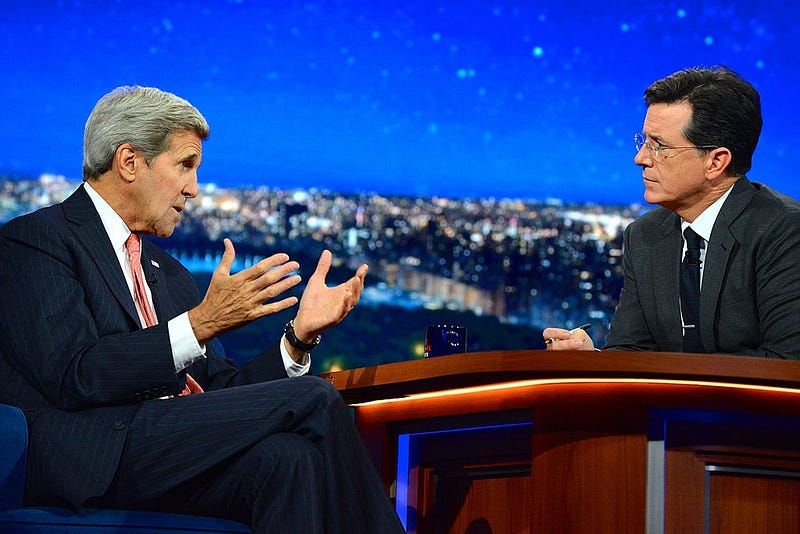
Then U.S. Secretary of State (and book author) John Kerry was a guest on “Late Night With Stephen Colbert” in 2015. Could you imagine trying to talk about what you wrote to appeal to millions of possible readers? (U.S. Department of State from United States, Public domain, via Wikimedia Commons)

Face it. Would you cause friends and family to reach for the TV remote?

You’ve all watched late-night television before. Celebrities and famed authors get chances to tell about their writings.

They get personal. The hosts want to know about their perspectives. Points of view.

The studio audience, nor the viewers, want to hear about how Wikipedia is the foundation of their dry, preachy listicles.

Could you help viewers care about why you care about your subject matter?

That’s the plea editor Adrian CDTPPW made his Jan. 30 monthly review. He wrote: “If I see a suspect submission (partially AI-generated or full of flat, meaningless information without any purpose or personal take), I will reject it.”

Why is this a great decision?

Because readers shouldn’t have to be subjected to lectures if they aren’t college students. (Even then, some professors could be charged with conspiracy to create boredom.)

If you’re a kid who doesn’t want to eat a serving of creamed spinach, a speech about nutrition and vegetables isn’t going to win many converts.

Instead, fussy young diners may be swayed by a childhood flashback, knowing that Popeye cartoons inspired that parent to eat her spinach to have the same muscles as the sailor man.

A kid might fall asleep, face-first in his plate, if a mother insisted on reading their offspring the entire Wikipedia entry on spinach.

When writing anything, not just for this Medium.com publication, build trust with your readers. Introduce yourself as you introduce your topic.

If you didn’t care while barfing up a Wikipedia report, why should readers feel differently?

It’s your job to connect with a reader. Share yourself with your audience, then they’ll be ready to think your thoughts and feel your feelings.

Do that, and you’ll be a published person who saves kind-hearted, inclusive editors like Adrian the thankless job of sending you a flush note.

Never miss a Tom Tale again. Subscribe here, then rest easy!

Wikipedia
Perspective
Humor
Point Of View
Read Or Die
Recommended from ReadMedium