
life experiences
Working With Prisoners & Ex-Prisoners
Does appearance matter?
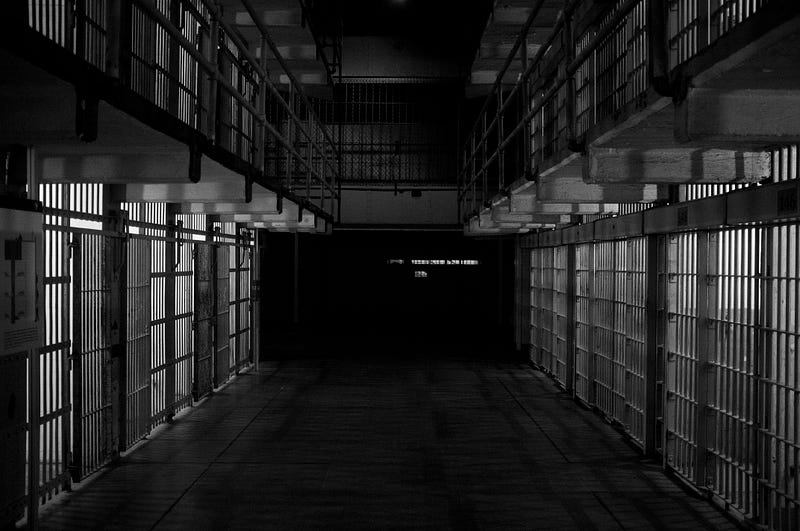
Inspired by the post of Ted Czukor on appearances, and my comment exchange with Sara Larca on her post about the deep sea, I decided to begin a series of short stories using the central theme of “appearance”. Even though all stories that will be shared are real, crucial/identifying information will be altered or omitted when the stories are derived from my working experience as a therapist.
As a trainee therapist, I had chosen to work at an organization that provided psychosocial support for prisoners and ex-prisoners. It was a short-term placement, but there I learned many things about life, the streets, and myself.
I quickly figured out that appearance was a crucial factor. Everyone at the organization tried to distance themselves from the population they were serving. This was done through clothing choices, accessories, and even language used.
More specifically, my direct supervisor always dressed up in haute-couture clothes and spoke ‘properly’. One time I asked her about that, and she told me that she couldn’t stand people who didn’t dress nicely and didn’t speak properly. I guess it was her way to remind the service users that there will always be a power divide between them and her.
Most of the service users had prison tattoos all over their bodies and faces. I find tattoos very interesting and, whenever I would have a hard time convincing someone to open up to me, I would ask them about their tattoos. Besides the tattoos, the condition of their skin and hair was a certain sign that they had a hard life on the streets and in prison. Self-harm scars, needle marks, and scars from fights were also plentiful.
Another thing I noticed there was that those who were the most gentle would go to great lengths to appear scary. For example, some of them would get lots of tattoos, others would only speak in prison lingo, and others would try to establish their physical dominance in the room by the way they would sit and look at you. The more I worked with these people, the more it was obvious that they had to look this way in order to survive on the streets and/or in prison.
I learned the prison and street slang quickly, which helped me establish better rapport with the service users. My ‘unconventional’ appearance helped too.
One day I met an ex-prisoner who had lots of prison tattoos but it was evident right away that he was a gentle soul. He was very soft-spoken, and apologized for his appearance many times. I enjoyed our session time together a lot.
Once he said that he imagines I’m probably rich because my clothes and my hair are always clean and look fancy. I was surprised to hear that. It never occurred to me that anyone would think that I look fancy.
During another session, he said that if he ever got clean (from drugs) he would buy some nice clothes so he could “feel human once more”. I asked him if he felt like a human at other times. He said that he had to “look like a monster in order to survive”. I told him that, in my eyes, he didn’t look like a monster at all.
A few years later, I saw his photo on the news. He was arrested for a violent crime. In the photo he looked at least 15 years older compared to the last time I saw him. I wasn’t even sure if it was him. I recognized him from his tattoos.
On news sites and on social media, everyone was commenting on how “scary and vicious” he looked. Most comments were along the lines of “with an appearance like that, of course he’s the one who did it”.
Up until today, it’s not sure whether he actually did the crime he was arrested for. And, if he did it, it’s likely that he was paid to do so for other reasons. All his other arrests were for misdemeanors. But he had a long record of being in and out of prison for various petty criminal offences.
Despite the fact that he had never, until that moment, committed a violent crime, it seemed that his appearance was enough for the people to condemn him. Even to this day, when I think of how our appearance can influence what others think of us, he’s the first example that comes to my mind.
To conclude my first story about the role of appearance, I wish more people would stop being afraid of the way a person (or an animal) looks and try to look at them through the lens of empathy. Our environment shapes who we become, and if we want to survive we must adapt to it. So, if one’s environment is the streets or the prison, they must adapt or they’ll perish.
I am not deluded though, I am well aware that some people are indeed better to avoid. All I’m saying is that, during my time in that organization, the most violent offenders I met were those who appeared ‘normal’ per society’s standards.
Therefore, instead of judging a book by its cover I believe we should give people a chance and be understanding when someone’s hardships are shown on their skin and through their eyes.
When I finished writing this story, I saw that John Ramos published an article on the truth about beauty. What a beautiful synchronicity!


