WORK | EDUCATION | FUTURE
Working from Home is The New World
Many workers will be keen to retain remote working arrangements in the future
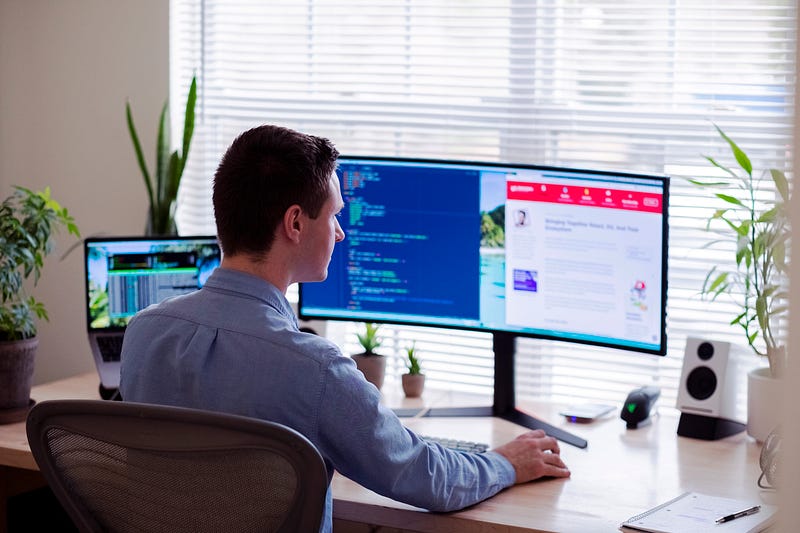
Twitter CEO, Jack Dorsey, made a bold move this week by informing all employees that they can work from home (WFH) forever.
In fact, many companies have put in place WFH options in recent weeks. A move that many had not previously considered until their hand was forced.
Google and Facebook also extended the WFH option to most of their staff, at least until the end of 2021.
In contrast, a recent survey indicates that “40% of workers are struggling with remote working”. Then again, this data is invalid due to the circumstances:
- Employees are forced to work from home
- Technology adoption was reactive i.e. unplanned
- Freedom of choice was suspended in lockdown
- Leisure and pastime activities are unavailable due to closures
- Child-care and homeschool has to be catered for
- Home-life brings distractions and disruptions
The list goes on.
This article will discuss the future of work and what educators and employers need to do now to equip the next generation for the new world.
To return or not to return
That indeed is the question. The initial instinct may be to return all employees to previous working arrangements after the pandemic. However, companies and employees that found an improved level of satisfaction in the WFH situation may wish to make this a permanent move.
Only employers can permit staff to WFH long term, but they must first weigh up the benefits — advantages, and disadvantages. One thing is for certain, flexible employers will be sought by employees going forward.
A remote choice
Working Remotely helps staff to manage family and personal commitments. The fact is that a lot of employees have managed to juggle childcare and work while schools were shut.
If lockdown restrictions are lifted to kickstart the economy, but schools remain closed, workers will struggle with childcare.
Making remote working optional on a more permanent basis means that employers will be less stressed. So it's advisable for employers to explore all forms of flexible workcing to facilitate the family unit going forward.
Lifting restrictions
When lockdown restrictions have finally lifted some form of social distancing will have to remain in place. So employers will have to make changes to the workplace anyway.
The answer to maintaining a level of distance between staff may very well be WFH.
Allowing remote working to remain for some employees is a ready-made solution, as it means fewer bodies are in the office.
For those who cant WFH, employers will have to come up with other forms of flexible working arrangements to keep the numbers down on a given day.
Mental health
Returning staff who were temporarily laid off will have been away from their role for a prolonged period. This brings other issues like retraining and mental health issues caused by the trauma of losing their job.
Employers must be patient with returning workers.
Returning employees may need to upskill through additional training or reorientation due to new aspects of their role. Newer employees may even need a refresher to become familiar with daily tasks again.
An empathic approach is the best course of action.

Education
Teaching the next generation is of paramount importance. Yet as far as I’m aware remote working has not made its way into the curriculum.
Like employees, students were thrown into the unknown and had to adapt quickly to stay on top of their studies. While the current cohort of students is considered the digital-generation, they’ve received little or no training on how to work remotely.
This is a problem, but also an opportunity.
Internships
The global pandemic brought a unique opportunity for companies, a virtual stage to show off their wares. A platform to impress and attract the next generation of employees.
The uptake of Zoom and other video technologies means that recruiters can invite interns into the virtual office with ease.
Think about the benefits:
- Location is removed
- Travel time and cost is removed
- Participation can increase from a few interns to an entire class
Also, this is an ideal way for employers to educate future employees on the ways and format of remote working. A win-win for all.
Feedback
There are other advantages too. Firstly, a two-way on the job interview process can start informally with graduating students, with little commitment from either party. A test-drive for all stakeholders.
Secondly, prospective employees will offer feedback through their decisions. For example, if a group of business or IT students spend time with three tech companies and 80 percent chose one, the other two companies are doing something wrong.
In effect, students can teach businesses and vice-versa through this mutually beneficial arrangement.
Final Thoughts
Communication should be transparent with the returning workforce, to keep staff updated on the company’s situation. Also, employers should invite employees to raise any concerns or challenges they may have.
To recap, below are three initiatives that businesses must embrace as we renter the future work environment.
- Flexibility — Employers should welcome WFH as a permanent solution to attract and retain staff while facilitating social distance.
- Mental health — We should all be more aware of our wellbeing and that of others to ensure that the new workplace is safe and fulfilling.
- Education — Future thinking will unlock opportunities that can benefit the collective workforce while educating the next generation.
The coronavirus has been difficult for everyone. It may have affected some employees more than others. So employers should offer counseling services and other support to aid employees to readjust.
Leaders have an important role to play and should maintain an open-door policy, encouraging employees struggling with mental health to seek help.