
Word Games Christians Play
When they can’t use reason to back up their faith, they play word games

I am not saying that non-Christians don’t play word games. All people do. But Christians tend to play specific kinds of word games to make their religion looks good.
There are just too many examples of this. I will just list a few. You may be familiar with some of them already.
1. ‘Christianity is not a religion, but a relationship’
This may be the most common claim I hear, but there is no substance in this claim. It is self-deception at its core.
Somehow many Christians, especially evangelical Christians, have a low view of the word ‘religion’. Since other religions are not true, they tend to feel it’s not appropriate to put Christianity in the same category. So what’s left to do is to come up with justifications to distinguish Christianity from other religions so they can see themselves as ‘above’ other religions.
One way is to define ‘religion’ as a man-made system of belief. Since they believe that all religions are man-made except Christianity, by using this definition, they can comfortably separate their faith from other religions.
There is just one problem…
A lot of religions don’t regard themselves as man-made either. So even in using this definition, Christianity would still be lumped together with many other faith traditions.
The second way is to emphasize the institutionalized part of religion. This is where ‘relationship’ comes in.
… the broad gate of religion versus the narrow gate of personal relationship. — D L Henderson Sept. 26, 2022
Things like the power structure of the church, rules, and sometimes adherence to the liturgy are not as interesting as having a personal relationship with Jesus.
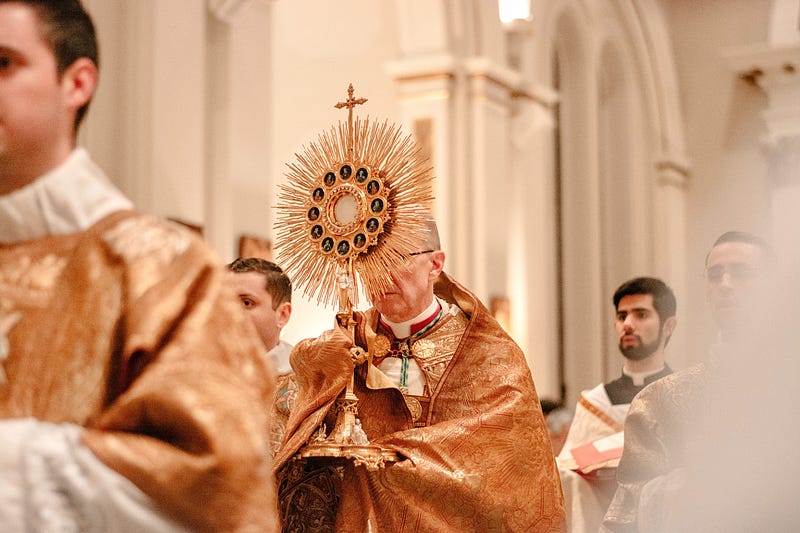
But let’s face it, biblical canon did not come into existence because of ‘personal relationship’, nor did the doctrine of Trinity or salvation. Christians don’t ‘realize’ that Jesus is both God and Man as a result of their personal relationship with Him. Whether they like it or not, they got this concept from the institutionalized church, in the form of the Ecumenical Council.
So yes, Christianity is about personal relationship with Jesus, but don’t kid yourself; it is also a religion.
‘Religion that God our Father accepts as pure and faultless is this: to look after orphans and widows in their distress and to keep oneself from being polluted by the world.’ James 1:27, NIV
2. ‘Science (or atheism) is also a religion, requiring faith’
First, like the previous point, a lot of Christians somehow think the word ‘religion’ has a negative connotation, so to show that science is a religion, to them, is like an attack on science, dragging it down to be at the same level as Christianity. It’s hilarious.
Second, it is not true that science or atheism requires faith. The definition of science itself is incompatible with faith. Evidence is required to establish scientific knowledge or theory, which is always tentative and can be overturned when new and more reliable evidence is discovered. Skepticism is at the core of science.

Many people misunderstand the philosophy of science to be naturalism. It’s not. Science adopts methodological naturalism. It does not assert that the natural world is all there is to know or all that exists. It just chooses to limit its focus to the natural world, using evidence that can be observed or detected. Science does not claim a monopoly on the truth. In fact, scientists generally do not use the word ‘truth’ to describe even well-established scientific theories because those theories can still be modified in the future.
Similarly, atheism (at least soft atheism) is not faith-based. Atheism is a state of not having a belief in god, a state of having no religion. Having no religion cannot be a form of religion; otherwise, the term ‘religion’ becomes meaningless. Not playing golf is not a hobby. Similarly, having no belief in god is not a religion.
Why do atheists not believe in religion?
Because atheists are not convinced that there is a god due to a lack of sufficient evidence. Not being convinced of something does not require faith. It is the acceptance of the null hypothesis when it could not be ruled out. Such acceptance is tentative, not positive.
The party that makes positive claims has the burden of proof. If the claim is not backed up with sufficient supporting evidence, the audience can dismiss it, and doing so requires no faith. Faith is only required when there is no sufficient supporting evidence but the person chooses to accept a positive assertion.
‘What can be asserted without evidence can also be dismissed without evidence.’ — Christopher Hitchens
A fraction of atheists may believe in hard atheism, claiming that they know for certain there is no god. I agree that they have the burden of proof, but such a stance is hardly the norm in the wider atheist community.
And frankly, I think some hard atheists may have been misunderstood. Some may mean that the kinds of deities that major religions today claim could not possibly exist (e.g. Victor Stenger). They don’t mean that any kind of supernatural world or being cannot exist outside of human knowledge and perception.
In the end, neither science nor atheism holds firmly a particular set of beliefs that cannot be questioned and has to be accepted by faith. Therefore, neither of them can be categorized as a form of religion.
3. ‘You took that passage out of context’

This might be the more humorous one among the word games Christians play. There had been numerous times when I simply quoted a Bible verse, without any interpretation or comment, and some random Christian would see it and quickly accuse me of taking the passage out of context.
When I asked them which part of my comment (there was none) misinterpreted the text I quoted, there was usually no response.
But more seriously, a lot of Christians think that by using the magic phrase ‘it should be read symbolically,’ somehow they feel justified to dismiss the harsh or disturbing edge off the message of the text.
Sometimes this reading strategy works. For example, it is well known that Genesis 1–3 contains two different and contradictory accounts of creation. A high level of mental gymnastics is needed to reconcile the two so they appear coherent (to the interpreter). But such an endeavor is not needed if these two creation stories are read symbolically. The contradictions do not matter that much when such non-literal reading is adopted.
But this method is not a cure-all for all the problematic passages in the Bible. Most Christians are aware of the morally questionable atrocities that Yahweh directly causes or commands His people to cause in the Old Testament. Some Christians leave this issue at the back of their mind, thinking that they would ask God this question after they die. Others try to rationalize it.
One common way of rationalization is to take the accounts of mass killing in the Old Testament (such as killing Canaanites and Amalekites) as allegories, not meant to describe what happened historically.
The problem is: innocent children and babies are still killed in the story. Christians may be relieved that the genocide was not real, but the moral problem is still there. It is the protagonists in the story that perpetrate the killing, not the antagonists. Christians still have to deal with this fact.
Readers don’t cringe as much when reading fiction of mass murder because there are no real victims, not because it is more justifiable to kill innocent victims in a fictitious story.
Some say Canaanite children symbolize seemingly innocent evil. But this is absurd. There are obviously more appropriate objects that can be used to represent such a concept. Babies make a terrible symbol of evil with innocent looks, especially when the ‘moral’ of the story is to completely eradicate them.
It makes no sense.
But Christians will still try to bend forward and backward to justify believing Bible as the Word of God. Their mind is already made up. What’s left to do is to find justifications. If one theory does not fly, they will keep inventing new ones.
I deal with a similar issue in the following article:
4. ‘Love the sinner, but hate the sin’
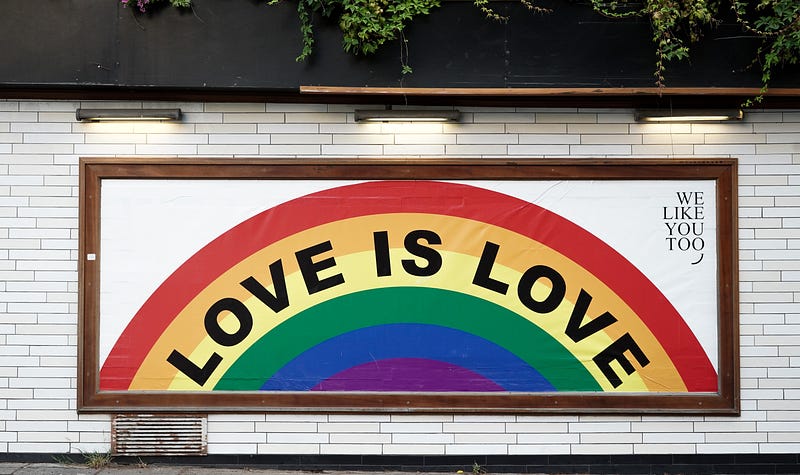
This slogan is not used by evangelical Christians to love gay people, but to justify their discrimination against sexual minority community while happily thinking that they are doing the right thing.
It is disturbing, if not disgusting.
You simply can’t separate a person from their sexual orientation. It’s part of who they are. To deny it is to deny the wholeness of that person. That’s not love.
In fact, it would have been better if Christians just say they hate gays. At least that would make it easier for gay people to shut them out emotionally. When they say they love all people regardless of sexual orientation, some gay people might believe them, only to be hurt even deeper in the end.
For example, gay Christians might tell themselves (or be told) that they just ‘struggle with same-sex attraction’, trying in vain to separate their identity from their sexual orientation. The long-term emotional damage is severe.
‘But our Bible teaches that homosexuality is a sin and that we should love everyone.’
That’s the problem. Most Christians believe everything the Bible says, no matter if it makes sense or not. Correct belief is more important than people. If it pleases God, or if it’s God’s will, not only is condemning homosexuals justified, but condemning and annihilating an entire race or tribe is also justified. I address this issue in the following article.
Conclusion
We all have our own biases. When we have already made up our minds about what is true, we tend to ignore the soundness of our arguments. The more invested we are emotionally in a certain viewpoint or position, the further we are willing to let go of our rationality. Let the examples I give in this article be a caution for all of us, so we don’t make similar mistakes.
If you are not a Medium member yet, please consider signing up using my referral link. I will get a small commission at no extra cost to you.


