
Winter Retreat: Exploring Gozo, Malta’s Hidden Gem
Warm-Up in the Mediterranean
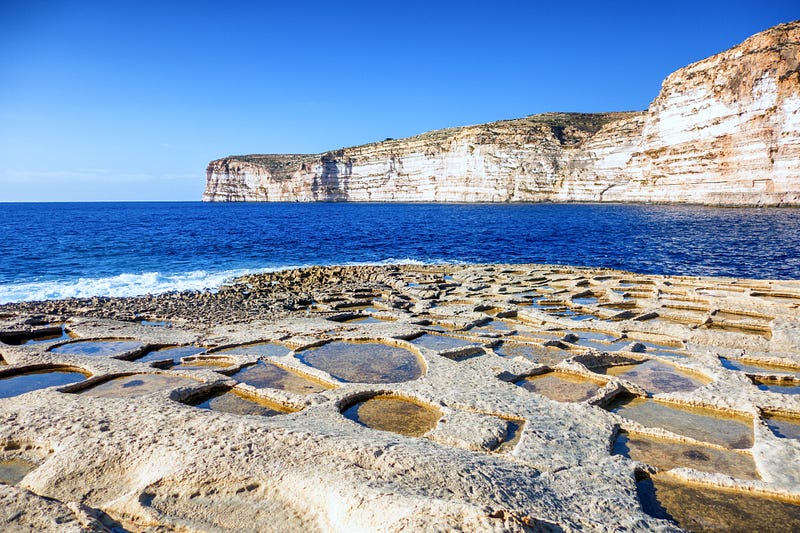
In Hungary, winter arrived. When coupled with snow, it can be great fun. But, the sudden cold urged my wife and me to warm ourselves up somewhere in Southern Europe for a few days.
So, we chose Malta.
We reached Malta by a direct budget flight, spending a total of 5 days there, which turned out to be a fantastic choice, not just because of the weather!
This travelogue recounts our day trip to the island of Gozo.
Gozo is one of the islands forming the Maltese archipelago in the Mediterranean Sea. It is the second-largest island after Malta, with a population of 31,000.
As our accommodation was on the island of Malta, we could only reach Gozo by sea, using a ferry. We had two options.
Either go to Valletta, the capital of Malta and from there take the Gozo Fast Ferry for a 45-minute journey to Gozo. Or go to the northern end of the island and choose the ferry service operated by Gozo Channel Line, which departs every half an hour. We opted for the latter, as it proved to be faster (25 minutes) and more cost-effective.
During our stay, we did not rent a car, so we reached the northern ferry terminal by local bus.
I should note here that Malta’s sole public transportation is the bus. Yet, it works well, runs frequently, and can take you almost anywhere.
So, we bought ferry tickets and set off for the island of Gozo, which got its present name, meaning “joy” in Spanish. The island was named by the Aragonese after they conquered it in 1282.
Sea travel is always a great experience, and with good weather, we enjoyed the crossing in the sunshine. Due to the short journey, the impressive panorama of the port town, Mgarr, unfolded before us upon arrival.
Exiting the ferry, we found the bus stop.
Gozo has a total of 15 bus routes, including a night service. With these buses, you can reach almost anywhere on the island within an hour.
Since we would have had to wait half an hour for the bus to our first destination, we decided that our first stop would be the capital, Victoria.
After a comfortable 15-minute bus ride, we arrived in Victoria. With a population of 7,000, it is a charming little town.
We walked through all the narrow streets of the old town. Due to the country’s history, Christian motifs and depictions are visible everywhere. We saw very kind and friendly people everywhere.
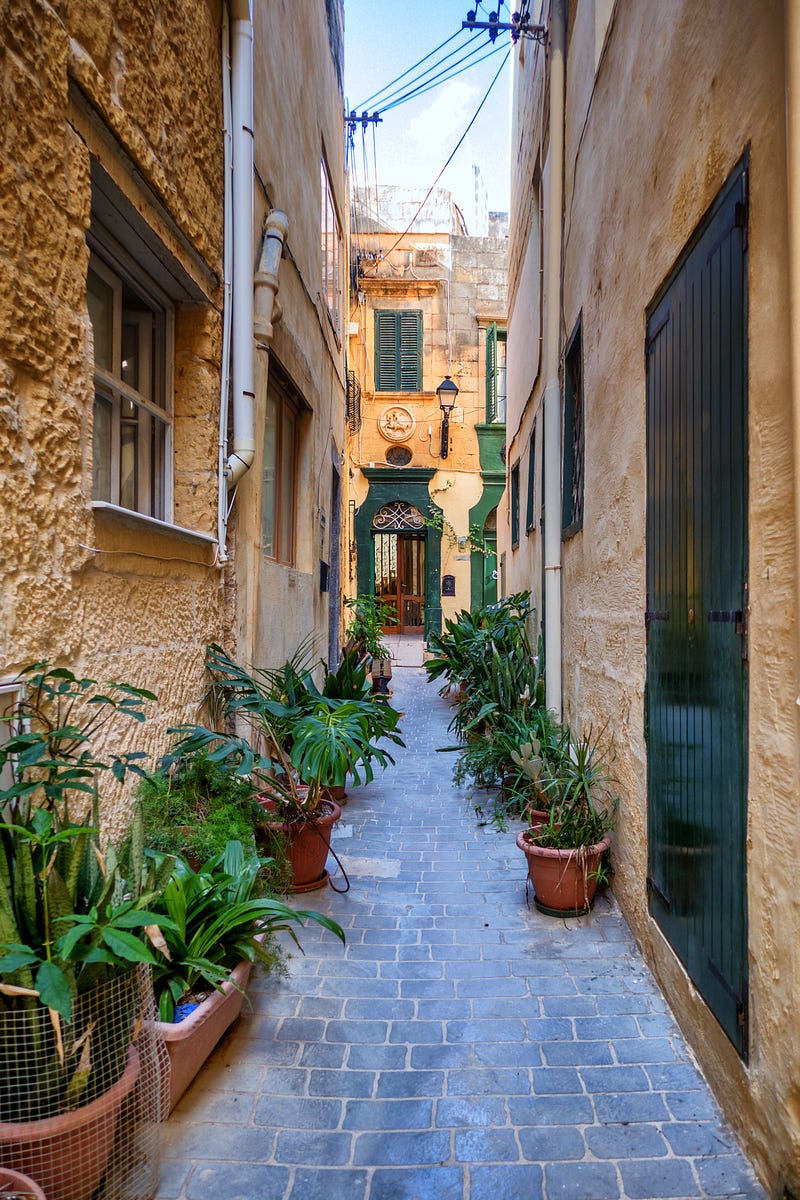
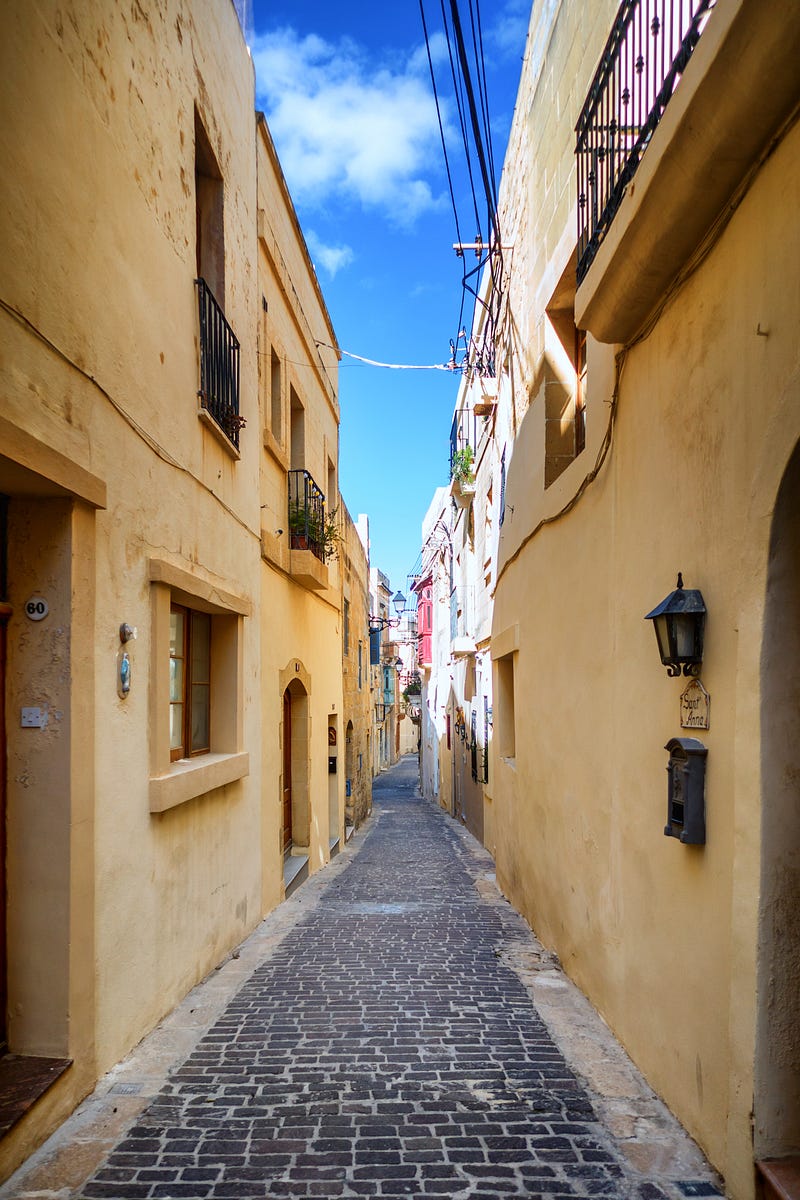
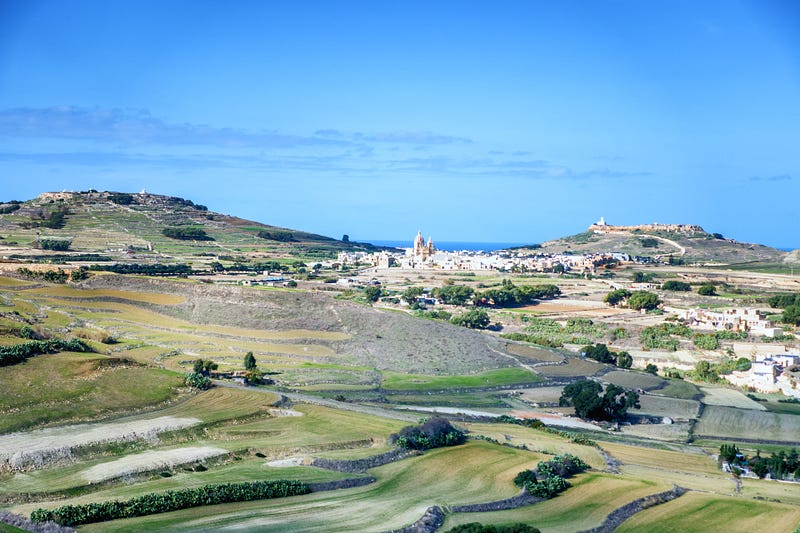
Our next stop was the city’s main attraction, the Citadel, Gozo’s historical fortress. The partially ruined monument houses the cathedral, the court, and several museums. The foundations of today’s citadel were laid during the Arab rule. The current fortifications are the result of the construction by the Order of Knights of the Hospital of Saint John of Jerusalem, known as the Knights Hospitaller (1599–1603).
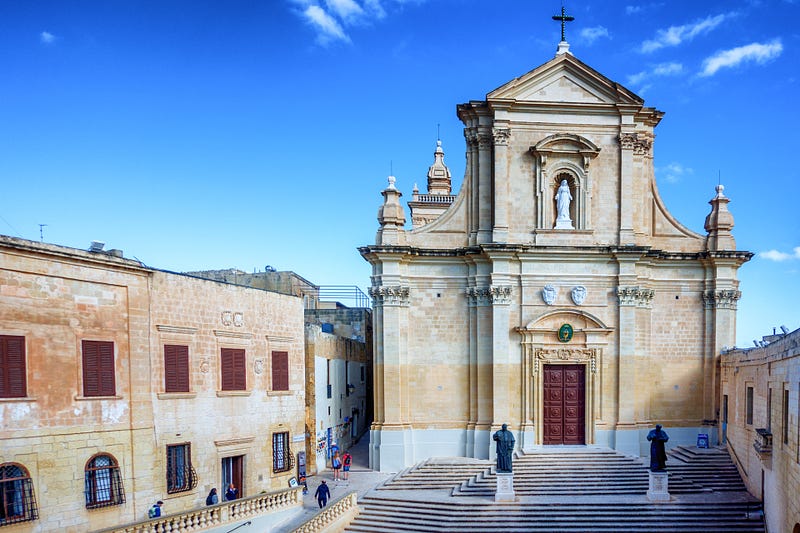
We walked along the walls of the Citadel, which we found a bit unsafe in some places, but the view spoke for itself, as shown by the attached photos.
Descending from the Citadel to the central bus station, we walked to our next destination, Xlendi Bay. Xlendi is a small seaside resort known for its lively atmosphere and idyllic surroundings.
Due to its location, small sandy beach, and great panorama, it is popular among tourists. There are several suitable diving spots near the rocks on the left side of the bay.
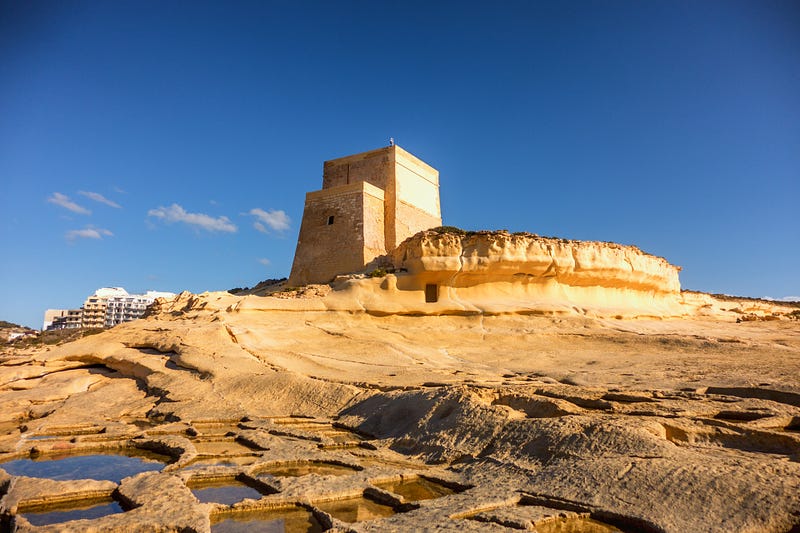
Next to the beach, there is a well-maintained promenade that leads from the city center to a medieval watchtower standing on the shore. The view is breathtaking!
We had lunch in a local restaurant. Besides enjoying hearty portions, we admired the divers returning from their dives, parading in their full gear along the main street.
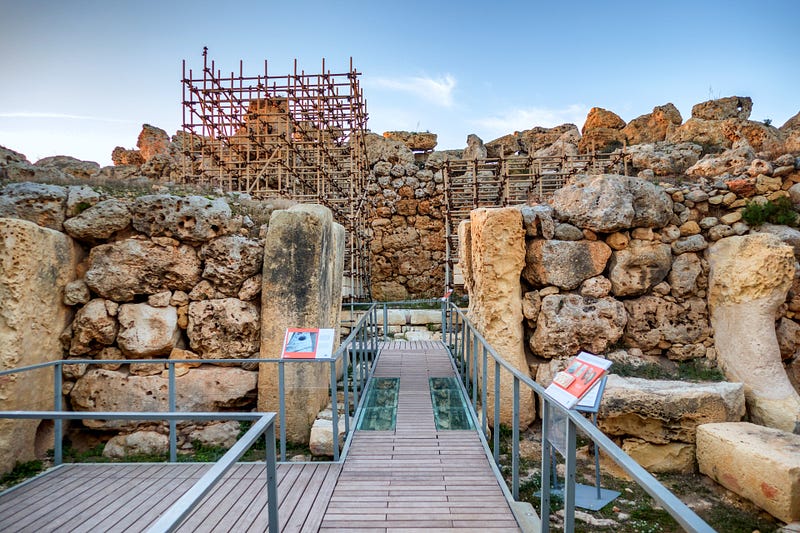
Our last stop, the highlight for me, was the Ġgantija, a Neolithic megalithic temple ruin. Its name means “from the giantess.”
Among similar temples in Malta, Ġgantija’s southern temple was the first and is the world’s oldest free-standing human structure.
Buried for thousands of years, the church was rediscovered in the 1770s.
Given the above, my excitement was understandable. Moreover, we timed our visit to marvel at this landmark in the light of the sunset.
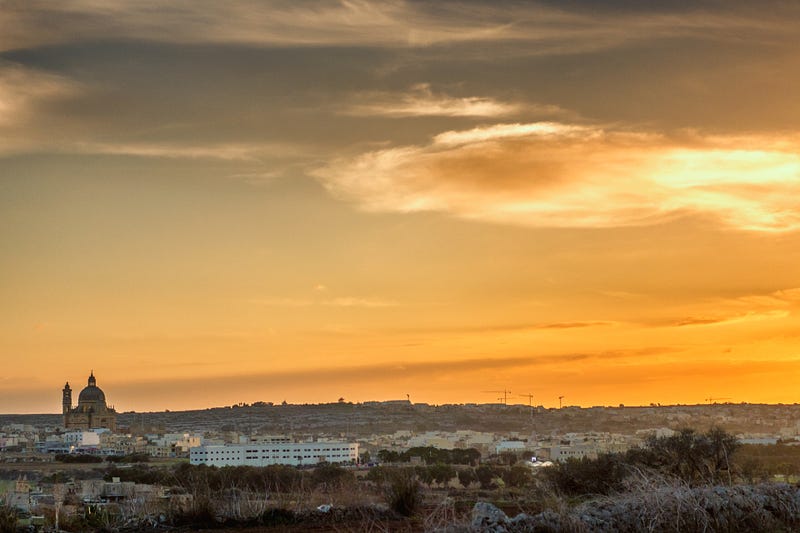
Before closing time (open until 18:00), we arrived two hours early at this ancient temple, part of the UNESCO World Heritage site.
After purchasing tickets, you can first visit a modern visitor center showcasing artifacts found during excavations. Through a short film you can learn about the history of the Neolithic temple and its discovery.
According to local tradition, a giantess named Sansunna built it, hence the name of the complex (ġgant means giant). Considering that the temple was built around 3600 BC, preceding the invention of the wheel, and some of its stones weigh up to 50 tons, the common belief is that giants built it.
Leaving the visitor center, a modern path leads to the ruins of the twin temples. As closing time approached, there were very few people around, making the moment we experienced, seeing the ruins illuminated by the sunset, even more special.
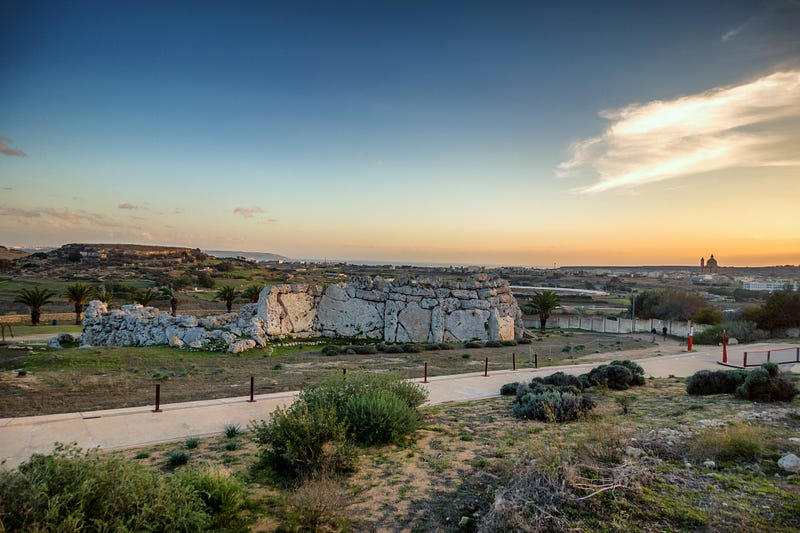
When we entered the southern temple, which is larger and older than the nearby northern temple, fantastic feelings washed over me. Having meditated daily for over 10 years, it was an incredible experience to feel the energies radiating from this place. Peace, tranquility, stillness, serenity — these characterized it. It was wonderful to experience this with my wife.
Unfortunately, as closing time neared, we had to leave the complex. Luckily, the bus stop for the return journey to the port was across from the entrance to the visitor center. So, after a quarter-hour wait, during which it got dark, we boarded the bus to head back to the ferry.
We had a wonderful and unforgettable day on the island of Gozo, and I hope we’ll return!
If you enjoyed the travelogue, take a look at my other travel articles, which are sure to captivate you with their similar tone and photos.
Hello, I’m Jozsef. I’m writing about startups, entrepreneurship, and traveling. To see my stories pop up on your feed, I’d love for you to follow me. ( Jozsef Kovacs) And, to have stories sent directly to you, subscribe to my newsletter.👇


