
William H. Whyte on Human Behavior in Urban Settings
Why people-watching is a crucial skill for urbanists
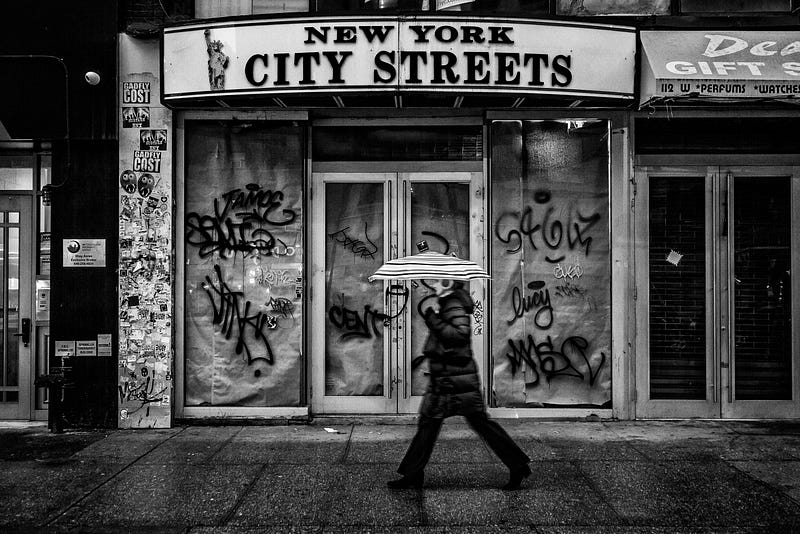
“What attracts people most, it would appear, is other people.”
— William H. Whyte in The Social Life of Small Urban Spaces (1980)
William Hollingsworth Whyte, known affectionately as “Holly,” was a prominent American urbanist who lived during the 20th century. An exceptionally influential figure, Whyte was the mentor of many other “urban legends” who were active in the same era, such as Jane Jacobs and Fred Kent.
Later, Whyte’s ideas — which have greatly impacted the field of urban planning and design and are still relevant today — were also picked up and built upon by other renowned urban thinkers, such as Jan Gehl, Donald Appleyard, Allan Jacobs, Clare Cooper Marcus, Galen Cranz, Robert Sommers — the list goes on.
What makes Holly Whyte so special? What’s so great about his ideas that it influences so many people so profoundly?
As paradoxical as it seems, Whyte’s most fascinating subject is also the most mundane: human behavior in urban settings, or, to put in even simpler terms, what people do or don’t do in the city. That’s the essence of his work.
Sounds too simple? Well, that’s because it is.
In fact, that simplicity is its greatest charm.
People-watching on the streets
“The street is the river of life of the city, the place where we come together, the pathway to the center.”
— William H. Whyte in City: Rediscovering the Center (1988)
While many of Holly Whyte’s ideas may seem incredibly sophisticated, they all have roots in a deceivingly simple activity: people-watching.
Again, what’s so special about that? Don’t we all do that every day?
Well, Holly Whyte takes people-watching to another level.
Known by the moniker, “The Man Who Loved Cities,” Whyte has a reputation of being incredibly observant. He enjoyed watching the small, unimportant things that people do in urban environments — to the point where he could draw complex patterns and derive insights from them. People attract people, he famously said, and people are what makes cities intricate and interesting.
As he expressed in one of his writings:
“One felicity leads to another. Good places tend to be all of a piece — and the reason can almost always be traced to a human being.”
From those words, we can infer this lesson: to design cities truly catered to people, we must first observe the people.
Sounds obvious? I wholeheartedly agree! It is blatantly obvious — but still, we keep missing that simple fact. Why is that? Who knows.
Now that we’ve established that people-watching is an important activity, especially for urbanists, let’s proceed to the next question: what’s the best place to watch people?
Their houses? Parks? Shopping centers? Cafes and restaurants?
According to Holly Whyte, the best place for people-watching is the streets. In his own words, streets are “the river of life…where we come together.” Streets are brimming with human activities, it’s where people gather, pass by, and intersect. To study the city and its people, we must study its streets.
In 1969, while working with the New York City Planning Commission, Whyte decided to take his favorite pastime into a full-fledged research project, which then became the Street Life Project. From this pioneering study of pedestrian meanderings, the gate opened wide for further studies on human behavior in urban settings.
The Street Life Project’s methodology is pretty straightforward. Whyte and his colleagues took a camera, put it on a street corner, and recorded a timelapse of pedestrian activities. The result of this observation is, again, staggeringly obvious, and yet often goes unnoticed.
Whyte found patterns and insights in seemingly meaningless behaviors, such as where people choose to stand, where and how they have conversations, how they move objects around and move around objects — all trivial stuff. Yet, it is through these tiny things that we can accurately find out what kind of places the people actually need.
In light of these humble findings, Whyte expressed:
“If there’s a lesson in streetwatching it is that people do like basics — and as environments go, a street that is open to the sky and filled with people and life is a splendid place to be.”
Holly Whyte’s legacy
Holly Whyte’s works have inspired a long list of urban thinkers — past, present, and emerging. He even mentored some of those thinkers directly.
He has been at the forefront of the struggle to re-center cities around people since the mid-1950s when he was an editor at Fortune Magazine. It was during this period that he published Jane Jacobs’s “Downtown Is for People” in Fortune and in his compilation The Exploding Metropolis.
Furthermore, Fred Kent, one of Whyte’s mentees, founded the Project for Public Spaces (PPS) in 1975 after working with him on the Street Life Project. This makes Whyte somewhat of a forefather of the placemaking movement, an approach of urban planning and design that focuses on the way people interact with the places they live in.
Even if you’re not an urbanist, there are still a lot of lessons you can learn from Holly Whyte. The majority of humankind now lives in cities. If you’re human, your life will inevitably be connected to the city in one way or another.
Among all of Whyte’s knowledge, these three are perhaps the most enduring and most relevant to our current world:
1. Small public spaces are important
Through his meticulous and diligent observation, Whyte has proven the importance of small spaces. It is park benches, streetlights, fountains, and other simple objects that people tend to gravitate towards. He elaborated extensively on this notion in The Social Life of Small Urban Spaces.
Furthermore, what attracts people most is other people. However much we love solitude, it is only among our kind that we feel the safest and most comfortable in. With this realization, Whyte believed that we have a moral responsibility to make places that facilitate humane interaction.
The microcosm of small public spaces is the perfect vehicle to reach that goal. These spaces contribute fundamentally to the people’s well-being and overall quality of life — both as individuals and as a collective entity.
2. Design should start from the bottom up
Whyte was a pioneer of a design approach that is bottom-up, as opposed to top-down. He advocated that design should begin, first and foremost, with a thorough understanding of the way people use spaces — the way they are currently using it, and the way they would like to use it.
He noted that people vote for spaces with their actions, which are largely unconscious. When using spaces, we don’t really think, don’t we? People simply use spaces that feel comfortable and easy to use, and we disregard those that aren’t.
Of course, there’s still merit in a top-down design approach, but it would be wrong to not consider its bottom-up counterpart. After all, if people won’t use a space, why build it in the first place? Might as well leave it in its natural state, let it develop organically, and see what happens.
3. Observation is key
We can learn a great deal simply by observing. Any decent planning and design process starts with observation, as opposed to assumption. It is with the knowledge found through observation that we can create places that are truly usable and useful for its users (kind of like UX, right?).
Whyte reminds us to examine spaces without theoretical or aesthetic biases. That is, don’t get stuck on the “textbook definition” of a space, and don’t view said space only from its outside appearance.
In his words, we should “look hard, with a clean, clear mind, and then look again — and believe what you see.”
Form follows function. First, the soul, then the body.
Final thoughts
“I end then in praise of small spaces. The multiplier effect is tremendous. It is not just the number of people using them, but the larger number who pass by and enjoy them vicariously, or even the larger number who feel better about the city center for knowledge of them. For a city, such places are priceless, whatever the cost. They are built of a set of basics and they are right in front of our noses. If we will look.”
— William H. Whyte in The Social Life of Small Urban Spaces (1980)
Holly Whyte was a profound man. Through his works, he taught us how to see. His humble take on urban planning and people-watching remind me of the Latin proverb Sic parvis Magna, “great things from small beginnings.”
Cities are colossal entities. People, on the other hand, are minuscule in comparison. Nevertheless, cities are made by people. They’re supposed to be made for people, too. And to do that, to make cities for people, we must refrain from staring incessantly at the grandiose, and also turn our gaze towards the ordinary — that’s where the magic happens, after all.
“If we will look,” Holly said.
