
11 Principles of Placemaking: How to Design People-Centered Places
In a way, placemaking is UX Design on an urban scale.
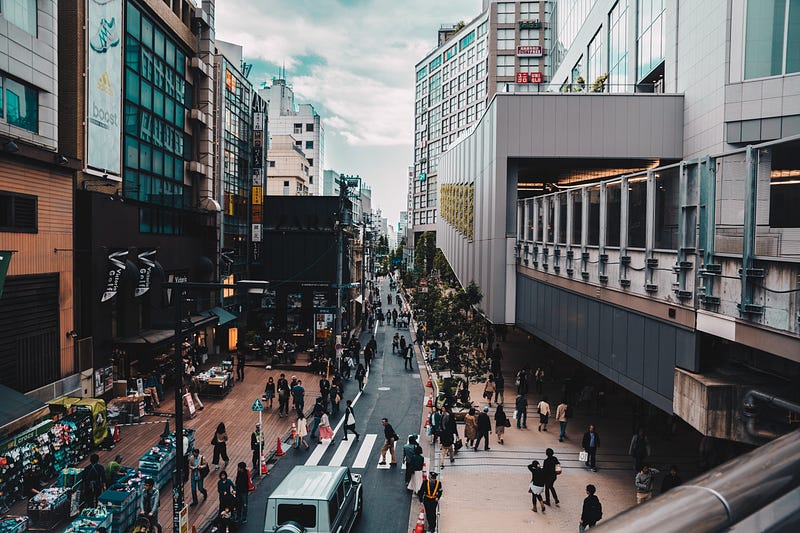
If you want to design places catered for humans, placemaking is the concept you want to utilize. It’s like UX on an urban scale. We plan, design, and develop according to the user’s needs and preferences, to ensure that the output is actually useful and usable for them.
In this case, the user is the community — the people.
In their book How to Turn a Place Around, Project for Public Spaces (PPS) proposes 11 principles to help urban planners, designers, and developers make places people actually want to live in.
Let’s dissect them one by one.
1. The Community Is the Expert
To begin a placemaking process, it’s best to first identify the talents and assets of the community.
In every community, there are “experts” who can present valuable perspectives and insights about the area’s history, culture, functionalities, or any other aspect that’s considered meaningful for the people.
By placing the community as the expert, it will foster a sense of “community ownership” which elevates the place’s importance in the eyes of its residents.
2. Create a Place, Not a Design
When we hear “design,” our minds are likely to conjure images of shapes, colors, and other physical elements. However, it actually extends beyond that.
As we understand from UX, design is a matter of experience.
In placemaking, every element (physical or otherwise), must serve a purpose. Mainly, the place should make people feel welcome and comfortable.
This often translates to the development of effective relationships between the place, the people, and the activities. The goal here is to make the whole greater than the sum of its parts.
3. Look for Partners
In a placemaking project, it’s best to look for partners as early as possible.
These partners may come from the residents, local governments, educational institutions, museums, libraries, or other related organizations.
Since placemaking is community-driven, and the place itself is supposed to foster community ownership, more partners will generally mean a greater sense of community.
4. You Can See a Lot Just by Observing
Instead of guessing what might work or not work, it’s much more preferable to learn through observation.
Simply by looking at how people are conducting their activities in a place, which elements they use or don’t use, what features they like, or don’t like; we can accurately identify what elements are missing and thus can be incorporated through placemaking.
It’s also important to remember that people’s preferences will evolve over time, and needs to be managed continuously.
5. Have a Vision
A good placemaking approach shouldn’t just flow by “whatever seems easiest” or “whatever seems good at the time” — it should have a vision.
This vision might include the physical shape of the place, its brand/image, the kinds of activities that might happen there, and so on. Ideally, the vision should come from the community itself.
6. Start with the Petunias: Lighter, Quicker, Cheaper
Places are complex entities, and placemaking practitioners shouldn’t expect to do everything correctly from the get-go.
The best places are made through incremental improvements that are tested and refined over many years. For example, physical elements like seating, footpaths, or public artworks can be added and subtracted as needed, in time.
Your first step can be as simple as planting a row of petunias. From there, you can gradually experiment with more intricate elements.
7. Triangulate
Holly Whyte defined triangulation as follows:
“Triangulation is the process by which some external stimulus provides a linkage between people and prompts strangers to talk to other strangers as if they knew each other.”
In the context of placemaking, this generally means the relationship between separate elements within the place, and how we select and arrange them to achieve a desirable effect.
For example, if we put a coffee stand and a bench near a pond, they will create a behavior pattern: People will buy a cup of coffee, then sit on the bench to drink it, while enjoying the pond’s view.
8. They Always Say “It Can’t Be Done”
Yogi Berra once said:
“If they say it can’t be done, it doesn’t always work out that way.”
Creating good places always has its obstacles. Often, no single stakeholder in the placemaking project has a specific responsibility to “create places.” Each person will have a narrow job description such as “landscape design” or “traffic management.”
As mentioned before, placemaking itself is a community effort that’s nurtured through small scale improvements over time.
9. Form Supports Function
While “form” is important, it must be designed to support a certain “function.”
This function should come from the place’s vision and the community’s needs and preferences, which can be understood through the input of the partners, and the community itself.
10. Money Is Not the Issue
Usually, the major problems of placemaking are not financial in nature.
After basic infrastructures are put in the public spaces, any additional elements often don’t have that big of a cost. Additionally, if the community and other partners are thoroughly involved in the process, this cost can be reduced further.
In the broader context, the financial costs are not as significant as the benefits. The bigger issue is, therefore, to ensure that all stakeholders involved are on the same page, going all-in on the same vision.
11. You Are Never Finished
By nature, a good place is one that responds to the needs and preferences of the community, and these are ever-changing variables.
Amenities wear out, new technologies are invented, social customs are continuously shifting — placemaking doesn’t simply “end,” it’s an ongoing process.
Thus, to create good places, the ability to adapt and overcome change is of the utmost importance.
Final Thoughts
Placemaking is still growing as an urban development concept. It will adjust itself to the characteristics of the particular time and location. Perhaps, these 11 principles will also change with it.
That being said, whenever and wherever placemaking is conducted, one thing stays the same: Just like UX design, which focuses on the users, placemaking focuses on the community. First and foremost, placemaking is done with the community — the people — in mind. That’s the most important mindset you need to make people-centered places.
If you’re still curious about placemaking, you might also enjoy these articles:


