
Placemaking: The Essential Approach to Designing Humane Cities
There’s an urgent need to reconnect people and places — and we have just the tool for it.
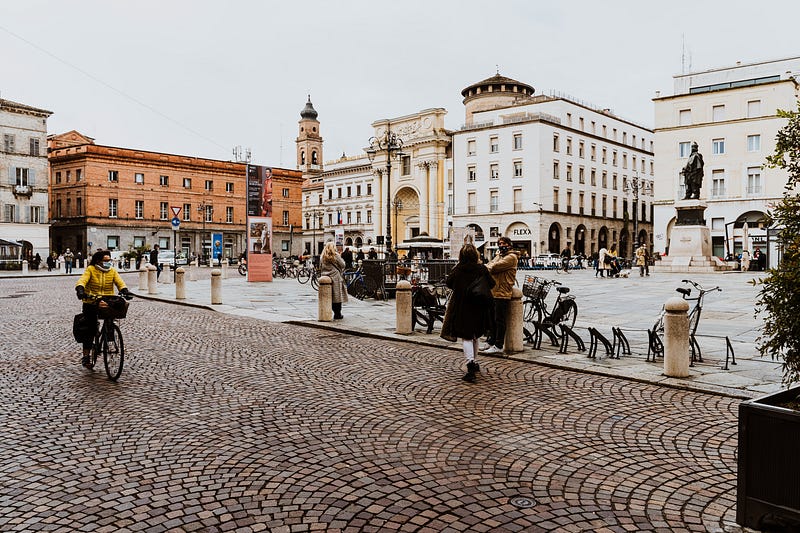
What city do you live in? Is it a small town or a huge metropolitan? Would you describe it as a “humane” city, or the other way around?
Since 2007, the global urban population has surpassed its rural counterpart. Cities have officially become the focal point of human civilization. For better or worse, that’s the direction our world is going: To the city.
Much like their human inhabitants, cities are complex systems. A city is comprised of myriad facets intertwined with each other. This complexity is a challenge we must take into account, and while this applies to everyone who lives in the city, it’s especially true for urban planners and urban designers.
Somewhere along the way, a problem emerged: Cities are supposed to be the nexus of human life, but is it designed with humans in mind? Empirical evidence suggests that it’s not. What, then, has been the central idea of urban development all along? You guessed it: automobiles, shopping malls, and other capitalistic entities.
This problem has grown severe in the last few centuries, but people are starting to realize the errors of their ways. More and more people start to understand the urgent need to humanize these cities of ours.
In recent years, urban experts have thought of one possible solution to this problem: It’s called placemaking.
About Placemaking
The concept of placemaking has its roots in the 1960s, when prominent urban thinkers postulated ideas about designing cities that are not catered for cars and shopping centers, but for people — “creating people-centered cities.”
One of those urban thinkers — perhaps the most well-known of the bunch — is Jane Jacobs, and she summarized that idea in this famous sentence:
“Cities have the capability of providing something for everybody, only because, and only when, they are created by everybody.”
This idea of “creating people-centered cities” was studied extensively in the following years, paving the way for many humanistic urban development concepts like New Urbanism.
Sometime later, the experts arrived at the concept of placemaking — a concept that only grows more relevant in today’s urban world.
Placemaking is both a process and a philosophy. It is a multifaceted and collaborative approach to urban planning and design that emphasizes the connection between people and the places they live in.
In the act of placemaking, we collectively reimagine and reinvent our public spaces, turning them into an emotionally fulfilling place to live. This distinction between “space” and “place” is often equated with “house” and “home” — two words describing the same object, but with a distinct condition.
Placemaking goes beyond design and architecture. It considers all aspects of a place: physical, cultural, social, even spiritual. This trait makes it cognate with the idea of “place identity,” and later, “place attachment.”
At its heart, placemaking is a collaborative community effort. It is not the instrument of the privileged few, but the entire community. No matter what gender, age, or race. To this end, it holds the value of inclusivity and sustainability in high regard.
All these traits make placemaking a suitable approach to humanize today’s post-industrial cities.
Places in the Post-Industrial Era
In this post-industrial era, the “community of place” is getting increasingly replaced by “community of interest.” Physical distance is becoming less and less relevant, mainly because of the development of communication technology.
Nowadays, people tend to congregate not with those in close proximity, but with others that have similar interests and passions: schools, workplaces, organizations, hobby groups, and so on.
Considering this occurrence, we can understand that “places” are being increasingly correlated with “interests” — a place that’s considered meaningful for the community is one that facilitates their interest. When a place fails to fulfill this criterion, that place will slowly lose its meaning, fades away from the people’s minds, and ultimately becomes derelict.
As William “Holly” Whyte said:
“It’s hard to design a space that will not attract people. What is remarkable is how often this has been accomplished.”
If we think about it, it’s always been like that: People are attracted to places they deem interesting. Technology is not the cause, it merely amplifies that fact. The root cause has always been basic human nature.
Despite the emergence of virtual spaces like the internet and social media, as long as humans are a physical being, places will always be important. People are using virtual spaces as an escape, because the places they find in real life do not fulfill their needs and interests.
However, technology is only a tool. If we use it correctly, it can breathe life into places instead of taking it. Social media, for instance, can be an effective placemaking tool through a process of urban acupuncture.
Through placemaking, we can reclaim the city and give it back to its people.
The Placemaking Process
The basic tenet of placemaking is pretty straightforward: Put the people first. In this case, it’s the community — their presence, activities, and livelihood. Buildings and streets can come later.
As expressed by Jan Gehl:
“First life, then spaces, then buildings — the other way around never works.”
To do this properly, we should include the people in the design process. Not as externalities, but as important stakeholders. The placemakers should observe, listen to, and ask questions to the community themselves — the very people who live, work, and play in that neighbourhood.
When we embrace this method of grassroots participation, a lot of common problems like congestion and urban decay can be fixed, or even avoided altogether.
Moreover, we should design a place with an activity in mind. Not just the activity that we think of, but those that are already present, and what’s possible to expand from that present condition. Form follows function — every element should have a purpose.
The best placemaking is done when we view the place in its entirety. As a whole system, not just a bunch of isolated components. Again, this “entirety” goes beyond the physical, but also the emotional, social, cultural, and so on.
Placemaking is about creating the soul before the body, the essence before the aesthetics.
Maybe it’s just me, but — putting “what’s felt” above “what can be touched” — aren’t all good things created like that?
Humanity is All Over the Place
Excuse the pun. But seriously, though. Since the dawn of time, the lifeblood of humankind has always been tied to the place they live in. The place, in a way, is a manifestation of our humanity.
Post-industrialism and the rapid growth of technology are not necessarily bad. They’re just like all other disruptions: We are taken aback by the sudden change, and we need some time to settle in and adapt. Lately, this adaption time has shortened, and it demands us to adapt much faster.
The failings of our predecessors have led our cities to become plagued by automobiles and capitalistic buildings — but there’s little good we can gain by blaming them. Instead, let’s just do our best to reclaim the city, and humanize it once more.
Many people across the globe have become aware of this urgency and begun their own placemaking initiative. Some notable examples would be Project for Public Spaces and PlacemakingX in the US, and CoDesign Studio in Australia.
The beauty of placemaking is that it belongs to everyone. Not just urban planners, designers, architects, and developers — everyone, everywhere; can and should do it.
Now, what about you?
What city do you live in? Is it a small town or a huge metropolitan? Would you describe it as a “humane” city, or the other way around?
If your city is not yet humane, then let’s humanize it. Let’s bring it back to the people. We have a powerful instrument for that — it’s called placemaking.