
Jane Jacobs on People-Centered Urban Planning
How a journalist with no formal urban planning education changed the way we build cities
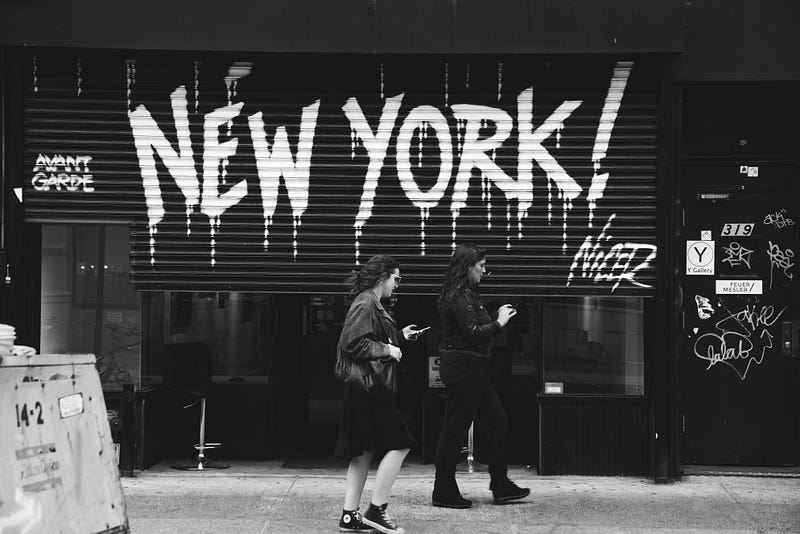
“Cities have the capability of providing something for everybody, only because, and only when, they are created by everybody.”
— Jane Jacobs in The Death and Life of Great American Cities (1961)
For anyone who dabbles in urban planning, urban design, and other city-related fields, Jane Jacobs is certainly a familiar name. She was an American-Canadian journalist, author, and activist who greatly influenced the field of urban studies despite having no formal training in it.
Her book, The Death and Life of Great American Cities, is arguably the most widely read literature among urbanists. Many of Jacobs’ ideas are still relevant today and are still considered by urban planners throughout the globe. One of her most enduring ideas is the notion of “people-centered urban planning” which we’ll discuss here.
Jane Jacobs is somewhat of a heroine for a lot of people, and there’s a good reason for that. To understand it, first, we should examine her battle with Robert Moses in the 1950s-1960s.
Battle for the city
This intellectual battle is arguably the most widely known chapter of Jacobs’ life. Here, she was up against Robert Moses, the master-builder of New York city — a person with enormous power at that time.
Moses planned to build the “Lower Manhattan Expressway,” a highway network that pierced directly through an area of Manhattan which later would be known as SoHo, as well as several surrounding areas.
Greenwich Village, where Jacobs’ home was located at that time, was one of the neighborhoods impacted by this plan. Long story short, Jacobs later became the spearhead of the grassroots movement that defies Moses’ grand plan.
This story was depicted in the 2016 film Citizen Jane: Battle for the City, which trailer you can see here:
The outcome of their battle resulted in a major paradigm shift in the field of urban planning. What used to be known as a building-centric discipline, slowly transformed into a more humanistic approach. Thereafter, Jane Jacobs became known as an advocate of “people-centered urban planning.”
Planning for the people
“There is no logic that can be superimposed on the city; people make it, and it is to them, not buildings, that we must fit our plans.”
— Jane Jacobs in Downtown Is for People (1958)
An urban planning approach that focuses on people. This is an idea that Jacobs returned to again and again in her work. It is the noble cause that she pledged her life to.
The premise is simple: we should build cities for people. Not cars, not streets, not buildings. People. It’s easy to see the reason why we should build cities for people, and yet, this is something that’s largely neglected in many cities around the world, even today, years after Jacobs’ passing.
There are many reasons why some urban planners wouldn’t adopt this people-centered approach, and most of them are cliché: economic growth, city branding, and other capitalistic purposes.
Why build more streets? So more cars will be sold. Why erect more skyscrapers? So the land will increase in value. Why gentrify? So the area becomes attractive and draws more investments.
These reasons are often times sugarcoated, but they are really straightforward. Anyone can understand them.
Profit-oriented planning might be acceptable to some degree. After all, money makes the world go round. The problem is that when it’s done in excess, problems start to pop up everywhere: urban decay, congestion, community displacement, and so on. These problems are what you get when you plan cities for inanimate objects and forget their living inhabitants.
Okay, then, how can we make cities for people?
There are numerous ways we can see if a city is people-centered or not. One of the easiest is by examining its walkability. If a city is walkable, it facilitates human activities. The city’s elements should be purposefully designed so people can walk to and from anywhere with ease.
In her book, Jacobs outlined four conditions necessary to generate exuberant diversity in a city’s streets:
“1. The district, and indeed as many of its internal parts as possible, must serve more than one primary function; preferably more than two…
2. Most blocks must be short; that is, streets and opportunities to turn corners must be frequent.
3. The district must mingle buildings that vary in age and condition, including a good proportion of old ones so that they vary in the economic yield they must produce. This mingling must be fairly close-grained.
4. There must be a sufficiently dense concentration of people, for whatever purposes they may be there…”
Of course, these four conditions are merely the beginning. Later, Jacobs’ ideas were developed by other urbanists, and gave way to newer people-centered urban planning concepts such as New Urbanism and placemaking.
Cities are complex and ever-changing systems. Thus, new solutions will always be needed. More sophisticated urban planning concepts will continue to be developed in the future, but the main idea stays the same: as long as humankind lives in cities, cities need to be planned with humans in mind.
Final thoughts
“Being human is itself difficult, and therefore all kinds of settlements (except dream cities) have problems. Big cities have difficulties in abundance, because they have people in abundance.”
— Jane Jacobs in The Death and Life of Great American Cities (1961)
Like everyone else, Jane Jacobs' works aren’t free from criticism. She fought for a noble cause: to humanize our urban habitats — but the matter is not that simple. Cities are complex because humans are complex. It’s just our nature.
The journey is far from over. In reality, it may never be over.
Today, many urban planners have shifted towards a more humanistic urban planning approach, but some others are still holding on to the age-old building-centric and automobile-centric mindset. This is somewhat alarming, considering the social and environmental concerns we have right now.
Jane Jacobs is no longer around to advocate for people-centered urban planning. Hopefully, the legacy she’s left behind is adequate enough to encourage worthy successors to continue her struggle.
Urban planners, it’s in your hands now.
