
Education
Will Kids Actually Go Back to School?
Why there are more questions than answers to our new educational “normal”
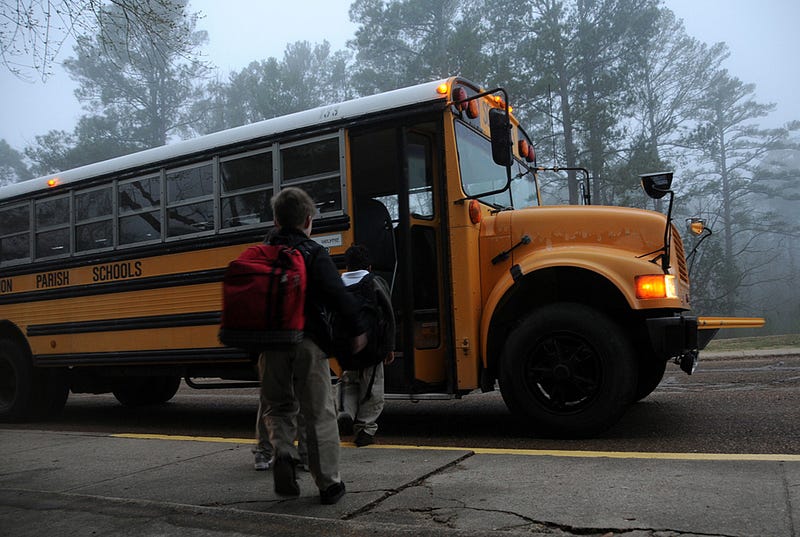
My kids are all adults now and besides having some idle curiosity about whether the gang of neighborhood kids will be performing scooter tricks off my front steps on weekdays, I really don’t have a personal stake in whether school begins in its traditional format in the fall.
But I am very interested in the conversation, and to find out what the new standard will be for elementary and secondary school kids here in the United States.
For decades now the U.S. has lagged behind most every other developed nation in our test scores and, really, any other measure of education of our kids. Having agonized and struggled moving two boys through the public education system here in Washington, I can say it is more something to be endured than revered.
This isn’t an indictment of educators, or really even the system, except to say that we can do better. This much is obvious.
Being a perpetual optimist, one of the potential silver linings I have seen to the large, angry, roiling black cloud of a global pandemic is the possibility of change for the better to our education system.
Now, I realize that this is an overly Pollyanna-ish outlook at a time where there are infinitely more questions that answers. I am also not in any way downplaying the fact that personal safety lies at the heart of this discussion. That is very real and should certainly be a primary driver of outcome for our new educational normal.
Things Will Definitely be Different
One of the most sensible outlooks to where we are right now comes from India Snow, a middle school teacher, who has rather astutely compared the current situation to the sinking of the Titanic.
Sure, the mind immediately jumps to the concept of disaster, but rather than focus on that, India wisely reminds us that the iceberg has already been struck. What we do next is the most important thing.
Then, what we do after that is the most important thing, and so on. The disaster is here, and we will all be affected, but we still have decisions to make and actions to take to mitigate some of the damage. In India’s literal words, we won’t be unscathed, but her subtext reminds us that we will survive.
India also sagely points out that, “Schools are a massive vector and trends will change if they open”, and because of that schools and educational organizations really have no idea how to best approach the start of the next school year.
The Issue with Classrooms
There are certainly some compelling reasons to have school-age children back in the classroom at some point. Educators feel strongly that classroom education is superior to remote, particularly for younger kids.
Michele Merritt, Ph.D., a university philosophy instructor with two young children herself, does a great job explaining the confusing and misleading arguments that spin around the topic of returning to the classroom in what is less than a month for many children.
Dr. Merit points out that teachers are being presented with a false choice of quality education versus personal safety. She explains that it is completely reasonable and logical for educators to be afraid about performing their job.
Parents as Educators
Meanwhile, parents are equally confused and faced with some choices as well. Not every parent can be an educator; nor, probably, do they want to be their child’s primary source of instruction.
Yet parents are faced with uncertainty about whether schools will even be open, if the instruction will be in the classroom or hybrid, and whether any, or all, of that could be subject to change at a moment’s notice.
Former elementary school teacher and private tutor, Carolyn Riker, suggests that parents might be best served to consider the possibility that children won’t return to school this fall, or if so, it will be in a hybrid format where they spend less time in the actual classroom. As a parent, there are certainly some preparations you can begin to make now that will set you and your child up for success in the coming months.
With the truncating of the school year this last spring, most parents have that experience of home education under their belts. Carolyn’s advice is to parse through that experience now and evaluate what worked and what didn’t.
She also makes a great suggestion to, “reframe the negative aspects”, as your outlook on the possibility of at-home education dramatically affects your child’s perspective on learning.
New Educational Models
As more and more kids and adults alike are learning remotely, Tim Cavey, an 8th grade educator in BC, Canada, asserts that it is a good time to re-evaluate the approach to instruction completely. He composes a strong argument in favor of an asynchronous mindset.
Tim defines asynchronous as being not in real time with the instructor. This post is an example of an asynchronous communication. I write it, and you will read at a later time. You may make a comment, and I may respond, but none of it is direct, or synchronous, communication.
This differs from the traditional interaction between teacher and student where communication happens in real time, whether it be in person or across a video or audio connection. Most online college courses are completely or mostly asynchronous, as are a lot of personal development courses, podcasts etc.
While younger learners tend to do much better with experience of having an instructor available in real time, the beauty of an asynchronous system is that the content can be developed simultaneously in time with synchronous instruction simply by hitting the “Record” button on technology as readily available as the phone in our pocket or purse.
As instructors build more of an “asynchronous library” of content, the availability of previously recorded instruction can slowly change the dynamic of learning, even for those in their younger years.
Imagine a future classroom, be it in person or virtual, where the instructor has the option to spend necessary one-on-one time with those that need it, while those that don’t can forge ahead in previously recorded content.
Personally, as a student that spent a lot of time reading a sci-fi book, doodling or screwing off while the instructor was helping others learn what I had already mastered, I would have appreciated a way to actually spend most of my time in school learning something rather than waiting around for others to learn.
Conclusion
There are no clear answers to the question of what school will look like for millions of students in just a few short weeks. Really, there aren’t any clear answers for what school should look like either.
But we know where we have been, and we also know we aren’t going to move back to that style of learning any time soon. The future is ahead of us, and I, for one, am hopeful that the experience of a pandemic will be disruptive to traditional educational models in the most positive of ways.
Timothy Key spent over 26 years in the fire service as a firefighter/paramedic and various fire chief management roles. He firmly believes that bad managers destroy more than companies, and good managers create a passion that is contagious. Compassion, grace and gratitude drive the world; or at least they should.