
It’s Time to Embrace the Asynchronous Mindset
It’s about more than just going digital. It’s about new ways of thinking about teaching and learning that meet twenty-first century needs.
Teachers face an important choice in hybrid and remote learning environments: should I use synchronous or asynchronous instruction?
By synchronous instruction, we’re talking about teaching and learning activities that are happening in real time. Students see us and hear us as words exit our lips. They can respond immediately. They can ask questions and expect instant answers.
This is the essence of the traditional classroom experience. And to some extent, we can try to replicate this kind of instruction and learning in online environments. Try.
When we talk about asynchronous instruction, we mean instruction that was created previously and stored digitally in the cloud. When students consume asynchronous content, they often cannot interact with the teacher in real time the same way they can in a classroom setting. But they can access these learning resources at any time, from any place, as many times and in whatever manner they wish.
There are pros and cons for each type of instruction, of course. Age and grade level are important variables, too. Younger students are generally more reliant on synchronous instruction or real-time support — precisely the reason that so many moms and dads played home teacher during the COVID-19 quarantine of 2020.
Our history of synchronous instruction and learning
For most educators, most of our pre-COVID teaching time was spent in the trenches of synchronous instruction.
Sure, as schools and districts moved toward 1:1 device availability for learners, teachers have been steadily creating more and more digital resources each year. Flipped classroom models have made steady inroads. The growth and evolution of learning management systems like Google Classroom, Seesaw, Schoology, and so many others have further accelerated this trend.
But when we think of teaching, we often still think of it fundamentally as the facilitation of instruction in the classroom setting in real time. It’s a view still pervasive throughout K-12 education and society at large. Naturally so.
The collision of COVID-19 and traditional teaching
Of course, when COVID-19 obliterated traditional programs of in-house instruction in March of 2020, schools and teachers were forced to make the fateful decision mentioned earlier regarding the shape of their online learning environments: should we use synchronous or asynchronous instruction?
In some cases, schools and teachers attempted to recreate their classrooms online. They asked students to follow normal bell schedules and give their teachers rapt attention for large periods of time over video conference services like Google Meet and Zoom.
That simply doesn’t work, for lots of reasons.
Sure, synchronous meetings are a good way to connect with a class and build relationships. Used for that purpose, Google Meet and the like can be very effective tools.
And I believe there’s an important place for real-time tutoring when it comes to small groups of students working toward identified learning targets. Another caveat there.
But in general, teaching and learning don’t do well in 45-minute Zoom sessions. Teachers get tired. Students get tired. The communication is not nearly as snappy or efficient as the real thing.
Three months of online learning showed all of us the awfulness of Zoom fatigue. Articles were written on the subject, and people across all industries agreed: real-time communication and learning over screens is taxing.
Instead, when it comes to remote learning and hybrid learning, I believe we need to move to asynchronous instruction and learning activities whenever possible. But asynchronous practices shouldn’t be limited to online-only environments. I believe we need to move in this direction even when learning returns permanently from the home to the classroom.
In other words, we may never return completely to the old normal. And that would be a good thing.
Why we need to embrace The Asynchronous Mindset
- Asynchronous resources allow students to move at their own pace: to slow down or speed up their learning, pause their progress, take breaks, and learn when they feel most comfortable. We value these powers immensely as adults, so we shouldn’t be surprised when students value them too.
- Asynchronous learning resources allow learners infinite opportunities for repetition and review. Unlike the traditional classroom, where attention can drift and key points are sometimes missed, asynchronous learning resources allow students to park for a while. To consider. To repeat and review — as many times as necessary. These are luxuries that the traditional classroom has not always afforded learners.
- The preparation of asynchronous learning resources allows teachers to get it right: to thoughtfully craft, rehearse, create, and make learning activities as accessible as possible for all learners. Any teacher who’s taught the same course in four different sections knows that the fourth section of students usually gets the best iteration. This is because instruction and the facilitation of learning generally improves as teachers are given more time and opportunities to practice. Asynchronous resources create that space.
- Digital asynchronous resources can be shared within grade levels, throughout buildings, and across districts and global networks. We’ve seen these sharing activities build steadily through the last decade, spurred on by Google Drive collaboration, teacher blogs, institutional websites, social media networks, podcasts, and YouTube. But we’re only seeing the tip of the iceberg.
The Asynchronous Mindset: start recording more
Teachers have been steadily moving in the direction of digital resources for the last decade. Making more documents, hyperdocs, images, and videos is not a new idea. Many teachers already do it and they do it well.
But I believe that room still exists for us to take our asynchronous instruction and learning activities to the next level. We can do much, much more for ourselves and for our learners.
It can begin as simply as this: start recording everything.
Gary Vaynerchuk, a prominent marketing expert, famously stated four years ago that brands and creators need to focus less on content creation and more on documentation.
Creating a quality piece of content scares people. It scares most educators. It feels like high risk, high investment, low reward.
But what if — instead of creating elaborate learning resources — we focused more on simply documenting the teaching that we’re already doing?
Here’s an example of what this can look like.
The Asynchronous Mindset in action
Let’s say you’re explaining a concept in the traditional classroom environment. Because you have the asynchronous mindset, you set your phone on a simple tripod or ask a student in the front row to record you while you explain it.
Such a simple, quick decision.
Once you’re finished recording, you can of course decide to delete it immediately and move on. But choosing to keep this piece of content gives you so many interesting options as an educator.
Let’s say that your explanation of planet rotation or fraction division went surprisingly well. In sixty seconds or less, you can quickly trim down the clip so that it’s usable again. Now you can save it for use with other classes or for teaching in future years. And you can go a step further by publishing it on YouTube and sharing it for learners across your district and around the world.
Keep going. You also have the option to strip the audio from your clip, store it in your Google Drive, and just like video — attach it to future learning activities as a supplementary resource.
And, like videos on YouTube, you can decide to share that content with learners around the world by publishing the audio in a podcast dedicated to your teaching resources. Now that Google searches index podcast results, a student across your district may learn from your little explanation simply by Googling ‘how the planets rotate.’ Or a student in India, for that matter. You get the idea.
The point here is that the simple act of documenting your teaching didn’t really require much more work on your part. You were already going to give the explanation you gave. But now that you recorded it and stored it in the cloud, you have some pretty powerful options — options that may benefit a student who was sick that day, students in other classes, your future students, and students around the world.
All because you hit record.
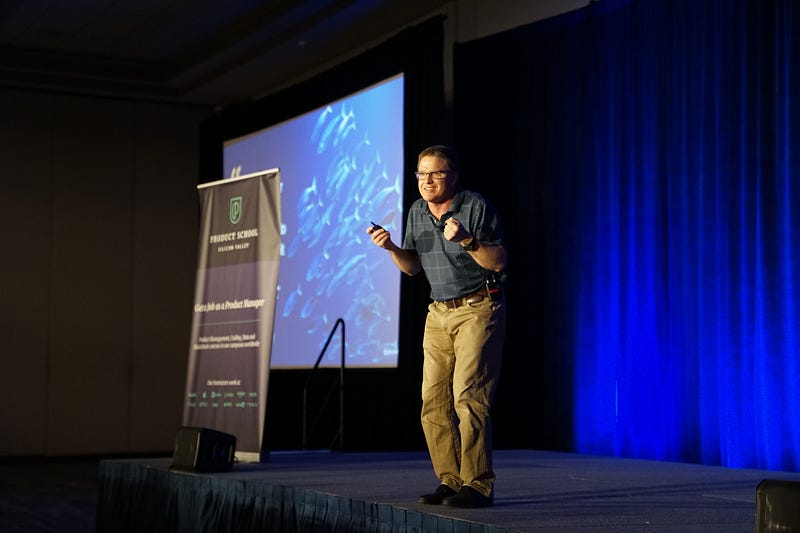
The Asynchronous Mindset in professional development
This blog post will be consumed asynchronously by hundreds or thousands of people at times and in locations of their choosing. The same goes for episodes of the Teachers on Fire podcast. Ditto for videos on my YouTube channel.
These mediums — or media, to put it properly — work precisely because of their convenience. They are examples of any time, anywhere, any way learning. Like Netflix, Spotify, and much of our entertainment world, they are consumed on demand and based on interest. They are examples of inquiry learning.
I believe our professional development needs to move in this direction. No, I’m not calling for a scrapping of traditional professional learning conferences or workshops — I think the professional networking and relationship-building opportunities at these events are tremendously valuable. I would be sad to lose them precisely for that reason.
But these traditional professional development events also bear the unfortunate reputation of often missing the mark. As Mike Washburn put it so eloquently in an episode of OnEducation, “Most professional development sucks.”
Asynchronous modes of professional learning fill in the gaps where traditional paradigms fall short. They allow teachers to learn what they need to learn and what they’re actually passionate about, at times and in ways that work for them.
Asynchronous media platforms like blogs, podcasts, and videos also provide another tremendous service: they share professional wealth by amplifying thought leaders on a global scale. Today, we’re no longer limited to the educators in our building, district, or state.
This is part of my passion for the Teachers on Fire podcast. Although 80% of my listening audience is American, the show has been downloaded in 120 countries.
My interviews with educators are simply conversations that could be enjoyed between two professionals over a phone call. But instead, they’re being heard thousands of times by educators everywhere.
And perhaps that is the simplest way to summarize the contrast between synchronous and asynchronous learning: an in-person exchange versus one that is recorded, saved, and published.
The conversation is the same in both. But the shape and scope and power of the learning that can follow is very, very different.
It’s time for all of us to embrace the power of The Asynchronous Mindset.
I’m excited about what’s ahead.


