
Why You Should Worship ‘The God of Small Things’ by Arundhati Roy
A summary, analysis, and review of a debut novel that won the 1997 booker prize, by an Indian reader
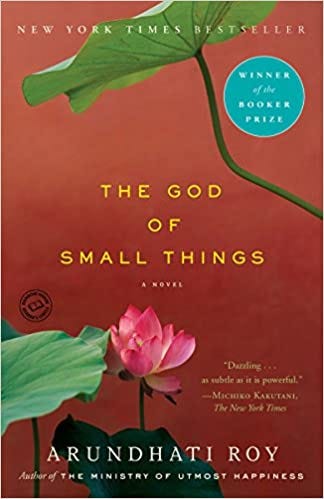
I was looking for a new book and google feed suggested an article that listed some books to read before you die. I decided to see if I could find something. Among many great books and author names, I saw an Indian title that I found very interesting. I decided to read it.
“Writers imagine that they cull stories from the world. I’m beginning to believe that vanity makes them think so. That it’s actually the other way around. Stories cull writers from the world. Stories reveal themselves to us. The public narrative, the private narrative — they colonize us. They commission us. They insist on being told. Fiction and nonfiction are only different techniques of story telling. For reasons that I don’t fully understand, fiction dances out of me, and nonfiction is wrenched out by the aching, broken world I wake up to every morning.” ― Arundhati Roy, The God of Small Things
Initially, I found the language to be very rich and filled with words I didn’t know. I spent some time switching between the dictionary and the book. But as I kept reading I stopped switching to the dictionary. The book captured and consumed my mind. It made me feel curious, sad, fresh, dark, and appreciative at the same time. Reading this book was like visualizing the characters slowly falling into misery and darkness.
Summary
“That it really began in the days when the Love Laws were made. The laws that lay down who should be loved, and how. And how much.” ― Arundhati Roy, The God of Small Things
The story is sometimes told from Rahel’s perspective and other times in the third person. It sets the environment by describing beautiful scenes in Ayemenem Village in Kerala, India using lush and rich language full of adjectives. Kerala is known for its greenery, beautiful backwaters, beaches, and rich culture. I learned a lot about Kerala by reading this book.
“May in Ayemenem is a hot, brooding month. The days are long and humid. The river shrinks and black crows gorge on bright mangoes in still, dustgreen trees. Red bananas ripen. Jackfruits burst. Dissolute bluebottles hum vacuously in the fruity air. Then they stun themselves against clear windowpanes and die, fatly baffled in the sun.” ― Arundhati Roy, The God of Small Things
Rahel returns to her hometown after 24 years to reunite with her fraternal twin Estha who had been sent back (not revealed where and why until later). Roy keeps building these kinds of questions in the reader's mind throughout the book. Roy describes all scenes beautifully with such details that you can almost visualize the story. You start walking with Rahel as she observes the changes that have taken place over the years refashioning the village. It makes you feel the freshness that the Kerala air oozes during monsoons.
Rahel had studied architecture and then met a man that she fell in love with and married. She moved to America with him only to find that something was missing and something wasn’t right. She worked dead-end jobs there but returned to Ayemenem because of the news that Estha has come back. She comes to her multigenerational family home where we meet Baby Kochamma, the antagonist of the story. She reveals that Estha doesn't speak and has become silent. He does his chores and keeps walking around in Ayemenem quietly. Again the author is trying to plant curiosity in the reader's mind.
“She wore flowers in her hair and carried magic secrets in her eyes. She spoke to no one. She spent hours on the riverbank. She smoked cigarettes and had midnight swims…” ― Arundhati Roy, The God of Small Things
Ammu is the twin’s single and divorced mother. Ammu tried to escape her misogynistic and ill-tempered father known as Pappachi in the book and her long-suffering and routinely physically abused mother known as Mammachi. She goes to Calcutta to spend the summer and marries a man there to avoid her return to Ayemenem. But the man addressed as Baba in the book turns out to be an alcoholic and a wife-beater. When he tries to pimp Ammu to his boss, Ammu divorces him and returns to her home in Ayemenem where she is ridiculed and looked down upon for being a divorcee and marrying out of her community. She joins her parents, brother Chacko and Baby Kochamma.
Baby Kochamma as a young girl fell in love with a young Irish priest addressed as Father Mulligan in the book. She converts to Roman Catholicism and joins a convent against Papachi’s wish. However, her love remains unrequited which makes her a bitter person over time. She enjoys people’s miseries and manipulates events to bring misfortune to others. The book tries to tell us every character’s back-story making it easier for the reader to understand and make sense of their actions and decisions.
“Baby Kochamma resented Ammu, because she saw her quarreling with a fate that she, Baby Kochamma herself, felt she had graciously accepted. The fate of the wretched Man-less woman. The sad, Father Mulligan-less Baby Kochamma. She had managed to persuade herself over the years that her unconsummated love for Father Mulligan had been entirely due to her restraint and her determination to do the right thing.”
― Arundhati Roy, The God of Small Things
Chacko is Ammu’s brother and a Rhodes Scholar. While in London, he met and married Margaret, an English woman. They had a daughter Sophie but divorced shortly after her birth. Margaret marries another man who dies in a car accident a few years later. Chacko invites a grieving Margaret and Sophie to Ayemenem to spend Christmas.
Chacko along with Baby, Ammu, and the twins go to the airport to receive them and also have plans to watch The Sound of Music at a theatre. On the way, they face a group of communist protestors that surround the car and make Baby wave a red flag and say their slogan, thereby humiliating her. Rahel says she might have seen Velutha, a worker at the pickle factory owned by the family, amongst the protestors. This makes Baby direct her revenge and blame for the humiliation towards Velutha. A small segment of The Sound of Music is described from the perspective of Rahel as a child. Estha is molested by a man outside the theatre when he comes out to get some fresh air by using his hand to masturbate. This leaves a huge impact on Estha and later makes him take actions that make things worse. We also see how Ammu is very strict with the children and is taking efforts to not make them feel fatherless and love them twice to make up for that. We also see how she and the twins are seen as millstones by Chacko and the family members.
Pappachi who was Ammu’s and Chacko’s father was an Imperial Entomologist and had discovered a new species of moth but his discovery was rejected as the moth wasn’t seen to be a new species until years later giving Pappachi no credit but to a new discoverer. This made Pappachi angry and gradually grow cruel towards his wife Mammachi and his daughter Ammu. However, he maintained his public appearance as a kind person. He and most of the family are portrayed as anglophiles- lovers of Imperial British culture.
“Pointed in the wrong direction, trapped outside their own history and unable to retrace their steps because their footprints had been swept away.” ― Arundhati Roy, The God of Small Things
Mammachi is an intelligent woman who could have been an excellent violinist if Pappachi didn’t stop her from learning more due to his jealousy and for maintaining his superiority. She is the founder of the pickle factory as she starts by selling her homemade pickle and slowly transforms it into a business as the demand increases.
“Ammu said that human beings were creatures of habit, and it was amazing the kind of things one could get used to.” ― Arundhati Roy, The God of Small Things
Velutha is the only character in the book that doesn't seem to have a bad past, unlike others. Velutha is a Paravan, a marginalized and ostracised segment of society under the Indian Caste System. He is a smart, skilled, and hard-working man. He works as a Carpenter at the family’s factory. The twins form an unusual bond with him despite his caste status. It is her children’s love for Velutha that helps Ammu realize her own attraction towards him. They have known each other since they were both children and now they find themselves in a secret love affair that has the potential to destroy their lives.
“As she watched him she understood the quality of his beauty. How his labor had shaped him. How the wood he fashioned had fashioned him. Each plank he planed, each nail he drove, each thing he made molded him. Had left its stamp on him. Had given him his strength, his supple grace.” ― Arundhati Roy, The God of Small Things
Vellya Paapen is Velutha’s father. He is the old world Paravan who has seen the old world discrimination and as a result, has accepted the laws of society to the extent that he offers to kill his son on the discovery of Velutha’s love affair with Ammu. He lost his eye in an accident and was helped by the family to get a glass eye. He felt extremely indebted to the family for this as he didn’t see a Paravan worthy of such a gesture. He is a perfect example that represents the mindset of the lower caste communities towards upper caste people and themselves.
“D’you know what happens when you hurt people?’ Ammu said. ‘When you hurt people, they begin to love you less. That’s what careless words do. They make people love you a little less.” ― Arundhati Roy, The God of Small Things
The short-lived affair of Ammu and Velutha is revealed to everyone. Ammu is locked up in her room and in her rage blames the twins for her misery and calls them “millstones around her neck”. Hurt by her words and in an attempt to not be millstones around their mother’s neck anymore, they decide to run away by crossing the river to hide in an old abandoned house. Sophie joins them too. It’s raining heavily and the boat flips in the river, the twins swim to the bank but Sophie is drowned.
“It is curious how sometimes the memory of death lives on for so much longer than the memory of the life that is purloined. ” ― Arundhati Roy , The God of Small Things
Baby Kochamma to complete her revenge goes to the police and accuses Velutha of Sophie’s death. Velutha who is also huddling in the same abandoned house as the twins are is hunted and beaten to the brink of death and carried to the police station. The twins hiding under the flipped up boat witness this horrific and inhuman crime. They are spotted by the police and reveal the truth.
“They would grow up grappling with ways of living with what happened. They would try to tell themselves that in terms of geological time it was an insignificant event. Just a blink of the Earth Woman’s eye. That Worse Things had happened. That Worse Things kept happening. But they would find no comfort in the thought.” ― Arundhati Roy, The God of Small Things
In an attempt to cover up what they have done, the police threaten Baby Kochamma for wrongly accusing Velutha. Baby Kochamma in turn tricks the twins into believing that they and Ammu will be imprisoned for murdering Sophie and convinces them to lie to the police that Velutha had kidnapped and murdered Sophie. But only one of them had to lie, Estha is chosen to do so. He is taken to see Velutha, who is lying half-dead in a pool of his blood. All Estha does is say the word “Yes”. This spoken word and this lie come to haunt the twins all their lives with an immense amount of guilt. Velutha dies the same night succumbing to the beatings and his injuries.
“It is after all so easy to shatter a story. To break a chain of thought. To ruin a fragment of a dream being carried around carefully like a piece of porcelain.
To let it be, to travel with it, as Velutha did, is much the harder thing to do.” ― Arundhati Roy, The God of Small Things
After Sophie’s funeral, Ammu visits the police station and tries to tell them the truth, only to be humiliated for her affair and called a Vaishya (Prostitute) by the police and turned away. Baby Kochamma in the meantime manipulates a grieving Chacko into believing Ammu’s affair and the twins were responsible for his daughter’s death. Ammu is thrown out of the house and is forced to send back Estha to his father as she can’t take care of both twins.
Ammu tries to find a well-paying job and bring Estha back when financial conditions improve. But that never happens and Ammu dies at the age of 31. Estha never gets to see his mother again. He keeps living with his father, trying to make up for his living expenses by doing as many house chores as possible.
The twins, now 31- the same age as Ammu when she died, meet again and share all their separated years with each other without saying a word. They have sex thereby completing the ‘something’ that Rahel found missing in her marriage. Again a love law is broken and the reader is nostalgically recounted of Ammu’s and Velutha’s love.
“But what was there to say?
Only that there were tears. Only that Quietness and Emptiness fitted together like stacked spoons. Only that there was a snuffling in the hollows at the base of a lovely throat. Only that a hard honey-colored shoulder had a semicircle of teethmarks on it. Only that they held each other close, long after it was over. Only that what they shared that night was not happiness, but hideous grief.
Only that once again they broke the Love Laws. That lay down who should be loved. And how. And how much.” ― Arundhati Roy, The God of Small Things
My Review
I absolutely loved this book. It's haunting and magical. It’s lovely and painful. It’s witty and sad. Here’s an author that combines her life, society, and fantasy into one book. She weaves the stories beautifully into one another maintaining the foreboding throughout. Every time you start a new paragraph you ought to wonder where has she brought me now. Reading this book is like listening to an old friend talking. You eventually through the book start looking at the events through the perspective of a child trying to make sense of this crazy and stupid world and its laws. It’s truly a book one should read before you die. The god of small things deserves to be worshipped.
The separation of Estha and the twin’s sex at the end of the book seemed unnecessary and unreasonable to me. Sometimes the book seemed to be over descriptive. Sometimes there are too many sentences that don’t contribute to the story but only to the language of the book. I had quite a time with my dictionary.
This book amazingly does encapsulate the various problems in Indian society and how they affect individual lives. It touches on problems such as pollution, politics, the caste system, and misogyny. It highlights the status of women in Indian society through Mammachi and Ammu. It also puts a light on the effects of colonialism.
“And when we look in through the windows, all we see are shadows. And when we try and listen, all we hear is a whispering. And we cannot understand the whispering, because our minds have been invaded by a war. A war that we have both won and lost. The very worst sort of war. A war that captures dreams and re-dreams them. A war that has made us adore our conquerors and despise ourselves.” ― Arundhati Roy, The God of Small Things
The book will make you love Kerala with its rich culture and beautifully constructed sceneries. There’s a lovely description of a Kathakali performance, the Kathakali artists, their history, and their status in today’s society. Elephants in temples and how people formed a bond with them. Communism in the state and its effects.
The book shows how past experiences build a character and personality. How our experiences along with society's laws make us believe that right is wrong and wrong is right. How history shapes our present and future.
“Perhaps it’s true that things can change in a day. That a few dozen hours can affect the outcome of whole lifetimes. And that when they do, those few dozen hours, like the salvaged remains of a burned house — the charred clock, the singed photograph, the scorched furniture — must be resurrected from the ruins and examined. Preserved. Accounted for. Little events, ordinary things, smashed and reconstituted. Imbued with new meaning. Suddenly they become the bleached bones of a story.” ― Arundhati Roy, The God of Small Things
Affiliate Links:
To buy The God of Small Things on Amazon click here.
To sign up for an Audible membership trial and get free audiobooks click here.
Read more stories written by me:
Connect with me: