
How I Went From Skinny to Muscular in a Year. And How You Can Too
Sharing my journey, workout strategy, nutrition, results, and tips
If you prefer watching my YouTube video:
Where did I start?
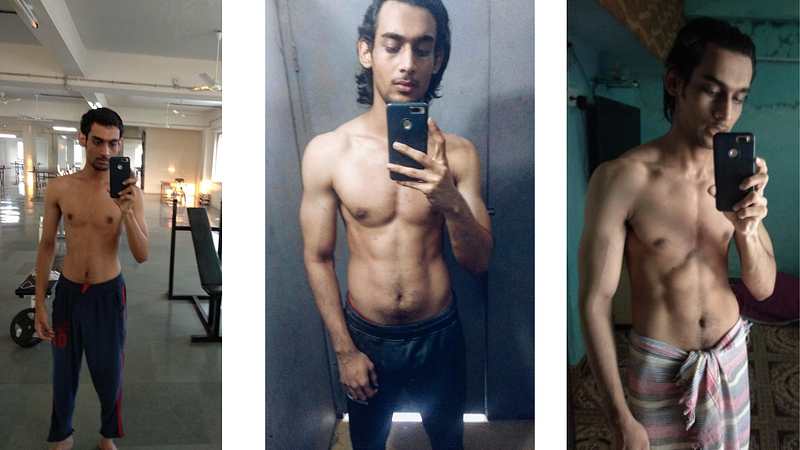
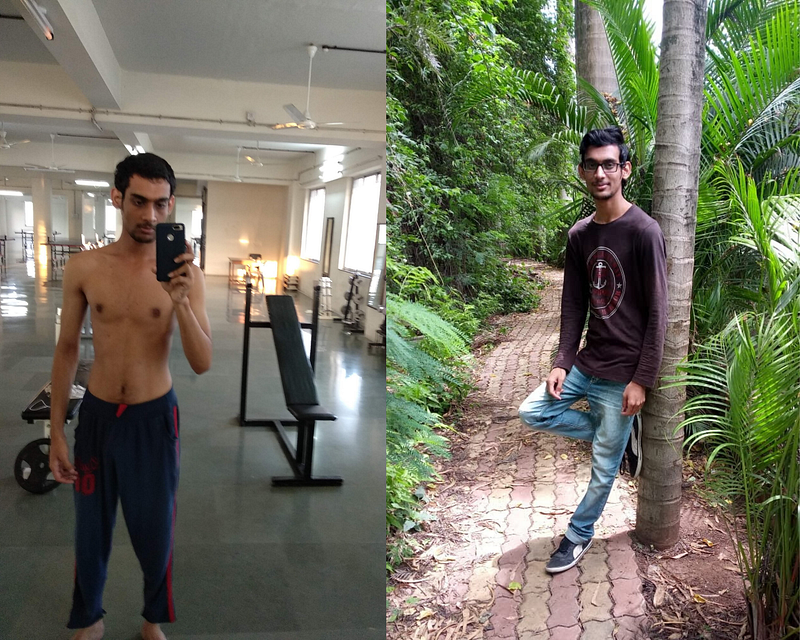
I was a second-year engineering student who spent most of my time with my laptop, mobile, and books sitting on my bed. I rarely played any sports even as a child. I had no physical exercise in my life. As a result, I was very unhealthy and could hardly eat any food. I took two buses every day from and to college. I had pain in my legs and lower back if I didn’t get a seat. Everyone who I met or talked to asked me to eat more food because I looked so weak and unhealthy. I tried forcing myself to eat and slowly I was able to do so. But this made me gain fat only in my abdominal area which made me look worse than before. So one fine day I decided to start exercising.
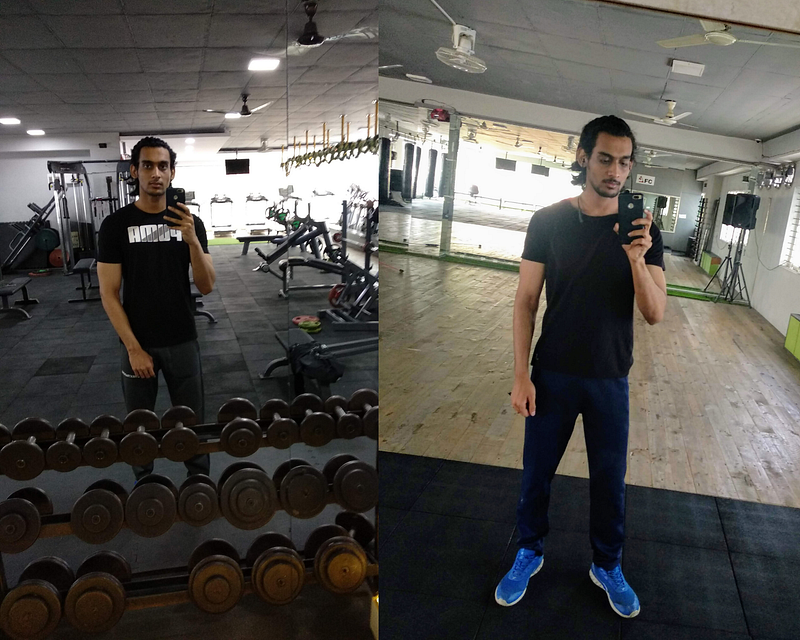
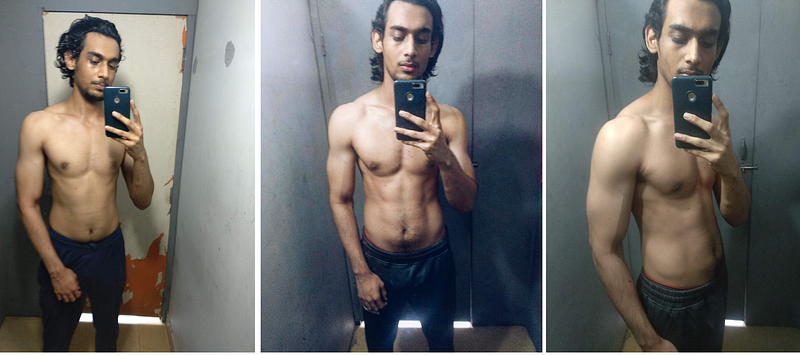
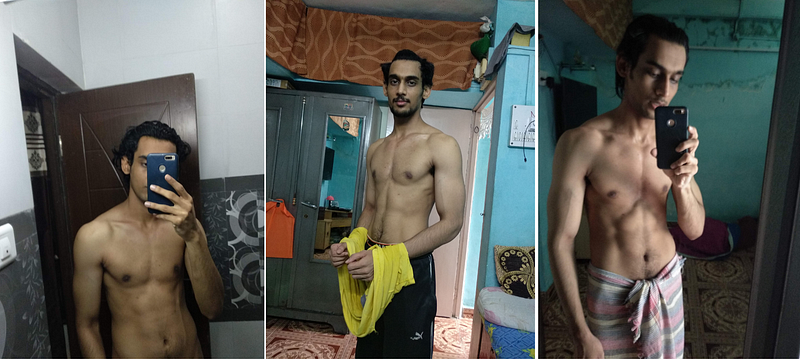
I am 5’ 11” tall. When I started I was 21 and I was skinny with abdominal fat with a weight of 55 kg.
How did I start?
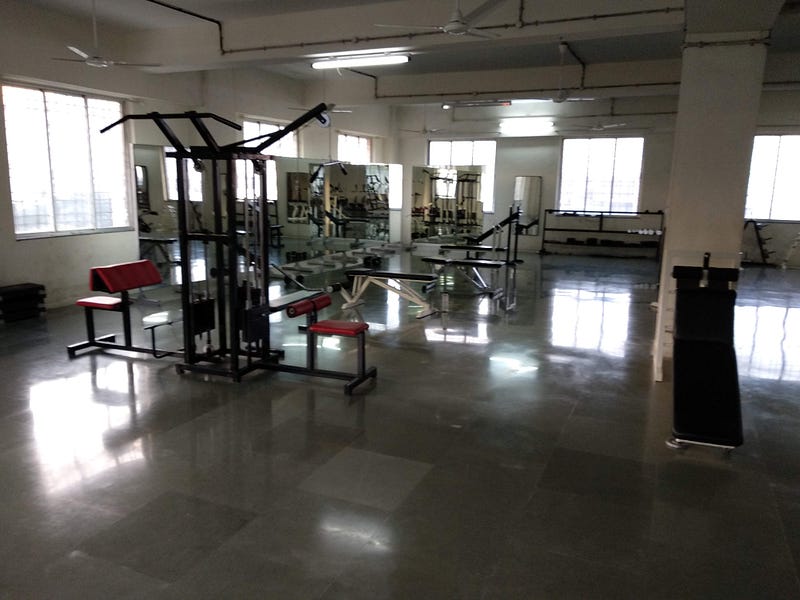
I got started by reading some articles and watching youtube videos. I found that a full-body workout is what beginners should start with. They are more efficient and ideal for beginners. These workouts help you train every major muscle in each workout. Most of these workouts are full of compound exercises. So I searched and found a workout plan on the bodybuilding.com forum, which was free to use back then. I started going to my campus gym which was free to use for students. It didn’t have any fancy machines but only a set of dumbbells, barbells, and one elliptical machine. It was good enough for a beginner.
Workout
Basic Terminology:
Reps and sets:
Reps ( repetitions) denote the number of times you perform an exercise. Sets refer to the number of times you cycle through the reps. For example, if you do X number of push-ups nonstop, then you did X reps and 1 set of push-ups. You take a small break and then do the X number of more push-ups. This is 2 sets of X reps.
Compound and isolation exercises:
Compound exercises work more than one muscle at a time. Examples are squats, push-ups, pull-ups, bench presses, deadlifts, etc. These are great for beginners to gain strength and control of your body.
Isolation exercises focus on one muscle at a time. Examples are bicep curls, tricep pulldowns, leg extensions, etc. These you can start after at least 2 months in the gym. But compound exercises should be 80 percent of your workout.
As I mentioned earlier, I started with full-body workouts and used to do them on alternate days. I did this for 3 months continuously.
Monday- Full-body
Tuesday- Rest
Wednesday- Full-body
Thursday- Rest
Friday — Full-body
Saturday- Rest
Sunday- Rest
I hardly felt any significant changes but my classmates kept telling me that I looked good. I switched to alternating between upper and lower body workouts. This was another program I found on bodybuilding.com.
Monday- Upper Body
Tuesday- Lower Body
Wednesday- Rest
Thursday- Upper Body
Friday — Lower Body
Saturday- Cardio
Sunday- Rest
I followed this for about 4 months and then switched to focusing on two muscle groups every day training mostly 4 or 5 days a week. I started doing more cardio now.
Monday- Chest and Triceps, Yoga
Tuesday- Back and Biceps, HIIT
Wednesday- Rest
Thursday- Shoulders and Abs, HIIT
Friday — Legs, Yoga
Saturday- Restorative Yoga
Sunday- Rest
Soon everybody including me was able to see my gains. I started feeling more confident and wearing T-shirts that helped me flaunt my gains.
I still train two muscle groups every day and have also started doing yoga every morning.
Resources:
Bodybuilding.com(not free to use anymore)
Scott Hermann
Jeremy Ethier
Nerdfitness.com
Numerous other websites and youtube channels that I don’t remember now.
My Workout Tips:
- Focus on form and not weights: I have done this and I see a lot of people do this. Lifting heavier weights won’t give you bigger muscles if your form isn’t perfect. Try to lift the maximum weight possible with perfect technique. If your form is suffering, reduce weights immediately.
- Warm-up and cool down: I used to work out in the morning and had college lectures to attend hence I skipped warm-ups and cooldowns. Don’t repeat my mistake. This could lead to injuries and underperformance due to muscles being cold. Remember to always follow a good warm-up and cool-down routine.
- Don’t join a gym immediately: Start by working out at home. Try doing bodyweight exercise, HIIT, and yoga at home. This way you’ll have strength, better body knowledge, and confidence when you walk into any gym. I recommend doing this for at least a month. Also this way you’ll not pay a gym membership just to stop after a week in case you lose your motivation( this is very very prevalent, I have seen it happen a lot).
About maintaining a Journal:
- Keep a journal: Keep a record of how much weight you lift and how many reps and sets you did. This will help you track your progress and help you decide when to increase the weights.
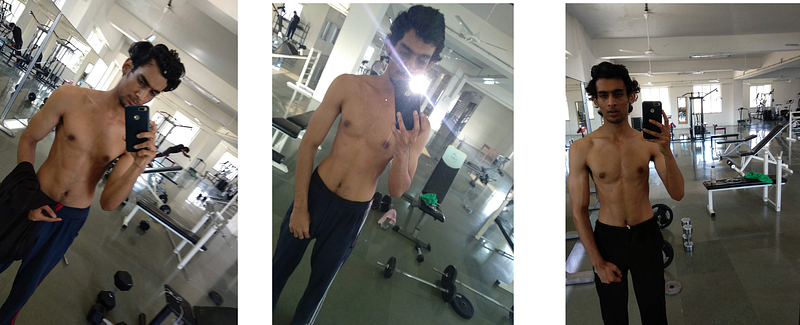
- Click pictures of yourself every week: As the changes happen gradually, a lot of times there is this feeling of not progressing but if you look at your older pics and your journal you’ll know how long you have come. It might also sometimes show you that you have been doing something wrong.
- Keep track of your bodyweight: Make sure you are not gaining weight very fast. It should be around 0.5kg every week. I weigh myself naked in the morning after using the toilet. I use a scale I bought online. This gives me a better measurement. Consider the following ones:
Cardio and flexibility:
Initially, I was so fixated on growing my muscles that I completely ignored these two.
Cardio is very important as you want your heart to pump all nutrients to your muscles and everywhere else it is required via blood. Start with moderate-intensity exercise for 5 minutes and slowly increase the time. Do anything that makes your heart beat faster. Now I have started doing HIIT two to three times every week. Every session is 15 minutes. When I started I was hardly able to do 5 minutes on the elliptical machine.
I have also started doing yoga for the last 6 months and have fallen in love with it. It made me realize how inflexible I have become due to my sedentary lifestyle. This inflexibility especially in my hamstrings and calves made a lot of weight lifting painful and awkward. I had pain in my lower back after legs workout and the days I tried increasing my weights. Everyone should try yoga or dynamic stretching. Don’t repeat my mistake of ignoring flexibility. It is of utmost importance.
Here are the Yoga mats I have used and recommend to you, it also is of great use for a lot of at-home non-yoga workouts:
AmazonBasics 13mm Extra Thick Yoga and Exercise Mat with Carrying Strap
The products that I recommend have been at some point used by me, I don’t recommend products that I won’t use. If you would like to support me for my work and you “need” to buy these products, please buy them through these links so that I can make a small commission from it and continue to write and make content similar to this.
Read this if you are a beginner to fitness:
Nutrition
Workouts are only 20% of work. Nutrition is 80%. Workouts happen for only 4 to 5 hours a week. Nutrition is 24 by 7. Nutrition is the part I struggled with the most. Nutrition is what will make or break your transformation. It was difficult to understand and support my nutrition as a student. I ate in canteens and college mess. I ate a lot of bananas thinking they are good sources of protein. The information on the internet is very intimidating and overwhelming for a beginner. I didn’t take any supplements until later as I couldn’t afford them. But I kept reading articles and watching videos, which helped me make better choices and understand what to eat and when to eat.
Read this story for an in-depth explanation of nutrition and how to apply it to build muscles:
Basic Terminology:
Caloric surplus and caloric deficit:
Your body needs a certain amount of calories(energy) to keep you alive, carry out day to day activities, and much more. Everything inside the human body requires energy which we obtain from the food we eat. Digestion, breathing, blood circulation, filtering blood to produce urine, and all other processes require energy. The amount of energy that your body needs in a day is called TDEE( Total Daily Energy Expenditure). You can use any online calorie calculator ( Just Google this) to calculate an approximation of your TDEE. Once you have this TDEE approximation you can start counting your calories. If you eat more calories than your TDEE, these extra calories will be stored as fat. This is called being in a caloric surplus. If you eat lesser calories than your TDEE, you will be in a caloric deficit, this will burn fat.
Bulking and cutting:
Bulking refers to building muscles. For building your muscles you should be in a caloric surplus. Although not impossible it is very difficult to put on muscle in a caloric deficit. Hence if you are skinny like me, I would recommend you start bulking and give your body all the required nutrients through food and build muscle at the same time. I recommend a caloric surplus of 500 calories every day. You might gain more muscle and weight by eating more than this but it is highly not recommended because by doing so you will end up with more fat than you can comfortably cut. Keep checking your weight every week and it should be increasing by around 0.5 kg( about 1 pound). If you are gaining weight too quickly reduce the calories you are eating.
Cutting refers to reducing body fat while retaining as much muscle as possible. We can do this by being in a caloric deficit. I recommend eating 300 calories less than TDEE. You can go up to 500 calories in deficit without any problem. However, to avoid muscle loss as a beginner to cutting I didn’t want to cut more calories. Make sure to eat at least 2–2.5 grams of protein per kg of bodyweight.
Carbohydrates(Carbs):
Carbs are fuel for the body. These are complex sugars that are the body’s first option to burn as these get converted to glucose in the bloodstream after digestion. All the extra glucose is first stored in the liver as glycogen and the rest is converted to fat.
Glycemic Index:
Not all carbs are created equal. Some carbs are digested more quickly than others causing your body to store it as fat. Whereas some carbs need time to digest and slowly release energy in the body. The Glycemic index helps us to understand how fast a carb is digested. A high glycemic index means the carb is digested quickly and hence should be avoided. We want to eat carbs which will release energy slowly i.e. carbs with a low glycemic index.
Proteins:
Proteins are what muscles are made of mostly. I aim to eat 2 grams of protein per kilogram of body weight. Protein is also used for producing hormones and many other vital functions. If you don’t eat enough protein, you will cause more damage than benefit to your body.
Fats:
Fats are not bad for you. They are very important. Eat healthy fats but avoid the bad ones. Be careful with counting fats as what seems to be a small quantity can be a huge source of calories. There are two types of fat: saturated fats and unsaturated fats. Eat saturated fats sparingly as they are unhealthy. Unsaturated fats are healthy fats, eat them but don’t go overboard. There is another type of fat called Transfat that needs to be completely avoided.

What I eat:
Eggs:
Why: Excellent quality and cheapest source of protein. Full of vitamins. Good for cholesterol, choline, brain, and eyes.
How: Boiled with salt and pepper/chili powder. Fried if you are okay with extra calories. (I recommend rice bran oil)
How much: At the most three every day to stay on a safe side. (There is not enough research to check if it is safe to eat more)
Chicken:
Why: Good quality protein, cheaper compared to protein powders and most other sources. Good for vitamin B12. Easier to eat and cook. Very versatile for adding to recipes.
How: Simply boil. Roast. Easy to find healthy recipes.
How much: I eat about 250 grams every day.
Sprouts and legumes:
Why: Good source of fiber, vitamins, and mineral. Provides additional protein to the diet. Easy to cook and very versatile.
How: I simply soak them overnight and boil them with salt. It can be used in many recipes.
How much: I eat about 100 grams every day.
Cow Milk( lesser fat than buffalo milk):
Why: Good source of protein. Easily available. Good for calcium. Easy to drink up.
How: I drink it raw. Sometimes I add it to oats/dalia. I make my yogurt by myself which is extremely good for gut health because of the probiotics present in it.
How much: 250–500 ml cow milk, Yogurt made from 250ml cow milk.
Soybean( whole and chunks):
Why: Good source of protein. Very cheap. Easy to cook.
How: Boil them. Make sabzi. Add to wheat before making flour.
How much: Not more than 200 grams a week. ( There is not enough research to conclude how much is safe to eat)
Oats:
Why: Gluten-free. Great source of fiber, vitamins, minerals, and antioxidants. The small amount of protein is good for achieving your daily protein goal.
How: Overnight oats with fruits and nuts. Cook 2 mins with milk for breakfast. Lots of healthy recipes.
How much: Treat Oats as carbs an adjust accordingly in your diet.
Recommended products:
True Elements Gluten Free Rolled Oats 1.2 kg — High in Fibre
Rice and Roti:
I ate very little rice and roti. Only enough to make sure I get daily required calories to stay in surplus. I got carbs and fat from legumes, dairy and sometimes frying eggs.
Fruits and vegetables:
Eat as much as you want as most of them are low in calories. Eating seasonal fruits and vegetables is cheaper and healthier. As with everything, don’t go overboard. Smoothies are a great way to add more fruits and vegetables to the diet.
Water:
Drink up so that you don’t feel thirsty ever. Thirst is an indication of dehydration. It’s a good idea to drink water when you wake up, 30 mins before workouts, a little bit during workouts, and a lot after workout. Avoid drinking a lot with meals. Keep drinking throughout the day at regular intervals. Keep a bottle with you all the time when you go outdoors. Keep a bottle on your office desk.
I highly recommend you to buy a food scale which will be immeasurably useful for counting calories and other macros:
Supplements:
The only supplements everyone should use is creatine. It is very inexpensive and has been scientifically proven to benefit bodybuilders.
Creatine:
It is the only supplement I have used continuously. It is naturally present in our muscles and helps to produce energy so that you can work harder in the gym. It is one of the few supplements that have been scientifically proven to be beneficial for muscle building. It is quite inexpensive and I highly recommend it.
The product I use:
Optimum Nutrition (ON) Micronized Creatine Monohydrate Powder — 300 Grams (Unflavored)
Another recommended one:
Muscleblaze Creatine Monohydrate (100 gms)
Whey Protein:
I only use whey protein if I couldn’t get enough protein from food or don’t have enough time. Whey provides you a lot of conveniences. It’s easy to consume, doesn’t require any cooking, and provides fast-digesting protein with very few carbs. I would recommend vegetarians to compulsorily use whey protein supplements as lean sources of vegetarian protein are rare.
Here are the ones that I have used:
Optimum Nutrition (ON) Gold Standard 100% Whey Protein Powder — 2 lbs, 907 g (Double Rich Chocolate)
Ultimate Nutrition Prostar 100% Whey Protein — 5.28 lbs (Chocolate Creme)
MuscleBlaze Whey Gold 100% Whey Protein Isolate with Digezyme (Rich Milk Chocolate, 1 kg / 2.2 lb)
If you can’t afford good brands, don’t bother buying cheaper products. You are better off, eating chicken, eggs, and dairy with that money.
Multivitamin:
If you can afford them, please use multivitamins, as getting every vitamin and mineral from food. It will help with your overall health and in turn, help you build healthier muscles.
Here are the ones I recommend:
MuscleBlaze MB- Vite Multivitamin with Immunity Boosters-100% RDA Vitamin C, D, Zinc, 60 tablets
Healthvit Mulvit A To Z Multivitamins and Minerals- 60 Tablets
HealthKart Multivitamin with Ginseng Extract, Taurine and Multiminerals (Multivitamin, 90 capsules)
Fish Oils:
Good for heart health and provides essential nutrients that are mostly found in fish. Alternatively, you need to eat fatty fish at least twice a week. It’s much easier to take this supplement instead.
Here are the ones I recommend:
MuscleBlaze Omega 3 Fish Oil 1000 mg (180mg EPA and 120mg DHA) — 90 Softgels
What I don’t eat:
Sugar(Try to reduce as much as possible), Refined flour(biscuits, cakes, most desserts), Glucose powders, fried foods, packaged foods(Ketchup, ice creams, cold drinks, etc), Fruits juices ( packaged, drink fresh-made smoothies, lemonade, coconut water, etc instead).
Try to eat fresh and natural produce, with as minimal cooking as possible. This will provide you with more antioxidants. Think salads, fruits, nuts, etc.
Resources:
Healthline
Webmd
NutritionFacts.org
Nutrition Tips:
- Don’t Eat too much: Every article you read will advise you to eat more food. Well, you will need to eat better and more than you had been eating but don’t go overboard, you’ll end up having a difficult time during the cutting phase.
- Eat small meals: Instead of trying to force yourself to eat more at lunch, dinner, or breakfast. Try to eat smaller meals every 2 or 3 hours.
- Working out empty stomach: As mentioned earlier I had a busy morning, I ate breakfast later in the day. This resulted in me being dizzy and nauseous in the gym, which leads to skipping exercises and workouts. I would recommend eating a good breakfast at least an hour before a workout if you want to workout in the morning. If you can then please workout in the evening, where you’ll be more relaxed and not rush through your workout.
- Start reading about foods you eat: I use Healthline for this. It helps me learn the benefits, how much is too much, and many more things about the food I put in my body.
- Don’t rely on supplements: Use supplements only in the recommended amount. Try to get most of your nutrients from food. Research your supplements. Don’t buy anything after watching advertisements and endorsements without understanding the need for them.
My other general tips:
- (Most Important) Be Patient: Rome wasn’t built in a day. I see people walking into gyms, working out for a few weeks, and then flexing in front of mirrors, trying to see their gains. It’s gonna take time and changes will happen gradually.
- Don’t trust anything blindly: Always research things before following them. Don’t trust articles, youtube videos, or trainers without researching. There is a lot of advice out there that can cause you serious harm.
- Don’t try to do everything at once: Don’t try to change everything at once. Take one step at a time. Start by adding protein to your diet in the first week, start working out in the second week, next week start eliminating sugar and refined flour, start doing cardio next, and so on. This way you’ll build long-lasting habits and you won’t overwhelm yourself trying to do everything at once.
- Don’t compare yourself with anybody: Everybody is unique. We all have a unique set of genes, lifestyles, and diets. Just try to enjoy the journey and success will come to you eventually. I used to go and look at other people’s transformation and feel bad about myself. But as I learned more I found most of these transformations to be highly exaggerated and sometimes even impossible. So just don’t compare.
- Don’t expect to look like Celebrities: These people have personal trainers, personal chefs, personal supplements, and whatnot. Accepting the fact that you will never look like these people will help you set realistic goals and realistic expectations.
- Sleep: Your body repairs itself when you sleep. Try to get 7 to 9 hours of sleep every day. Try to sleep and wake up at the same time every day. Sleep is an important factor contributing to overall health.
- Finally: Find exercises and workouts you enjoy doing, not everyone needs to be muscular as far as you are happy with your body. Yoga, Running, Swimming, Calisthenics. Find what makes you feel good about yourself because that’s what is important. Find food/ recipes you’d enjoy eating. Healthy food doesn’t need to be boring. Be nice to your body and it will be nice to you. I exercise and will continue to do so because it makes me feel in control, empowered, and liberated. I hope it gives you much more than this.
How did all this benefit me?
I feel much more confident about myself.
People look at me differently now ( also they stopped asking me to eat more)
I look good in T-shirts now ( I think only skinny guys will understand this)
I have seen changes in my skin, hair, nails, and everywhere. ( Thanks to healthy eating.)
I feel more energetic and motivated in all things I do now.
Lastly, I now have a dating life that was nonexistent earlier.
I have written this article to help people like me who are struggling with their skinny bodies. I hope it inspires people to make healthier choices. I also plan to make a small profit out of the product links I have posted. This will help me write and create more such content. I hope you found my article useful. Please share it with anyone who you feel can benefit from this article. If you have any questions or doubts, ask them in the comments section below, I’d be happy to answer them.
Follow me as I am planning to write more such stories.
Connect with me:


