
If you’re feeling overwhelmed voluntary solitude might be what you need
Sometimes, what we really need is a little peace and quiet to recharge and recalibrate.
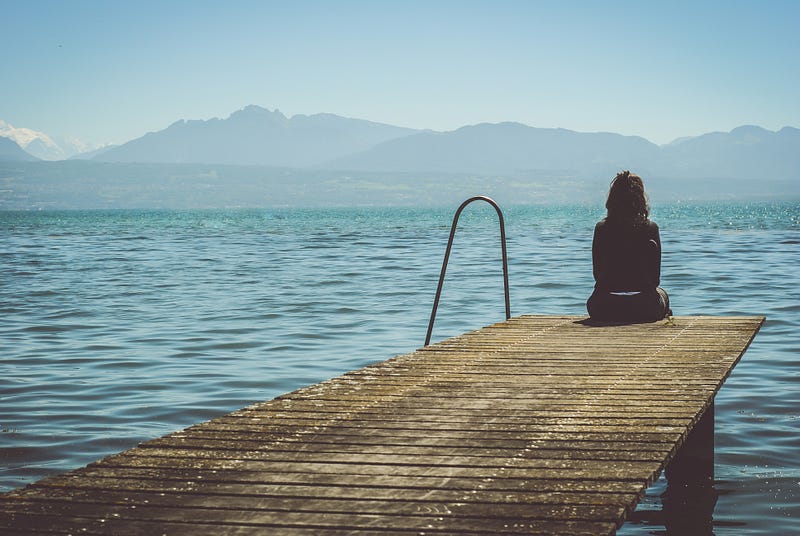
by: E.B. Johnson
Life is hard, and it’s made even harder when we feel like we’re bogged down by the external elements of our lives. Though our friendships, our careers and our intimate relationships add a great deal of depth and fulfillment to our lives, they can also add a certain amount of pressure distraction that causes us to wander off from our own inner truths.
Voluntary solitude is a great way to preserve these elements of our lives while still giving ourselves the attention we need. Similar to self-care, voluntary solitude allows us to zero in on our authentic self, and get up-close-and-personal with what’s really going on internally. If you’re struggling with the stress and pressure of everyday life, getting away for a few quiet minutes alone might be just what you need to find your balance again. Getting that right, however, takes a certain amount of understanding and knowing when to spot the signs of a desperate need for alone time.
What is voluntary solitude?
Voluntary solitude is not a new concept, but it’s picking up steam in modern psychology and personal development and it’s not hard to see why. Taking time and space on our own has a number of surprising benefits, and it makes like that much easier to get through; but it can be tricky to figure out if it’s not something that you’ve ever engaged in before.
At it’s most basic level, voluntary solitude can be defined as taking a chosen separation from other people, your job and the general external pressures of your life in order to seek a certain internal stillness, calm or peace. It’s taking a break from others in order to get more in tune with yourself, and it’s one of the best gifts we can give ourselves if we’re struggling to keep our heads above water.
The benefits of voluntary solitude.
There are a number of benefits of getting away and getting some time to yourself. When you can manually create some space between you and the distraction that is other people, it allows you to tune in to yourself and address the issues and pressures you might otherwise have been putting on the back-burner. Overtime, these practices enhance our sense of self and what we want.
Engaging in self-discovery
Modern life moves at the speed of light and that can make it hard to keep up with what’s going on inside. When we take a step back and get some time to ourselves, we can engage in a journey of self-discovery and start getting real about who we are and what we need to do in order to be happy.
Nurturing our emotions
It’s hard to attend to the complex array of emotions you’re experiencing when you’re constantly worrying about the next person or the next “thing”. Engaging in voluntary solitude allows us to check in our emotional temperatures in a way that’s just not possible when you’re surrounded by the emotions of others. When we’re alone, we’re more aware of how we’re feeling, and more aware of why we really feel that way.
Space to evaluate and plan
Taking a break from the things and the people in your life lets you get some perspective, and that perspective then allows us to make a plan for our lives. Voluntary solitude is great, because the quiet of it all makes it possible to get focused on our true goals and motivations. This then empowers us to better act on the future we desire; thus creating a more fulfilling experience overall.
Signs it’s time to get away.
There are a number of signs that might signal it’s time for you to take a break and get a little time on your own. When you’re stressed, your body gives off a number of little cues and the same can be said for our mental distress. If you’re overworked, burned out or just fighting to keep yourself ahead of the major changes life is throwing your way — it’s time to take a step back and get a break.
You’re overworked or burnt out
If you’re working too hard, or spend more time at the office than you do at home — it might be time to take a step back. Though our work can be addictive, necessary and even empowering, it can also be radically destructive too. In order to give your all in any aspect of your life, you have to let your batteries recharge from time-to-time.
Life changes just threw you for a loop
Undergoing major life changes can seriously disrupt our stamina, both physically and emotionally. Suffering the loss of a partner, pet, child, parent, or friend — or just going through a major upheaval like fire, moving or any other array of disruptions — can leave us exhausted, aching and needing a serious break to untangle our complex emotions.
Your body is falling apart
If you’ve noticed that you’re exhausted and suffering from things like headaches, migraines or random aches and pains it might be a sign that you need to give yourself a break. When our bodies are put under too much stress, they start to fall apart; causing a number of a health problems and even more auges than we might usually experience. Likewise, stress can cause our immune systems to bomb too, leading to even more headache and illness.
Your mind is too
Just as the stress of everyday living can be tough on the body, it can be tough on the mind as well. When you don’t give yourself enough “you time” it can cause your mental-interior to go on overdrive. Like we get burnt out from working too much, it becomes exhausted from constantly being bombarded with emotion and information that it doesn’t have the time to process. Taking a break from it all can allow your brain to recharge, in ways that are both beneficial and transformative.
Living is a burden rather than a joy
Though society might tell us anything but, life is not meant to be miserable. We’re not meant to be constantly stressed or on the brink of nervous collapse. It’s not normal and it’s not healthy. That’s where solo time comes into play, allowing us to get in touch with ourselves in a powerful way that empowers change, growth and the strength and resilience to weather the storms of day-to-day living.
How to embrace a voluntary solitude break.
There are a number of ways you can start to embrace voluntary solitude and make it a part of your regular routine. The more often you practice getting some alone time, the more in-sync you’ll be with your authentic inner self. Apply these techniques with commitment and, over time, you’ll see a shift in not only yourself, but also in the way you handle stress and pressure in your life and environment.
1. Build your awareness
Before you temporarily cut your ties and take some time away, it’s important to cultivate a certain awareness and understanding of yourself and what you need from your alone time. Getting some space on your own doesn’t have to be elaborate or expensive, but it does need to serve a purpose, and that purpose is allowing you to get some peace.
Our environments can be stressful and that stress can equal a big loss of self-identity. Having time to ourselves is imperative for our souls to rejuvenate. When we’re alone we can reflect on life, reflect on the things we want, and even make a plan of action for the future we are manifesting every day.
Before you launch into some exotic solo holiday, or you run off and take a hiatus to rent that cabin in the woods — work on establishing an awareness of both who you are in the moment and who you want to be at the finish line. Consider what you fully need from your alone time on order to truly reconnect with who you are authentically are at you core.
2. Cut contact
Part of taking a voluntary solitude break is cutting ties with the outside world, and that includes contact with others. Though our friends, family and loved ones form an important support system, they can also get in the way of our own personal searching. Seeking to resolve the pain, stress and trauma in our lives takes dropping all the outside distractions and that’s precisely what our loved ones (no matter what their intentions are) can be.
Explain what’s going on to those closest to you, and explain why you need some time to yourself. Whether you’re just taking 30 minutes alone in the bubblebath, or you’re setting out on a globetrotting solo expedition — make sure they understand why you need space and then ask them to respect that space. After all, we all deserve our own chance to recalibrate and recharge.
Use this time to be fully alone, and learn how to revel in it. Turn off the screens, stop answering the texts, and don’t even think about filling that silence with the empty chatter of a phone call. Contact with the outside world will only lead to more confusion and more distraction when it comes to any issues you’re trying to get clarity on. Give yourself room to breathe and dig and discover who you really are and what you really need, so when you come back to the outside world you come back as a full and complete person.
3. Overcome your guilt
One of the biggest reasons we find ourselves being overwhelmed is because of a warped sense of guilt or shame that keeps us from saying “no”. Modern society puts a lot of pressure on us to do, do, do, but going non-stop — or overcommiting to the needs of others — can leave us feeling run down and struggling to make it through. Overcoming the guilt we feel around taking a step back and taking time for ourselves is an important part of the process, and a huge leap in our own personal growth and development.
Allow yourself the permission to step back. Tell yourself that it’s okay to take some time that’s all your own, and actively make sure your inner child knows it’s okay to do things on their own. Leave that feeling of being pulled in a million reasons behind and get selfish with your time. Realize that you’re not abandoning anyone, and you’re not doing anything wrong. Everyone else’s problems will still be there when you get back. Take this time to deal with your own and know that it’s okay.
You’re not the only one who will thrive from taking some time away. Those around you will benefit from the space (whether they realize it or not) and you’ll be happier and more enjoyable to be around. Think about how energized you’ll feel once you’ve had some time to relax. Consider how it will affect your closest relationships or the aspects of your life that are causing stress. Make a list of the things you accomplish each day, and then make a list of the ways a recharge could help you achieve those things more efficiently.
4. Establish some boundaries
Our personal and professional relationships can form a positive part of our lives, but they can also bring with them unique forms of stress, so it’s imperative that you learn how to manage these relationships in a way that protects your hearts and your emotions. This starts by setting boundaries and sticking to those boundaries even when things get hard or uncomfortable.
Let those around you know what behaviors you will and will not tolerate moving forward.Have an honest and open conversation and be frank about what you need and how your parent’s actions make you feel. Setting boundaries is important in any relationship, but they’re especially important when we’re stuck in a pattern of stress or pressure that we can’t escape.
Set boundaries in the moment and make it clear that you need time alone in order to recharge and relax in a way that makes you the person you need to be around them. You can say things like “I appreciate the invite, but I really need to take the weekend for myself. Sorry. Self care.” Stand firm in what you need and stand firm in the knowledge that you have a right to need what you need, and want what you want. We all have different journeys in this life, but we all have our limits too.
5. Make room in your life for solo time
Getting time to ourselves isn’t something that should be enjoyed once a year or once-in-a-lifetime. It’s important that we build in regular intervals of time in which we can spend time by ourselves and realign to the things that matter. That requires making time in our schedules so solo time, and that means sticking to it even if it makes us uncomfortable.
Pick what you want your solitude-time to look like, and find a way to build it regularly into your life. It might look like a run or yoga time each morning; or, it might look some planning time that you take to yourself each weekend. However you choose to be alone, relax and recharge, make sure it’s something that’s both comfortable and accessible — setting yourself up for failure will defeat the purpose entirely.
If you’re completely lost as to a starting place, look for the smallest possible task that you can accomplish on your own, and look for the one with the biggest results. For example, you might start journalling for a few minutes each night or you might start your day off with just 10–15 minutes of meditation. Explore things that allow you to get up-close-and-personal with your inner self, and explore the internal factors that might be impacting your stress or making it hard to get through the things you need to accomplish.
6. Start saying no (and mean it)
If we truly want to start taking a stand for the space you need and create a voluntary solitude routine, we have to get comfortable with the word “no” and we have to start incorporating it into our day-to-day life. No isn’t a negative word. It’s a protective word, and it’s one that can make us both safe and strong in who we are and what we want from this one life we have.
Saying no to things you don’t have time for or things you don’t want to do is an issue for a lot of people. Still, it’s one of the most important life skills we can master. Turning down things you don’t feel equipped to cope with or things you just don’t have time for isn’t rude or stubborn — it’s self-care and the sign of a strong person.
If you learn to say no, you’ll find your perceptions changing entirely and before long you’ll see “no” as a positive, not a negative. Turning down the things that don’t suit us, or the opportunities that detract from, more than add to, our lives makes us stronger and makes our living more beautiful for the experience. A world of “yes” equals a world of exhaustion. Say “no” when it suits, and get the time and space you need when you need it.
7. Accept your needs
The final piece of the solitude puzzle is learning how to accept our experiences (and ourselves) — radically and unabashedly. Once we’ve learned how to see our emotions for what they are, we can start to drop the judgements and reservations and with it our need to run away from the way we feel. Part of being able to stand up for the time we need alone is accepting them for exactly what they are and who they’ve shaped us to be.
When faced with the stress, jump back and give it the space you need to name it. Sit for a while with the feeling, and pay attention to the physical and mental sensations it gives you. Now, close your eyes and imagine literally picking that feeling up and placing it 5 feet away from you. Give it a form. What does it look like? Is it as scary as you thought it was, or is it sometthing else? Is it bigger or smaller than what you expected? You might be surprised.
After you’ve had some time to observe the strange emotional creature from a distant place, open up your arms to it and let it return back to its home. Its a part of you afterall, no matter how strange an uncomfortable it might be. Recognize what you need in order to put this stress-monster back where it belongs. Once your feeling is back where it belongs, take some time to reflect on what you’re feeling now. Is is easier to see that emotion as a tangible thing and take a stand for it? Chances are, it will be. Repeat this exercise for 30 days, and record how your feelings change over time.
Putting it all together…
Getting time to ourselves is important. It allows us to check in with our emotions and refocus on the things that matter most, but it’s not always easy to do when you’re mired in the chaos that is daily life. Voluntary solitude is a great way to hit the reset button on our internal status, but it takes some dedication and know-how to get right. By getting away and getting some peace and quiet, we can transform who we are and how we interact with others in the best possible way.
Build up an awareness of your emotions, and an awareness of what you need in order to find the internal peace and resolution you need to thrive. Create solo time that allows you to cut contact — fully — and use that time to overcome any guilt you might feel in taking some time for you. We can only provide care to others when we learn how to efficiently care for ourselves. Make your solo time a regular practice, and make space for it in your life when you need it most. Establish boundaries and let those around you know that you need your solitude in order to be the person they need you to be. Ask them to respect your needs, and get comfy saying “no” more often. Accept your needs for what they are and accept that everyone needs time to themselves; it doesn’t make you selfish or weak. Take care of yourself so you can better care for others and you’ll the improve the lives of everyone around you.


