
Why the Kitchen Helps Foster Critical Thinking Skills in Students
Building critical thinking skills as an important life skill starts in the kitchen!
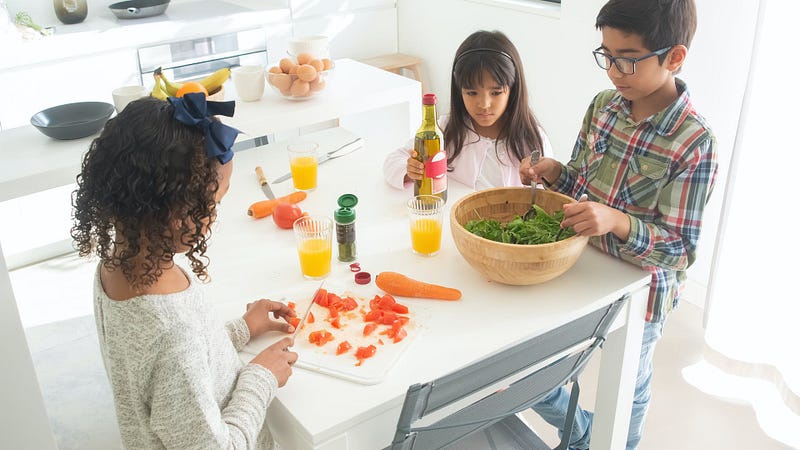
I’ve known this secret for a while now, and I will share it with you.
The kitchen is our first real classroom.
Okay maybe it’s not a secret, and maybe you already knew this if you love spending time in the kitchen, but I look to connect this to the classroom.
Let me tell you a litle story.
It started in 2020. The world shut down because of the COVID-19 pandemic, and teaching went virtual.
The kitchen table was my office table where I conducted all my lessons with students.
And then it hit me.
A world full of knowledge can come from this kitchen alone.
From there I developed a recipes for learning guide to share with my students, built a Wordpress blog, and called it edukitchen.net to showcase the beautiful connection between education and the kitchen.
At the beginning my students found it funny when I shared my ideas, but I kept trying to inspire them.
I continued to work hard trying to convince them the kitchen is the place to start learning life skills that can translate to the classroom and work environment.
Through my blog, I built a kitchen to classroom series that looks at five important life skills and how time in the kitchen can play a role in building these skills.
Today it’s all about critical thinking skills.
What Does ‘Critical Thinking’ Mean?
Critical thinking is meant to encourage new ways of thinking to bring about new insight to knowledge with a creative edge.
Critical thinking skills requires you to use your own objective (open) approaches to asking questions or challenging what is before for your own level of understanding.
It is meant to help you find your creative spark in whatever you do in bettering yourself or those you look to connect with.

Let me explain what I mean.
In 2017, as I was working on my Masters in Education, I was presented with an article in one of my classes that compared schools to prisons.
You can see where this is headed.
Schools tell you when you can go outside for a break, when to have lunch, and when you can go to the bathroom.
But more importantly, the article mentioned that schools were initially designed to get you to think a certain way for a certain role in society, and that is what, according to the author of the article, is paramount to being in some kind of prison.
Critical thinking therefore is seen as a way to break free from this type of prison because learners take back control of their thinking when it comes to absorbing information for their benefit.
How to Think Critically from Kitchen to Classroom
In learning how to cook or bake in the kitchen, we are building our critical thinking skills!
If we are novices in the kitchen, we start by reading.
Then we gather the ingredients to start doing.
We can ask questions along the way if we need to change something in the recipe or increase or decrease the portion sizes. Or how to properly use important kitchen tools.
Then when we have tried the recipe and found success or failure, we can try again by getting a little more creative.
Finally, when we feel confident in our own creative spark, we can express ourselves through the food we make.
Now apply the same logic to the classroom — and how to approach any subject.
Improving critical thinking skills will also have a liberating effect on how students approach any subject.
Why? Because they are in essence finding their creative outlet in expressing what they know.

Inside and outside the classroom, children will see that improving their critical thinking skills will help with organizing, problem solving, and understanding what needs to be done to get assignments or projects done on time.
I now share with you the five ways to help children build their critical thinking skills to help make life more enjoyable inside and outside the classroom.
Five Fun Ways To Build Critical Thinking Skills with Your Students
First things first though, you will have to get them to step away from the Internet and reconnect with the world around them.
I. Read More
When we read, we gain knowledge, vocabulary, and new understanding that we may not have had before.
As we read, we begin to formulate our own thoughts and opinions as to what benefits we have gained after reading.
Reading not only benefits our mind, but it benefits us in how we share what we learn with others by allowing us to engage in meaning dialogue that can benefit those we come in contact with to discuss what we read.
In gaining this new knowledge through reading, it can help us think about ways we can do more in sharing what we learned.
Encourage students to read more about topics they feel passion about and hopefully they will grow to have a favorite author.
My favorite author is Jane Austen. I’ve read almost all her books. My favorite is Pride and Prejudice. Now, I’ve seen most of the movies and tv series based on her books, and they always pale in comparison.
Why do movies fail when compared to books?
Because you are the director of the movie you create in your head while you read!
II. Do More
By doing more to keep ourselves interested in the world around us, we can gain new insights, thoughts, and opinions as to what is happening in the world we live in.
We need to do more so we can take charge of our own thoughts, and not just go along with what others tell us based on what they are doing.
What are some ways we can do more?
Get involved with helping family, friends, neighbors, or community in giving your time in service or in advocating for good changes.
III. Ask Questions
Asking questions that help us grow in learning are one important way in building our critical thinking skills.
In building your critical thinking skills, it’s important to think about why you are asking the questions you want to ask.
The main reason to ask questions is to gain knowledge, and another reason may be to help others understand when they are not able to ask the questions.
Encourage students to not be afraid of asking questions.
IV. Get Creative
You can get creative in many different ways.
If you are into cooking, you can show your critical thinking skills through the food you make.
If you are into the arts, you can show your critical thinking skills through the art you produce.
If you are into the sciences, you can show your critical thinking skills through the projects you build.
The list goes on and on.
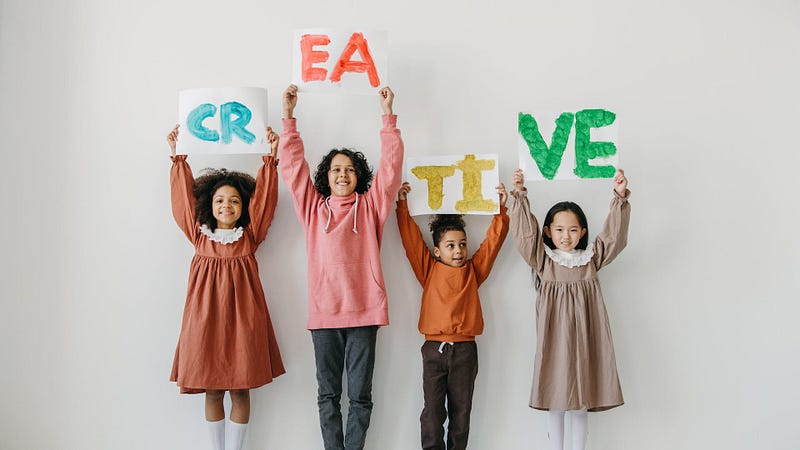
V. Express Yourself
There are ways to express who you are that make people want to listen.
When you use your critical thinking skills in the right way in expressing yourself, others will learn and benefit from what you have to say.
Remind students that words matter, so have them choose their words carefully!
There are some students who prefer to express themselves in ways other than on tests. If students struggle with traditional, have them create projects that cover the required assessment goals.
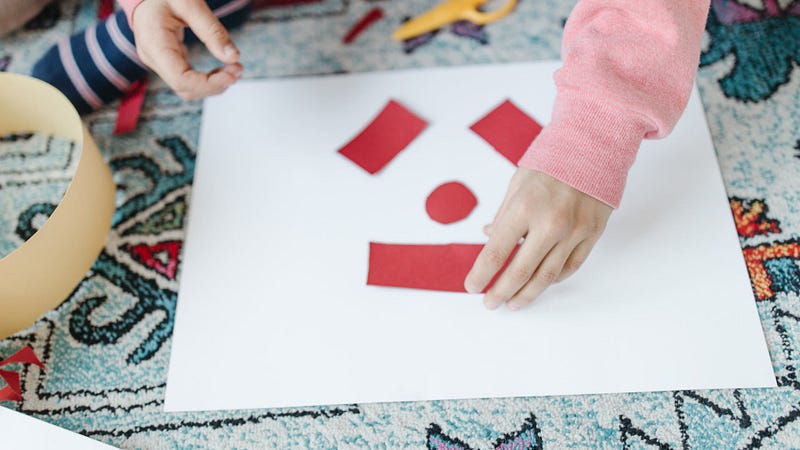
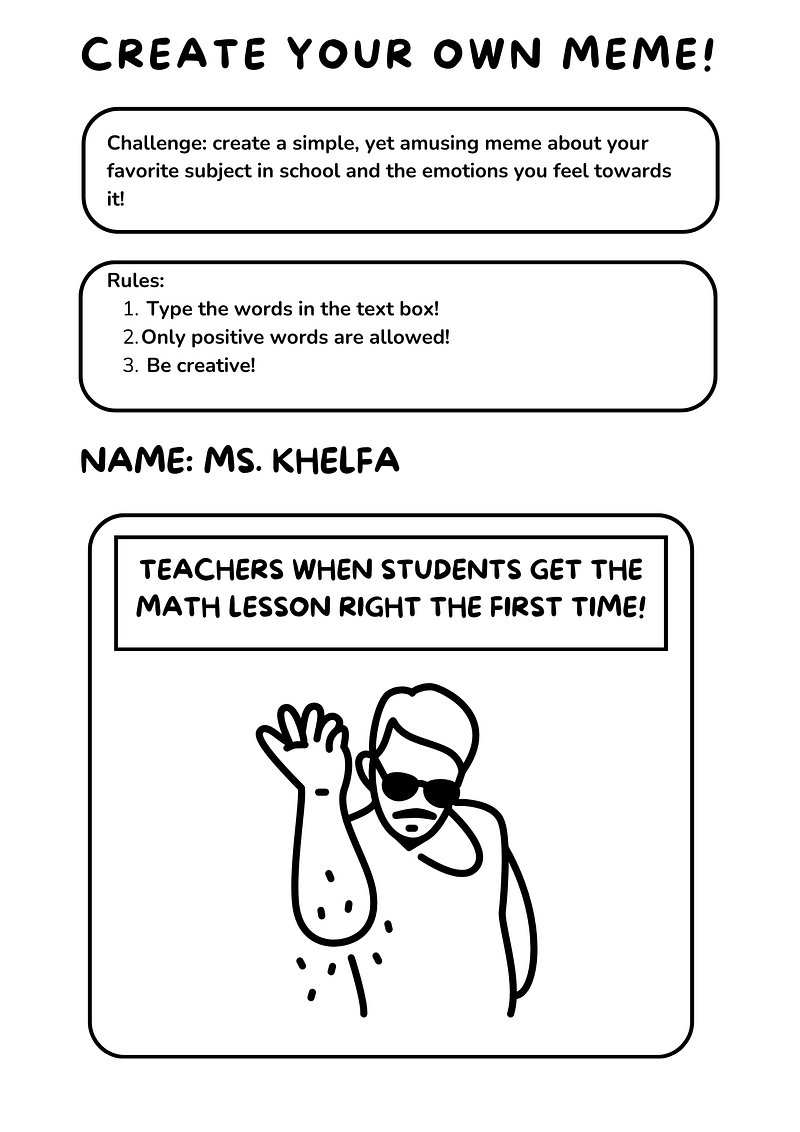
In keeping with the current trends, I created this “create your own meme” worksheet to share with students.
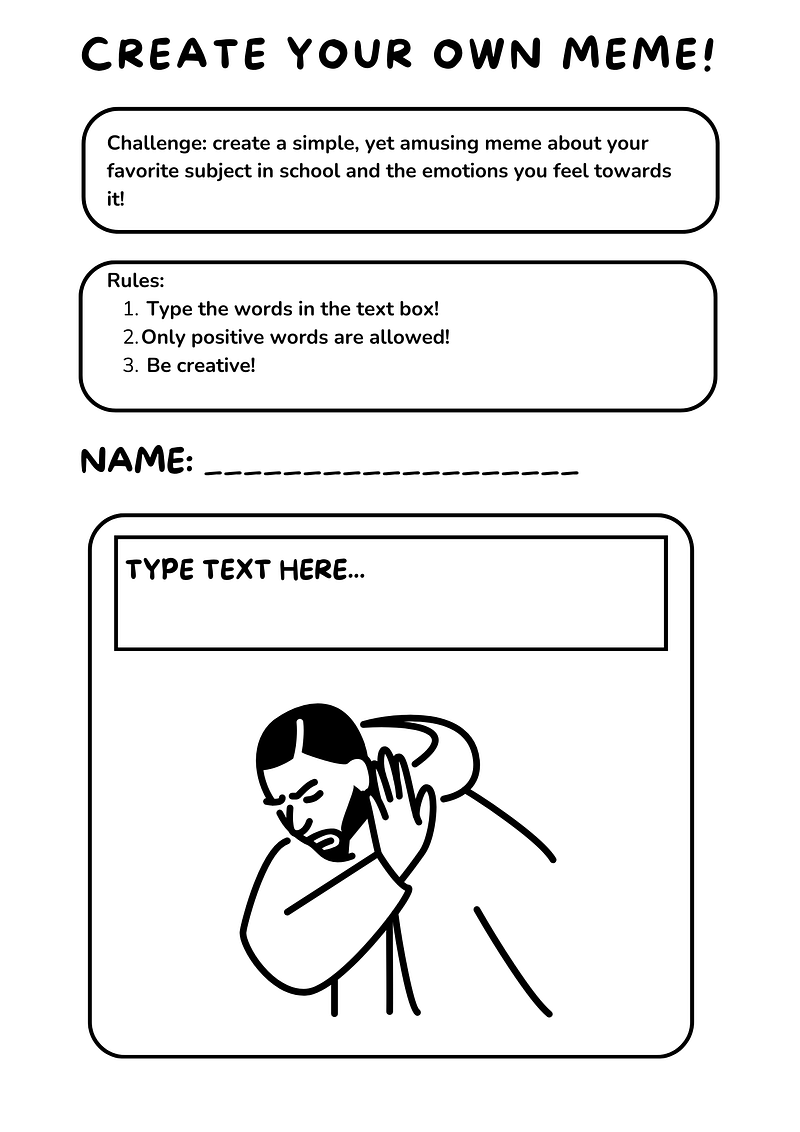
Here’s my example;
Building Critical Thinking Skills Video
Watch this video below to learn how I see the kitchen as a great way to help children build critical thinking skills in the classroom.
If enjoyed this video, please like it and subscribe to my channel: The ETI Academy!
Final Thoughts…
I hope you enjoyed reading this article and found it useful for building good critical thinking skills that will help with your goals whether they be educational or with life in general, for years to come!
If you enjoyed this article, here are some more that connect the kitchen to the classroom!