
Helping Students Find Their Recipes for Learning
In this article I share with my fellow educators a look at what I call “recipes for learning”.

In my 20 years as an educator, I have come to believe that student success comes from combining important skills and strategies in ways that can be referred to time and time again. This is what I believe a recipe calls for, and now let me show you how.
Helping Students Build Recipes for Success in Learning
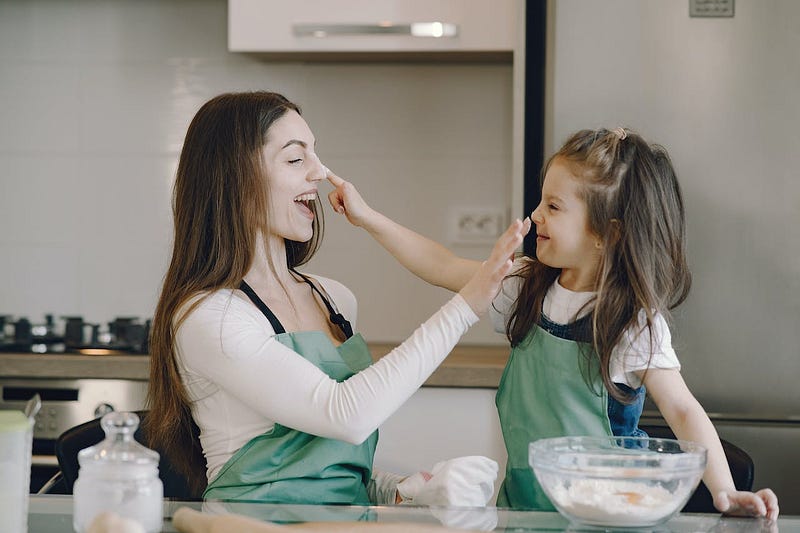
Let’s start at the very beginning, the kitchen.
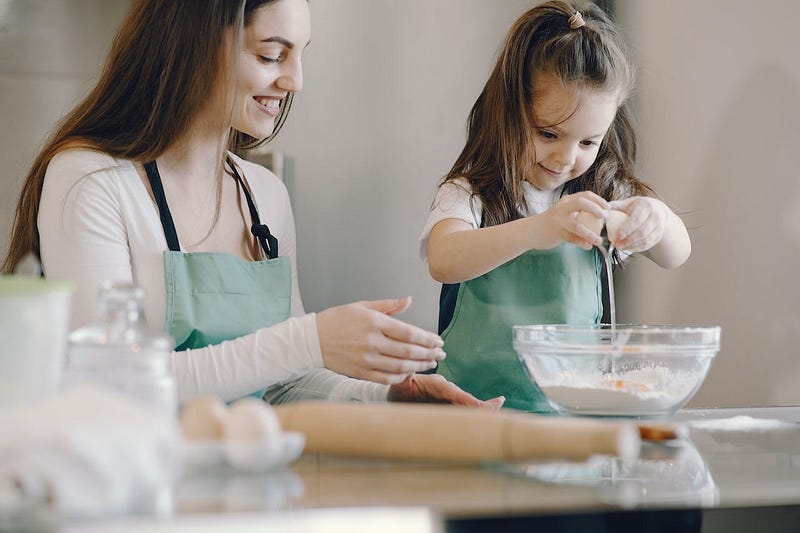
Recipes in the kitchen need essential ingredients to make every part of the dish something to remember.
There are important steps to follow through in the recipe that lead to the ultimate satisfaction of the dish we are about to enjoy.
With the right skills, or ingredients (see my list below), students can develop general learning strategies that when used correctly, can create recipes for success in reaching their educational and future goals.
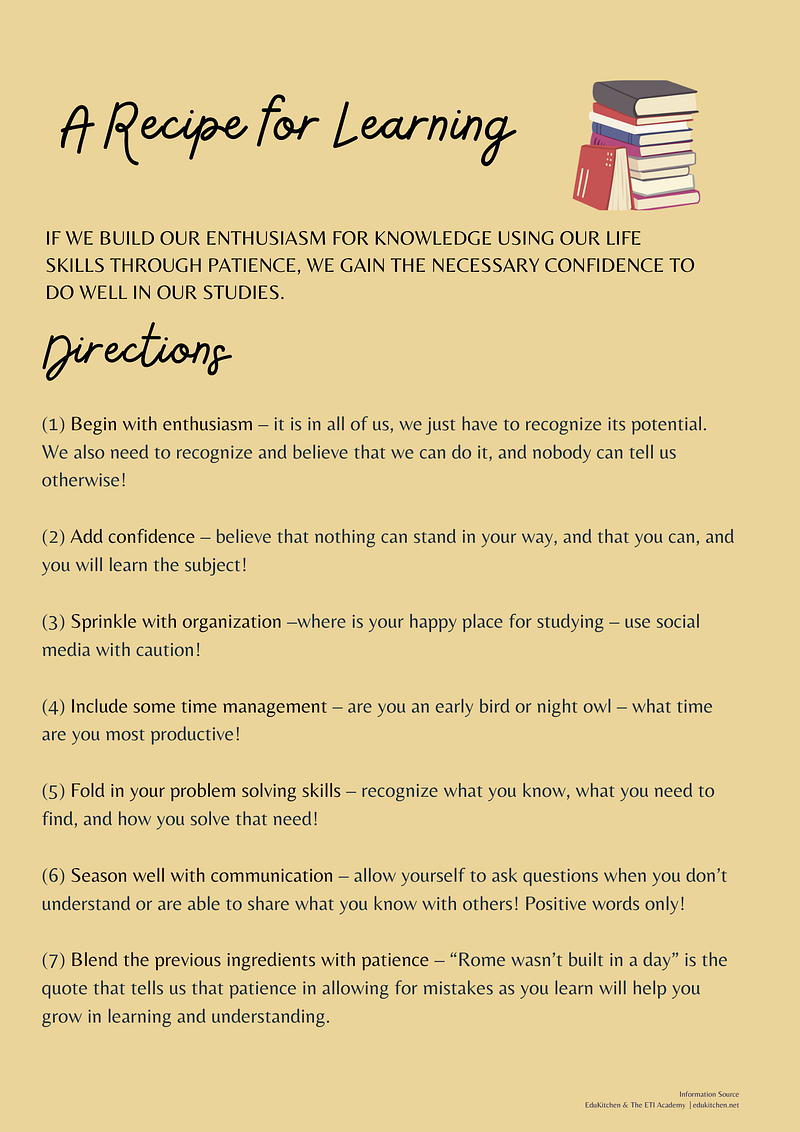
Visit me on Canva to download this and more educational resources .
Recognizing The 7 Must Have Skills
When it comes to studying, most students find it difficult to put together a strategy that helps them succeed in learning.
But if we keep these important life skills in mind, students are on their way to building strategies that can lead to success with learning goals every time!
So let us begin with recognizing the seven must-have skills that build our recipes.
I. Enthusiasm
(1) Begin with enthusiasm — It is in all students, they just have to recognize its potential. Students also need to recognize that they can do it, they just need to believe that they can, and that nobody can nor should tell them otherwise!
II. Confidence
(2) Add confidence — Students should believe that nothing can stand in their way, and that they can and will learn in their own way!
III. Organization
(3) Sprinkle with organization –ask students to find “a comfortable and happy place for studying” — free of any distractions — so yes, this also means they should use social media with caution!
Social media can be a big deterrent when it comes to the following ingredient!
IV. Time Management
(4) Include some time management — Ask students this simple question: “Are you an early bird or night owl?”
When students can recognize when they are most productive, then can begin to take charge of their time management and use it most effectively!
These previous four ingredients are the foundation for the following “rigorous” skills students need to focus on.
V. Problem Solving Skills
(5) Fold in your problem solving skills — Have students recognize that problem solving really comes down to three important steps: what you know, what you need to figure out, and the best approach to solve that need!
VI. Communication Skills
(6) Season well with communication — encouraging students to ask questions when they don’t understand gives them confidence to build their critical thinking skills.
Then it makes it possible for them to share what they know with others!
Of course, positive words have a greater impact towards success in learning, so encourage students to choose their words carefully!
And now for the most important ingredient, the one that brings all others together!
VII. Patience
(7) Blend the previous ingredients with patience — “Rome wasn’t built in a day” is the quote that tells us that patience in allowing for mistakes as students learn will help them grow in learning and understanding.
Bonus Ingredients!
One bonus ingredient we need to think about is student mindset.
Teaching students the value of consistency, goals, and positive outlooks help them build a positive mindset towards learning.
One other bonus ingredient is laughter.
Consider Adding a Little Laughter To The Recipe
Consider adding a little laughter in with all the seriousness of creating such recipes for learning.

When we learn to see the humor in how sometimes things don’t go as expected, or the unintended consequences of doing (or not doing) things, then we make our day just a little bit brighter by taking away some of the anxieties we associate with learning or life!
Now doesn’t that sound like an amazing recipe for success in learning!
Building Recipes for Learning Video
Watch my video below that highlights all that was mentioned in this article.
Note: this was one of my first videos I created in a series of videos connecting the kitchen to the classroom. My channel was called EduKitchen — Recipes for Learning.
I’ve since rebranded the channel to the ETI Academy in order to connect the creativity found in the kitchen to more topics surrounding teaching, learning, mental health, and test preparations in the classroom.
Final Thoughts..
The purpose behind building a “recipe for learning” is to understand that how we learn plays a major role in our success in education.
It will help us build the necessary skills and abilities to understand what we are learning.
And if for nothing else, creating recipes for learning can help make us become better at problem solving — which we need to recognize is a very important life skill.
Your brain will thank you for it!
Think about how many problems you solve in one day!
Still counting?
Finally remember that…
If we build our enthusiasm for knowledge using our life skills through patience, we gain the necessary confidence to do well in anything we attempt.
Along with students, teachers can apply these ingredients to their teaching strategies as well!
Now let’s start cooking!
If you enjoyed this article, please read my articles that discuss how the kitchen can help inspire creativity in children and their learning in the classroom.


