
Thunderdome
Why Scooby-Doo is the Best Cartoon Series
“And I would have gotten away with it, too, if it weren’t for you meddling kids!”
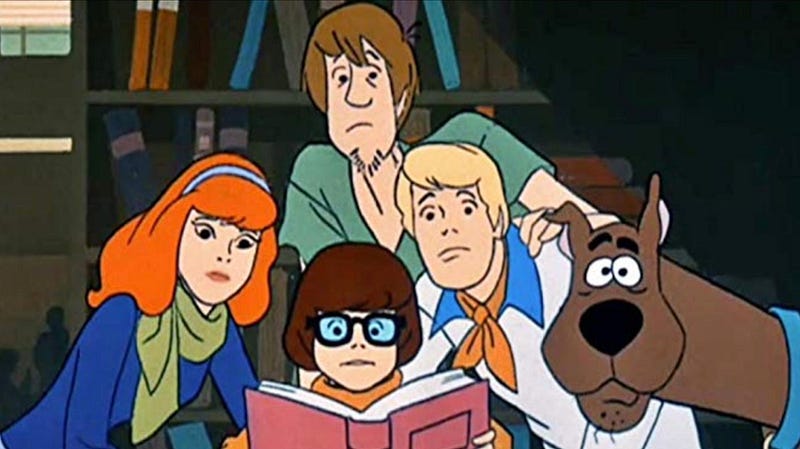
Thunderdome is a FanFare series where our writers good-naturedly debate some matter of pop culture and then leave it to the readers to decide. Read each post and vote at the bottom!We all love cartoons, and we have a special fondness for the cartoons of our youth. Claiming that one is better than another, let alone the best of all-time, is bound to start fights reaching back to childhood. With that fact firmly in mind, I still boldly proclaim that Scooby-Doo is, without question, the best cartoon series ever.
Before you light up the comments section after only one paragraph, let me get a few things out of the way that will hopefully encourage a full hearing of my case. First, if we were debating the most famous cartoon character ever, that title would go to Mickey Mouse with almost no debate. He is the animated rat that started it all. But the cartoons he featured in were mostly crap, and he’s not really even the face of the House of Mouse anymore; Disney is far more about Marvel heroes now than cartoon mice.
The next likely objection to Scooby will come from the Looney Tunes camp. Sure, we all love Bugs Bunny, Daffy Duck, and the rest of the gang (I almost got a Chicken Hawk tattoo myself). But as cartoons, they’re one-dimensional: three minutes of Bugs tormenting Daffy, Foghorn Leghorn tormenting Barnyard Dawg (that spelling is correct, I checked), and Wile E. Coyote using the most outlandish methods to catch a bird that would not make much of a meal. All good fun when you’re five, or just trying to switch off your brain at 55, but not much else.
As for Tom and Jerry (which is still one of my favorites), they are pretty much Coyote and Roadrunner, cat vs. mouse version. Mindless fun, and great to watch before heading off to freshman algebra, but not much else.
Which brings me to the gold standard: Scooby and the Gang. When Scooby-Doo Where Are You! burst on the scene in 1969 with the debut episode “What a Night for a Knight,” we knew, even as kids, that something special had arrived. It was like our favorite Hardy Boys and Nancy Drew (and for me, the Three Investigators) books come to life, but with humor and an awesome talking dog. Those intrepid mystery solvers have been a part of our lives, in multiple incarnations, ever since.
It’s hard for anyone who grew up after the advent of cable TV to grasp what a big deal cartoons were when you only got them on Saturday mornings (not counting the religious cartoons they ran on Sundays in the South, God help us). We waited for them like they were mini versions of Christmas. And amid all the cookie-cutter clutter (Josie and the Pussycats, The Osmonds, The Pebbles and Bamm-Bamm Show, The Perils of Penelope Pitstop), Scooby appeared.
These kids and their dog were something other cartoon characters were not: they were cool. Hell, Fred managed to be the epitome of cool even wearing a stupid ascot; not many could pull that off. Yes, you had most of the common tropes you find in ensemble characters today: the jock, the brain, the hot one, the goofball, and the dog. But they often transcended easy classification; Daphne would be the one who figured out the riddle, Shaggy would suddenly get brave, etc.
As for the mysteries they solved, remember that this was kids’ TV in the late 1960s and early 1970s; you were not going to find the kind of scares you get today in children’s programming. That’s fine, because Hanna-Barbera, which produced the show, understood long before many that mixing scares with laughs brings in a much wider audience. It didn’t even matter that in half their cases the ghost/monster/demon turned out to be a greedy real estate developer or crooked banker. The show was teaching us at an early age that those are the real monsters.
Even if the monsters turned out to be crooks (and their henchmen…where did they get all these henchmen?) in disguise, the disguises themselves introduced us to classic monsters many of our parents had denied us up to that point, deeming them not age-appropriate. They let us run wild through the neighborhood at seven years old, with BB guns, late into the night, but reading Dracula was dangerous. Ah, the ’70s. Scooby skirted mom and dad and taught us about vampires and werewolves and Yetis and cursed pirate ships. Hell, it was so educational it should have been on PBS.
Don’t believe me? If you have HBO Max, check out the first two seasons (if not, they have it on DVD as well; it’s a worthwhile investment either way). You really should just watch every episode in order, but failing that the following are must-see: “What a Night for a Knight” (the debut episode), “Hassle in the Castle” (a haunted castle), “A Gaggle of Galloping Ghosts” (Dracula, Wolfman, and Frankenstein’s Monster), “That’s Snow Ghost” (a ghost Yeti), and “A Night of Fright is No Delight” (the classic “survive a night in a haunted house to inherit a fortune”).
That last episode brings me to another reason Scooby-Doo is the best cartoon: its impact on popular culture up to the present day. In 2018, the Supernatural series aired an episode called “Scoobynatural,” in which Sam, Dean, and Castiel are sucked into a demon-possessed television and become animated characters who, along with the Scooby gang, investigate their way through a re-telling of “A Night of Fright is No Delight.” This is only one of many times the Scooby show turns up in other films and TV shows, from “The Scoobies” of Buffy the Vampire Slayer to the Mystery Machine appearing in Jay and Silent Bob Strike Back. The show has been referenced in Teen Titans Go!, South Park, Futurama, The Lego Movie: 2, and even a Batman cartoon. No other cartoon from 1969, and damn few after, can make that claim.
So, you can have Mickey and Donald, Bugs and Daffy, Tom and Jerry, even Michelangelo and Donatello. I’ll take Fred, Daphne, Velma, Shaggy, and of course Scooby-Doo every time. Now it’s time for a nice Scooby Snack. Zoinks!
What say you?
Based only on the arguments presented (you have read all of them, haven’t you?) and not on personal preference: who wins this bout? Voting closes on August 5 at 7:59 AM.The other entries:


