
Thunderdome
Why DuckTales Is the Best Cartoon Series Ever
Race cars, lasers, airplanes… what more could you ask for?
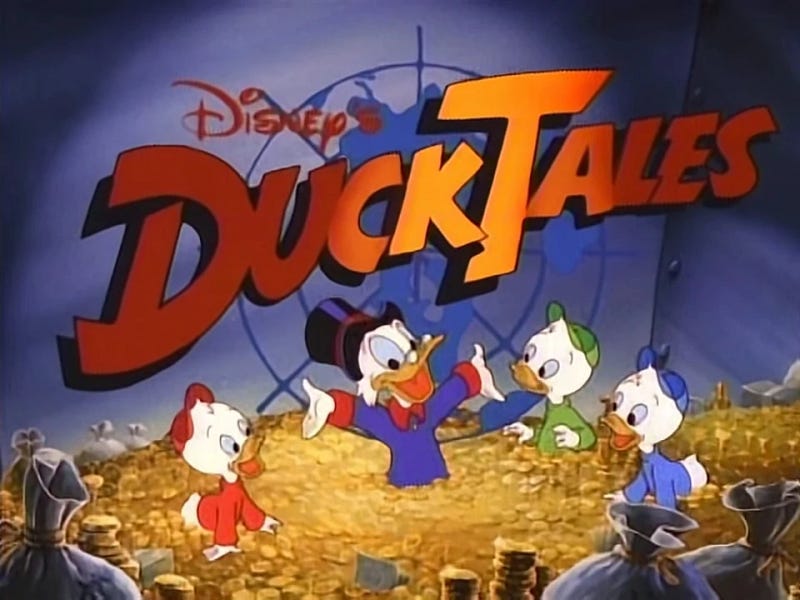
Thunderdome is a FanFare series where our writers good-naturedly debate some matter of pop culture and then leave it to the readers to decide. Read each post and vote at the bottom!There are many shows I could have picked for this Thunderdome match. Some of them were already taken, so I decided to go with the one I most often go back to, and not really for nostalgic reasons: the bulk of my DuckTales viewing occurred in the last few years, via DVD box sets and its current availability on Disney+. But even on those rare occasions when I would view it as a kid, I could sense there was something different about this particular series.
New Animation
When DuckTales debuted in syndication on September 18, 1987, the quality of television animation was still very much a sore subject among fans and critics: due to lower budgets, animation produced for the small screen tended to be limited, with jerky and simple character movements. Studios like Jay Ward Productions and Hanna-Barbera would make up for this with razor-sharp writing and top-notch voice acting (June Foray, Daws Butler, Don Messick and Mel Blanc were but a few of the names involved), but that wouldn’t be enough when it came to Disney.
After all, we’re talking about the brand that was essentially synonymous with great animation, notwithstanding the slump the studio was going through when the television unit was launched in late 1984 (this was when Michael Eisner and Jeffrey Katzenberg came on board, with the latter infamously trying to salvage The Black Cauldron). As such, when it was decided to produce original animated series for broadcast and syndication, the main mandate was that they be visually on par with the movies, courtesy of larger budgets.
DuckTales wasn’t the first show to benefit from this, as it was the third Disney animated series to be produced, but it was arguably the first to really make an impact. Sure, Adventures of the Gummi Bears proved popular enough to generate enough episodes for a syndication package (compared to The Wuzzles which only lasted 13 episodes), but DuckTales was a bit of a mission statement, being rooted in classic Disney properties and based on the much-loved Duck universe that Carl Barks had established in comic book form.
Over the course of its 100 episodes, the show remained a visual delight from start to finish, each adventure being more enticing than the last. Other studios took note of this, and began spending more on their own shows, leading to a new era of terrific television animation. An era that began, arguably, with Scrooge McDuck and his nephews.
Cast of Characters
The astounding visuals were accompanied by sharp writing that cleverly blended action, humor and heart, throwing brilliant characterizations into the mix for good measure. Largely bringing Barks’ character gallery to the screen (with a few originals like Gizmoduck and Launchpad McQuack, the latter a replacement for Donald Duck who was reduced to occasional guest appearances by corporate decree), the creative team took the best elements of those stories and turned them into fresh televised adventures.
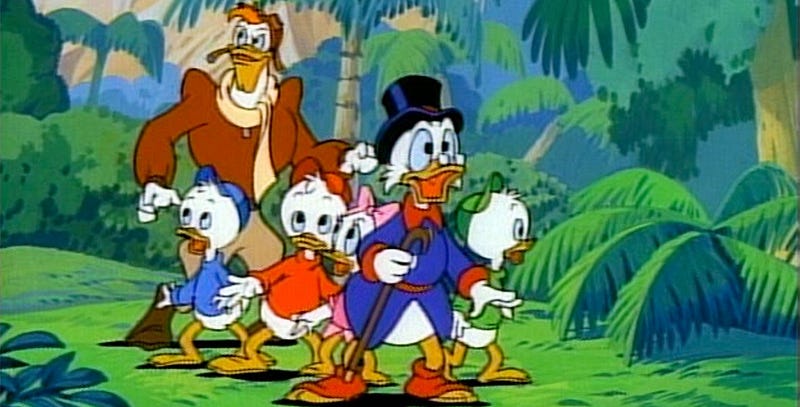
One episode could deal with magic, another with technology, another with good old-fashioned romance in the Yukon. They all felt of a piece because the characters remained consistent and there was no attempt at being overly clever or cute with the material (save for the odd inside joke like a line acknowledging the influence of the Indiana Jones movies, which in turn had been inspired by Barks).
And in at least one regard, the show pulled off a minor miracle: it made us care about Scrooge McDuck. Don’t get me wrong, he’s always been a great character, and a charismatic one to boot, but if you’ve read the comics, he’s not that likable. Barks based him on Ebenezer Scrooge from A Christmas Carol (hence the Disney-themed adaptation released in 1983), and many stories show him being no better than his rival Flintheart Glomgold; the only reason we root for him is because the story tells us he’s the protagonist. Don Rosa, Barks’ spiritual successor, pushed that notion as far as possible in the latter stretch of The Life and Times of Scrooge McDuck, with money taking precedence over family.
The animated version, lovingly voiced by the late Alan Young, is a tiny bit softer, but overall, the shades of gray are still there: lest we forget, the opening scene of the show features the richest duck in the world singing his own praises while bathing in gold. It’s hilarious, and also a little sad.
Woo-oo!
Did you really think I wasn’t going to mention it? Of course, part of the reason DuckTales is the all-time greatest animated show has to do with the theme song, composed by Mark Mueller and performed by Jeff Pescetto (who became Disney’s go-to guy for other tunes as well). It’s ridiculously catchy, and arguably the most frequently hummed cartoon theme song of all time.
It perfectly captures the essence of the show, from the great adventures to the shenanigans the characters can get mixed up with at home, and it comes with an infectious desire to join Scrooge and the nephews on whatever quest lies ahead, like Pescetto says before jumping into the chorus: “Might solve a mystery, or rewrite historyyyyy…”
The creators of the reboot even went as far as naming their series premiere after the enthusiastic sound that is associated with the show’s title, confirming just how integral a part of our pop culture that earworm has become. Once you hear the opening bars, it’s impossible to think of anything else, including the possibility of watching another show instead. And frankly, why would you? DuckTales has it all: great scripts, amazing animation, stellar voice acting and peerless music. Life is like a hurricane. Just let yourself get swept up in it.
What say you?
Based only on the arguments presented (you have read all of them, haven’t you?) and not on personal preference: who wins this bout? Voting closes on August 5 at 7:59 AM.The other entries: