
Thunderdome
Why ‘Avatar: The Last Airbender’ is Undeniably the Best Cartoon Series
And it’s not even a competition
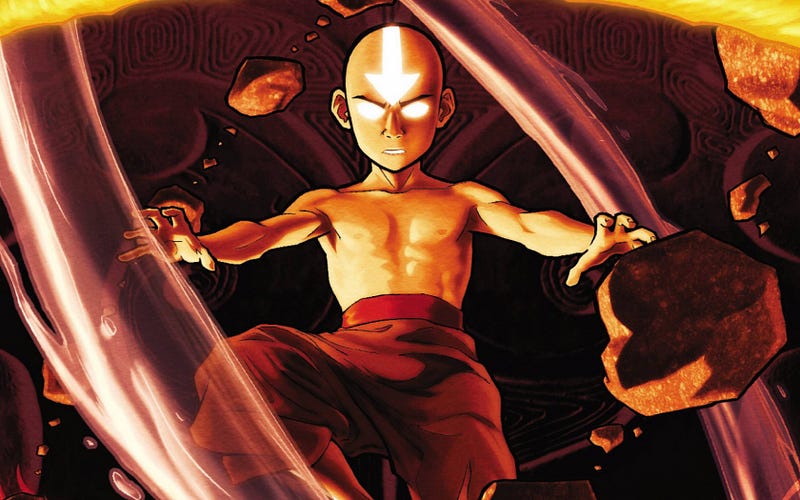
Thunderdome is a FanFare series where our writers good-naturedly debate some matter of pop culture and then leave it to the readers to decide. Read each post and vote at the bottom!Avatar: The Last Airbender is the best animated TV series of all time.
At the very least, it is certainly the best of the bunch picked for this week’s Thunderdome.
Not only does it have a higher rating on the big three (IMDb, Rotten Tomatoes and Metacritic), but it also possesses unique qualities that stand the test of time.
Unlike the bulk of children’s media, it’s bolstered by more than just nostalgia.
Quick summary. Avatar: The Last Airbender takes place in a world divided into four nations — the Earth Kingdom, the Water Tribes, the Fire Nation and the Air Nomads. Each nation contains people with control over the elements (called benders). However, there is one person who can manipulate all four: the Avatar.
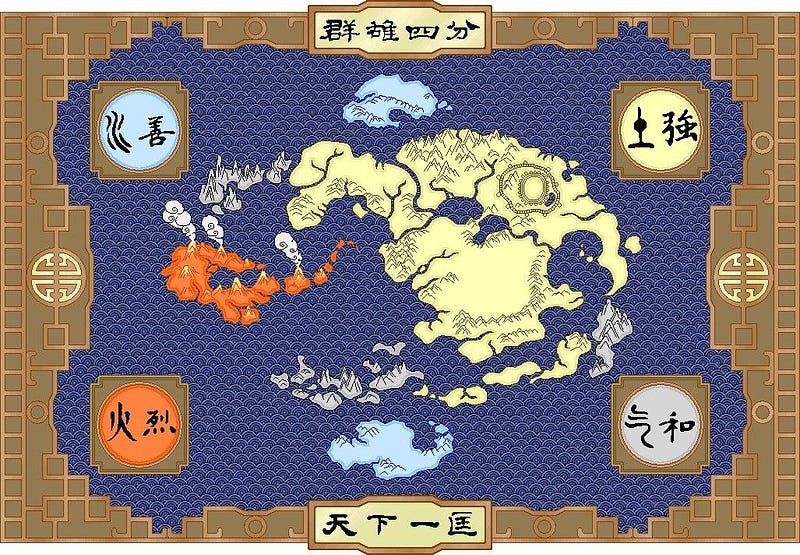
The avatar disappeared a hundred years before the start of the series, and the world plunged into war when the Fire Nation attacked. One day, siblings Katara and Sokka discover a 12-year-old boy, Aang, trapped in an iceberg. He is an Airbender (the last of his kind) and the Avatar. Slight problem: Because he slept in an iceberg for 100 years, Aang only knows air bending.
The series follows Aang’s journey to learn all four elements and defeat the Fire Lord to restore balance to the world.
World Building — The Slow Burn
The show executed a double back salto with a half twist — the Biles — and like its namesake, stuck the landing effortlessly.
We can divide TV into episodic and serialized formats.
The episodic format is most popular in sitcoms. Every episode has a clear beginning and end. You can sit down to watch an episode of Friends or Family Guy without watching any other instalments. These types of shows are most profitable for networks because they require no commitment from the viewer. No narrative end means also studios can get away with no actual end.
In contrast, serial shows have an overarching plot, a driving force that pushes the narrative forward episode after episode until it reaches completion. Think Game of Thrones, Breaking Bad or Money Heist. You can’t dive in mid-season. Well, you can, but it would suck.
Avatar’s approach to world-building sticks out because it combines episodic and serialized storytelling.
While the series contains quite a few standalone episodes with arcs completed in 20 minutes, they all operate under the cloud of the main narrative. Learn all four elements. Defeat the big bad guy. Restore peace.
For this reason, even the most seemingly disconnected misadventure is important for its contribution to the show’s narrative and aids in world-building and characterization.
That our main characters are children is a deliberate and brilliant choice. It means they know little — about anything. So we the audience never stop learning imperative nuggets of information alongside them about the bending world and how it operates.
The interweaving of standalone pieces with more direct plot-driving serials is the perfect format for the delivery of this information. It’s a slow burn but God when you get there!
Characterization — An Exercise in Mastery
As a whole, the series has won multiple awards — and even had an Emmy nomination — but most prominent is its 2008 Peabody Award.
Avatar won the prestigious award for its “multi-dimensional characters, unusually complicated personal relationships for a cartoon serial, and a healthy respect for the consequences of warfare.”
Avatar: The Last Airbender’s approach to character development is unrivalled in kids’ programming.
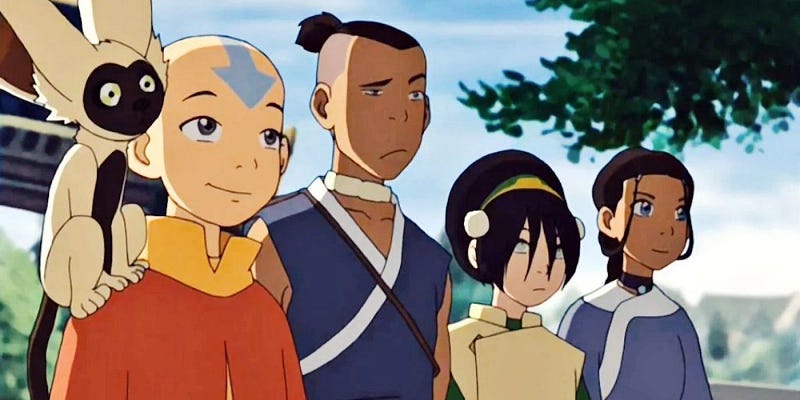
A theme throughout the series is the weight of good versus evil. The cartoon underscores the fact that no one fully embodies either characteristic.
Our good characters are every bit as flawed as our bad ones. They have conflicting beliefs, lie, cheat and revel in mischief. Our evil characters likewise show moments of deep vulnerability and kindness that make you question their vile actions.
I won’t go into too much detail to avoid spoilers but in no character is this more self-evident than Prince Zuko, the deuteragonist of the series.
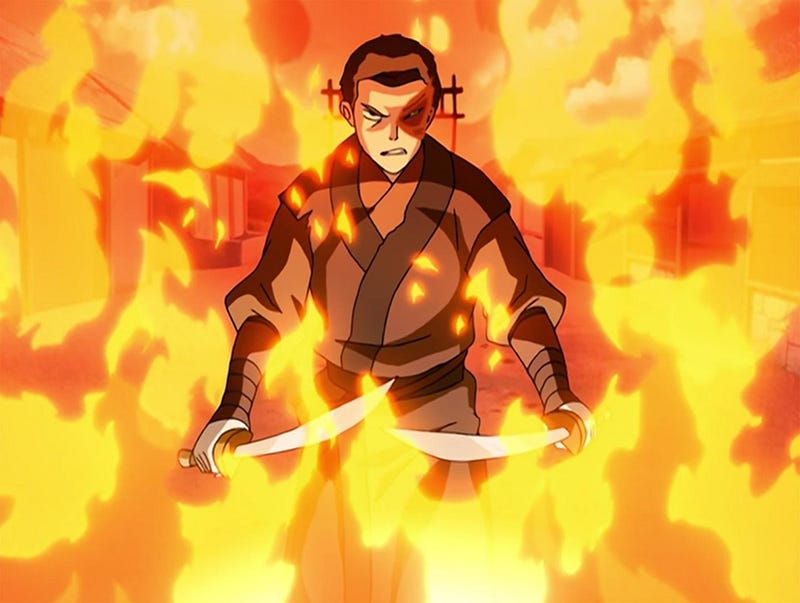
Although he is initially Aang’s antagonist, it soon becomes clear that he is not a villain. His journey is an arc of redemption and self-discovery.
Avatar can make you oppose the actions of the protagonist in one breath and express true empathy for the ‘villains’ in the next. The characters are full, fleshed out and complex individuals.
Storytelling — Transcending Generations
I was going to include a lengthy bit here about the quality of the show’s animation and fight sequences. Summary: amazing and consistently better every season. They based each form of bending on a distinct style of martial arts, so fight sequences are ever-changing and dynamic as the characters learn more. Just when you think they can’t surprise you, they do.
Now onto the real draw of the show: the storytelling.
Do you know what the worst feeling is?
When you revisit something you used to love to find that your feelings have changed. It’s like a stab to the gut. As I’ve grown older, I’ve become more critical, so books, TV series and movies that previously captivated me sometimes fall flat.
This has not been the case with Avatar: The Last Airbender.
I grew up with the show and watched it for the first time when I was seven years old. I’m 22 now and love it even more than I did then.
Although the show aired on Nickelodeon, it tackles mature subjects including genocide, childhood trauma, abuse, sexism, imperialism, environmental degradation and redemption. It also juxtaposes the notions of good versus evil and free will versus determinism. The show strikes an impressive balance between levity and seriousness.
And it does all of this in a way that adults can appreciate while still appealing to a younger audience.
Case in point, when Netflix first started streaming the show last year, it shot directly to #1 on its Top 10 List, becoming the first animated series to do so. The cartoon would stay on Netflix’s Top 10 chart for 60 consecutive days, becoming the longest chart run of any show and the only show on the Longest Run list to have ended many years before Netflix started its streaming service.
The power. The reach. The gripping storytelling. It is unmatched.
Final Thoughts
I’ll be honest. I care very little about winning this Thunderdome. After getting destroyed last week over my defence of Dolores Umbridge as Harry Potter’s best teacher, I’ve developed some numbness to my unpopular opinions. However, if I’m able to convince one soul to watch this animated series, then my work here is done. You won’t regret it! To prove this, I enlisted the help of my best friend who recently watched the show. I texted, “Why do you think Avatar is a good show?”
Her response:
“I think one of the reasons it’s great is because it transcends age. It’s meant for children, but it isn’t childish. So children are watching this really cool fantasy show where people can bend all the elements, but at the same time, they’re also watching the main character deal with many different challenges, and they can passively take away so many positive life lessons from his journey.”
What say you?
Based only on the arguments presented (you have read all of them, haven’t you?) and not on personal preference: who wins this bout? Voting closes on August 5 at 7:59 AM.The other entries:
- Scooby Doo
- Duck Tales
- Animaniacs
- Muppet Babies