
Why No One Really Wants North Korea To Fall
The Americans, Chinese, North and South Koreans all have something to lose in the mix
North Korea is a pariah state.
From the regular sabre rattling, through to horrific human rights violations — most people do not wish them well.
That does not mean, however, that anyone actually wants them to collapse. The reasons for this vary depending on your perspective. Let us consider the four key ones:
- American
- Chinese
- South Korean
- North Korean
The American Viewpoint

A key part of being a superpower is to be able to project power. Especially into regions where players might be considered adversarial.
One such theatre is China.
The US has sought to contain them through a policy of encirclement. A critical pillar of this is the ~25,000 US troop deployment in South Korea.
Ostensibly, they are stationed to protect the latter from possible North Korean aggression.
Being only around 350KM from the Chinese border, however, it is also quite a handy spot from which to be able to keep tabs on Sino-activity and in the event of a hot war: a beachhead from which to commence an offensive.
Should North Korea cease to exist, the justification for the US presence on the Korean peninsula disappears, meaning that they may well have to leave.
This is obviously not something that they would be keen on.
The Chinese Viewpoint
For each action — there is an equal and opposite reaction.
Thus it follows from the above — that while the Americans want to have a presence near the Chinese; the Chinese do not want the Americans at their doorstep.
They’ve already had to contend with this once in recent history — when Allied forces bombed and attempted to march to the Chinese border at the Yalu River during the Korean War.
So long as North Korea exists it serves as a buffer — keeping the US just that little bit away.
Finally — should North Korea collapse or reunification occur — not only will this buffer disappear — but there will likely be millions of refugees spilling over the border into their territory which will have significant economic and social impact.
The South Korean Viewpoint
South Korea is a highly developed society and a regional power with around 50 million citizens.
North Korea has half the population but just 4.5% of the GDP per capita.
If South Korea had to step in and integrate the north — it would be a herculean endeavour, placing the state under incredible economic and social strain.
As a comparison: When West Germany had to re-integrate East Germany (with a third of the population and ~30% of the GDP per capita) after the fall of the USSR — it cost around two trillion Euros in re-distributive “Solidarity” payments, subsidies, welfare and infrastructure spend.
The gulf between East and West Germans, however, was orders of magnitude less than that between North and South Koreans.
Even culturally — Germany was only divided for 31 years, but Korea has been for over 70.
Even opinions on the ground amongst Korean people aren’t unanimously for reunification.
Surveys also show that 40% of South Koreans in their 20s support co-existence rather than reunification. Across age groups — support for co-existence over re-unification grew by a quarter from 2018–2019 alone.
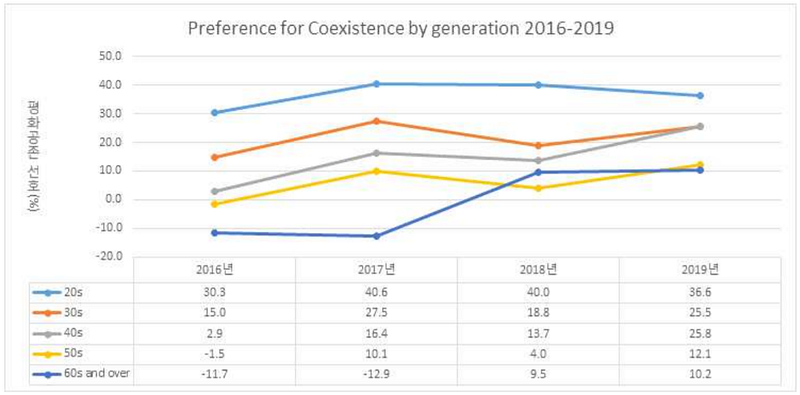
It seems that as time goes on, re-gluing the social fabric might be getting close to impossible.
The North Korean Viewpoint
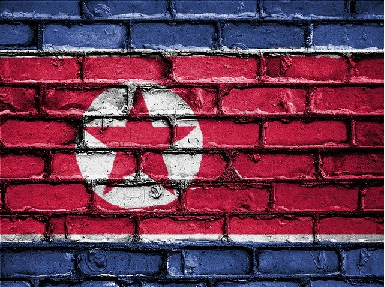
The primary objective of the authorities in the DPRK is to survive — so it goes without saying that they would not want to see the state collapse.
Even if there were a peaceful transfer of power — it would be difficult to guarantee immunity from prosecution for the various human rights violations that the leadership would have been involved in.
Leadership aside, re-unification would see the privatisation of North Korean assets. The overwhelming majority of these sales would be to actors from South Korea, who in turn will reap the majority of the profits from these companies.
This is basically what happened in East Germany (where 85% of assets were bought by West Germans), and might similarly stymy the economic development and even further de-industrialise North Korea.
Yes — economic growth in the DPRK is not spectacular right now — but a lot of that is also due to sanctions (which probably would not exist in a unified Korea).
So there you have it.
Though North Korea is a horrific regime as well as a belligerent and menacing geopolitical player — no one really wants to see it disappear.
The die of history it seems has been cast. The Korean peninsula may be destined to remain divided for quite some time yet. At least until a new world order emerges.
You may also like:


